Last April I almost rented the wrong warehouse in the Nairobi Kenya warehouse market. An old customer needed more volume, city orders were piling up, and my first instinct was to move toward the airport corridor. Closer to the freight, closer to the customers — what could go wrong? Then the quote came back and cooled me down fast. We are a small warehouse. We cannot afford to burn money like that. That was when I understood it is not a contest for who sits nearest the airport. It is a contest for who does the math properly. A higher or lower rent always shows up somewhere else, in fuel, labour, returns, or stock sitting still. There is no hiding from it.
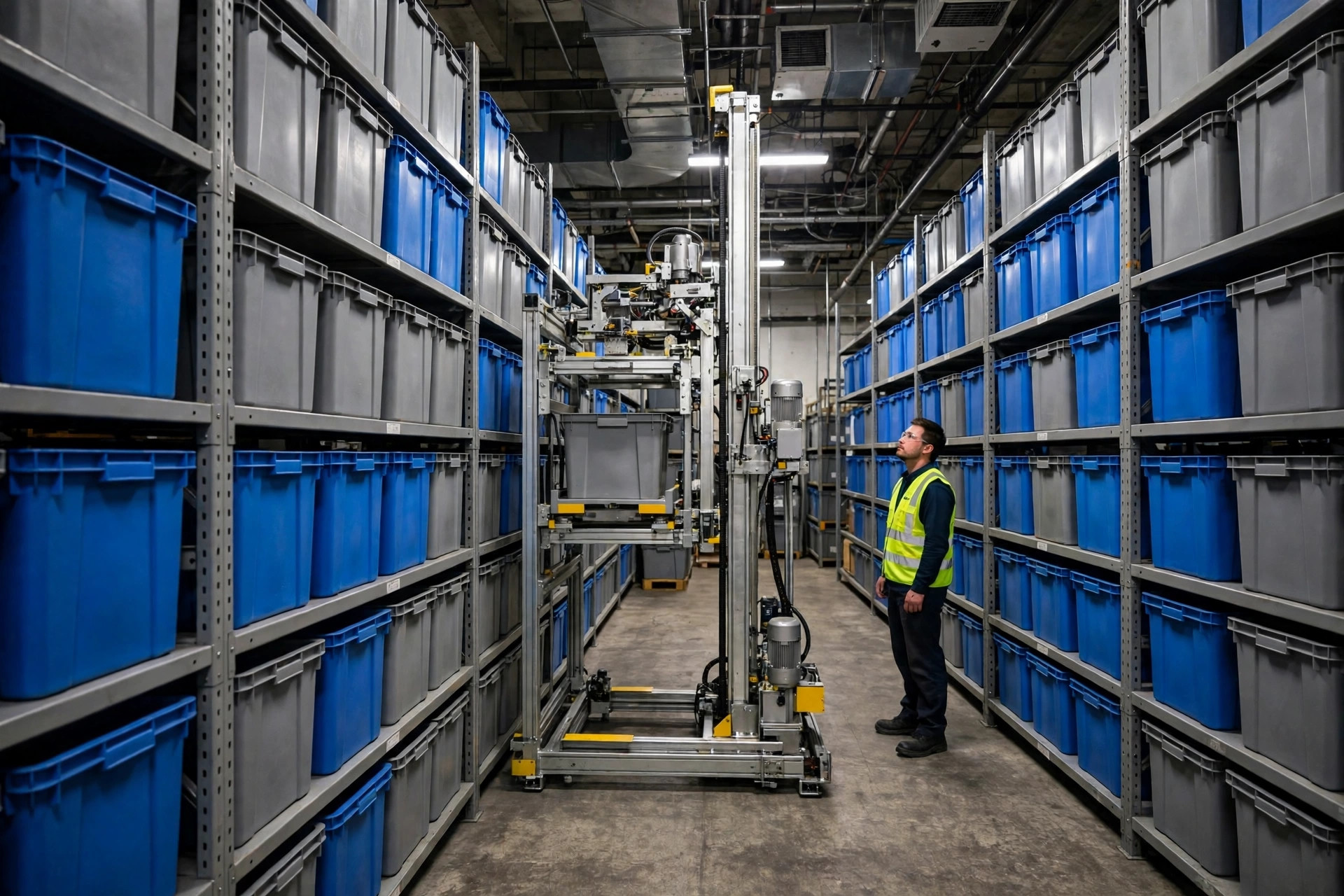
Our place is small, about 3,000 square metres, a team of just over a dozen people, two forklifts, one of which only keeps going because we keep fixing it. Our customers are mostly small traders and local distributors. The goods are ordinary stuff — daily necessities, small appliances, packaging materials — the kind of cargo that lives or dies on fast turnover, not on fancy handling. The big-company playbook does not work for us. A big warehouse can spread a high fixed cost across a huge volume. We cannot. If the rent jumps, our cash flow breaks first. If the location is too far out, deliveries slow down and customers walk away first. Small warehouses live stuck between those two cliffs.
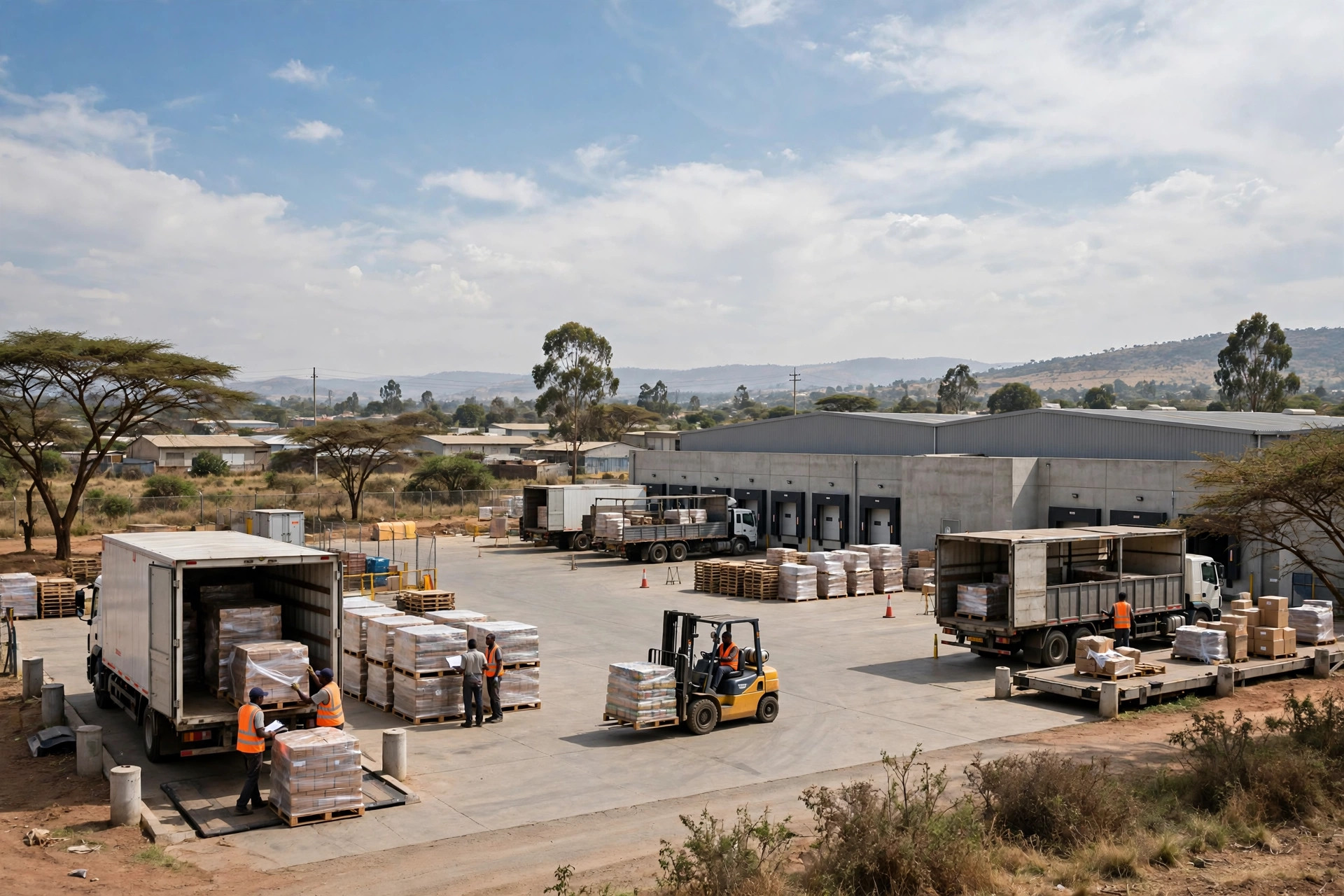
Let me tell you about a job that taught me this properly. Last May, a local distributor came to us. He needed to supply small shops in Nairobi and second-tier buyers toward Mombasa, about three truckloads a week, lots of small mixed orders. Our first idea was a small unit near the airport corridor, because fast pickup sounded smart. After two weeks of talking, the numbers stopped making sense. Most of his orders were not urgent air freight at all. He would have been paying corridor prices for the idea of speed, not for speed he actually used. So we changed the plan. We kept the warehouse on the city edge, close to a main road, easy in and out of town. Twice a week we consolidated loads toward Mombasa, and urgent city orders went out the same day in a small van. Three months later, his stockout complaints had dropped and returns were down too, because stock moved with the order rhythm instead of sitting in a distant warehouse waiting. The few hours a corridor location might have saved never came close to paying for itself.
I learned the same lesson from the other side, and it cost me money. A couple of years ago, a small trader handling garden-product supplies needed extra space in peak season. I found a big, cheap yard out in the suburbs. Plenty of room, easy unloading, a price that made me smile. Then the rains came. The access road turned difficult, big trucks could not get in, and we ran small vehicles back and forth, burning overtime and vehicle wear. When a customer asked for a rush top-up, getting stock back into the city took most of a day, and twice we nearly missed the delivery window. Since then I check different things on a site visit: can a big truck get in during the rains, can we work at night, is there a reliable shuttle fleet nearby? None of that appears on a quote sheet.
Nairobi Kenya Warehouse Market: The Airport Corridor Is Expensive for a Reason, and Expensive All the Same
Nobody needs to sell me on the corridor. It is fast, it suits air-related and time-sensitive cargo, and it is handy when customers want to inspect goods in person. Its price reflects location and services, not just floor area. For a small operator, the only question that matters is this: does your cargo really need to sit next to the airport every day? If only one or two shipments a week are air freight and the rest moves by road or city delivery, you are paying for somebody else's urgency. I know a fellow operator who moved into the corridor, held on for six months, then quietly moved out. Customers did not order more just because he was near the airport. His monthly fixed costs, on the other hand, never stopped squeezing him. That gap between big and small is structural, not a matter of working harder.
Nairobi Kenya Warehouse Market: Suburban Space Looks Cheap Until You Add Up the Whole Bill
Suburban warehouses are genuinely cheaper, the space is generous, and expanding is easier. They suit seasonal stock and distribution toward East Africa. But a small warehouse has to count the full bill: trunk transport, the number of city delivery trips, the return journey for rejected goods, rain and traffic delays, and how hard it is to hire and keep workers. My method now is low-tech. I write each cost on paper and go through it with the customer: what the warehouse saves, what the road adds back, and whether anything is left. Often half the saving disappears into transport and time. On the other hand, if your cargo is already heading out of the country, a suburban site near the main outbound route can be an advantage, while a city warehouse burns fuel and hours crossing town every day. Suburban is not a bad choice. It is just a choice you cannot make from the rent figure alone.
| Submarket | Best for which cargo and which small warehouse | What a small operator really pays | Easiest trap to fall into |
|---|---|---|---|
| Airport corridor | Time-sensitive, air-related, frequently inspected cargo | High fixed costs and constant cash-flow pressure | Paying for speed your cargo does not use |
| City edge | City delivery, fragmented orders, frequent replenishment | Limited space, and expansion means waiting in line | Judging only city access, ignoring unloading conditions |
| Suburbs | Seasonal stock, East African distribution, trunk shipments | More trips, rain and traffic risk | Counting only rent, missing the full journey cost |
| East African distribution nodes | Multi-country delivery from a regional base | Cross-border timing you do not control | Promising cross-border speed too confidently |
East African Distribution: How a Small Warehouse Survives Without Overpromising
Distribution across East Africa sounds huge, and it is, but every neighbouring market runs on a different rhythm. Customs paperwork, documents, and cross-border vehicle connections all have to line up, and one stuck link leaves your cargo sitting on the road. Our homegrown fix is boring but effective: take one direction first, get the document checklist, the transport partners, and the exception routine working smoothly, and only then add a second direction. Never start by telling customers you can deliver everywhere in East Africa. When the promise is that big, the loss is that big too. Packaging and labelling need to be settled before dispatch, not at the border.
One more cost outsiders rarely mention is hiring. On the city edge, workers live nearby and night shifts are simpler to roster. In a suburban site, long daily travel pushes people to leave, and training replacements is a real monthly cost that never appears on a rent quote. Count staffing when you choose a site, not after you are already short-handed.
So what would I tell another small owner? First, map your order mix before you look at property: how much is urgent city work, how much is trunk haulage, how much is cross-border? The mix should pick the location, not your gut feeling. Second, sort out transport before you sign a lease. Shuttle fleets and trunk carriers, their reliability and their real prices, matter as much as the warehouse itself. Third, keep an exit in the contract. A lease that lets you expand a little in peak season and shrink a little in quiet months is worth more than an opening discount. Fourth, stop competing on square metres. Our survival is turnover: goods in and out quickly, one fewer day of stock sitting still is one fewer day of money tied up.
Looking back, there is no standard answer here. The corridor, the city edge, and the suburbs each have their own bill and their own traps. Choosing a warehouse is really choosing which kind of cost you are willing to carry: high fixed costs for speed, or transport and time costs for lower rent. I no longer envy the big warehouses. They have their volume math, and we have ours. Get the order mix clear, count the whole journey, keep a way back in the contract, and a small warehouse can hold its ground just fine. Small warehouses have their own way of making it work.
By Xiao Ma, Small Warehouse Owner