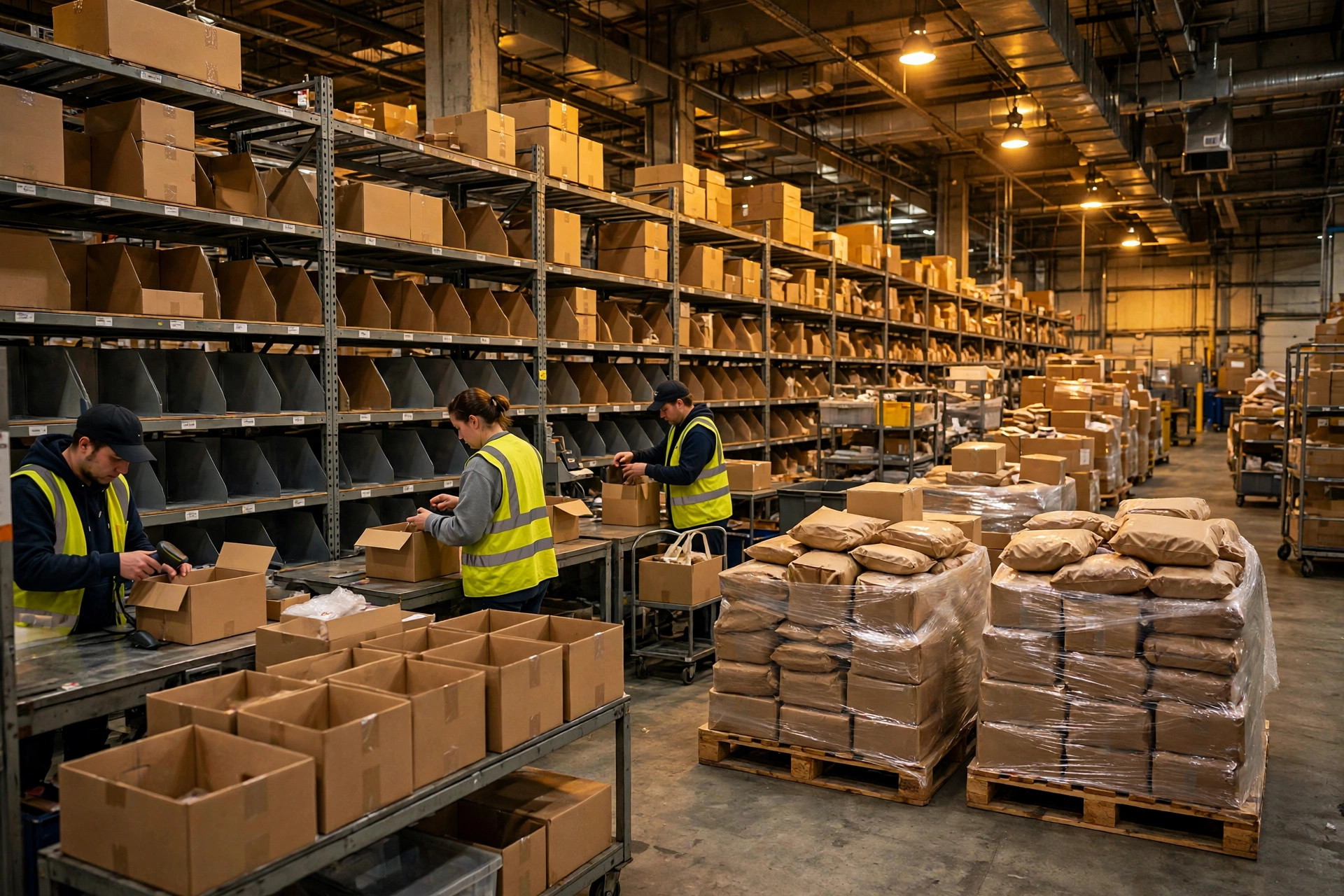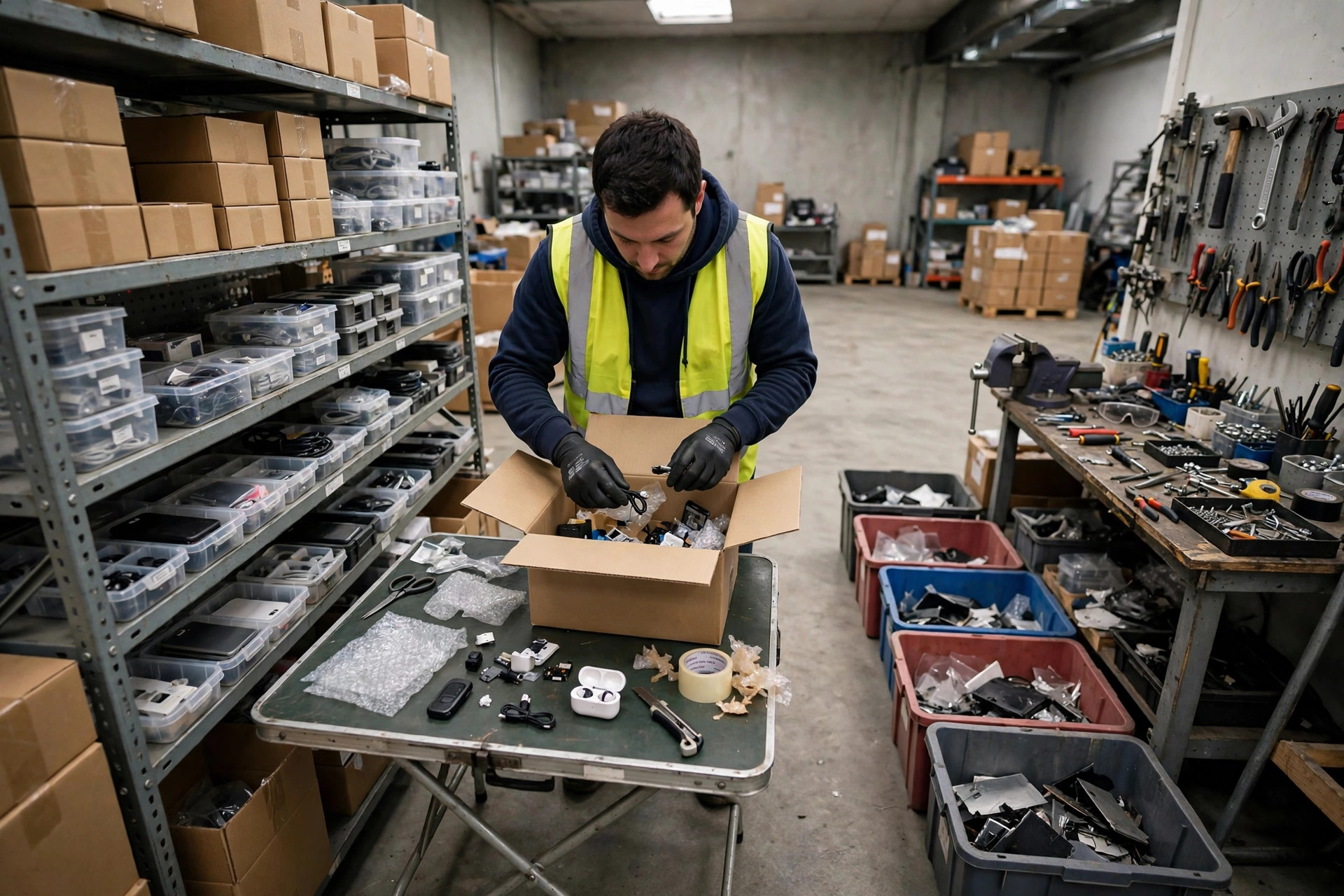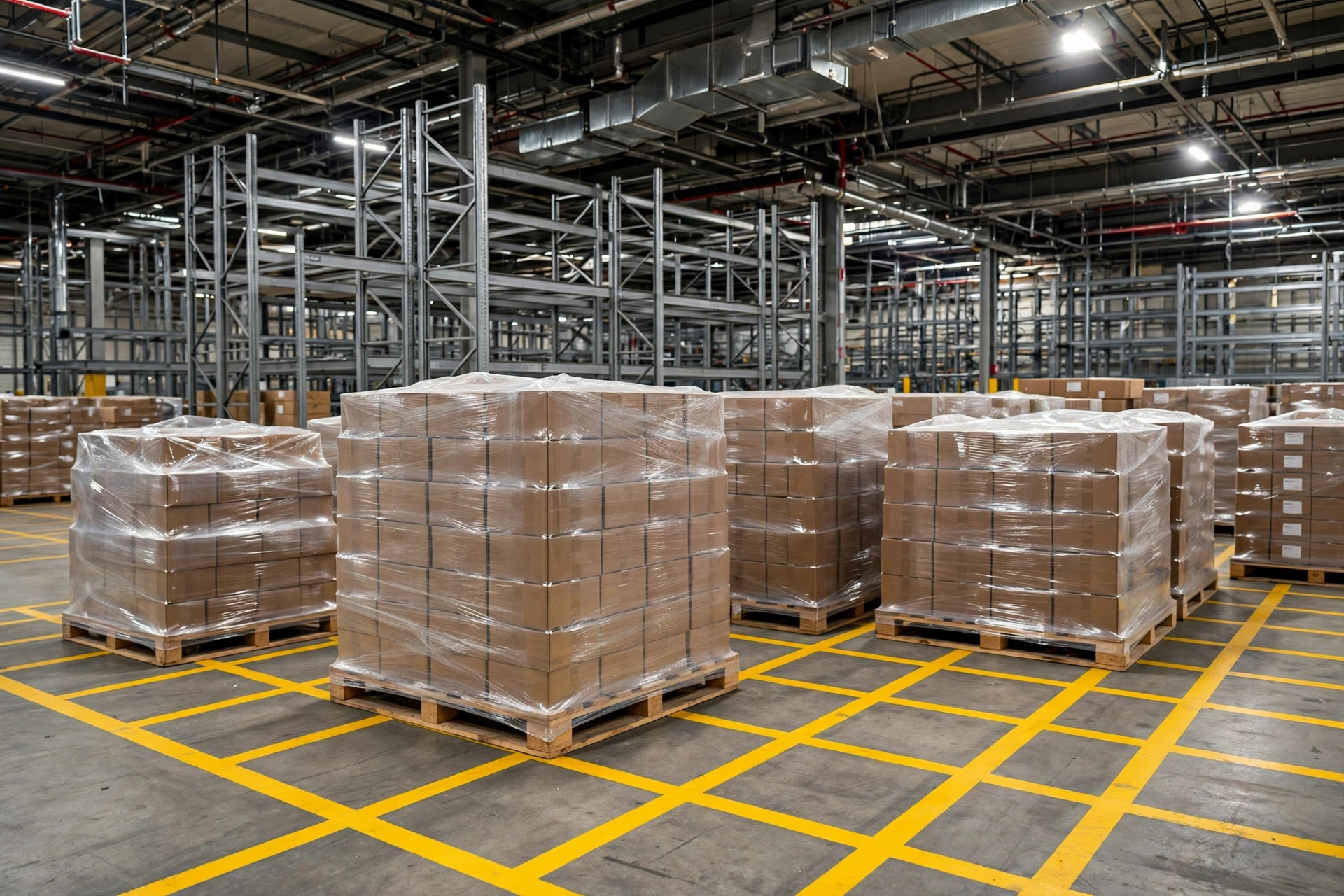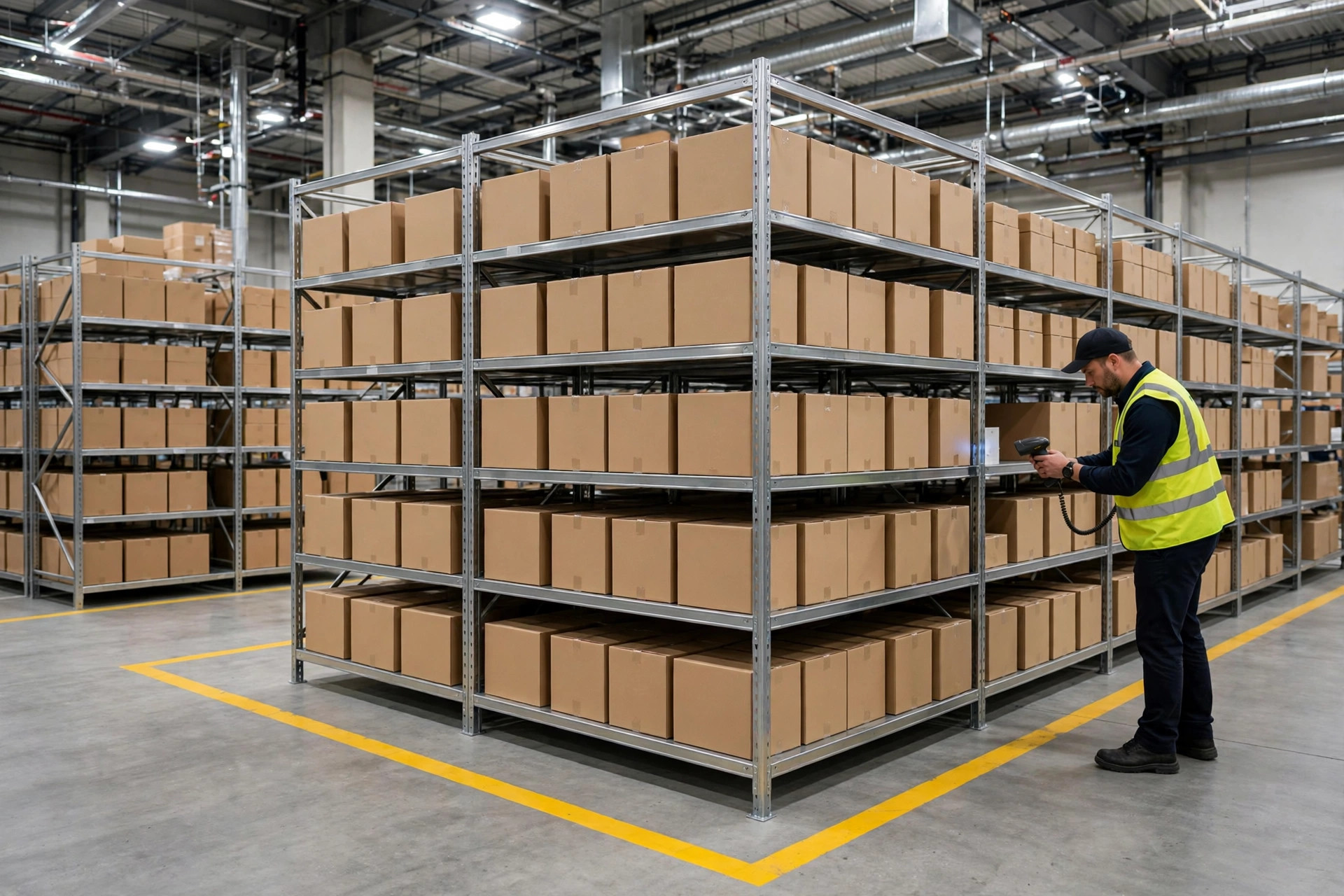
The Monday morning after the big holiday sale rush, I got to the warehouse before 7 a.m. Three pallets of unopened returns were already stacked by the returns door, and the forklift driver was shuttling more in, trip after trip. Let me be straight with you: in all my years running warehouses, I've watched more operations trip over returns than you'd believe — and it's never the volume that gets them. It's returns getting mixed in with forward stock. The fix is warehouse returns location coding: separate location codes for reverse inventory, fully split from forward stock. Today I'm laying out our hard lessons and exactly how we do it.
The Morning We Shipped a Return as New
It was an ordinary Wednesday when it blew up. Xiao Zhao, a picker with nearly two years under his belt, picked a dress from location A-03-12 and shipped it. By afternoon, customer service was on fire: the customer had received a returned item — tags gone, a stain on the cuff that wouldn't wash out.
The root cause was embarrassingly simple. The day before, someone from the returns team had "temporarily" staged a batch of uninspected returns next to A-03-12 — "just for one night, we'll move it first thing tomorrow." Zhao scanned the location barcode, the system said forward stock, the SKU matched, the item looked identical. What did he do wrong? Let me be straight: nothing. Not a thing.
That one shipment cost us return shipping both ways, reshipping a good unit, half a day of customer-service back-and-forth, plus a strike on our marketplace seller metrics. Tens of dollars straight down the drain. And that wasn't even the worst of it.
The worse one still stings. A veteran, Lao Wang, was training a rookie, Xiao Chen. Three days of shadowing, then Chen worked solo on day four — and put away a whole carton of uninspected returns directly into a forward-stock location. Month-end cycle count: system versus physical, off by more than forty units. Three of us spent two full days digging before we found that carton buried in forward pick locations in Zone B. Folks, once a return lands in a forward location, it goes invisible — the system says it's good, the picker believes it's good, and nobody can find it.
Three Homegrown Fixes, Two Flopped
After that, we tried three things.
First, tribal knowledge. The returns team wrote each day's staging spots on a whiteboard. During peak we were getting seven or eight hundred returns a day — three whiteboards filled with handwriting the size of ants. Nobody could read it. Dead in two weeks.
Second, colored dot stickers. Every return gets a red dot; forward stock gets none. Sounded clever. In practice? Stickers fall off, people forget to stick them when it's slammed, and worst of all — a picker racing the clock doesn't look at stickers. They look at SKU and location. That one lasted a month.
Third — the one we still use: separate location coding for returns. Returns get their own zone and their own codes. In the system, forward locations and returns locations are two completely unrelated code sets, and pick tasks simply never route to the returns zone.
Why did the first two flop? Because they tested human nature. Any fix that depends on people "remembering to look" or "remembering to stick" collapses the moment things get busy. The third one works because the system and the codes physically block the mistake — you couldn't mix them if you tried.
Warehouse Returns Location Coding, Our Way
Our current practice is three rules, non-negotiable.
First, physical separation. Returns get their own fenced-off area, at least one aisle away from the forward pick zone. Returns come in through receiving and go straight to the returns area — no "temporary staging" in forward zones. "Temporary" is just the next accident waiting to happen.
Second, independent codes for returns locations. Forward locations run "A-aisle-bay-level-slot"; returns locations always start with "R" — R for Return. In the WMS, R-prefixed locations are locked by default: excluded from wave allocation, invisible on pickers' handhelds. A return that passes inspection and is resellable gets a formal return-to-stock move from an R location to an A location, with a full system record.
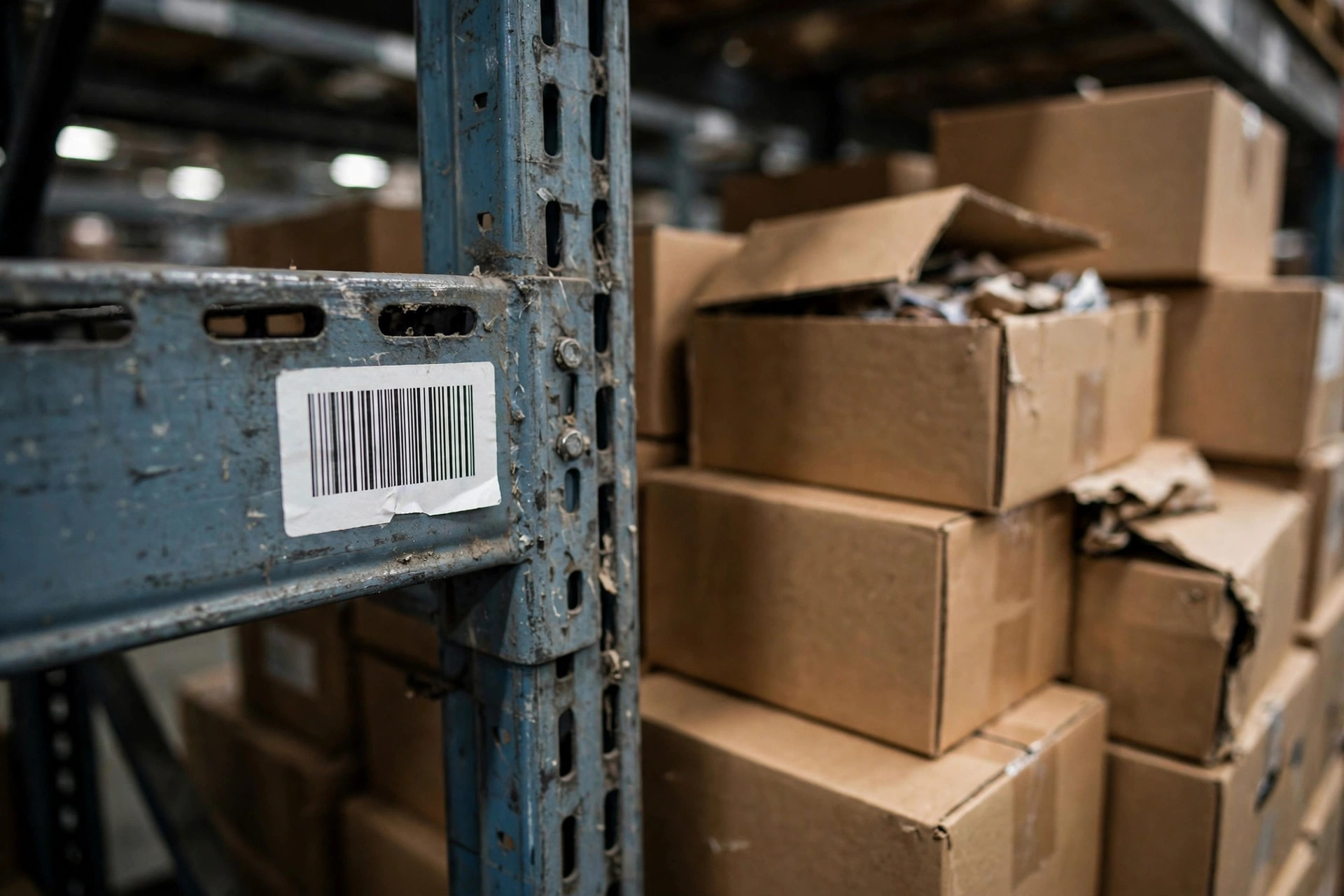
Third, barcode scan on every returns putaway. You scan the R-location barcode or the putaway doesn't complete. Don't underestimate this step — that scan is the system's last check on your behalf.
People ask what it costs. Let me run the numbers for you:
| Returns mixed in (no separate coding) | Returns coded separately | |
|---|---|---|
| One-time cost | Zero | A few hundred barcode labels plus half a day of labeling labor |
| Cost of one mis-shipped return | Two-way shipping, reship, CS time — tens of dollars minimum, plus possible marketplace penalties | This category of error: basically eliminated |
| Cycle counts | Returns hidden in forward stock; variances take a day or two to chase down | Pull the R-location list; variances jump right out |
| Training rookies | Constant "don't touch this, don't grab that" — and they still mess up | The code tells the story: R means don't pick |
The math isn't hard. The cost of three to five mis-shipped returns pays for relabeling the entire returns zone. Since we went to separate coding, mis-ships caused by returns mixing into forward stock: zero. Not down — zero.
On the fence? Ask yourself three questions. One: do your returns share SKUs with forward stock — same item, same barcode, indistinguishable at a glance? Two: do rookies or temps handle putaway during peak? Three: can your WMS lock an R-prefixed location out of allocation? Two or more yeses, and warehouse returns location coding isn't optional anymore — it's overdue.
One more people note, because this is where it usually breaks down. When I rolled this out, the pushback came from my own veterans: "We've always just known where the returns are." Sure — you know. But the temp we hired last Tuesday doesn't. Separate coding isn't about the people who've been here five years. It's about the person on their fourth day.
A Heads-Up: Code Your Returns Before Peak Season
Here's the counterintuitive part, and it may run against your gut: high-volume returns operations rarely have this problem. At that scale, management pays attention, and you get dedicated people and zones. The ones that get burned are the operations with "only" a few dozen returns a day. "We barely get any returns — is separate coding worth it?" Yes. Low volume means returns are invisible in your building, which means they get set down wherever there's space, right into the forward pile. Accidents don't care about your totals. They care about that one time.
One more thing: separate coding feels like extra work in the short term — a bit more space, one more scan. But think about it this way: you can always rent more space and print more labels. The customer trust you lose on a mis-shipped return? You can't buy that back. This is how we run it in our warehouse now — feel free to copy the homework, folks.
By Chen Feng, Warehouse Operations Manager