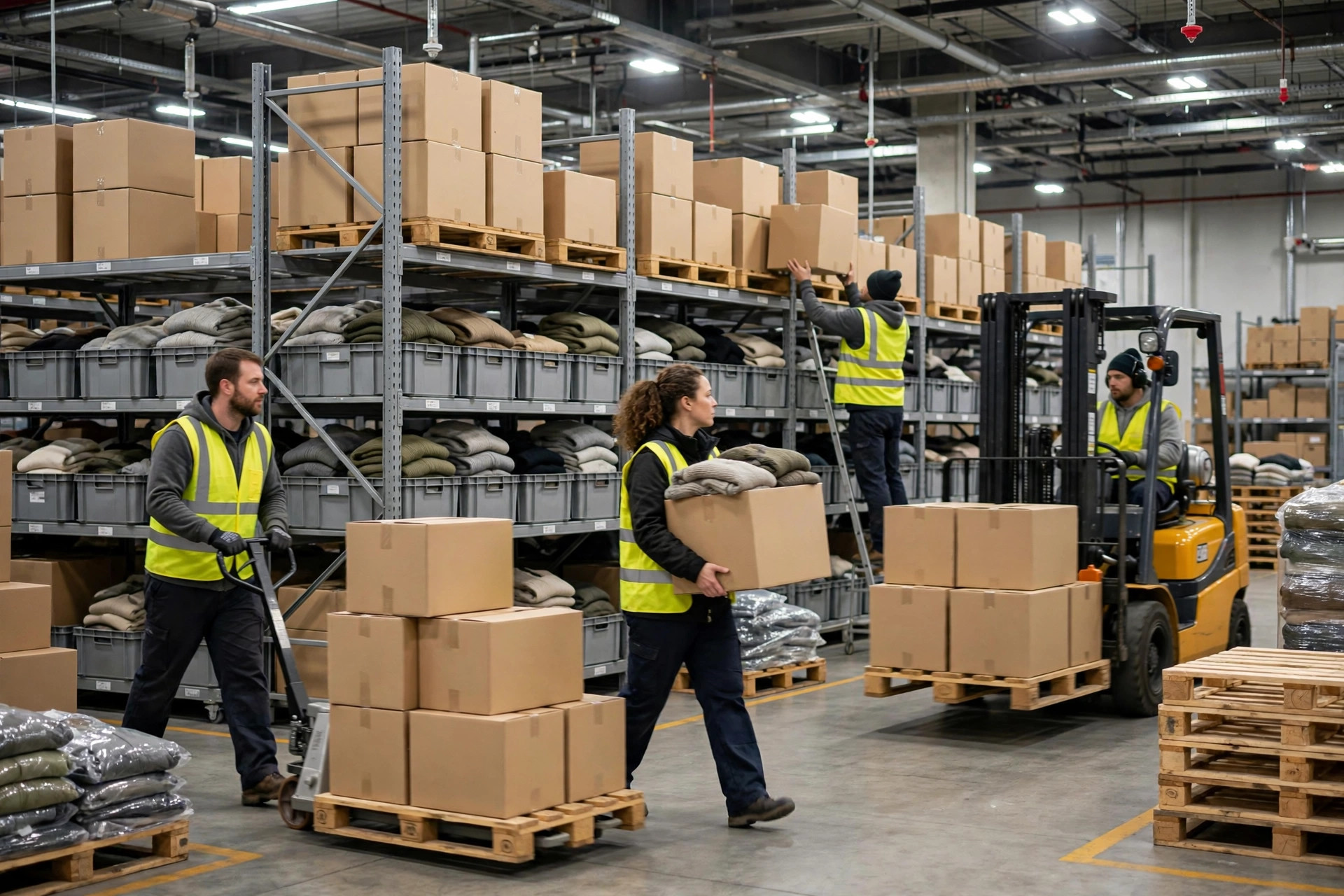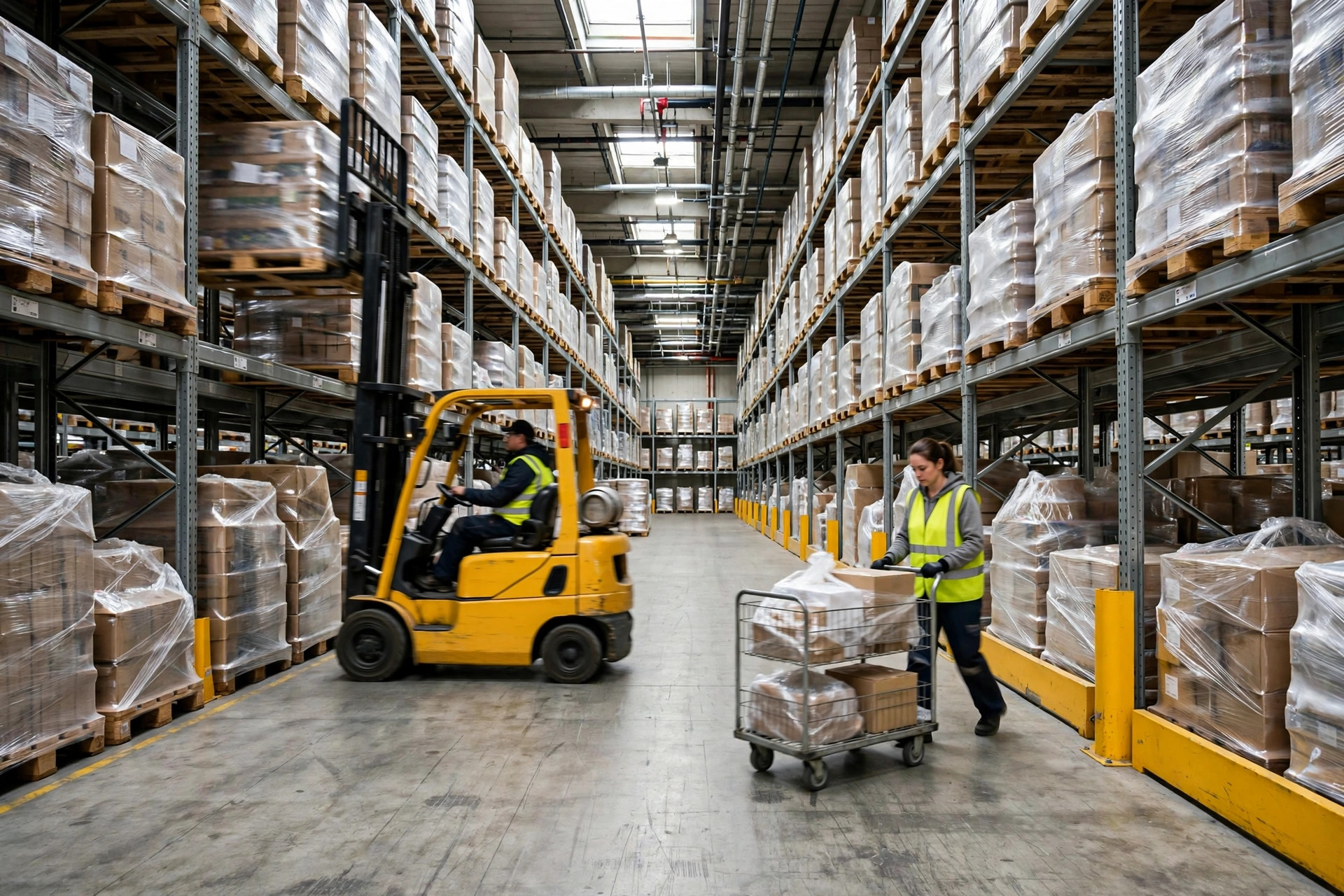
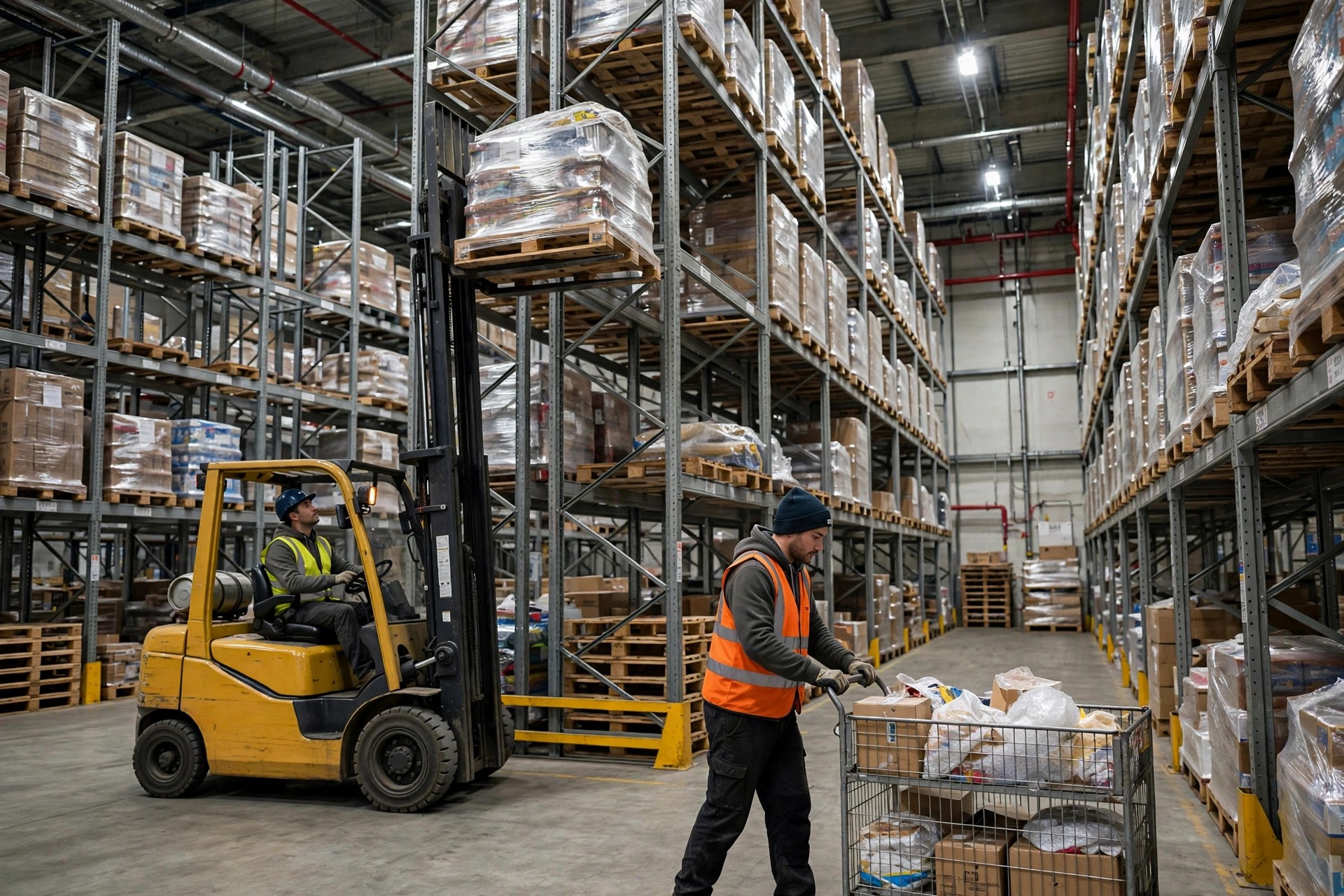
It's 3 PM, peak picking time. A forklift sits in the middle of the main aisle with a pallet raised, the driver waiting for a picker in front of the high-bay racking to move — and behind it, six pickers with carts, every face saying "my orders are about to miss cutoff." I know this scene too well. Almost every e-commerce warehouse has lived it.
When replenishment collides with picking, it looks like "a forklift blocking the aisle," but the root cause is that replenishment timing was never staggered against wave releases. Picking needs clear aisles and stocked locations; replenishment needs to get product into those locations. Two jobs fighting over the same aisle at the same hour — of course they collide.
Why 3 PM Is Always the Worst
Wave scheduling decides exactly when replenishment conflicts erupt. A typical wave plan looks like this: first wave at 10 AM, second at 1 PM, third at 3 PM to beat the carrier cutoff. Each wave releases and pickers flood the aisles.
Replenishment, meanwhile, is generated automatically by the WMS whenever a location drops below its replenish point — with no regard for the clock. So at 3 PM, right in the heaviest picking, the system keeps dispatching replenishment tasks into the main aisle. One forklift occupies a 3-meter-wide aisle, pickers with carts can't get through, and everyone waits. Five minutes of waiting and a whole wave's rhythm is broken.
In 2024 I measured this at a beauty e-commerce warehouse in Fontana: between 2 and 4 PM, replenishment forklifts occupied the main aisle an average of 22 minutes per hour. During those 22 minutes, picker throughput fell from about 90 units per hour to just over 70. With 40 pickers on the floor, that's 1,600 fewer units picked over two hours — and that day, 900 orders missed the UPS pickup and shipped a day late.
Three Ways to Stagger, Cheapest First
The cheapest fix: put replenishment on curfew. Configure one rule in the WMS — no replenishment tasks generated for main-aisle zones within 90 minutes of a wave release; tasks auto-defer. No new equipment needed, just a task-priority rule. The cost is delayed replenishment, but with sane safety stock levels, a 90-minute delay won't stock anyone out.
The mid-cost fix: a dedicated replenishment lane. During peak hours, split the main aisle with movable barriers — replenishment forklifts use one half, pickers the other. Off-peak, the barriers come down and the aisle goes back to full width. A few thousand dollars in barriers buys you zero conflicts at peak.
The expensive fix: automated replenishment. Swap narrow-aisle forklifts for automated guided vehicles, or feed full pallets to the pick zone front via conveyor. That's automation-level investment, suited to warehouses doing 30,000-plus orders a day. Smaller operations should stay away — the payback period will make you question your life choices.
Before Buying Anything, Get the Data
Before touching anything, log one week of data. Three numbers are enough:
Conflict windows. Have the shift lead note every "forklift blocking the aisle" incident, to the half hour. After a week, the conflict peaks reveal themselves.
Blocked minutes. How long each incident lasts, totaled per day. That number maps directly to lost picking capacity.
Stockouts caused by deferral. Did any location actually run dry because replenishment was delayed, sending pickers on empty trips? If a full week shows zero, your safety stock comfortably supports a 90-minute replenishment curfew — go configure the rule with confidence.
With those three numbers in hand, pick your fix. Many warehouses discover after logging that the problem was never equipment — it was scheduling. Shift the replenishment shift one hour earlier, cut conflicts in half, spend nothing.
What That WMS Rule Actually Looks Like
A "replenishment curfew" sounds like a management slogan, but inside the WMS it's just a task-scheduling rule. Most major WMS task engines support priority by task type, zone, and time window, and the configuration logic is similar everywhere:
Set picking tasks to top priority, replenishment to second, then add a time condition: for 90 minutes after each wave release, replenishment tasks in main-aisle pick zones auto-downgrade to "deferrable" and the task engine schedules them after the 90 minutes expire. Emergency replenishment (location already empty, picker waiting) takes an exception path exempt from the curfew — that exception is mandatory, or the curfew turns from optimization into incident.
One option many people overlook: shift the whole replenishment shift earlier. On a two-shift operation, start the early shift one hour early dedicated to replenishment; or define "replenishment windows" — say 6 to 8 AM and 8 to 10 PM daily — when picking continues but no waves release, and replenishment trucks close the day's gaps in those windows. This works especially well for mid-size warehouses under 5,000 orders a day: no system changes, just a revised shift roster.
One More Option: Move Replenishment to Nights
If your warehouse runs 24 hours, there's a more thorough option: move most replenishment to the night shift. No picking waves at night, empty aisles, forklifts running free — replenishment productivity more than doubles versus daytime.
The trade-off is labor: night differentials run 10% to 15% above day rates in California. The math is direct: does the extra night-shift wage bill beat the daytime picking capacity you're losing? For warehouses above 10,000 orders a day, it usually pencils out; under 3,000 a day, night labor may not pay for itself — stick with the curfew rule.
That Fontana beauty warehouse ended up with the combo: a 90-minute curfew rule in the WMS, the replenishment shift moved one hour earlier, plus morning and evening replenishment windows. Three months later, re-measurement showed peak-hour aisle blockage down from 22 minutes per hour to 6, and picker throughput back around 90 units. Money spent? Zero. What changed? A roster and one system rule.
So next time a forklift is parked across the aisle, don't yell at the driver first. Ask instead: why did this replenishment task appear at exactly this time? The answer is rarely on the forklift — it's in your wave plan.