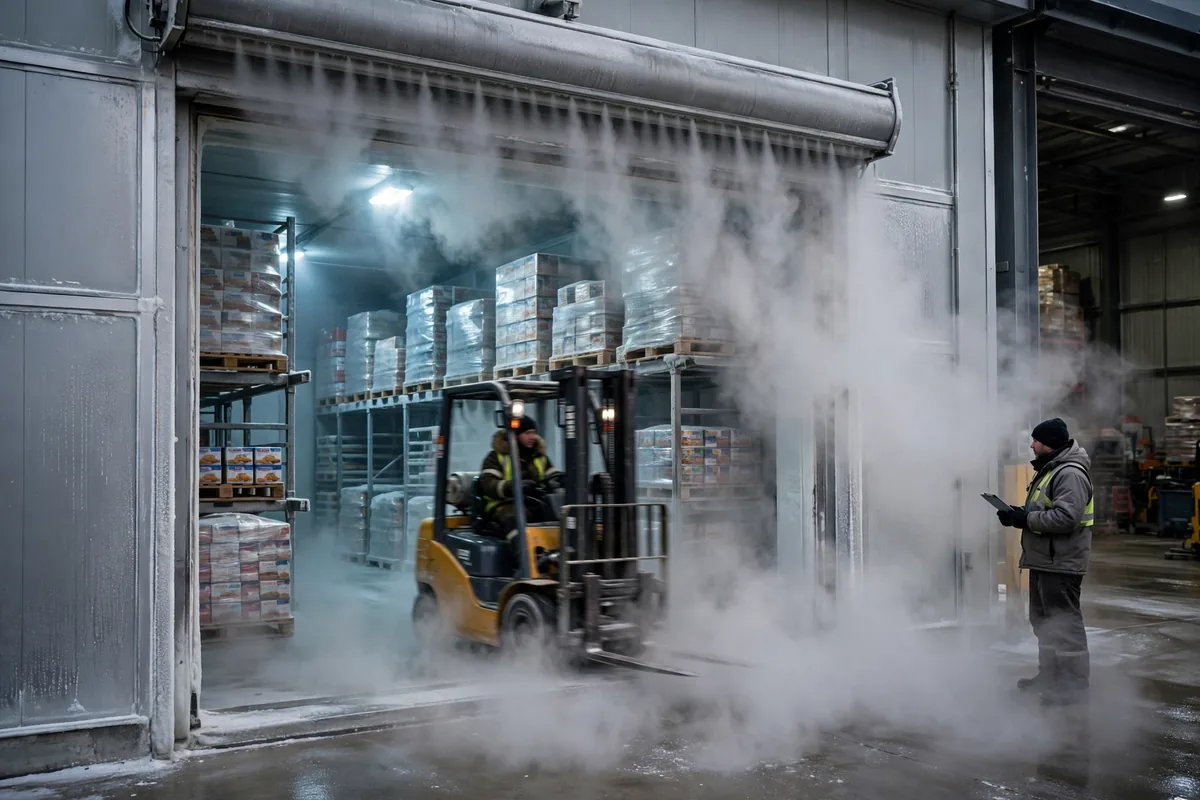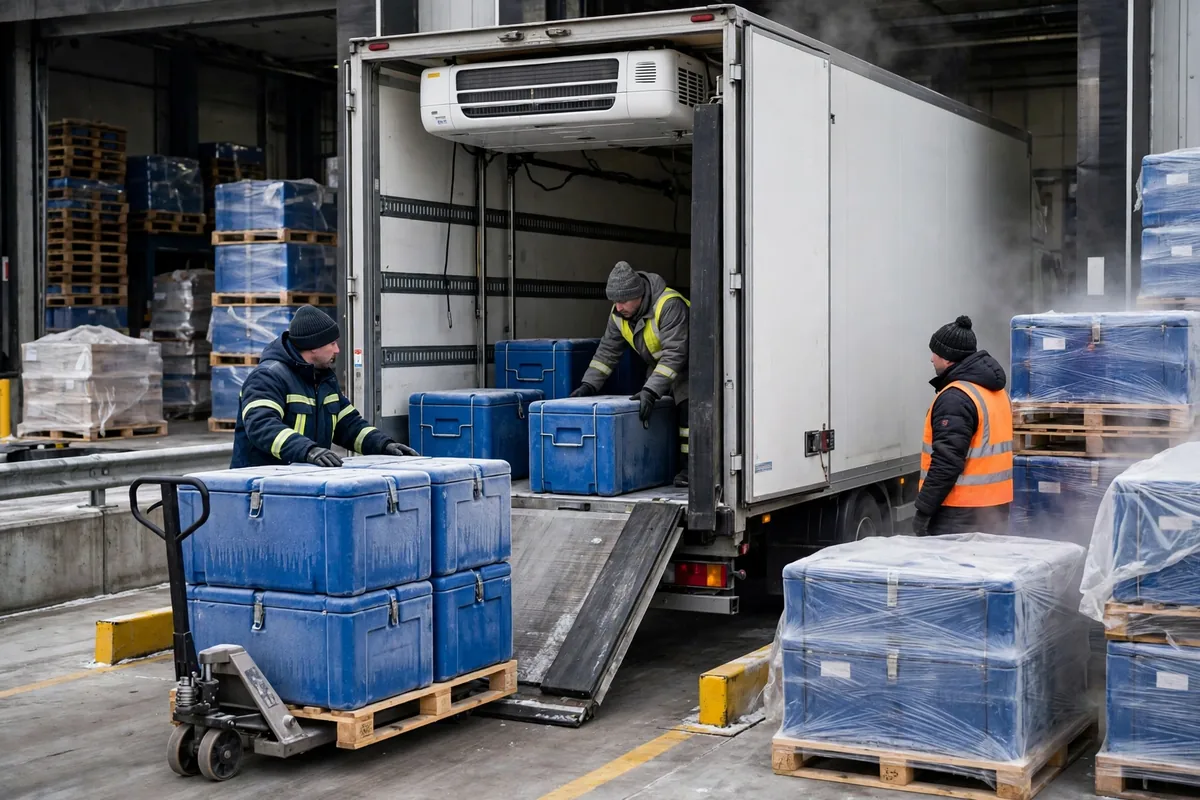
Let me start with the money. In July 2025, a fresh-food warehouse in eastern China received a refrigerated truck loaded with frozen seafood, worth roughly 400,000 yuan at market prices that day. The truck waited 40 minutes at the dock door before it could back in. The dock door seal was worn, and every time the door cycled, warm air poured in. The cargo temperature climbed from minus 18 degrees Celsius to minus 9. When the customer inspected the load, spot temperature checks failed, and the entire truck was rejected. The goods were sold off at a discount, the warehouse paid out about 120,000 yuan, the driver ran an empty return leg, and the warehouse burned a full shift of labor on the mess. I have run that math several times since. The most expensive part of the trip was not the 300 kilometers on the road. It was the 40 minutes at the dock door.
A refrigerated truck dock handoff looks like the driver's problem, or the refrigeration unit's problem. After years of cost analysis, my view is the opposite: the cold chain is most fragile exactly where it changes hands. The truck is sealed on the road. The warehouse is temperature-controlled inside. Only at the dock door, for a few minutes, does the freight sit in the gap between two temperature-controlled systems. The gap is small. The loss is not.
What One Break in a Refrigerated Truck Dock Handoff Actually Costs
Most warehouses budget for freight and electricity, but the cost of a broken cold chain never makes it into the budget. Here is the breakdown of that rejected load, using the warehouse's own internal accounting:
| Cost item | Amount | Note |
|---|---|---|
| Discounted goods | About 80,000 yuan | Thawed seafood sold off at a discount |
| Customer claim | About 30,000 yuan | Paid under the contract terms |
| Rework and labor | About 10,000 yuan | Unloading, re-inspection, re-sorting |
| Total | About 120,000 yuan | Excludes reputational damage |
What does 120,000 yuan mean in context? A full set of replacement dock door seals for that warehouse costs a few thousand yuan. Running a proper dock pre-cooling routine costs a few thousand yuan a month in labor. One break cost enough to cover seals and pre-cooling for years. That is money spent for nothing — money that never had to be spent.
There is also a hidden line the table cannot show: after one rejection, the customer starts asking harder questions about your dock temperature control before the next shipment. Trust lost that way is difficult to price. In my experience, warehouses that lose a customer over a single cold chain break are not rare.
Three Details That Get Missed at the Dock Door
A refrigerated truck dock handoff usually fails on details, not on missing equipment. From the warehouses I have looked at, three details get missed most often.
The first is pre-cooling. Before the truck arrives, the dock work area should already be cooled close to the cargo temperature, and the buffer zone by the door should be closed and cooled too. Many warehouses start cooling only after the truck shows up, which means the freight is already waiting at the door while the dock area is still warm. The right order is to pre-cool about half an hour ahead of the scheduled arrival and only let the truck back in once the temperature is there. Reverse the order and you hand the freight the hottest half hour of the day.
The second is the seal. Dock door seals, dock shelters, and the gap between the trailer and the dock are where warm air loves to get in. In early 2025, a pharmaceutical cold chain warehouse in northern China had the same problem: an aging seal had cracked, and at midday in summer the temperature loggers showed the dock area running several degrees warmer than the storage zone. Their fix was plain but effective: inspect the seals every month and replace them when they crack, keep the dock shelter tight against the trailer, and open the door only as wide as a forklift needs. All of that together costs very little per year, and the temperature curves steadied noticeably.
The third is time. A refrigerated truck dock handoff is, at its core, a race against the clock. My rule of thumb: from the moment the trailer door opens to the first pallet entering the building, under 10 minutes is a passing grade. Past 20 minutes, the temperature curve is usually lost. So the schedule has to be worked out in advance: forklift, people, and storage slot all in place before the door opens. Never open the door and then wait for people. Ten minutes of discipline is worth more than an extra refrigeration unit.
Check the List Before the Refrigerated Truck Arrives
Half the work of a refrigerated truck dock handoff happens before the truck gets there. I recommend every warehouse keep a short pre-arrival checklist — six items, no more — and not let a truck back in until every box is ticked: arrival time confirmed, dock pre-cooling temperature reached, seals in good condition, forklift and crew in place, storage slot cleared, temperature logger battery normal.
In May 2025, a frozen-food warehouse in southern China used exactly this list to dodge a loss. A refrigerated truck arrived two hours early, and the driver wanted to back in and unload right away. The shift lead ran down the list: pre-cooling not done, storage slot not cleared. He had the truck wait in the holding area until both were ready, about 25 minutes extra, and the temperature record for the whole load stayed inside limits. The driver thought it was a hassle at the time. The goods passed inspection on the first try, and the customer later called specifically to say so. Twenty-five extra minutes of process bought the safety of an entire truckload. That is time well spent, by any accounting.
The list has a second benefit: when something does go wrong, you can trace it. A temperature excursion, and the list tells you which step was missed — pre-cooling skipped, a seal leaking, or too long waiting on people. Without the list, the review depends on memory, and memory is the least reliable evidence there is.
Cheap to Fix, Expensive to Keep Doing
At this point someone usually asks whether it is time for automated temperature-controlled doors or smart dock scheduling. My answer is to go in two steps. First, run the return-on-investment math: seals, a pre-cooling routine, and door discipline cost almost nothing and solve most of the handoff problem. Get those three right, hold a clean temperature record for three straight months, and then talk about equipment upgrades. Do it the other way around — new equipment on top of a sloppy process — and you have put an expensive lid on a leaking bucket.
Here is a counterintuitive observation: the warehouses with the best dock temperature control are usually not the ones with the most expensive equipment. They are the ones with the strictest handoff routine. The dock crew that checks the temperature logger and confirms pre-cooling before opening the door is the crew that rarely has a problem. Equipment is fixed. Process is alive. Spend the money on the process.
I will close with a number you can calculate yourself. Add up your warehouse's cold chain break losses over the past year and divide by twelve to get the average monthly loss. Then price a month of dock seals plus pre-cooling labor. In my experience, if the monthly loss is more than three times the monthly prevention cost, the investment needs no further debate. The fresh-food warehouse from the start of this story ran that calculation, replaced every seal in the building the following month, and wrote pre-cooling into the shift roster. Three months later, their temperature excursion record was zero. That was the best money they spent on the cold chain all year.
By Lao Zhou, Logistics Cost Analyst