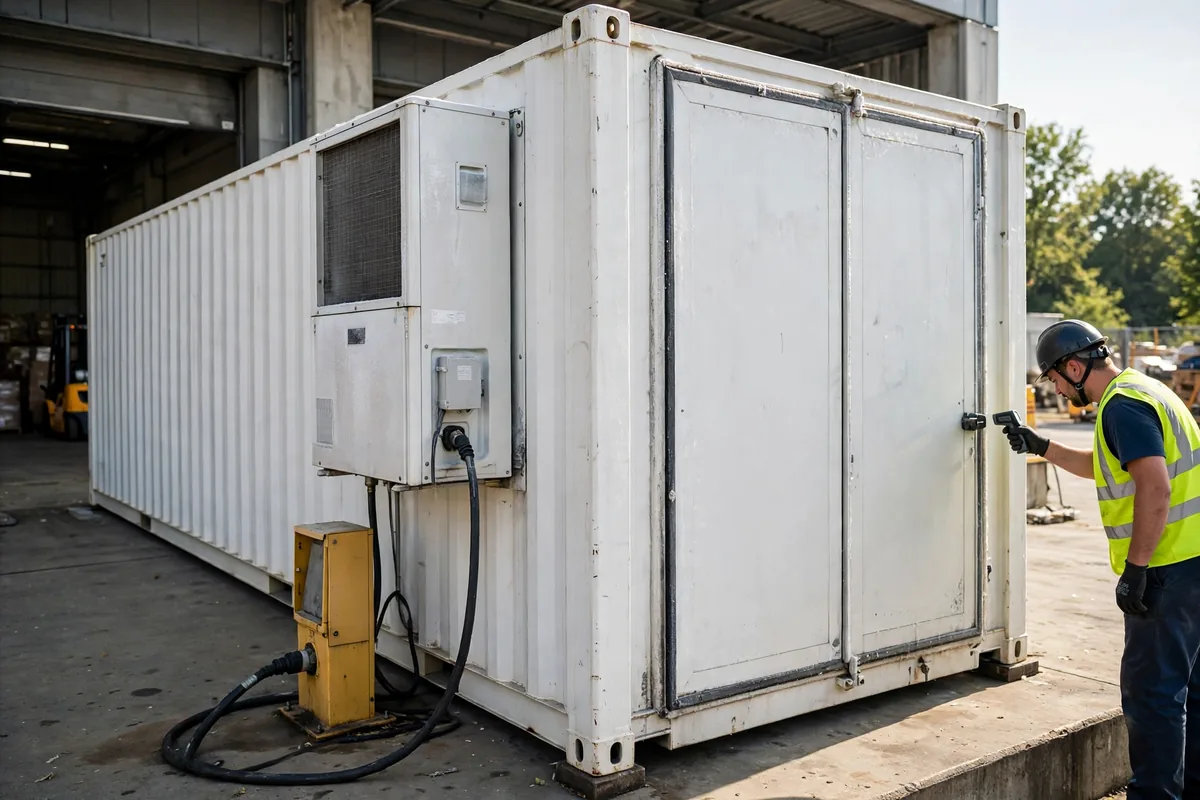
It was 5:40 on a July morning, and I had barely walked into the warehouse when dispatch called. The reefer was at the dock, the driver was waiting, and he wanted to know if we could load right away. Let me tell you, that morning was brutally hot — by 6 a.m. the dock apron was already over 30 degrees. I walked to the box with my temperature gun and took a reading: 12 degrees inside. The reefer container precooling warehouse cold chain step had been skipped, and this load was chilled fresh product with a setpoint of 2 degrees. The driver shrugged and said, plug it in, it'll cool down on the road — as if reefer container pre-cooling could happen while the truck was already rolling. To be honest, I've heard that line at least ten times, and every time it makes my skin crawl. Loading cargo into a box that isn't cold yet is like putting fresh product into a hot metal oven. The freight warms itself up from the inside, and the refrigeration unit can't chase it back down. That is the price of skipping the reefer container precooling warehouse cold chain step — invisible on the day, and fully visible three days later at the destination port.
What Reefer Pre-Cooling Actually Protects
A lot of people think a reefer unit is powerful enough to pull the temperature down after loading. That's a misunderstanding. The unit is designed to hold temperature, not to drag it down fast. A 40-foot reefer — the steel, the floor, the lining — soaks up a whole summer day of heat, and pulling an empty box from 30 degrees down to 2 takes real time. Once the cargo goes in, it gets worse: chilled product carries its own heat, and in the tightly packed spots the cold air can't even reach. Pre-cooling, the reefer container precooling warehouse cold chain step, exists for exactly this reason — cool the box first, then let the cargo move into a box that is already cold. That is the whole point of reefer container pre-cooling: the box is cold before the cargo ever touches it.
Two summers ago, a cold chain warehouse next to ours learned this the hard way. A container of chilled poultry was loaded before the box reached setpoint. The driver was rushing for the vessel cut-off, and nobody in the warehouse held the line. At the destination port, inspectors found the product temperature out of range, and the whole container was downgraded. The manager there told me later that the money they lost would have paid for three years of pre-cooling electricity. To be honest, anyone can do that math. But on the dock, under time pressure, people always think this time will be different.
Check the Temperature First: Three Minutes That Save a Container
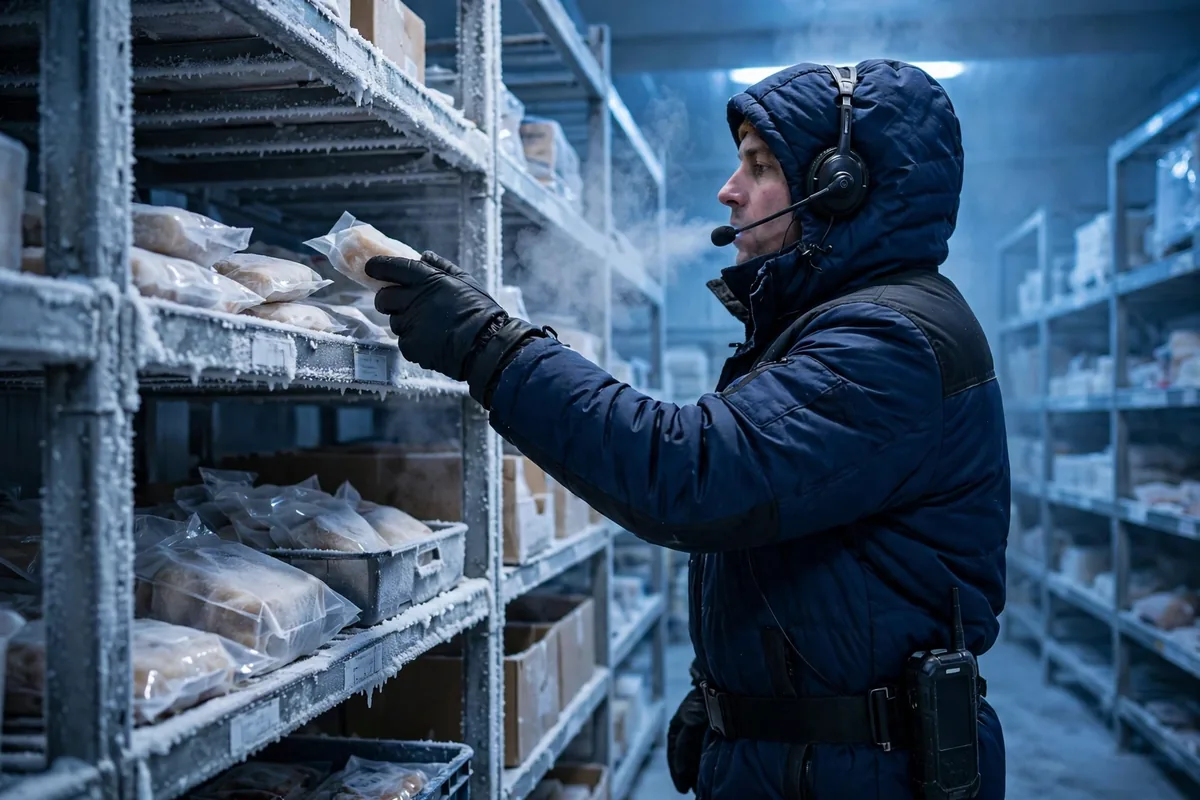
Here's what we do in our warehouse now. The box arrives, we check the temperature, then we talk about loading. I take readings at three points with the gun: the return air vent, the middle of the box, and the door. All three have to hit setpoint before we load. One point out of range, we wait. We photograph the readings with a timestamp and drop them in the shift handover group. The whole routine takes three minutes, but it turns "the box is cold enough" from a verbal promise into a written record.
Last summer we had a box sitting at 9 degrees against a 2-degree setpoint, and the driver was pushing hard, saying it would cool down on the road. We waited two hours until the box hit 2 degrees, then loaded. That same week, another warehouse didn't wait, and their freight arrived out of spec. Here's the thing: the driver pushing is his job. Checking the temperature is ours. Don't trade jobs with each other. "No loading until temperature is met" — that line goes on the handover sheet in writing, so nobody on the floor has to argue about it in the moment.
Plug-In Bays: The Power Has the Final Say
Pre-cooling isn't just plugging in and walking away. The dock has only so many plug-in points, and in summer every one of them has a box waiting. First come, first served is fine. The real question is whether the power holds up. A 40-foot reefer at full run can draw anywhere from a few kilowatts to well over ten, depending on the model — check the nameplate, because two units from the same batch can differ by a factor of two. Not enough plug points, you queue. Queuing means scheduling. And if you can't schedule it, pre-cooling becomes a nice idea that never happens.
What we do now: the plug-in bays are painted on the ground, one truck per bay, numbered plug heads. The shift lead checks the vessel schedule and the arrival plan ahead of time and reserves bays. When more than four boxes are pre-cooling at once, the electrician checks the total load first, and we stagger if we're over. Bays need airflow too — don't back a box tight against a wall, or the condenser can't shed heat and the cooling efficiency drops straight away. And one detail people forget: drainage. Condensation water pooling on the dock means a forklift sliding through it. None of this is high tech. It's just not cutting corners.
When Pre-Cooling Falls Short, Who Pays
This is where the arguments start. Product temperature goes out of range, the cargo owner blames the warehouse for skipping pre-cooling, the warehouse blames the driver for rushing, the driver blames the vessel schedule. Who pays in the end? Whoever has the evidence. Our rule now: the temperature check sheet gets three signatures — driver, warehouse operator, and the booking clerk, one copy each. If the temperature isn't met, no loading, and the reason and the waiting time go on the sheet. Photos and timestamps stay on file. And the contract should say plainly who owns pre-cooling — whoever asks to skip it signs for it and carries the risk. No signature, no skipping.
Here's the counterintuitive part: a warehouse waiting two extra hours looks like it's missing the vessel. In reality it's saving the cargo owner money. A rejected container, a downgraded load, a claims fight that eats a week of staff time — every one of those costs more than two hours of electricity. The cost of pre-cooling is a few kilowatt-hours you can see on the meter. The cost of a spoiled load is a whole container you can't see coming. If the people on the floor don't do that math, the reefer container precooling warehouse cold chain step will always look like a step you can skip.
The Summer Time Budget: How Long to Allow
So how long does summer pre-cooling actually take? The table below is our warehouse's working reference, built from our own measurements. Treat it as a scenario guide — verify against your own readings:
| Box temperature at arrival | Target | Time to allow | Notes |
|---|---|---|---|
| Above 25°C | 2°C | 3–4 hours | A box baked in midday sun — use the upper end |
| 12–25°C | 2°C | 1.5–2 hours | The usual case; most boxes land here |
| 5–12°C | 2°C | About 1 hour | Box just unloaded, hasn't heated up yet |
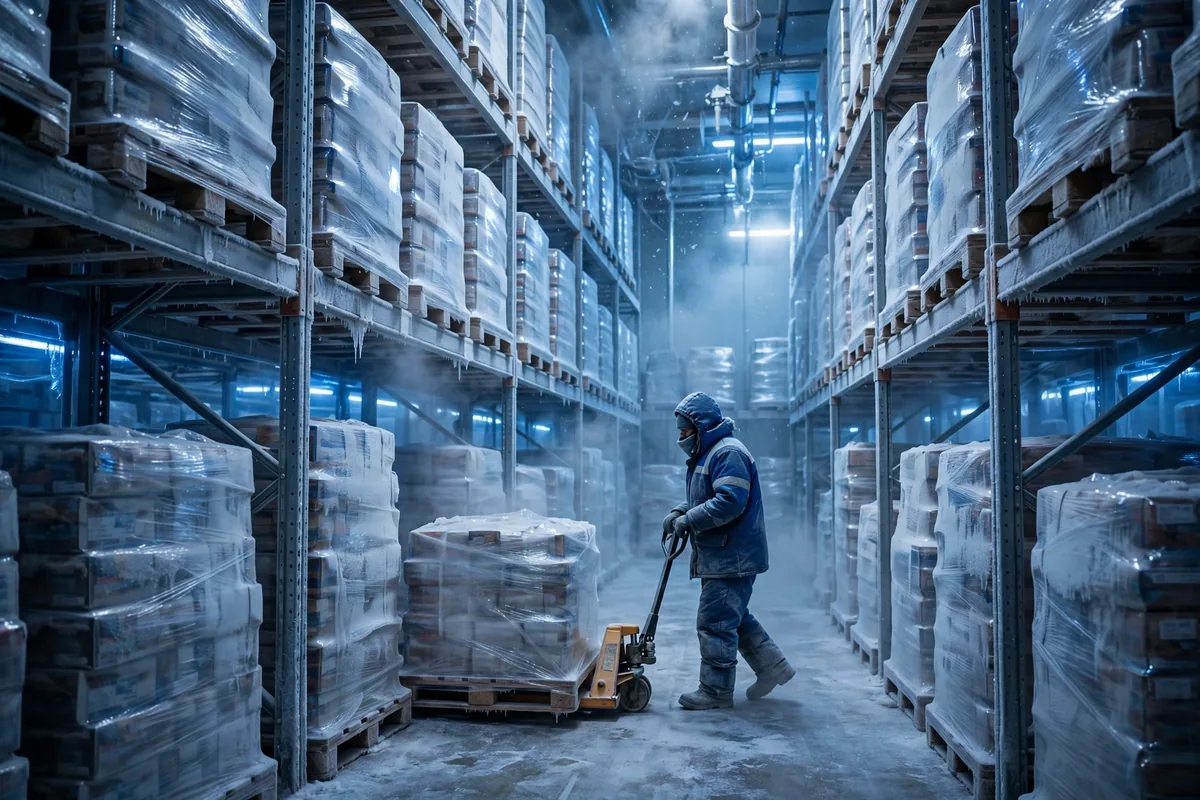
| −18°C (frozen) | −18°C | 4 hours or more | Frozen boxes pull down slowly; allow extra |
Two things to watch in this table. First, the starting temperature matters more than people think: a box that sat in the sun all morning can be hotter inside than the air outside, so measure before you schedule, don't guess. Second, nights and shade save time — but don't spend the savings. Keep half an hour of slack. A late driver, a queued plug point, any surprise will eat that half hour.
Brothers, there is no shortcut here. Reefer container pre-cooling is the cheapest insurance in the cold chain — a few hours of electricity against a whole container of cargo. Next time a reefer shows up at your dock, check the temperature before you talk about loading, plug it in before you schedule the load. A cold box keeps cargo cold, and cargo that stays cold arrives safe. I've said this to every new hire in our warehouse more times than I can count, and I'll say it to my fellow operators too: three minutes to check, two hours to wait, and you buy a container arriving safely at port. That's a trade worth making.
By Chen Feng, Warehouse Operations Manager