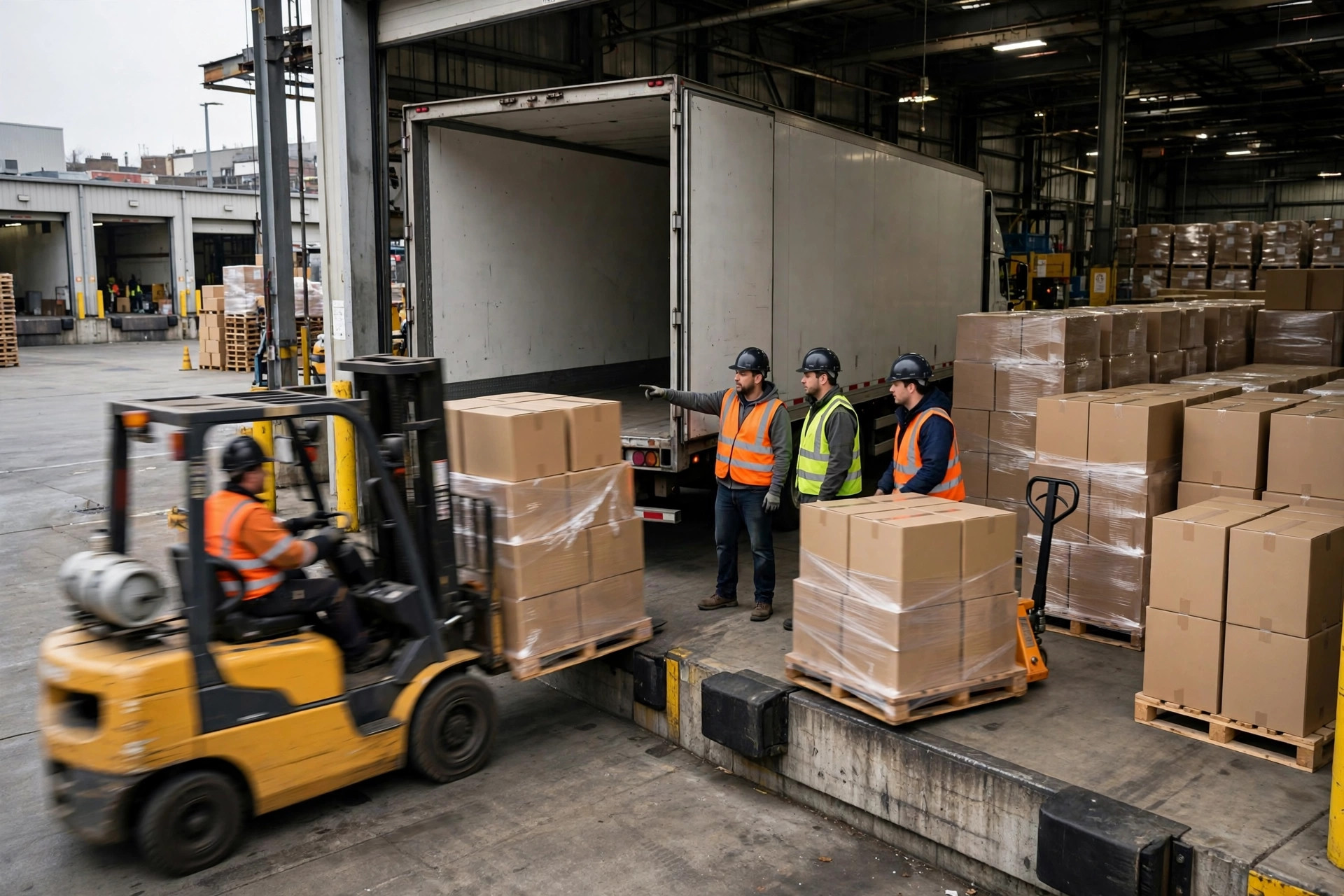
Last month I sat in on a morning meeting at an e-commerce warehouse in Fontana, and watched the receiving supervisor and the putaway lead nearly come to blows. Receiving said: we unloaded 40 pallets an hour, everything staged nice and neat, putaway is just slow. Putaway said: the aisles are blocked solid with pallets, the forklifts literally can't get through — we're slow because you stage wherever you feel like it. I sit through some version of this meeting three times a year. Both sides always have a point. It never gets resolved. Because the root cause is never the people. It's the flow.
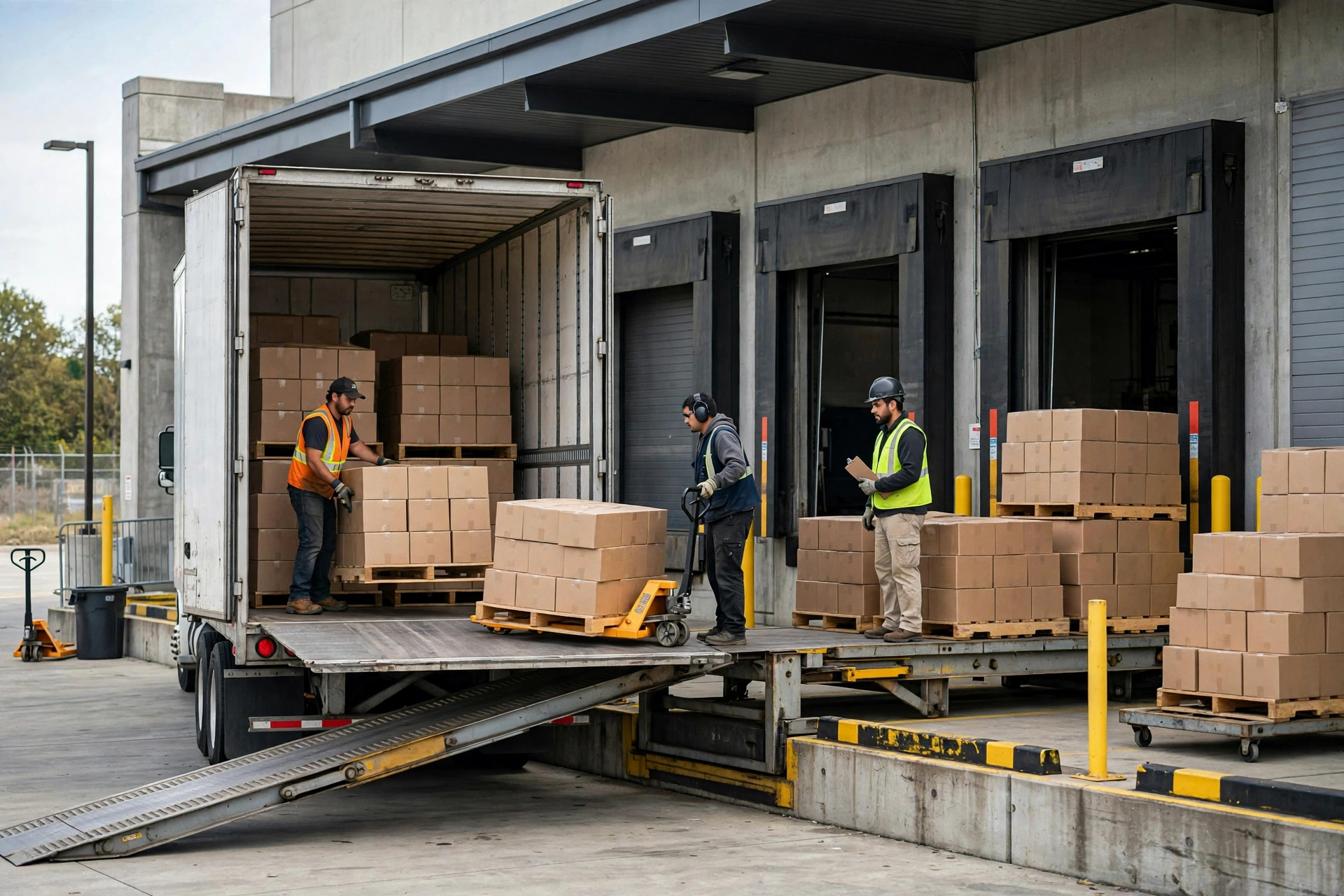
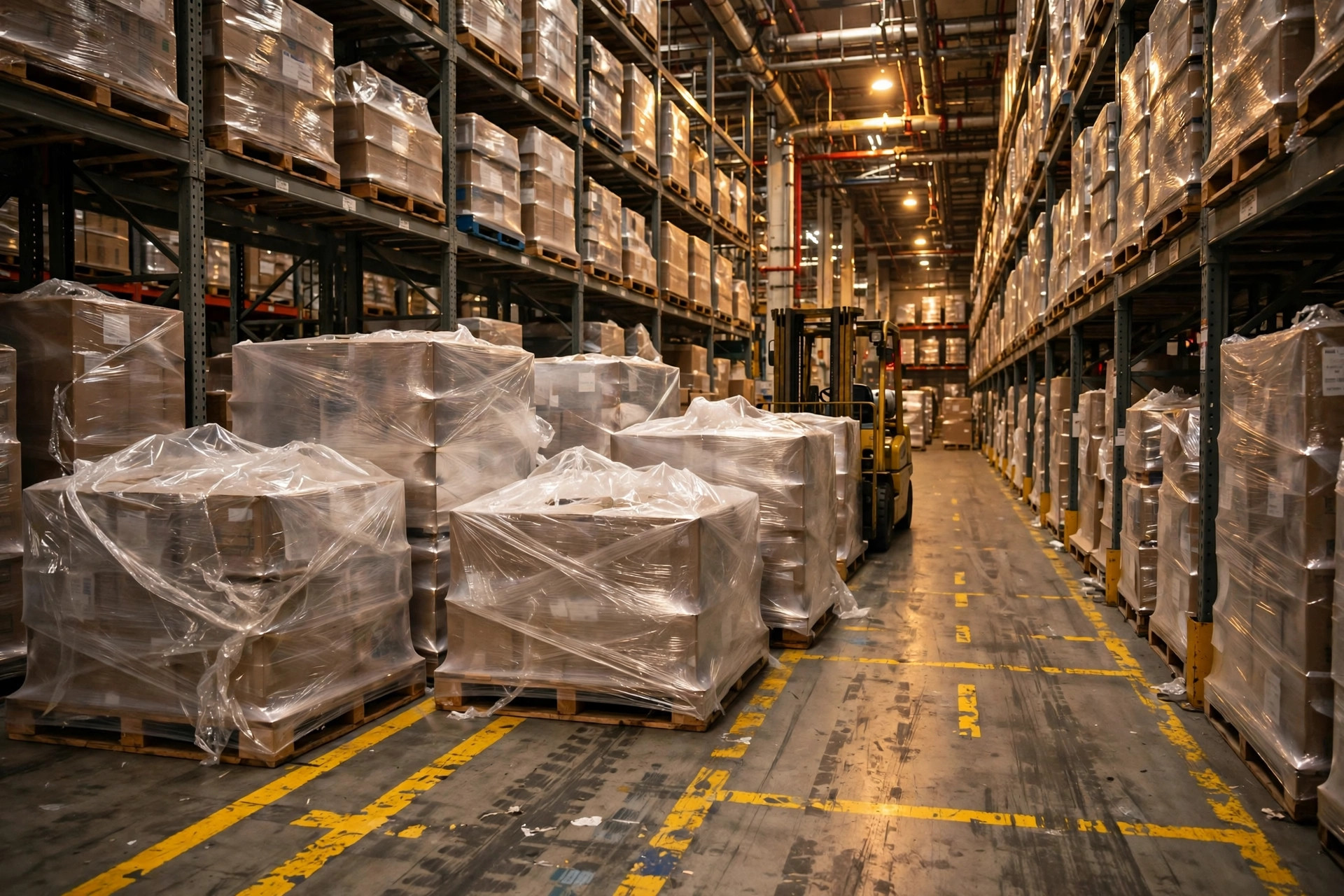
These two crews are set up to fight each other from day one. Receiving is measured on unload speed — trucks are queued at the dock, detention runs $75 to $100 an hour per trailer, and everybody wants that door turned fast. Putaway is measured on pallets put away per hour, which means drivers want clear aisles, sensible slot assignments, and short travel. So receiving drops pallets on the nearest patch of open floor, and putaway drivers spend their shift weaving a forklift through a pallet maze. The more congested it gets, the slower putaway runs; the slower putaway runs, the more pallets pile up. Eventually both sides hate each other, management decides it's a people problem, and they swap supervisors, dock bonuses, and hold motivational meetings. All of it wasted.
Staging Space Is Math, Not Gut Feel
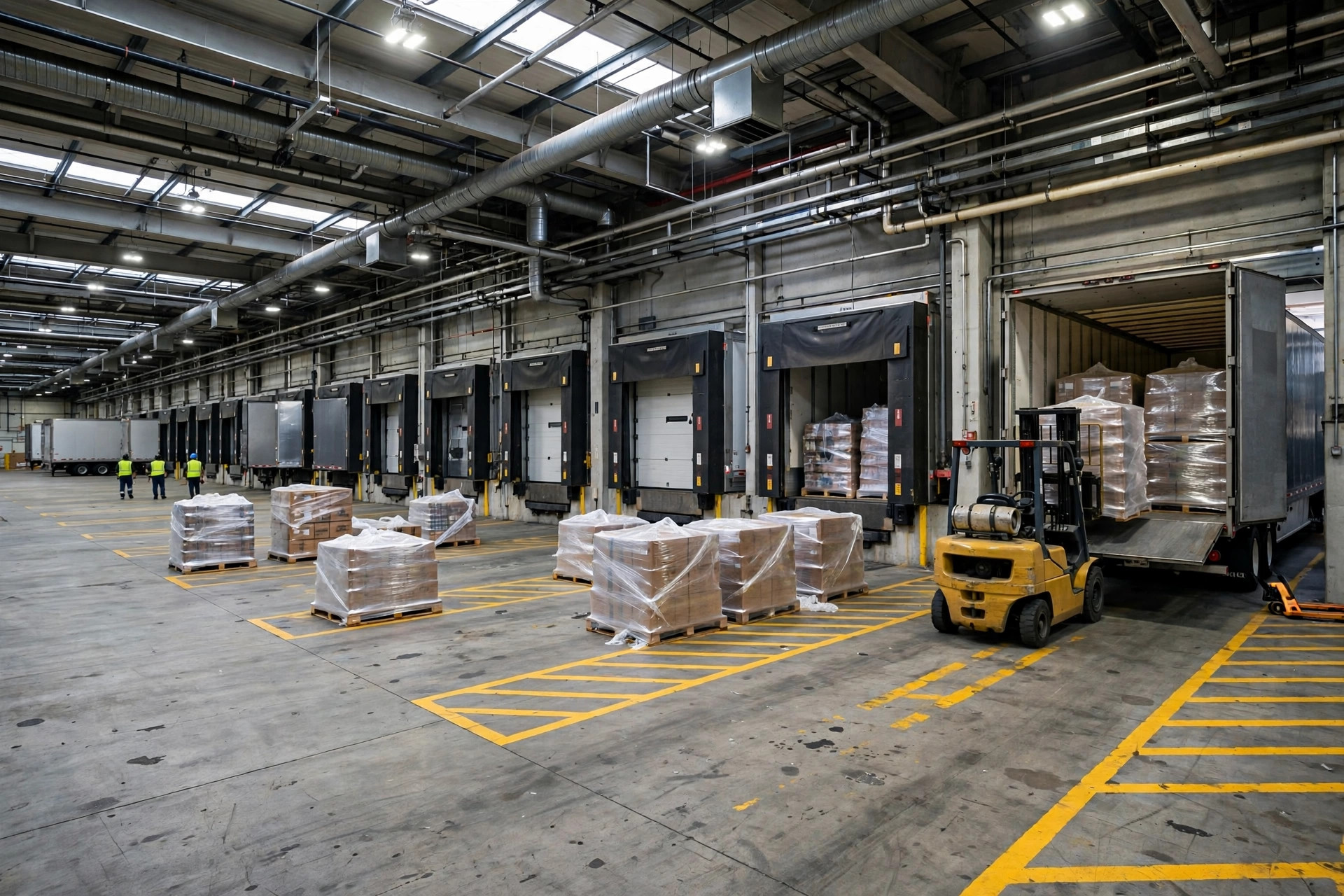
In a lot of warehouses, the staging area was drawn on opening day and never revisited: leave some open floor in front of the dock, paint a few yellow lines, done. Then peak season hits, volume doubles, staging overflows, pallets spill into the travel lanes, and the whole flow dies.
How big your staging area needs to be is calculable. It isn't a vibe. The formula is simple:
Required staging positions = inbound pallets per hour × average dwell time in hours × 1.5 safety factor
Take a typical example. An 80,000-square-foot e-commerce facility runs its receiving peak from 6 to 10 in the morning, unloading 50 pallets an hour. A pallet sits in staging an average of 4 hours between unload and putaway. Peak staging demand is 50 × 4 = 200 positions. Multiply by 1.5 to cover uneven arrivals, QA holds, and system outages, and you get 300 positions.
One pallet position, with its share of maneuvering space, needs roughly 25 square feet. So 300 positions means about 7,500 square feet of staging. Go measure yours. I routinely find warehouses running 3,000 to 4,000 square feet of staging against a real demand of 7,000-plus. Under-built from day one — no crew on earth can make that work. Every warehouse manager should run this calculation once. Ten minutes, pen and paper.
Once you have the number, don't rush to expand. First check the second problem: is your staging in the right place?
Stop Assigning Dock Doors First-Come, First-Served
The most common mistake I see is first-come, first-served dock assignment: whichever door is open, the truck backs into it. So freight destined for zone A and freight destined for zone D both land at door 1, everything piles into one staging area, and putaway forklifts fan out from a single point across the entire building, routes crossing everywhere.
The fix is to group doors by putaway zone. Divide the warehouse into a few large logical zones and dedicate two or three receiving doors to each, as close to that zone as the building allows. Zone A freight only comes through zone A doors — it stages nearby and gets put away nearby, with short, non-crossing travel paths. As a bonus, receiving naturally sorts freight by zone during unloading, so putaway doesn't have to re-sort it.
This costs almost nothing. It's a rule change, plus aligning door assignments with your carriers and the appointment system. The hard part is enforcement: drivers are used to backing into any open door, so you need someone at the dock watching for two weeks. After that it becomes habit.
Three Cheap Fixes for an Existing Building
If your building is already up and you can't redesign the layout, these three moves give you the most relief for the least money.
First, make the main forklift arteries one-way. Two-way aisles look flexible, but in practice receiving forklifts and putaway forklifts meet head-on all day, nobody yields, and it's a safety incident waiting to happen. Convert the mains to a one-way loop, paint the arrows clearly, and total travel speed goes up because crossing conflicts disappear.
Second, split staging into fast and slow lanes. Freight that's QA-cleared, fully labeled, and ready for putaway goes to the fast lane, with a dwell target under two hours. Freight waiting on inspection, labels, or system receiving goes to the slow lane. Mixing the two is the most common reason staging blows up — the slow freight always ends up blocking the fast freight.
Third, stagger the shifts. In many warehouses the receiving peak and the putaway peak land in the same window, with two fleets of forklifts fighting over the same floor space. Push the putaway shift two hours later: let receiving clear the morning peak and free up half the staging area before putaway rolls in. It sounds crude. I watched a 3PL in Ontario do exactly this and take putaway on-time performance from 70% to 92%.
One more no-cost detail: don't just paint one big box for staging. Mark one outlined position per pallet, one pallet per outline, with stacking height (usually two high max) written into the SOP. Anything outside the lines is a violation, and leads photo-check daily. The more specific the floor markings, the fewer arguments — most "messy staging" is really just a vague standard that everyone interprets their own way.
The Cost of Doing Nothing Is Also Calculable
Some owners treat this as just bickering that blows over. Run the numbers. Detention at $75–100 an hour: three extra trailers a day, each waiting two extra hours, burns $13,000 to $18,000 a month. Putaway delayed a day means the pick modules stock out a day — late shipments eat chargebacks, split shipments double your outbound freight. And peak-season overtime for a putaway crew grinding until 10 p.m. at time-and-a-half adds up fast.
Compare that to repainting floor lines for a few thousand dollars, two weeks of enforcing a door-assignment rule, and a shift stagger that costs nothing. Not a hard calculation.
Here's my verdict: in nine warehouses out of ten where receiving and putaway are at each other's throats, the building owes them a flow-design debt — it's not a people problem. Before you replace another supervisor, run the staging math on paper and pull up your dock door assignment sheet. Monday morning, first shift: spend two hours counting how many pallets are sitting in staging at the peak. That number will tell you exactly where the problem lives.