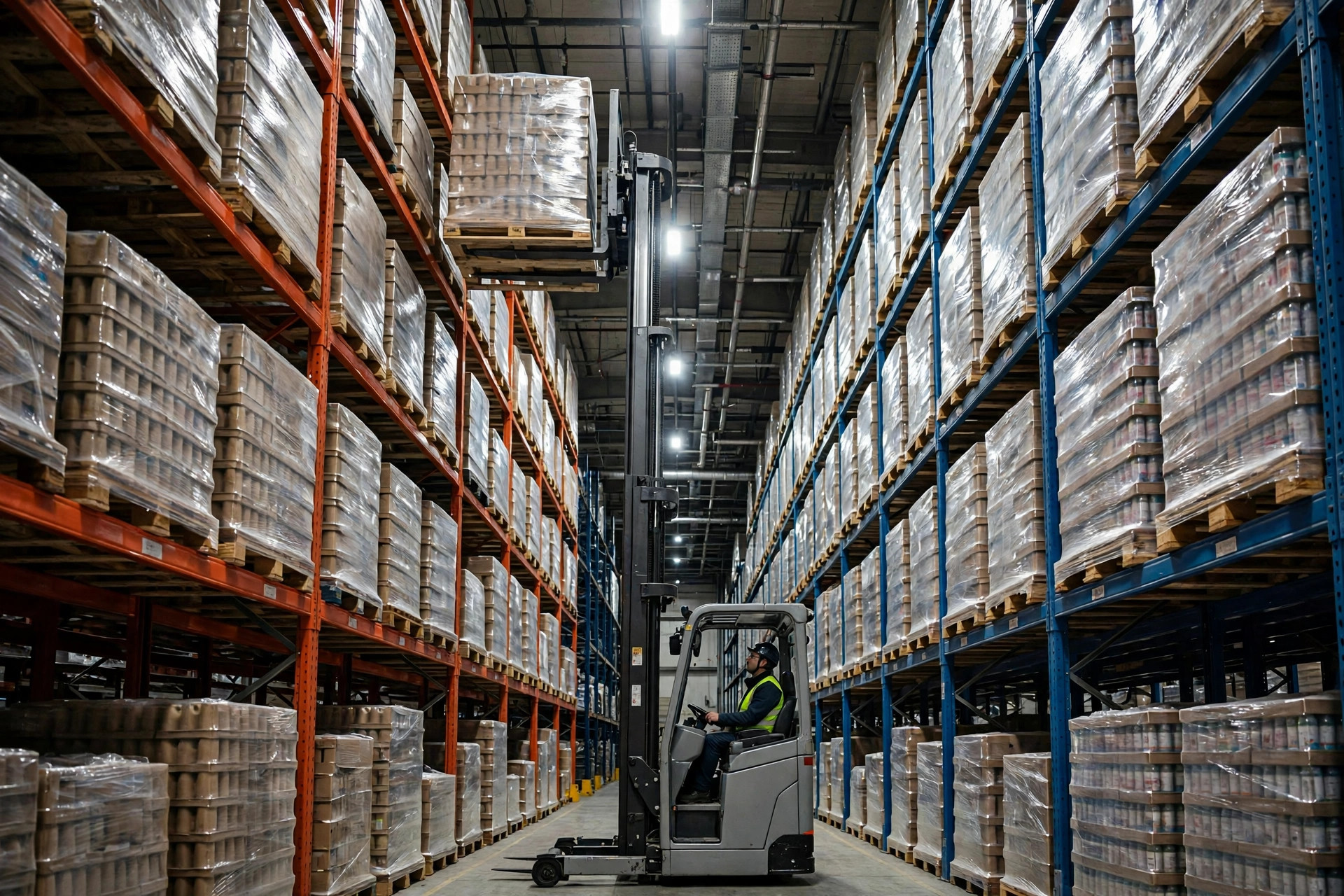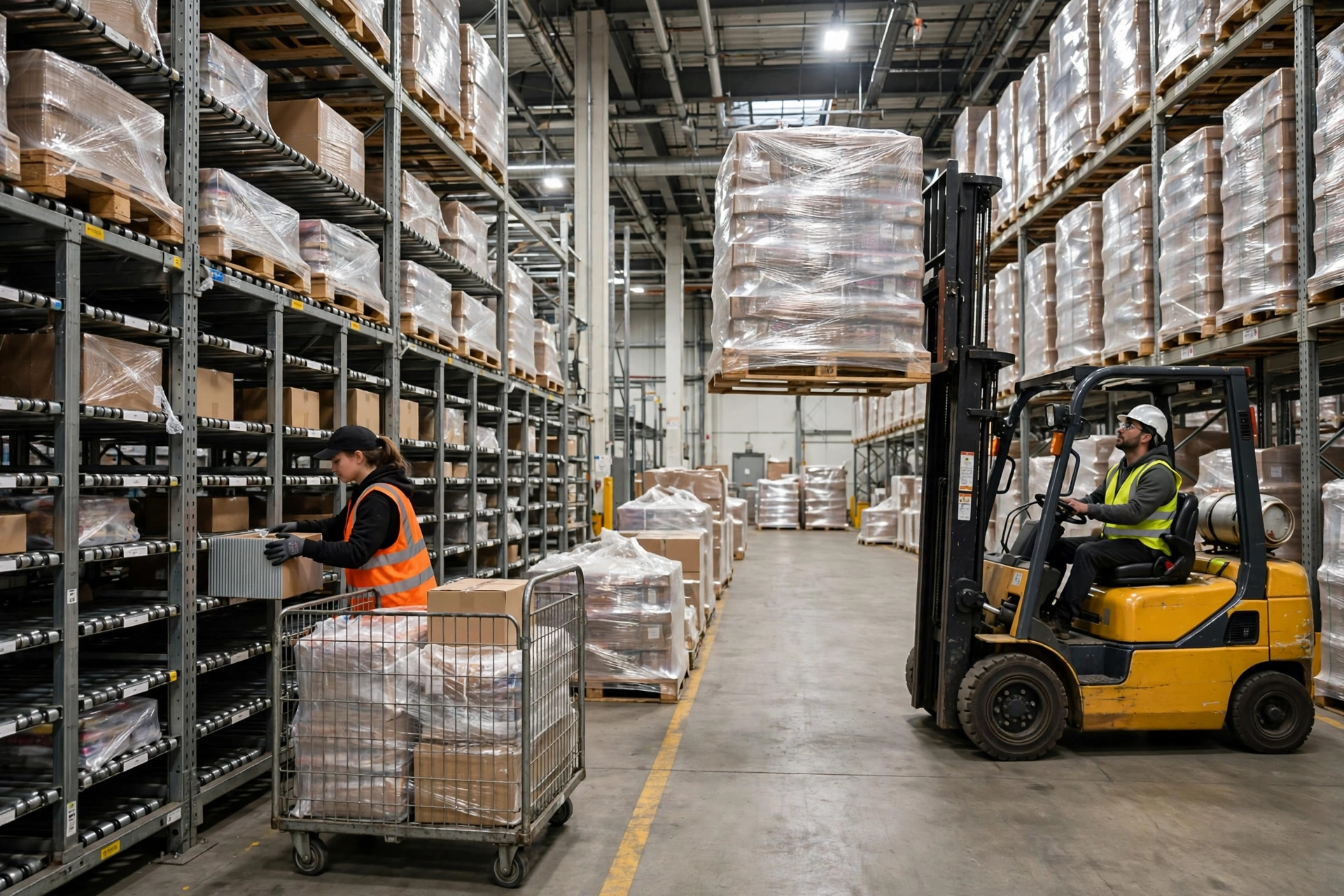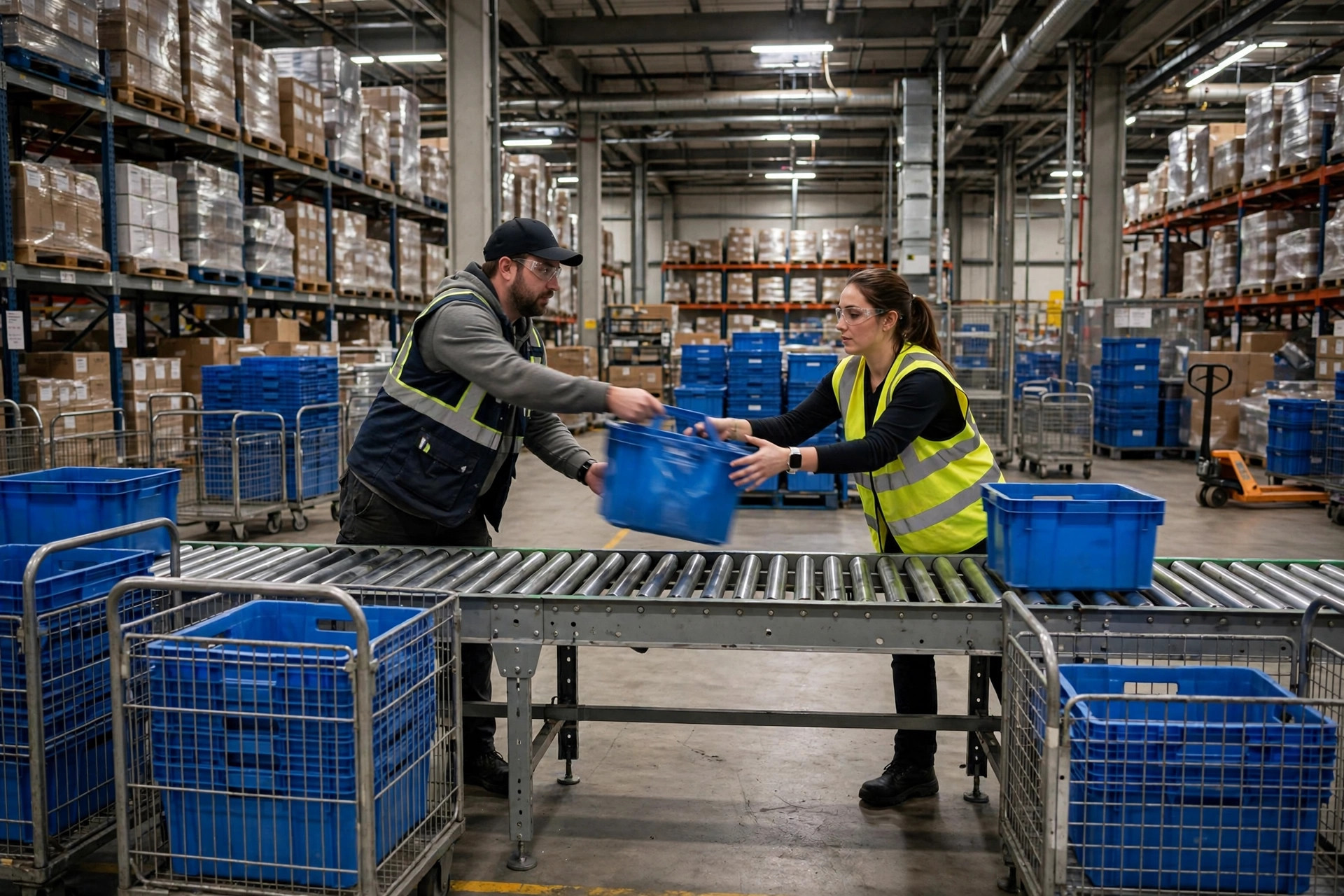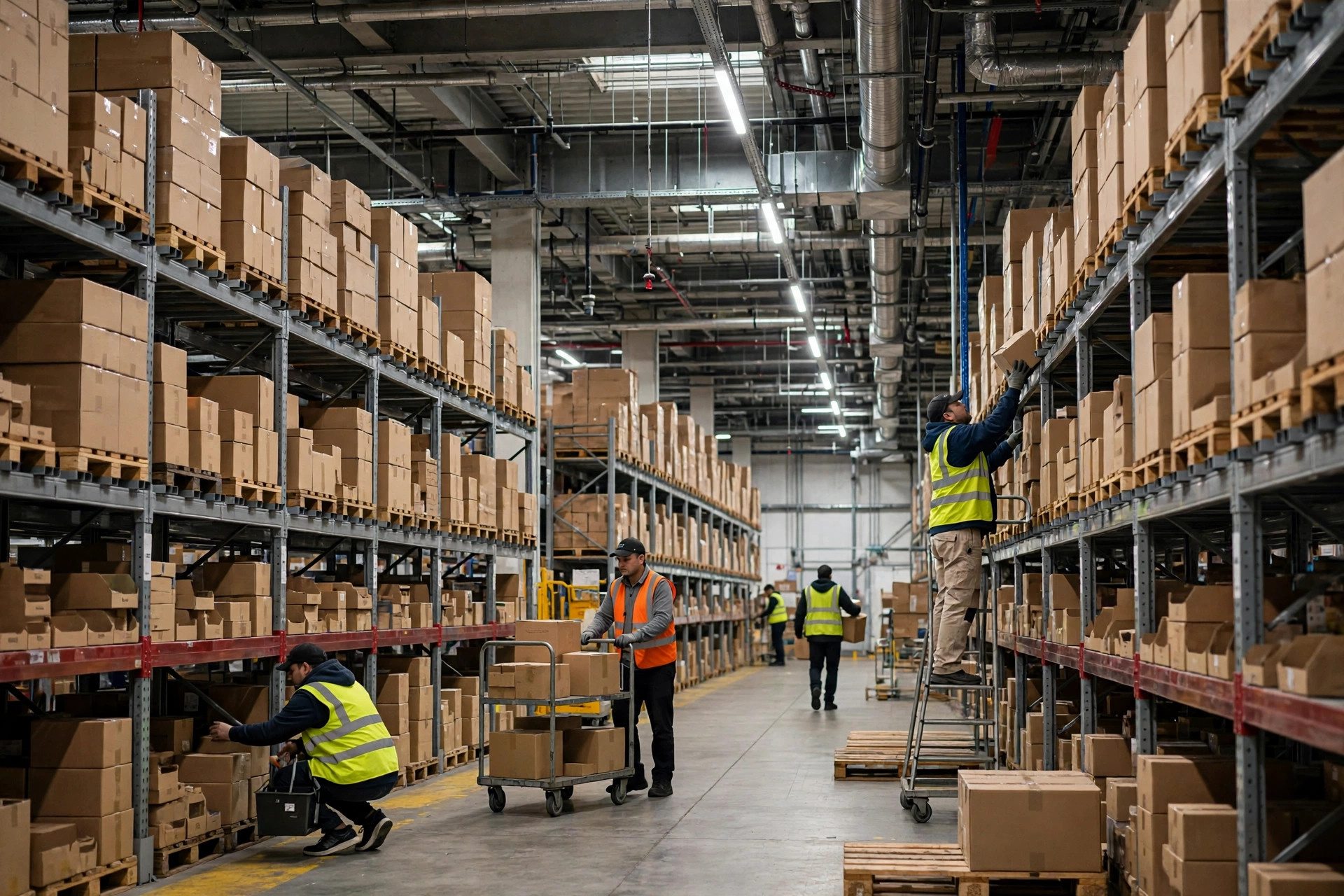
Last fall I walked through a friend's warehouse in Fontana — 40,000 square feet, about 2,800 orders a day. In the sort area, three people worked a row of carts, twenty cartons per cart, paper pick sheets taped to the handlebars. Walk, sort one order, cross it off, repeat. He asked me whether he should buy a put-to-light put wall. I told him: don't buy anything until we've done the math.
Two-stage picking splits the job in two. Stage one is batch picking by SKU: forget orders for a moment, pick the total quantity of each SKU in one pass through the aisles. Stage two is the put: distribute everything back out, one order at a time.
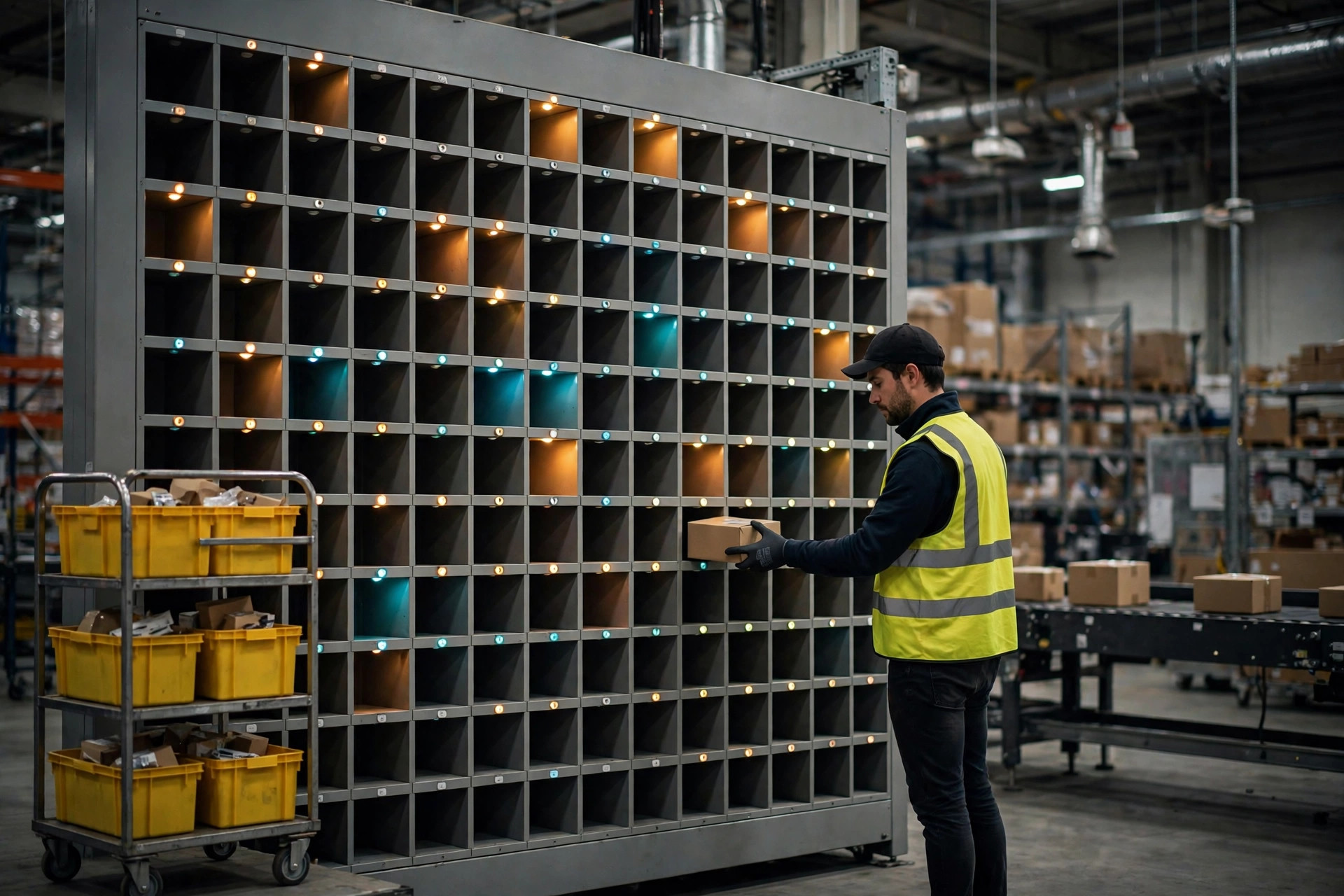
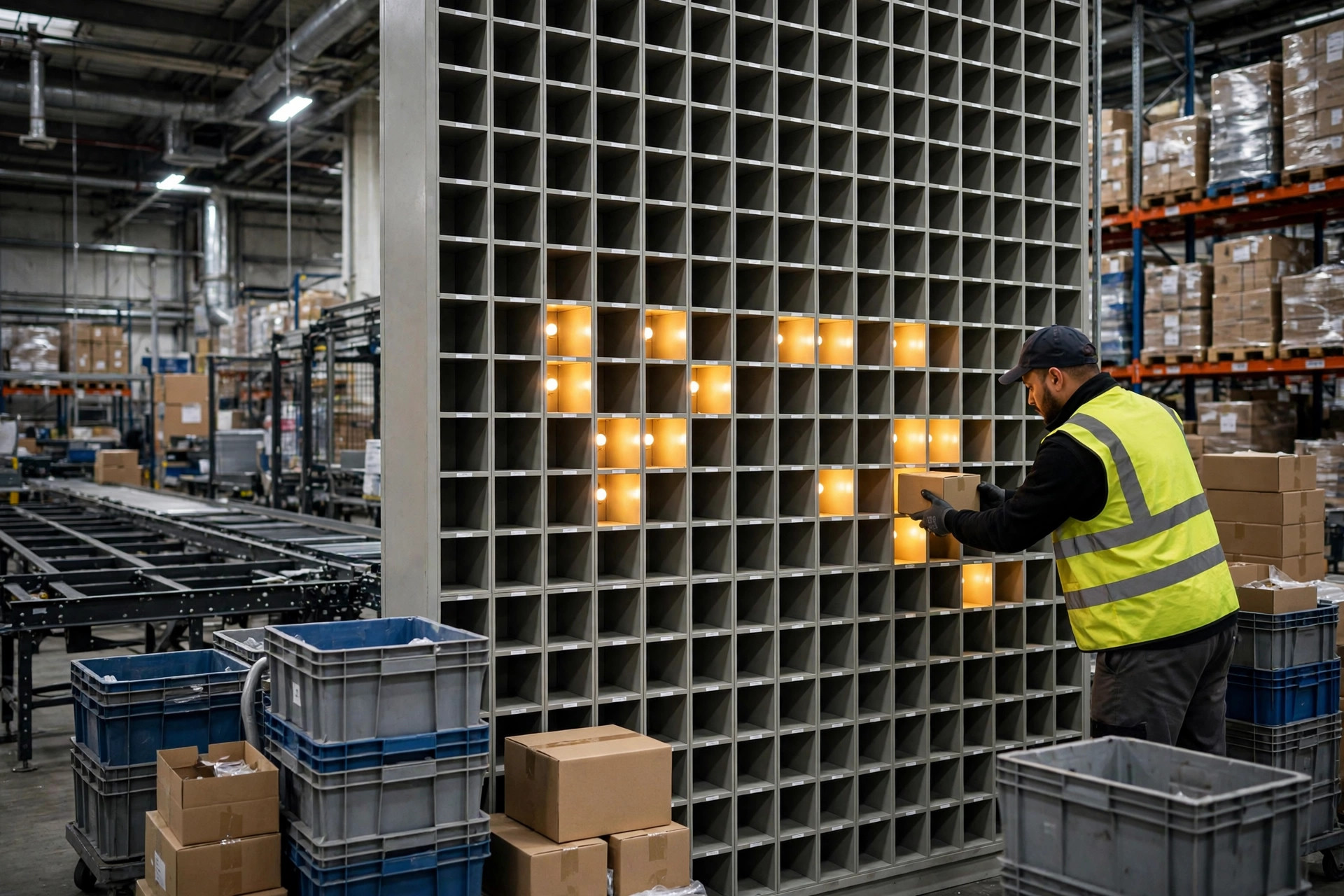
The put wall is the tool for stage two. It's a wall of cubbies — dozens or hundreds of them — each cubby standing in for one order. A light comes on, you drop the item in, you hit the confirm button. When every light is out, that wave of orders is complete; push it to packing and start the next wave. One full cycle of the wall is called a "turn," and a turn typically runs 20 to 30 minutes.
What the wall sells you is speed and accuracy. An experienced operator doing light-directed puts can hit 440 to 480 puts per hour with accuracy running 99.5% to 99.9%. Paper-based manual sorting doesn't come close on either measure. That's the whole pitch.
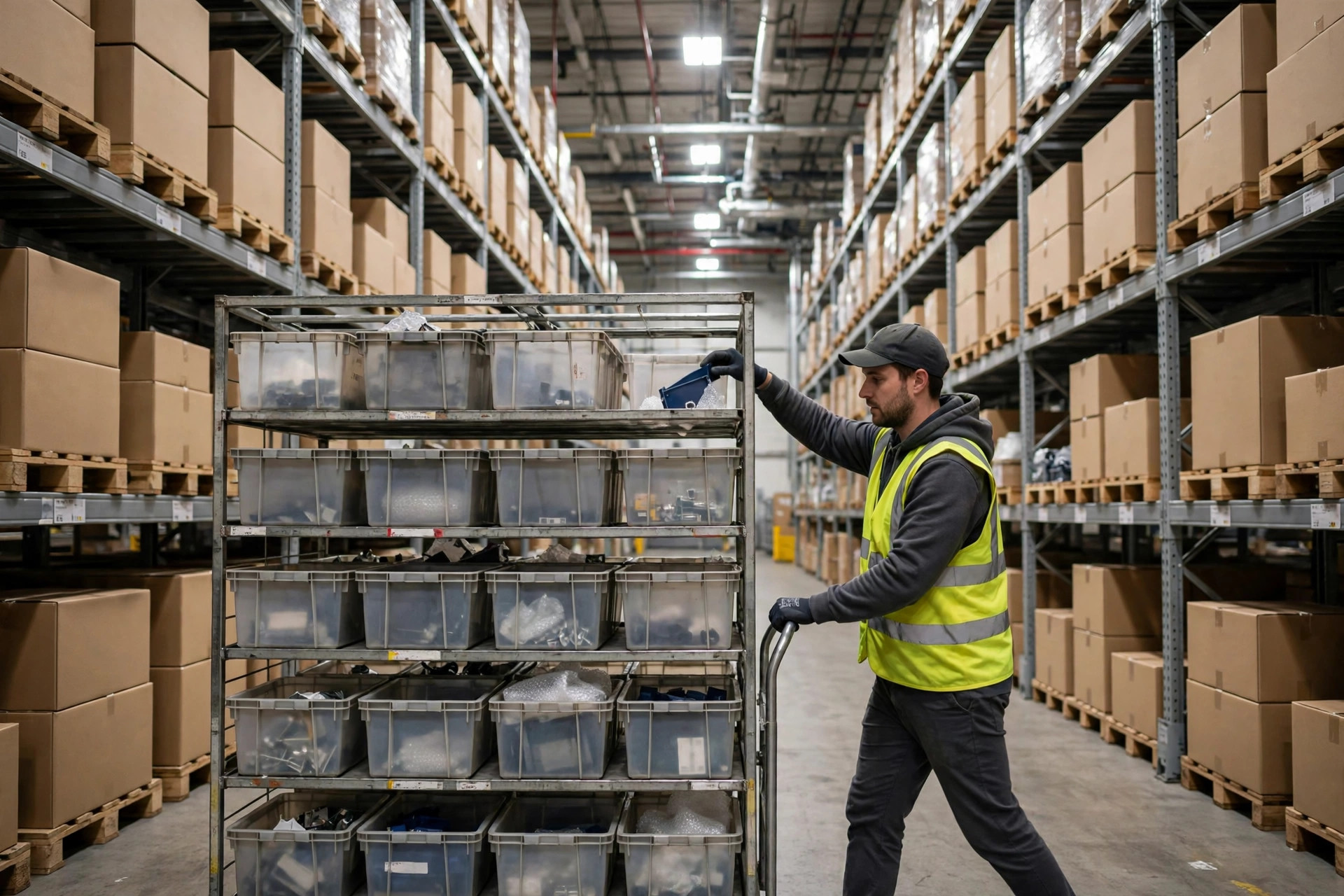
But here's the part vendors skip: the wall only pays for itself if your order profile fits it. The first filter is lines per order.
If your average order carries one or two lines and you've got volume, a put wall is in its element. Stage one becomes brutally efficient — one SKU, hundreds of units, a single pass. Stage two is just following lights. Apparel, beauty, small-goods e-commerce: this is their profile.
If your average order carries five or more lines, stop. Batch picking saves you barely any travel, and stage two turns into line-by-line sorting anyway. You've added a whole process step for nothing. Those orders are better off picked discrete or picked-and-sorted in one motion.
The second filter is daily volume, and 3,000 orders a day is roughly the dividing line. Below it, the wall never fills up — you turn it with a few dozen orders and the equipment sits idle more than it works. Above it, manual sorting starts drowning in headcount and error cost, and that's when the wall earns its keep.
The third filter is SKU spread. Warehouses with a long tail of SKUs and mixed orders save the most travel in stage one, so they gain the most. If eighty percent of your volume comes from fifty hot SKUs, stage one was never much walking to begin with, and the wall doesn't save you much.
I've seen it go wrong. An auto-parts warehouse averaging eight lines per order installed a wall anyway. Stage one needed more people than stage two. The wall became furniture. The wall wasn't the problem — the order profile was.
So let's run the numbers for 3,000 orders a day at 1.6 lines per order: 4,800 lines a day.
Option A is paper-based pick-and-sort in one motion: roughly 90 lines per labor hour, which means about 53 labor hours a day — call it seven people. Assume a 1.2% error rate.
Option B is two-stage with a put wall. Stage one batch picking runs about 180 lines per labor hour (26.7 hours); stage two light-directed putting runs about 460 puts per hour (about 10 hours). Total: roughly 37 labor hours, or five people. Assume a 0.3% error rate.
Labor at a fully loaded $25 an hour — that's an assumption, plug in your own number — saves two people, sixteen hours, $400 a day. Errors: 3,000 orders a day, error rate dropping from 1.2% to 0.3%, means 27 fewer bad orders a day. At $10 per error (reship freight plus customer service plus return losses — again, an assumption), that's $270 a day. Combined: about $670 a day, or roughly $200,000 a year over 300 operating days.
Now work backwards. Take the vendor's quote — wall hardware plus integration plus the WMS connection — call it X. Payback period is X divided by annual savings. My rule is simple: if payback runs past 18 months, don't do it. A small warehouse can't afford to tie up cash that long, and whatever you buy today will be cheaper in two years.
Notice how many "assumes" and "abouts" are in that math. That's not a weakness, it's the whole point. Fill in your real numbers — your actual units per hour, your actual error rate, your actual labor cost — and the model gives you your answer. A payback period built on guessed numbers is exactly what the vendor wants you to bring to the meeting.
If the budget isn't there, skip the lights, not the concept. Rack up a row of shelving into cubbies, one cubby per order, print sort sheets, and sort by hand. It costs almost nothing, it's faster than pick-and-sort, and the error rate lands somewhere between paper and lights. It'll carry you through a peak season just fine.
There's also a middle path: install the wall without lights first. Get the two-stage process running, grow into the volume, and add the light modules later when the cubbies overflow or the errors won't come down. Lights are modular — adding them later doesn't hurt. What hurts is buying the full light package on day one and watching it sit there as decoration because the volume never showed up.
Before any of that, pull two weeks of order data into a spreadsheet: lines per order, daily order count, the distribution of lines. Average under two lines per order and over 2,000 orders a day — then go get quotes. Otherwise, build the cubby rack first. Spend the money where your order profile says to spend it, not where someone else's success story says to.