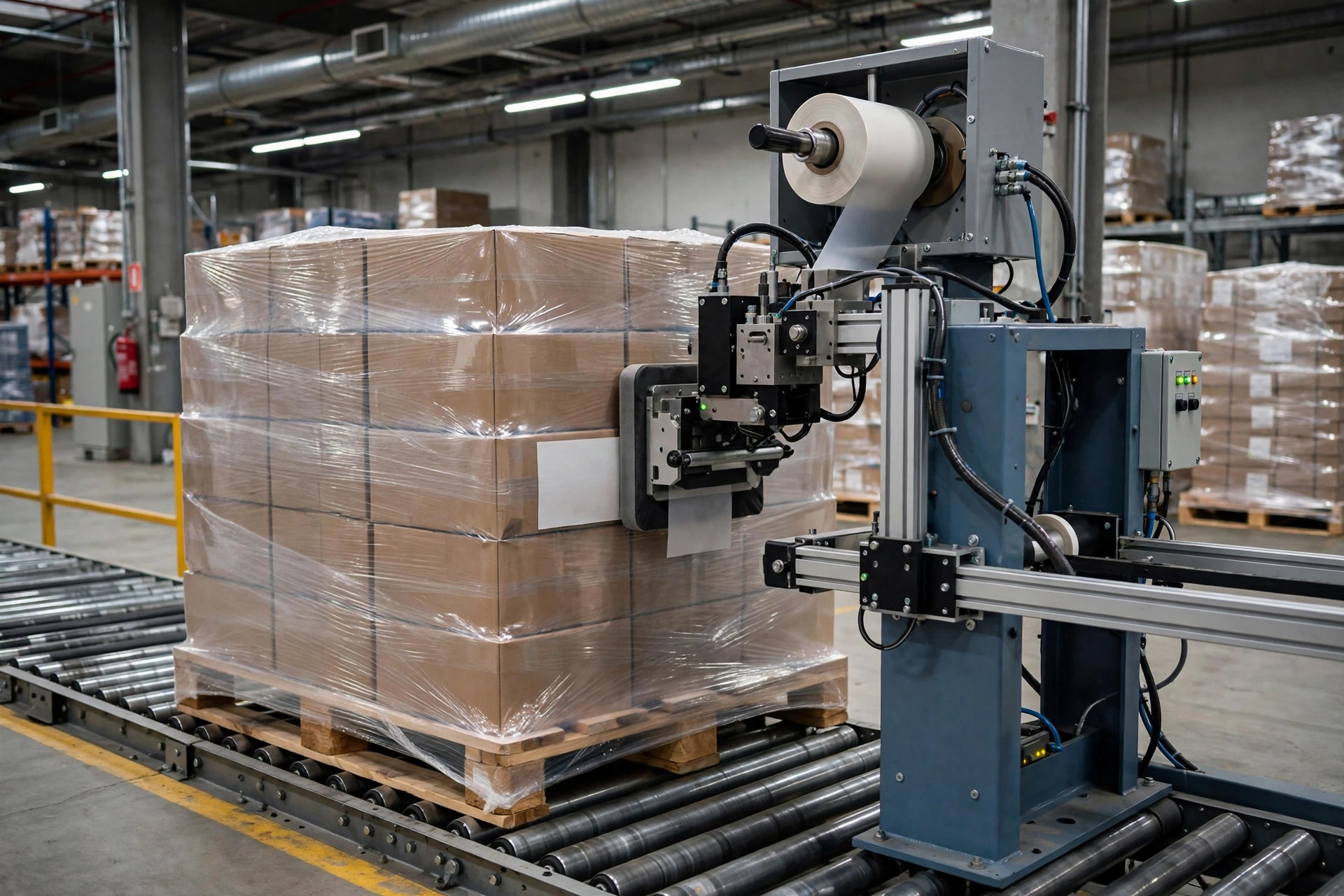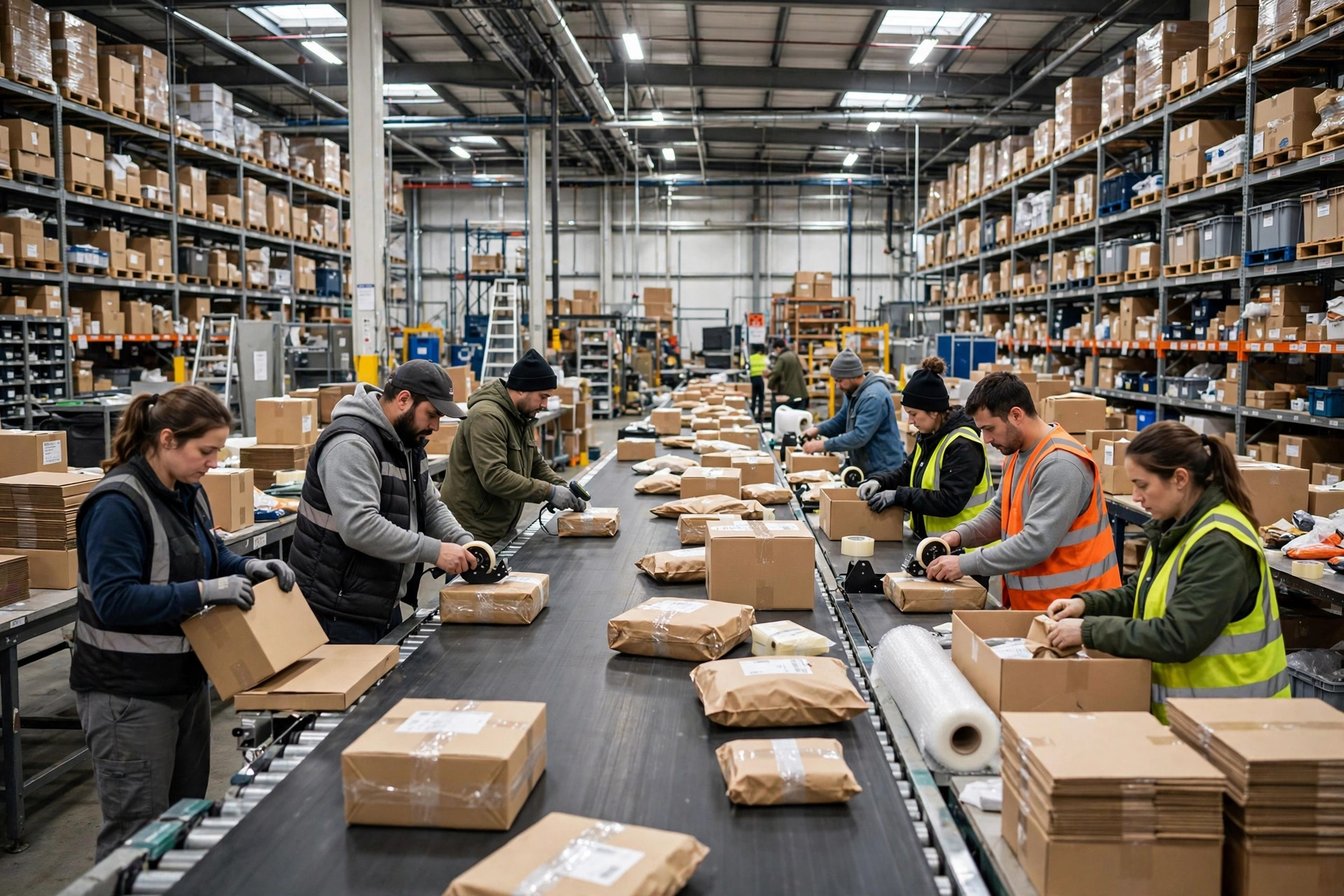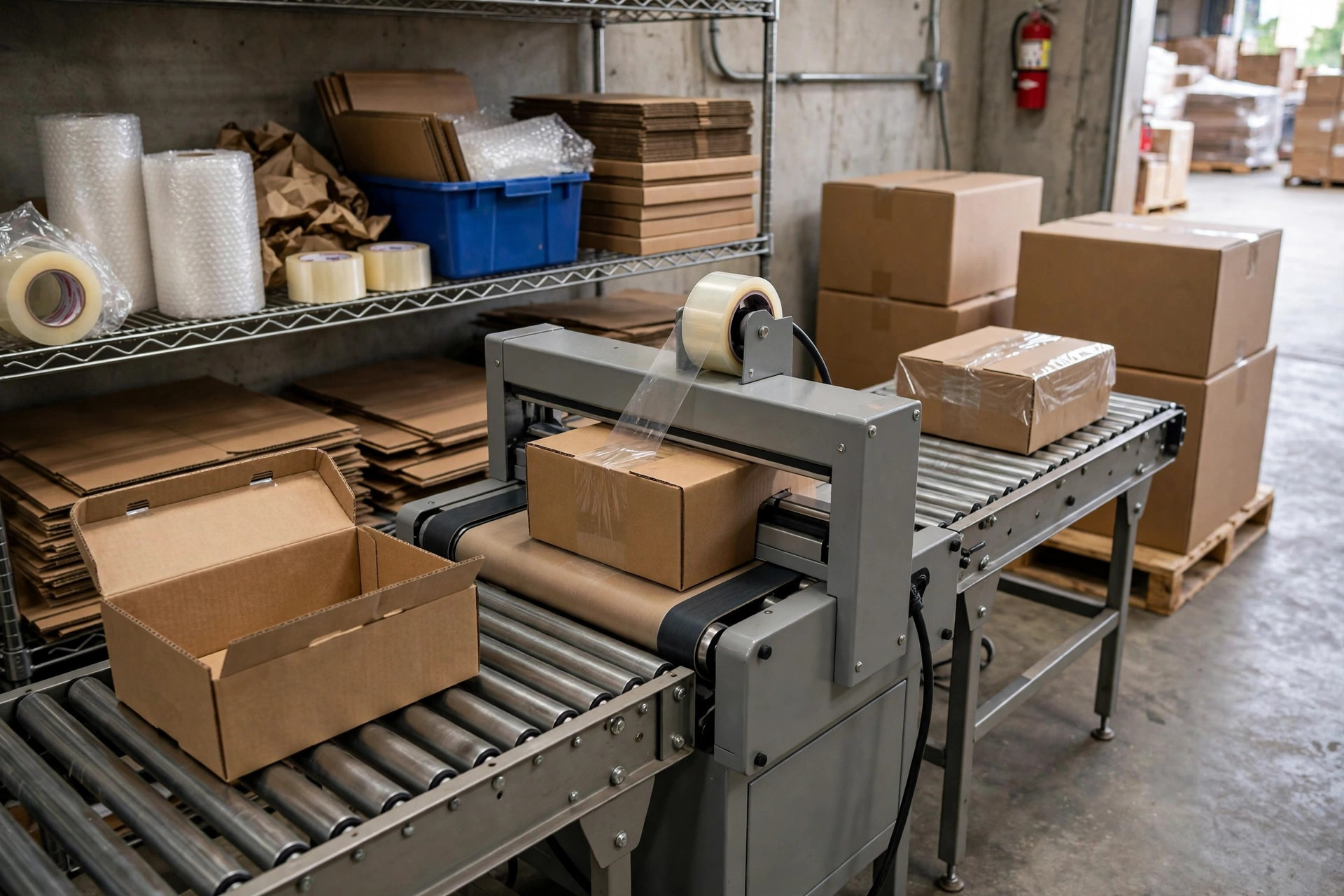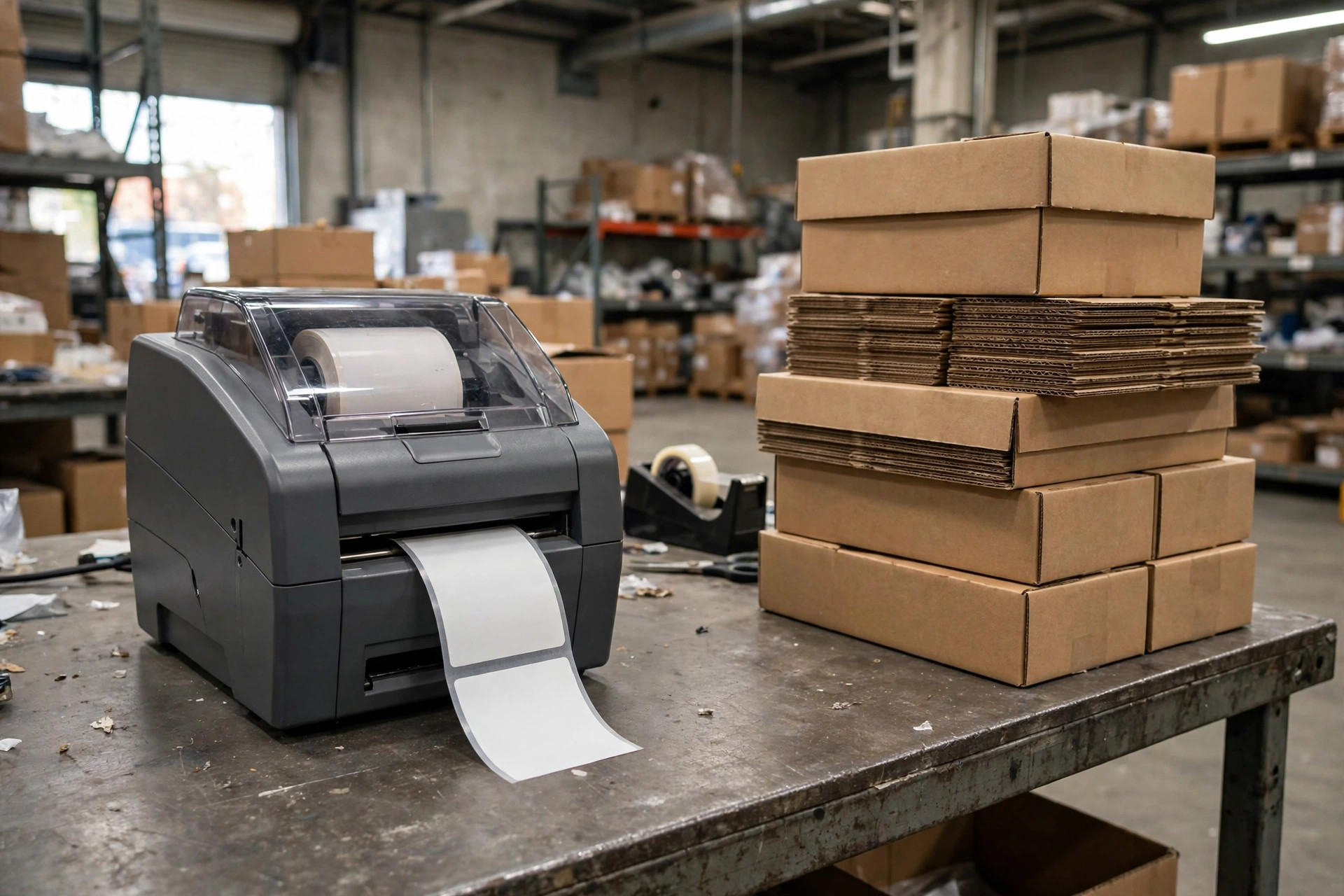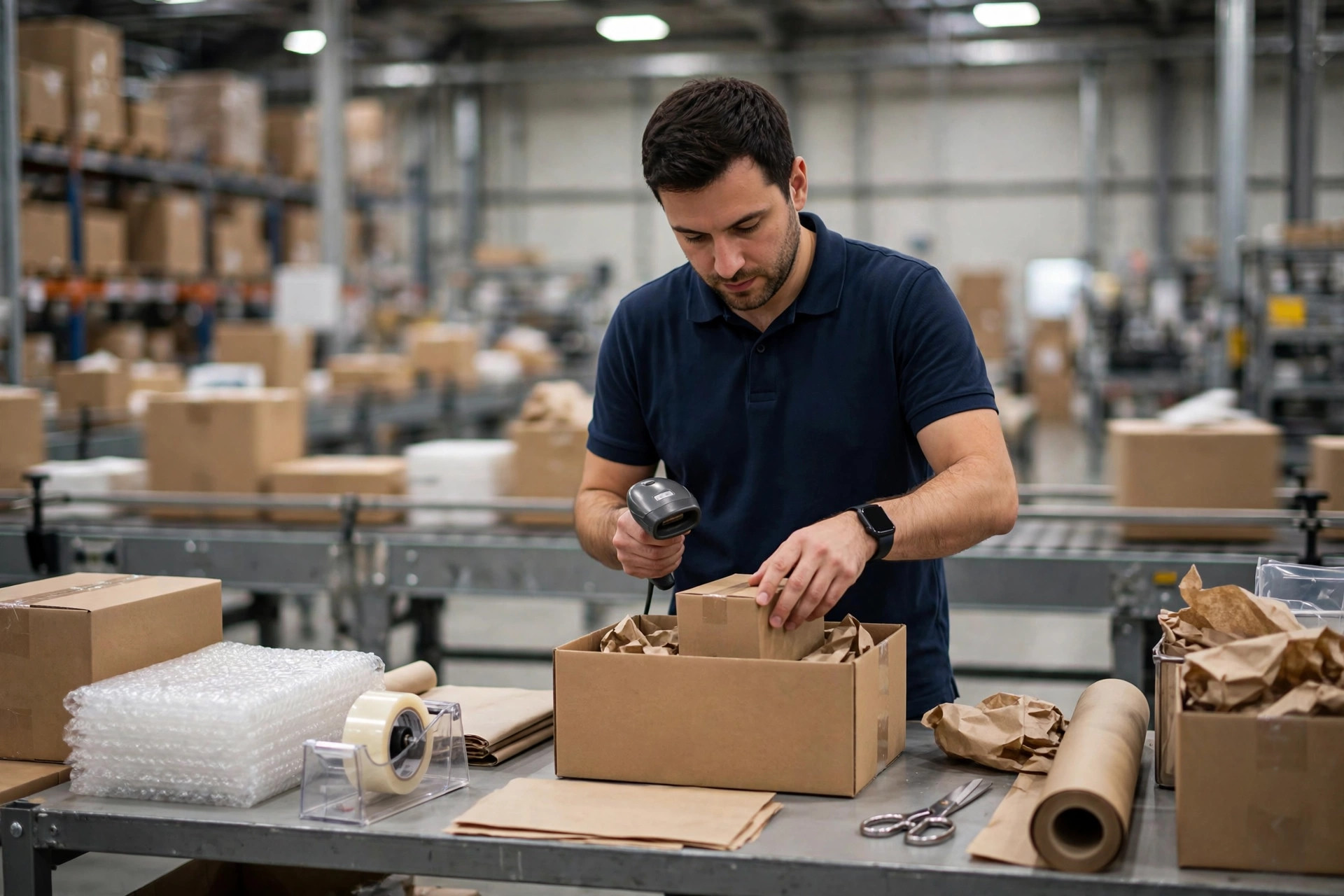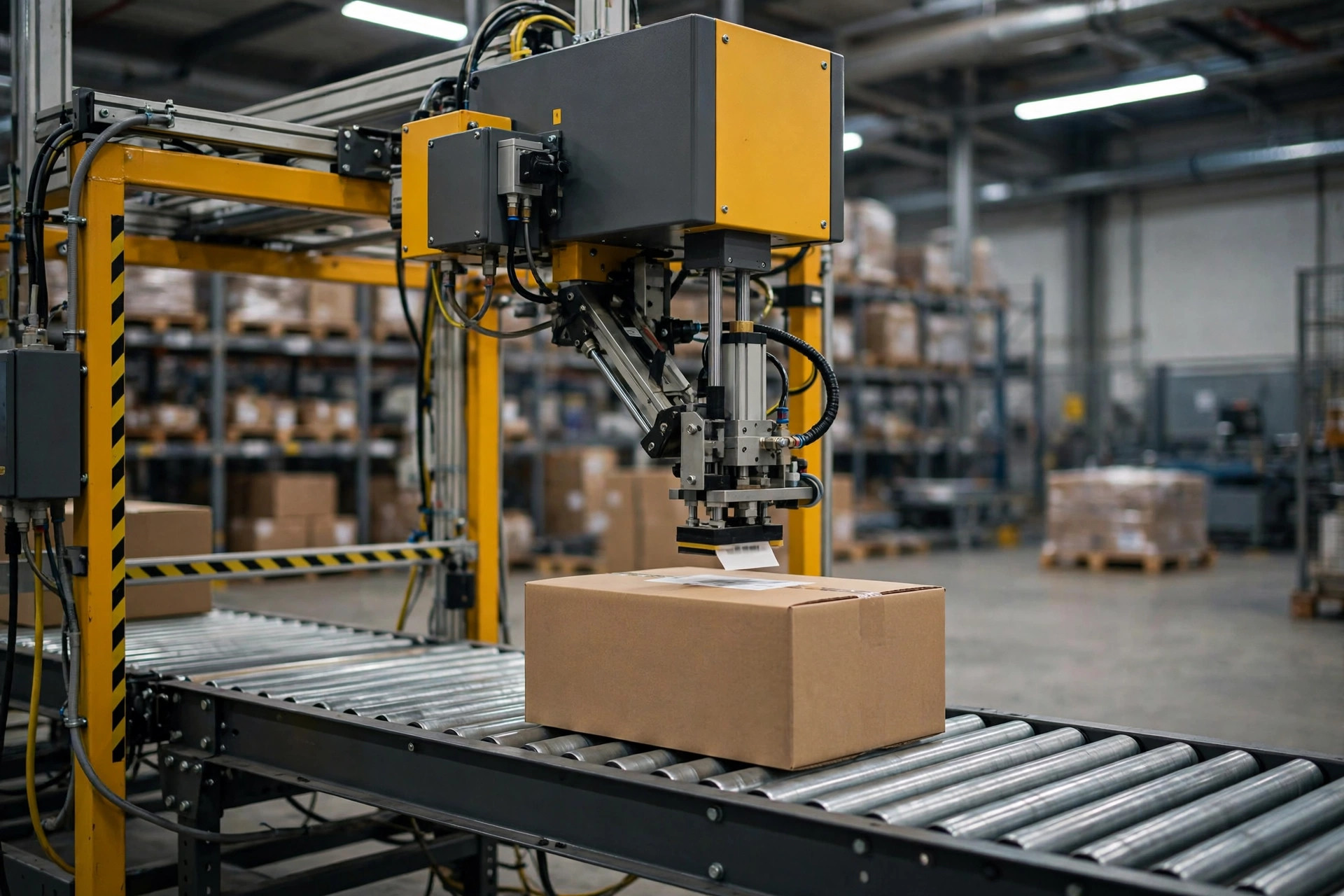
It's 4:40 on a Tuesday afternoon in a third-party warehouse in Fontana, California, and the outbound supervisor is doing the math nobody wants to do. Four hundred cartons are staged and sealed. The small-parcel carrier pulls its trailer at 5:30 sharp. Four people are hand-applying shipping labels at the end of the line, moving fast, and it still isn't fast enough — and every few minutes someone peels a label back off because the barcode won't scan. I've watched this exact scene play out in half a dozen warehouses. The label is the last thing that touches a carton before it leaves your building, and it's the thing most operations treat as an afterthought.
Here's my verdict after twenty years of watching outbound lines: fix your label before you buy a labeler. A print-and-apply machine applied to a bad labeling process just makes bad labels faster.
Why I stopped believing labels-per-minute
Every print-and-apply brochure leads with speed. You'll see "up to 120 labels per minute" in bold type. That number is real in exactly one context: tiny labels with no variable data, in a lab. On a real outbound line, printing a standard 150 x 100 mm side label with a unique tracking number on each one, about 30 labels a minute is a comfortable, sustainable rhythm. Push past that and your misapplication rate climbs — labels landing crooked, half on the box seam, or trailing off the edge.
That gap between brochure speed and line speed matters because it changes the business case. A standard 4-inch-wide case labeling machine runs roughly $10,000 to $20,000 depending on configuration; wider 6-inch machines, thermal-transfer versions, and pallet-labeling setups cost more. If you're justifying that spend against labor savings, do the math with 30 labels a minute, not 120. I've seen two warehouses buy the machine on the brochure number and then run it at half the expected throughput because their cartons varied in height and the tamp head couldn't reach consistently. The machine wasn't broken. The cartons were.
Tamp, blow, wipe: the applicator choice you'll live with
There are three ways these machines get a label onto a box, and this is the decision that determines whether your operators love the machine or fight it daily.
Blow-on uses a puff of air to carry the printed label to the carton surface. The box never stops, so it's the fastest option, but it needs clean, stable compressed air — and it only works on flat, predictable surfaces. If your air supply fluctuates, labels land crooked.
Tamp-blow extends a cylinder and physically presses the label on. It's the most secure application and the most accurate placement, but it's sensitive to carton height variation. If your inbound cartons range from shoebox to wardrobe-box in the same shift, the tamp head will miss the short ones.
Wipe-on lets the moving carton brush past the applicator head and pick the label up. Simplest mechanism, lowest cost, but it demands a flat carton face and runs slowest of the three.
Before you sign anything, I'd check four things that never appear in the brochure: whether the label width and roll core diameter match the stock you're already buying; whether your site has reliable compressed air if you're considering blow-on; how long a roll change takes (two minutes versus ten minutes is a different machine in peak season); and whether the machine reads your WMS label template format — ZPL and similar — without a template rebuild project.
The label itself is half the battle
Here's the part that costs nothing to fix. In that Fontana warehouse, we collected a week's worth of rejected labels and sorted them. A third had the barcode partially covered by packing tape. A third were applied over the carton seam, where the corrugation groove distorted the barcode. The rest were printed on heat-damaged thermal stock that had faded to gray. The labeling crew wasn't the problem. The label as a product was.
Stock first. The 4 x 6 inch label (about 102 x 152 mm) is the standard shipping label size across UPS, FedEx, and USPS — their scanners and sortation equipment are tuned for it, so don't invent your own dimensions. Direct thermal stock is cheap and needs no ribbon, which is fine for parcel labels that move fast. But direct thermal fades with heat, sunlight, and oil contamination — leave a roll near a sunlit dock door and you'll print ghosts. For anything stored long-term, moving through cold chain, or sitting outdoors in transit, thermal transfer with a ribbon is the honest choice.
Adhesive second. Corrugated surfaces are uneven and dusty, and a weak adhesive will let a label peel halfway off after fifty feet of conveyor. Before committing to a new label supplier, run a sample roll through a full shift on your actual cartons — a few hundred labels — and check for lifting edges. Verbal promises about "strong adhesive" don't count.
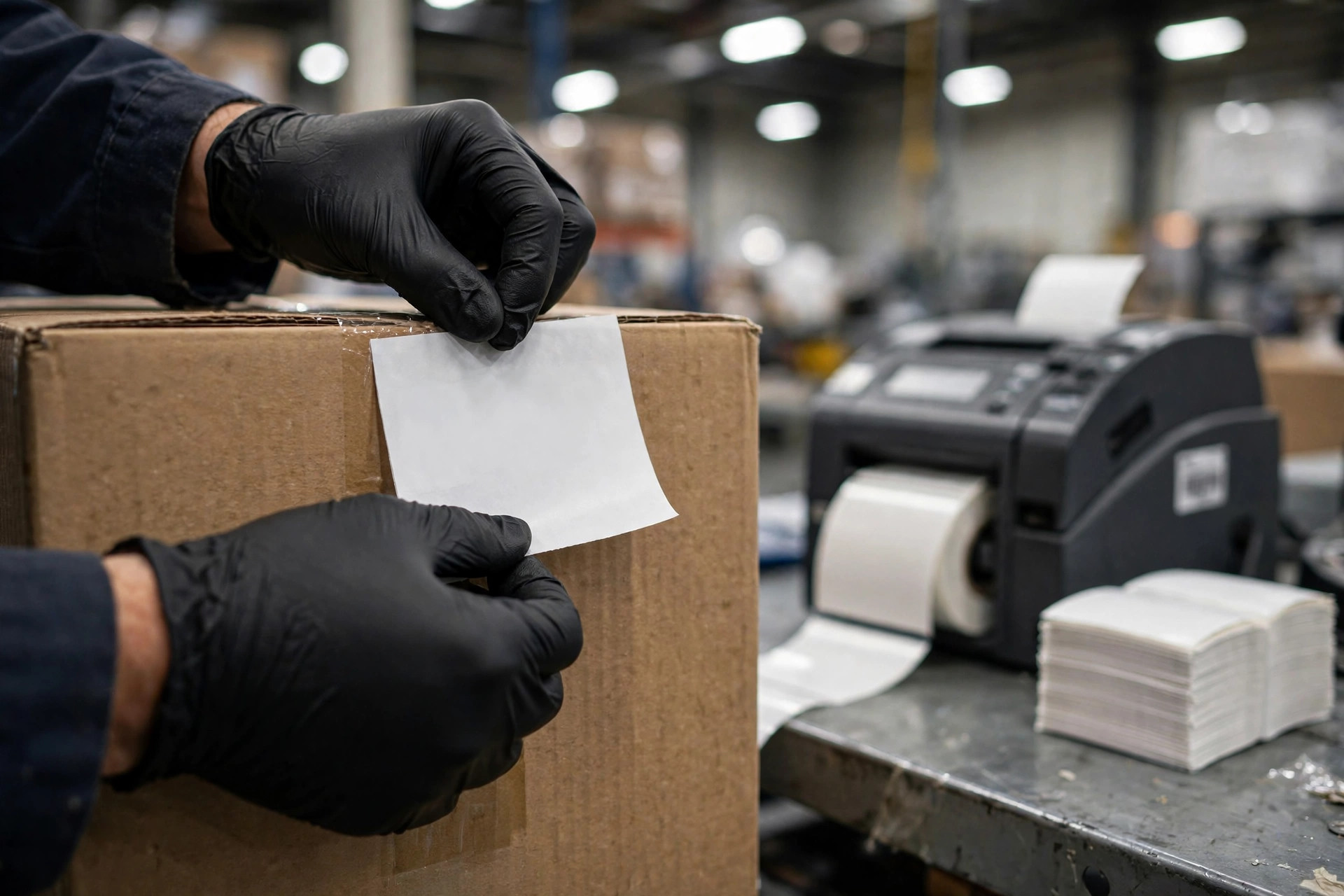
Placement third, and this is where most warehouses bleed. The barcode needs a clean quiet zone around it — tape overlapping one corner is enough to make it unscannable. Keep labels off seams, flutes, and box corners where curvature distorts the code. And if you're shipping into Amazon, the FNSKU placement rules are specific; check the current Seller Central policy rather than going from memory.
What I'd check before spending anything
If I walked into your outbound area tomorrow, here's the sequence I'd run before talking about equipment:
Pull last week's rejected labels and sort them into three piles — stock problems, adhesive problems, placement problems. Fix whichever pile is biggest first; it's usually placement, and it's free.
Scan fifty freshly printed labels in a row with a handheld scanner. More than two failures means your stock is wrong or your print darkness needs adjusting, not that you need a machine.
Audit twenty labeled cartons for placement: anything over a seam, under tape, or on a corner gets reworked, and the labeling crew gets a photo standard to match.
Check where your label rolls are stored. Direct thermal stock sitting by a sunlit door or in a humid corner is a problem you can solve with a shelf move.
Then do the labor math honestly: total labels per day divided by 6 to 8 labels per minute for a skilled hand labeler. That's how many labor hours labeling actually consumes. Only then does the $10,000-to-$20,000 machine quote mean something.
Labels are the cheapest component in your outbound operation and the one most capable of stopping a trailer from leaving on time. Get the stock, the adhesive, and the placement right, and hand labeling can be perfectly stable. Get them wrong, and the most expensive print-and-apply machine on the market will just misapply labels at thirty cartons a minute.