Let me start with a rant: after five years selling e-commerce, I've learned that most sellers track their ad spend to the decimal point but choose between prepaid return labels and a return portal on pure vibes. Amazon already charges a returns processing fee on high-return categories (check Amazon's latest published policy for current terms), and if you sell on your own site without doing the returns math, there's a hole in your P&L leaking money every single day.
There are basically two ways to handle return shipping. I've used both. Here's the honest breakdown.
Option 1: Prepaid return label
The dumb-simple approach. You either stuff a return label in every outbound box or generate one manually when a customer requests a return. Where do you print them? Discounted postage platforms like Pirate Ship and Shippo can generate return labels at rates well below retail counter prices.
The cost structure couldn't be simpler: no monthly fee, no subscription, you pay per label. A domestic small-parcel return label costs whatever it costs based on weight, zone, and carrier — a few dollars for something light, teens for something heavier (always check each platform's current published rates). So the math is one line: return rate × order volume × cost per label = your monthly return shipping spend.
That's what I ran in 2023 for small home goods. 4,000 orders a month, 9% return rate, about 360 returns, labels averaging a little over $7 each — roughly $2,500 a month in return shipping. No portal subscription, no mystery add-ons, finance could read the line item at a glance.
But there's a fatal flaw: once a label leaves your hands, you lose control of it.
A friend of mine selling apparel learned this the expensive way in early 2024. He stuffed a prepaid return label into every package for convenience. Someone scraped the label details and started reselling them on a secondhand marketplace — buyers used his labels to ship their own stuff, and he footed the postage. One month he got 40+ "ghost returns": mystery parcels arriving at his warehouse, nearly $2,000 in postage he never authorized. Took two weeks to trace it back to label theft. After that he switched to labels-on-approval-only: no label until the return request passes review, short label expiry windows, tracking numbers matched against the original order at receiving, and any parcel whose weight doesn't match the original order gets put on hold first.
Option 2: Self-service return portal
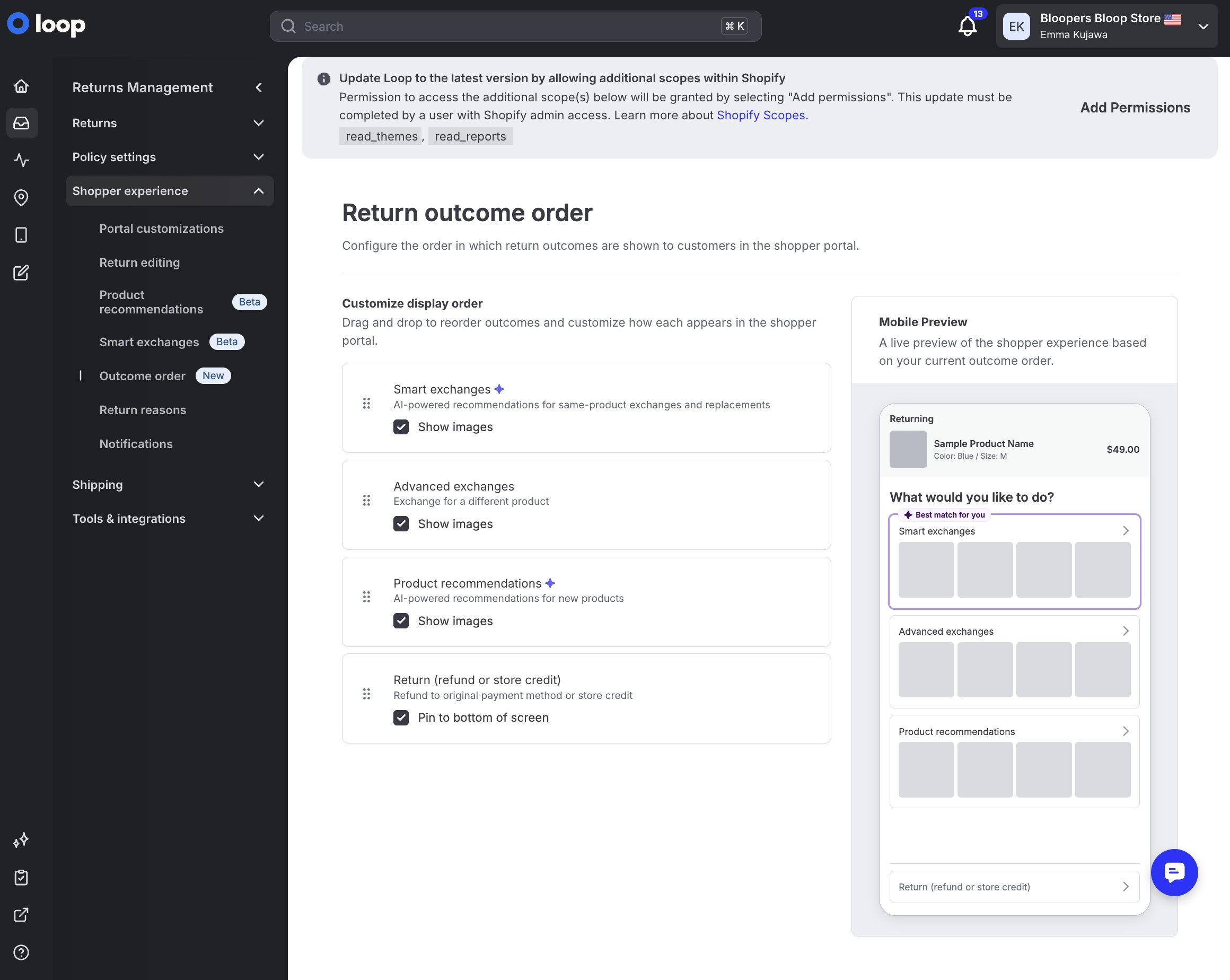
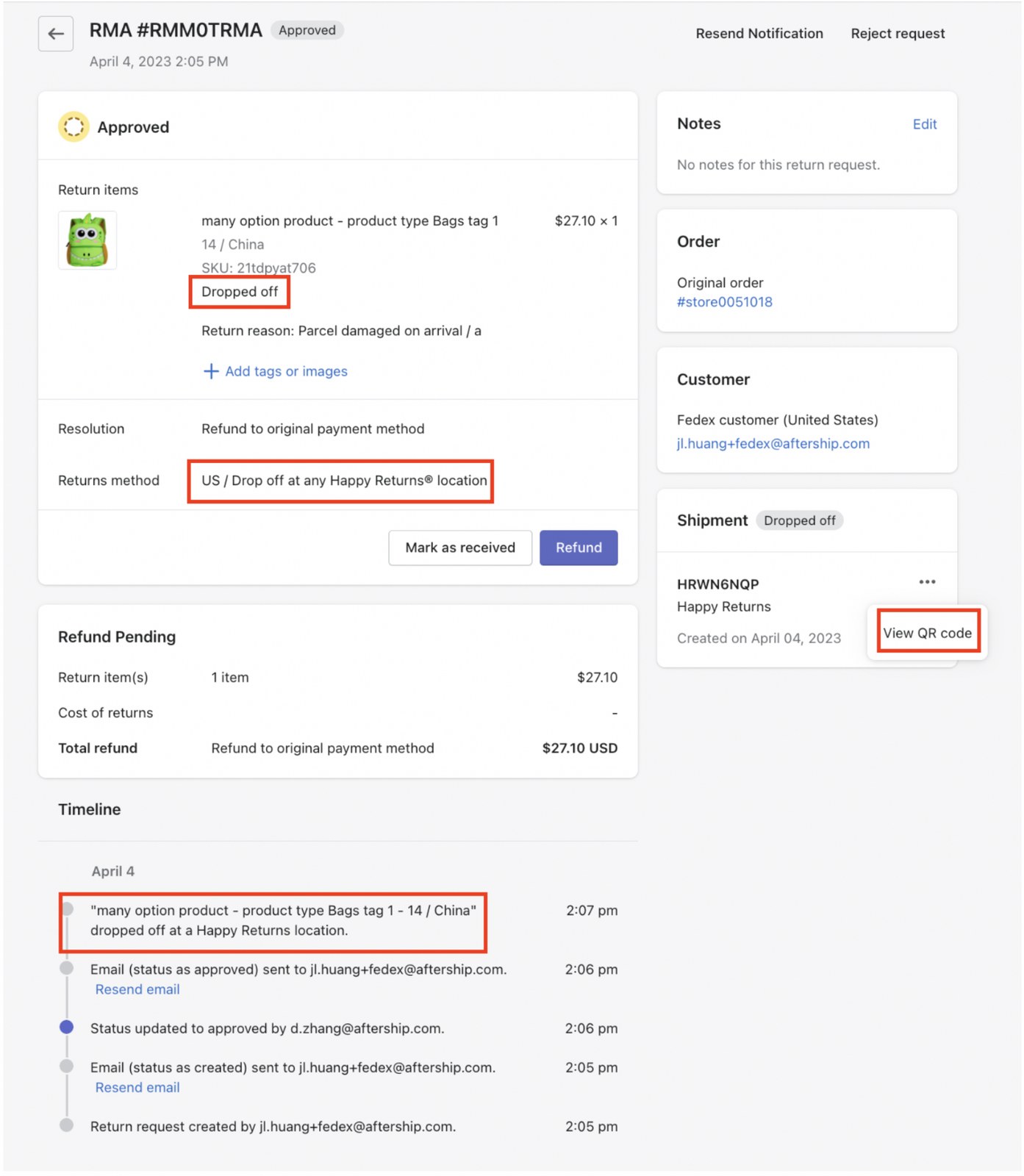
Return portals like Loop and ReturnGO, plus Happy Returns with its physical drop-off network, turn returns into a product. Customers go to the portal, pick a return reason, choose exchange or refund, print a label or drop the item at a location — and your warehouse processes receipts against the rules you set.
The cost structure is completely different: a monthly subscription (tiered by order volume — check current published pricing), plus a per-return service fee, plus the return shipping itself, which you can absorb, pass to the customer, or split by return reason (your defect = you pay; "changed my mind" = customer pays).
Here's the thing most sellers miss: the portal's real selling point was never cheaper shipping. It's retention. A portal like Loop is built to convert "refund" into "exchange" or "store credit" — a customer who was going to take $80 back now swaps for a $90 item and pays you the $10 difference. Happy Returns plays a different game: no label printing, customers drop items at physical locations, and consolidated returns bring the per-shipment logistics cost down — a good fit for high-return-rate, mid-ticket categories (check coverage and category limits on their site).
Two sets of numbers, down to the dollar
These are illustrative models built from public information and my own books. Treat every rate as a placeholder and verify against each platform's current published pricing — what matters is the structure, not the absolute values.
Scenario A: 10% return rate, 3,000 orders/month (small home goods, $45 AOV)
| Cost item | Prepaid labels | Return portal |
|---|---|---|
| Monthly fee | $0 | a few hundred dollars (tiered) |
| Per-return service fee | $0 | 300 returns × ~$1 |
| Return shipping | 300 × ~$7 ≈ $2,100 | 300 × ~$7 (merchant-paid share) |
| Monthly total (illustrative) | ~$2,100 | ~$2,700 |
At low return rates, prepaid labels win — and it's not close. The portal's fixed subscription and per-ticket fees spread over a small number of returns look expensive.
Scenario B: 30% return rate, 3,000 orders/month (women's apparel, $60 AOV)
| Cost item | Prepaid labels | Return portal (with exchange retention) |
|---|---|---|
| Monthly returns | 900 | 900 |
| Return shipping | 900 × ~$7 ≈ $6,300 | 900 × ~$7 ≈ $6,300 |
| Portal fees | $0 | subscription + 900 × service fee |
| Exchange retention | $0 (all refunds) | 25% convert to exchanges → ~225 × $60 = $13,500 in retained sales |
At high return rates the story flips completely. Shipping costs are roughly equal, but the portal's extra fees get dwarfed by retained revenue — $13,500 in sales at a 30% margin is $4,000+ in gross profit. The portal subscription is a rounding error next to that.
So here's the crude rule of thumb: 15% return rate is the dividing line. Below it, prepaid labels are simpler and cheaper. Above it, the portal wins on retained revenue. Pull three months of your category's return data before you decide — don't guess.
Two traps, one more expensive than the other
Trap one we covered: label theft. The fix is three moves — labels only after approval, 7–14 day expiry windows, weight reconciliation at receiving. If you can't do all three, stop pre-stuffing labels in outbound boxes.
Trap two: misconfigured portal rules. I've watched a seller make every return reason auto-approved, merchant-paid shipping by default, 60-day no-questions returns. First month on the portal, return rate went from 18% to 26%, and customer service was proud of how "smooth" the process felt. Smooth isn't the word — they removed the guardrails. The portal's rules engine is the actual product: defects and wrong-size go to free returns with exchange prioritized; "changed my mind" goes to customer-paid shipping and store-credit-only refunds; return window capped at 30 days. Misconfigure the rules and the portal is just a machine for losing money faster.
One last honest take: the return policy itself is a customer acquisition cost. "Free returns" lifts conversion, but every return shipment is you paying for the customer's impulse. If you don't do this math, the harder you push ads up front, the more you bleed out the back.
By Ah K, E-commerce Seller (5 yrs)