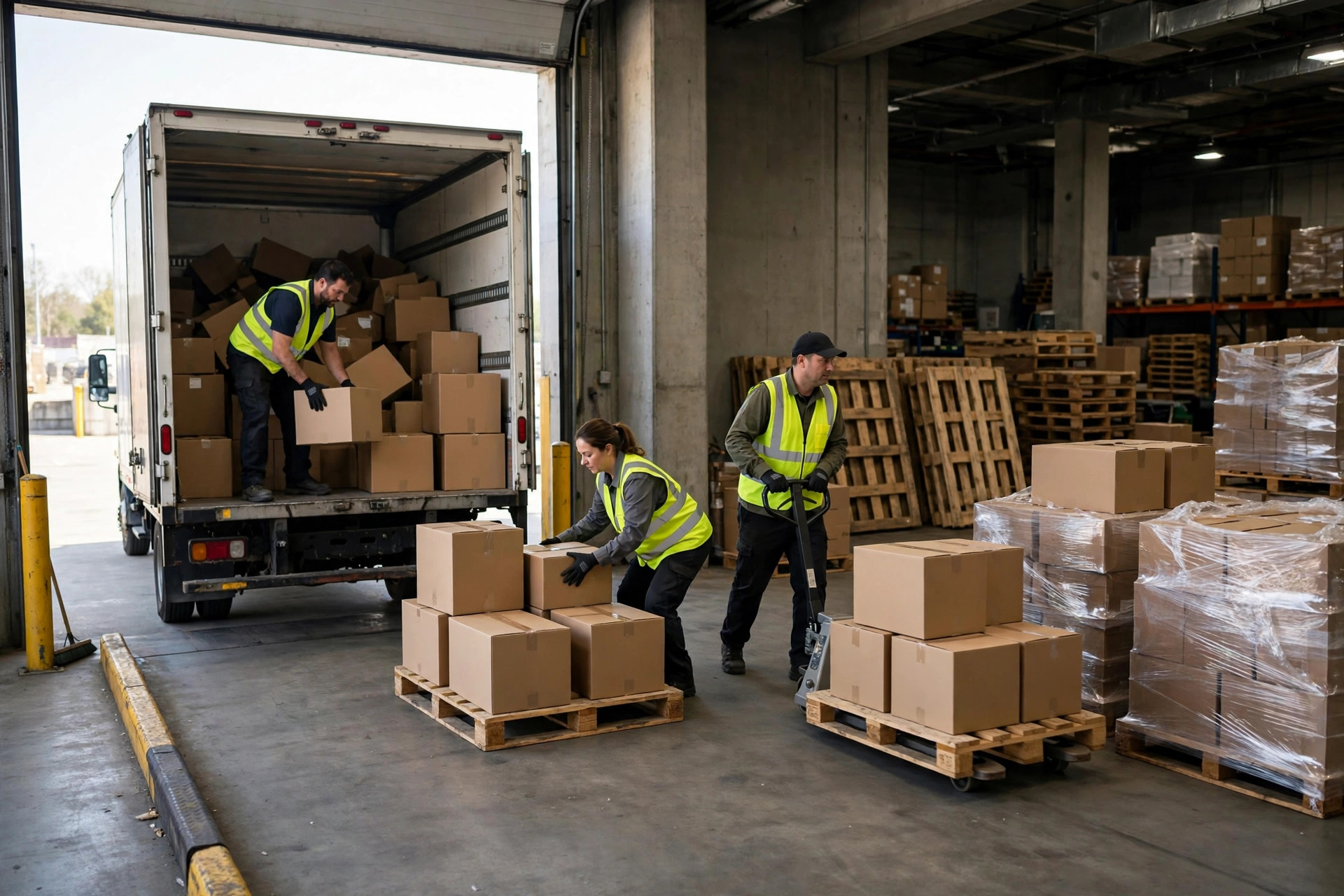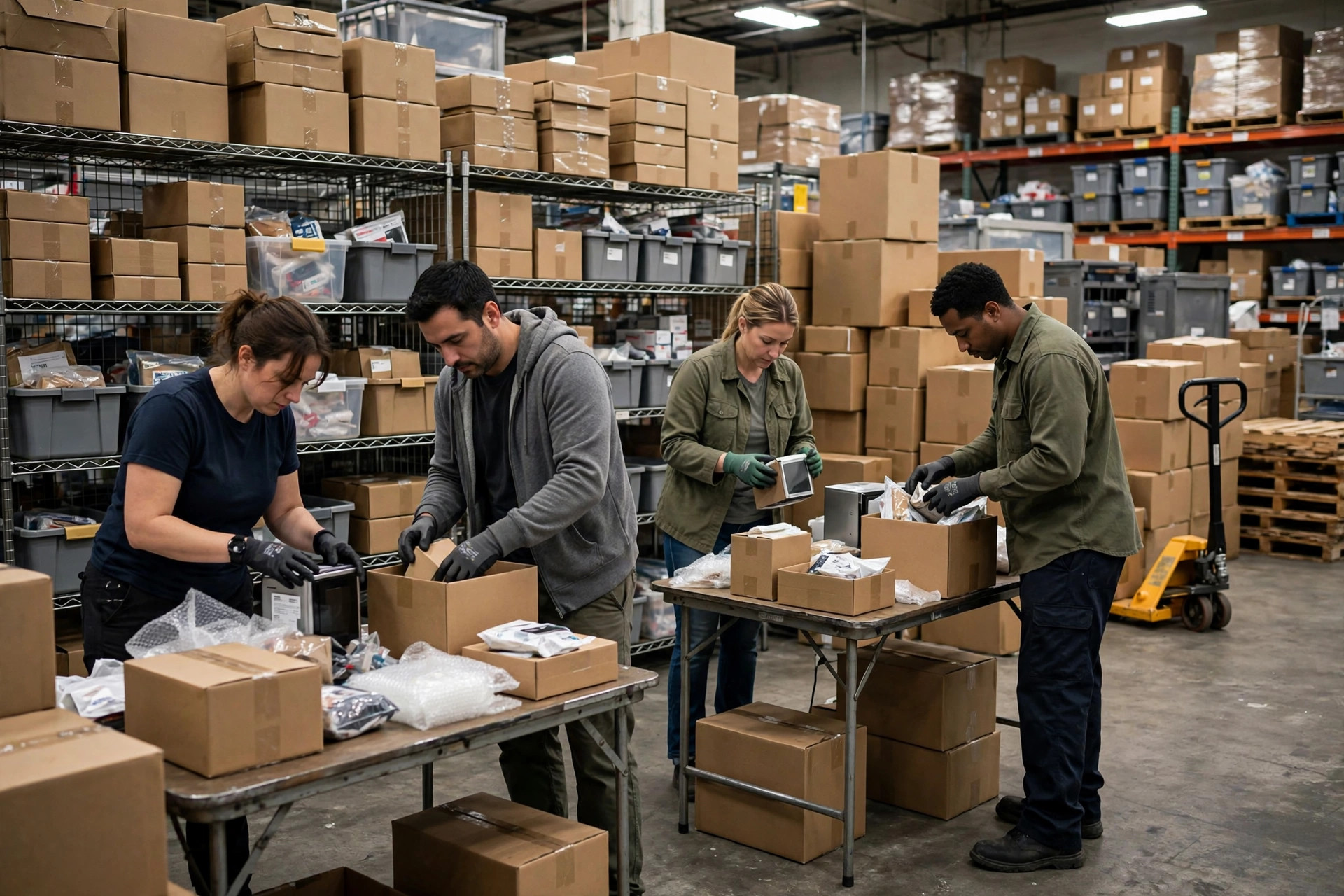
Last November, returns refurbishment and resale landed on my desk mid-peak-season: three pallets of customer returns piled up next to my receiving dock, boxes torn open, items half-broken. One of my sellers called about returns refurbishment and resale: "Xiao Ma, can you guys refurbish these returns and resell them? They're just sitting there anyway."
I said "let me look into it" while my stomach did flips. It sounds like a nice side income — until it turns into a money pit. A small warehouse like ours can't afford to burn cash on experiments. But returns can't sit there eating pallet positions forever, so we gritted our teeth and did it for over a year. Now I've got the math figured out.
Lesson One of Returns Refurbishment Resale: Not Everything Deserves a Second Life
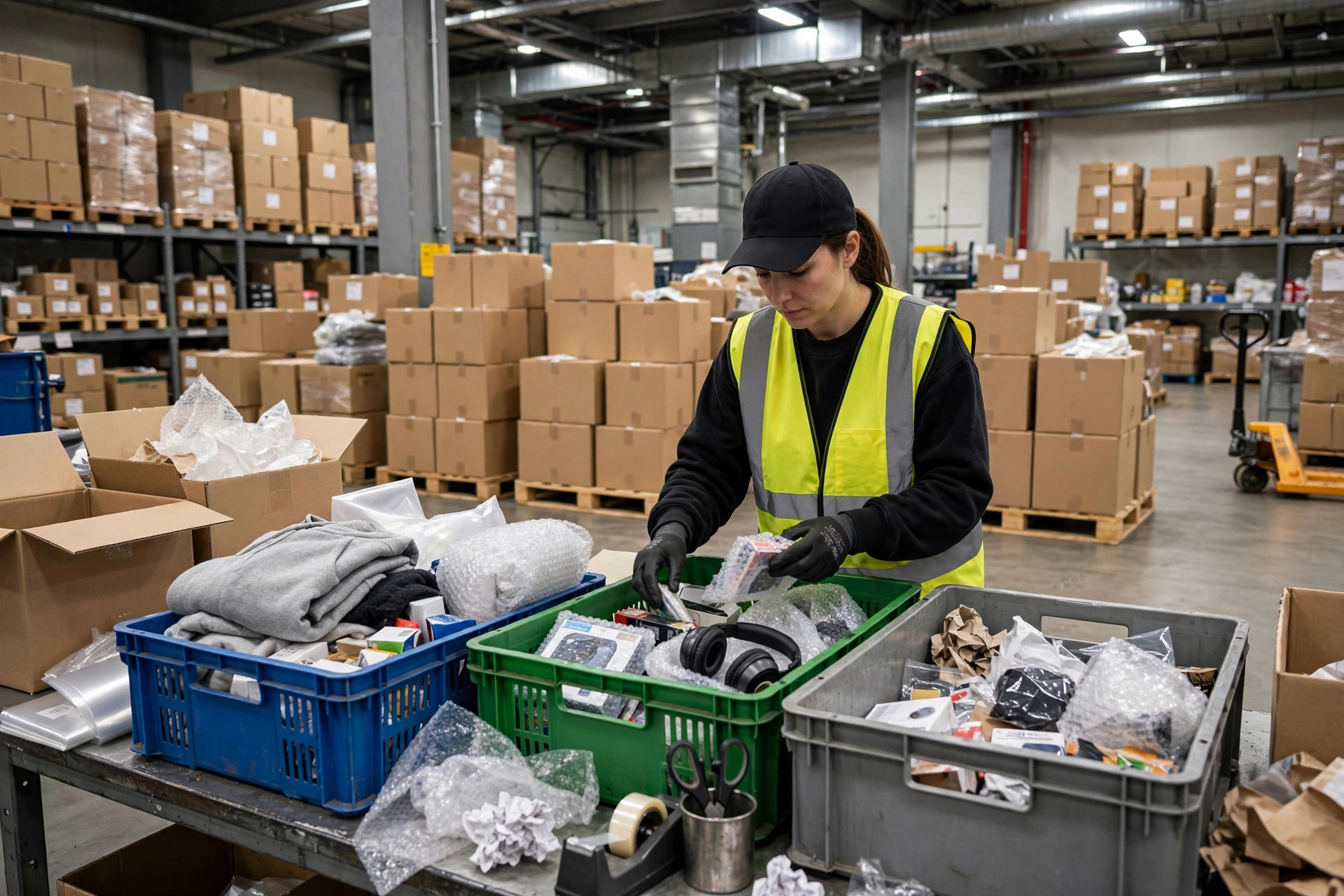
Our first month taking refurbishment jobs, we got burned. We said yes to everything, refurbished anything that came through the door, and then did the labor math: refurbishing a $9.99 gadget cost us more in labor than the thing was worth. After that we made a hard rule — every return goes through a four-tier sort before anyone touches a screwdriver.
Tier 1: Resell as-is. Packaging unopened or just the outer film removed, product untouched. Wipe it down, swap the outer box, list it. This is our favorite tier — basically zero cost.
Tier 2: Light refurb. Needs a basic cleaning, a replacement part, or fresh packaging. Think wiping down a small appliance, dropping in a missing manual, replacing a crushed box. One person should finish it in 15 minutes.
Tier 3: Parts harvesting. The whole unit is dead, but the parts are alive. Power cords, remotes, filters — we strip them and sell them separately or keep them as spares. Last year we tore down a batch of returned coffee makers and sold the cords and water tanks for a few hundred bucks. Happy accident.
Tier 4: Scrap. Broken beyond saving, refurbishment cost exceeds residual value. Straight to recycling or disposal, no second-guessing.
Our sorting method is gloriously low-tech: four colored pallets — red, yellow, blue, green — and every return gets tossed into its color zone the moment it arrives. Workers know where things go at a glance. Faster than building a returns-QC workflow in a WMS. The big-company SOPs aren't for us, but those four pallets have filtered out at least half the "not worth refurbishing" junk this past year.
Building a Refurb Station: One Table and a Supply List
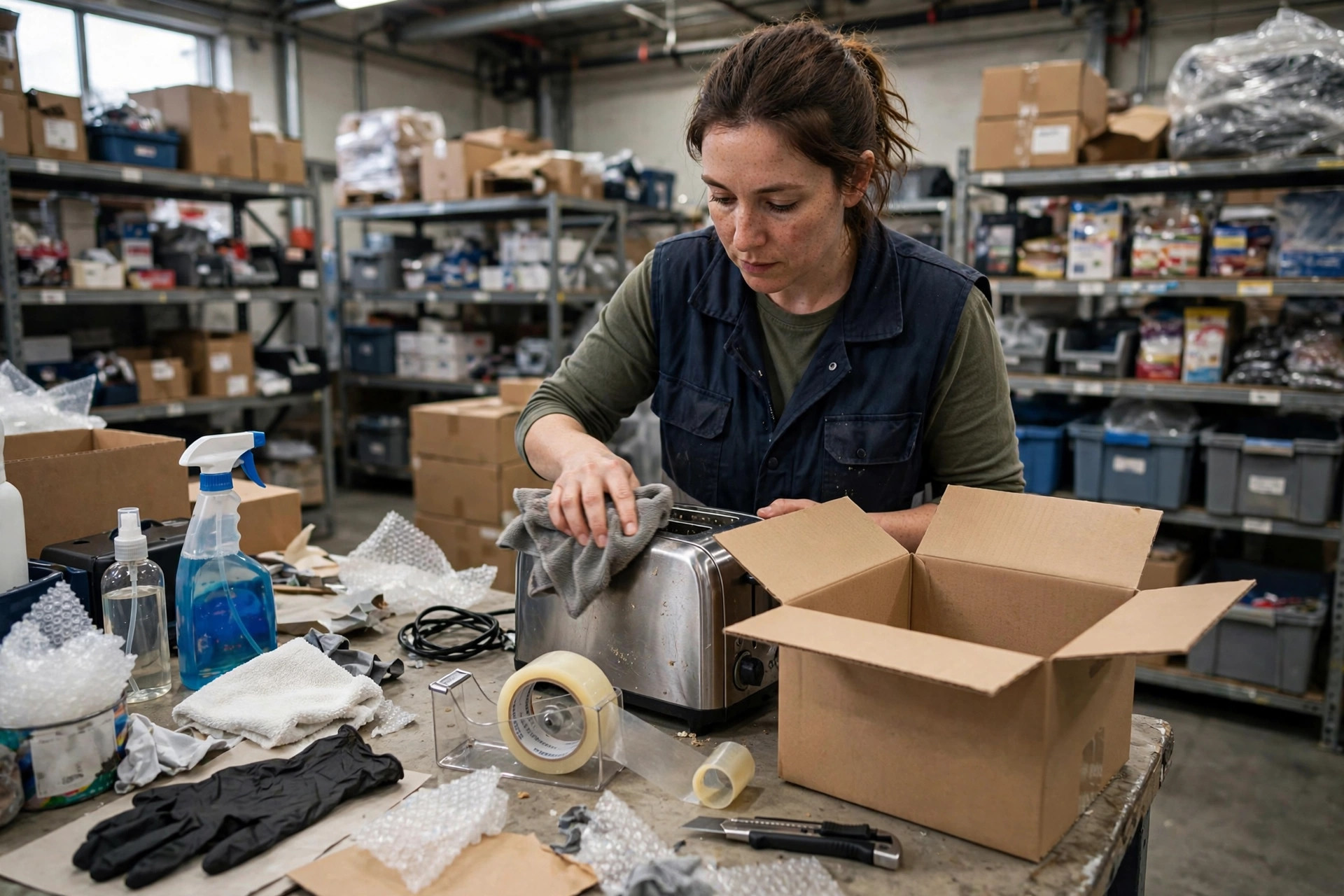
Don't let the word "refurbishment" scare you. Our refurb station is a six-foot folding table against the wall with a desk lamp on it. The supply list is taped to the wall, all cheap stuff:
- Alcohol wipes and microfiber cloths (buy in bulk, costs almost nothing)
- Shrink wrap + a heat gun (a few dozen bucks for the set, for re-sealing)
- A few standard box sizes, bubble wrap, packing tape
- Zip ties, label paper, a small screwdriver set
- One secondhand label printer (for printing "refurbished" stickers — non-negotiable)
The whole setup cost next to nothing. What matters is the flow: one person tears down and grades, one person cleans and repacks, and in peak season we add a third just for photographing and listing. Three people rotating — that's our little refurbishment line.
How We Price It: Two Models We Actually Tested
The pricing model decides whether you make money or not. We've tried two.
Model one: per-piece fees. Tiered pricing — a buck for as-is resell (just a wipe and a new box), $3.50 to $5 for light refurb, $2 for parts harvesting. Sellers like it because the math is transparent. But we got burned once: a batch was harder to refurbish than we estimated, and five bucks a piece didn't cover the labor. We worked for free.
Model two: base fee plus a cut of resale. We charge a base handling fee to cover our costs, then take a percentage of whatever the item resells for. We did this with a kitchenware seller — last fall he had a batch of returned air fryers, we refurbished them, they moved through secondhand channels, a couple hundred units. Our 15% cut earned us nearly double what per-piece pricing would have. The catch: the seller has to trust you, and the books have to be transparent — we reconcile line by line every month.
We push model two now, but only for sellers we've worked with for over six months. New sellers get per-piece pricing until trust is earned. Running a small warehouse means counting every penny — and having the guts to put the awkward stuff in writing up front.
The Real Math: Refurbish vs. Resell Price vs. Liquidate
Feelings don't pay rent, so here's the comparison table from our most common category — small appliance returns. These are our own warehouse numbers, take them as one shop's experience:
| Refurbish & resell | Liquidate in bulk | |
|---|---|---|
| Cost per unit | Labor + supplies, about $3.50–$5 | Near zero, ship the whole lot |
| Recovery price | ~70–80% of original price | ~15–25% of original price |
| Time per unit | 10–20 minutes | One bulk move |
| Cash cycle | Slow, sells piece by piece | Fast, one payout |
| Risk | Refurbished item may get returned again | No follow-up risk |
The takeaway is brutally practical: for items with a $40+ ticket price, refurbish-and-resell clearly wins — the margin covers the labor. Under $20, refurbishing is self-punishment; liquidate and move on. The $20–$40 zone depends on how easy the item is to fix — simple structure, refurbish it; complicated guts, let it go.
There's also a hidden line item: pallet position cost. Every day returns sit in our warehouse, they burn storage space. Refurbishment earns more per unit but turns slowly; liquidation sells cheap but frees space fast. When pallet positions are tight in peak season, we shut the refurb line down without hesitation and liquidate everything. In the slow season, when space is sitting empty anyway, the refurb line runs at full tilt. We eat according to the weather — that's small-warehouse flexibility.
The Counterintuitive Part: Some Returns Money Isn't Worth Earning
After a year of this, my biggest lesson is a little counterintuitive: the biggest trap in returns refurbishment resale isn't doing a bad refurb — it's refurbishing the wrong stuff.
Example. A seller sent back a batch of Bluetooth earbuds. Cheap units, but each one needed new ear tips, a cleaned charging case, re-pairing and testing — over 20 minutes a piece. The labor cost more than the product was worth, and we were losing money on every unit. Worse, the refurbished units came back at a higher return rate than new ones, and the bad reviews landed on the seller's account. We finally told the seller straight: we'll sort this batch, but we're not refurbishing it. He was annoyed at first, then did his own math and thanked us — because his previous refurbisher's fees plus second-round return losses cost him more than just writing the batch off.
So now, before we take any returns refurbishment job, we check three things: is the ticket price high enough, is it easy to refurbish, and is the second-sale return rate low? If any one of the three fails, we pass — no matter how much money is on the table. A small warehouse can't take the big orders, but we keep the freedom to pick our battles.
What to Refurbish, What to Walk Away From
For fellow small-warehouse folks, here's the honest version:
Worth refurbishing: higher-ticket small appliances (coffee makers, air fryers — simple structure, universal parts); cosmetic-damage returns (box is wrecked, product is fine); branded goods (they resell well, high residual value).
Walk away: cheap consumable gadgets (labor costs more than the item); swollen batteries (safety risk, hard no); personal hygiene products (nobody wants a refurbished one, and honestly, ew); complex electronics that need long testing (a small warehouse doesn't have a test lab).
Here's the honest truth. For a small warehouse like ours, this isn't a road to riches — it's a craft. Big 3PLs win on scale. We win on sharp eyes, fast hands, and knowing when to say no. A big company's returns center can process thousands of units a day; we do a few dozen on a good day — but our per-unit margin is no worse than theirs, because we only refurbish what's worth it.
This past year, refurbishment contributed close to twenty percent of our gross margin — enough to cover two workers with change to spare. For a small warehouse, that's plenty.
Small warehouses have their own way of surviving.
By Xiao Ma, Small Warehouse Owner