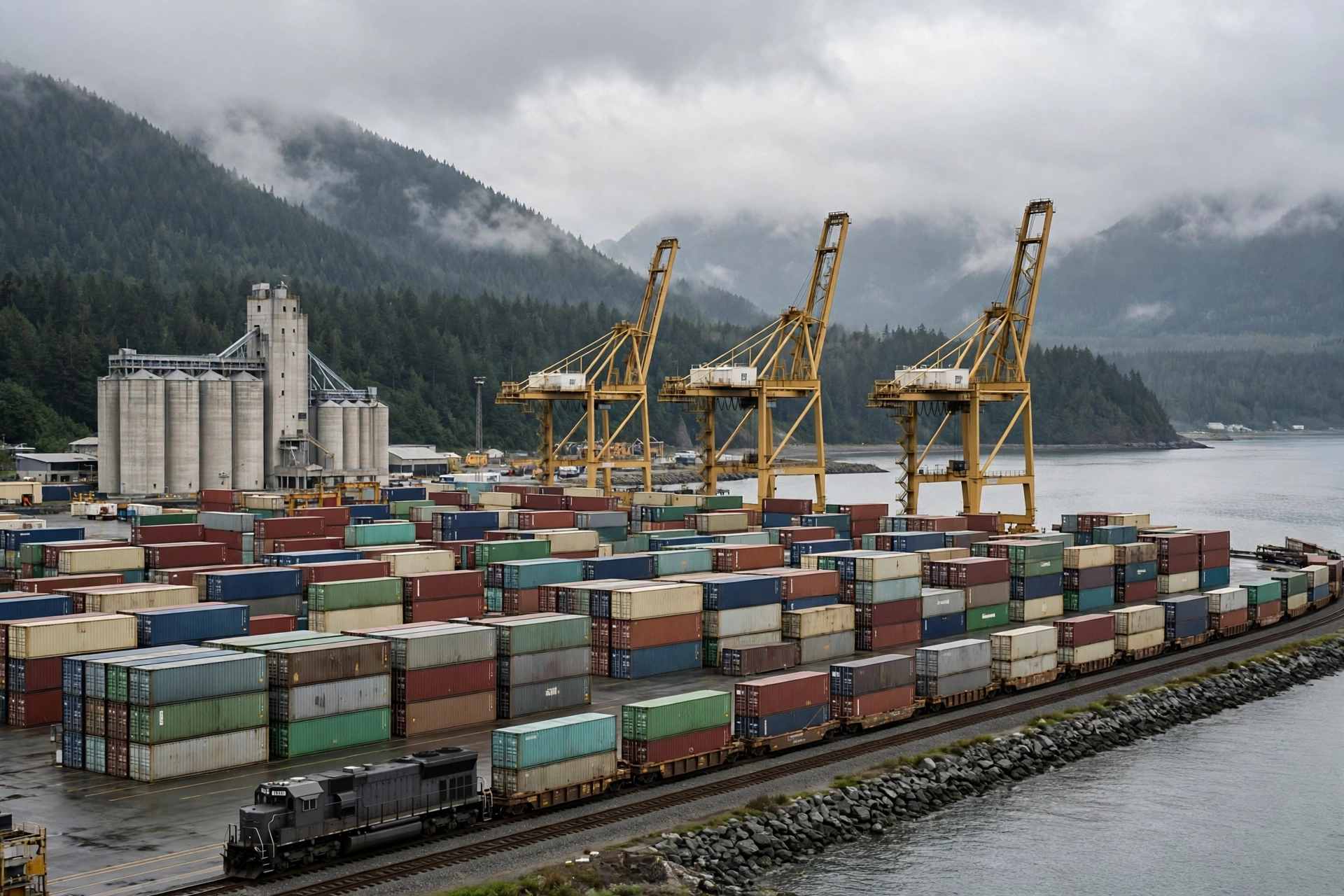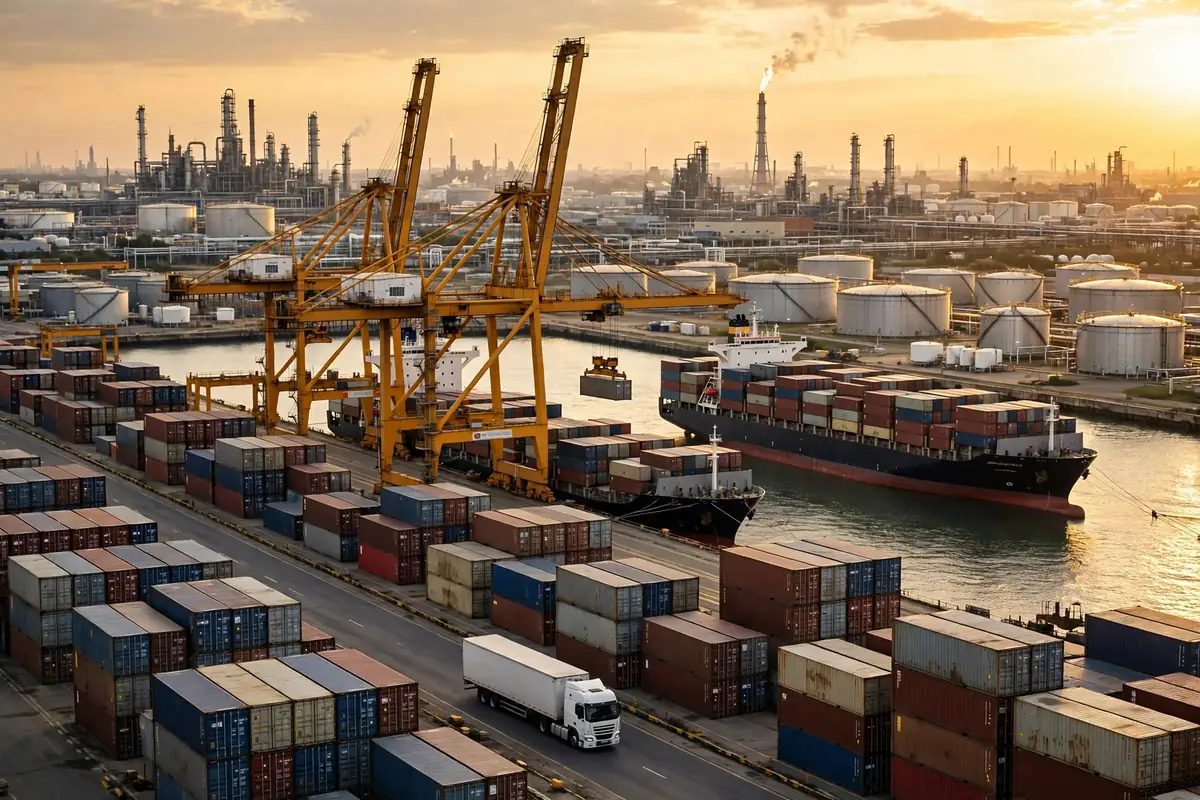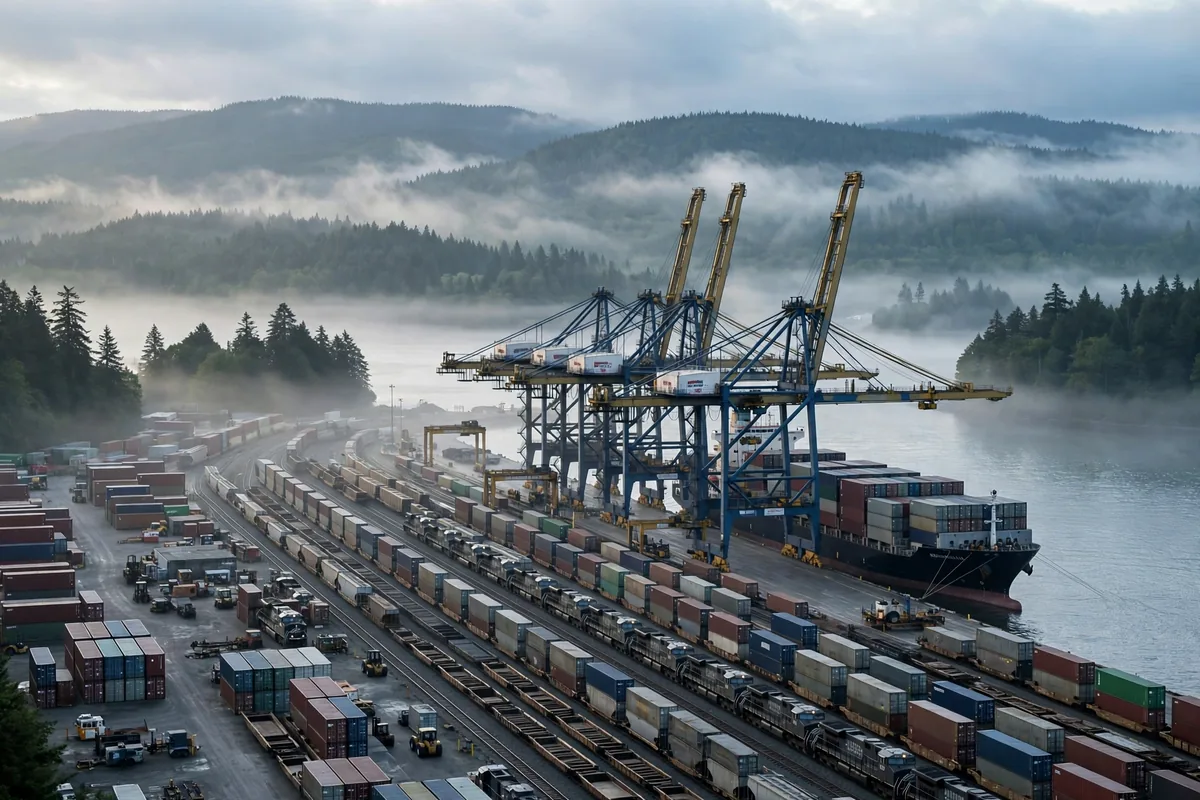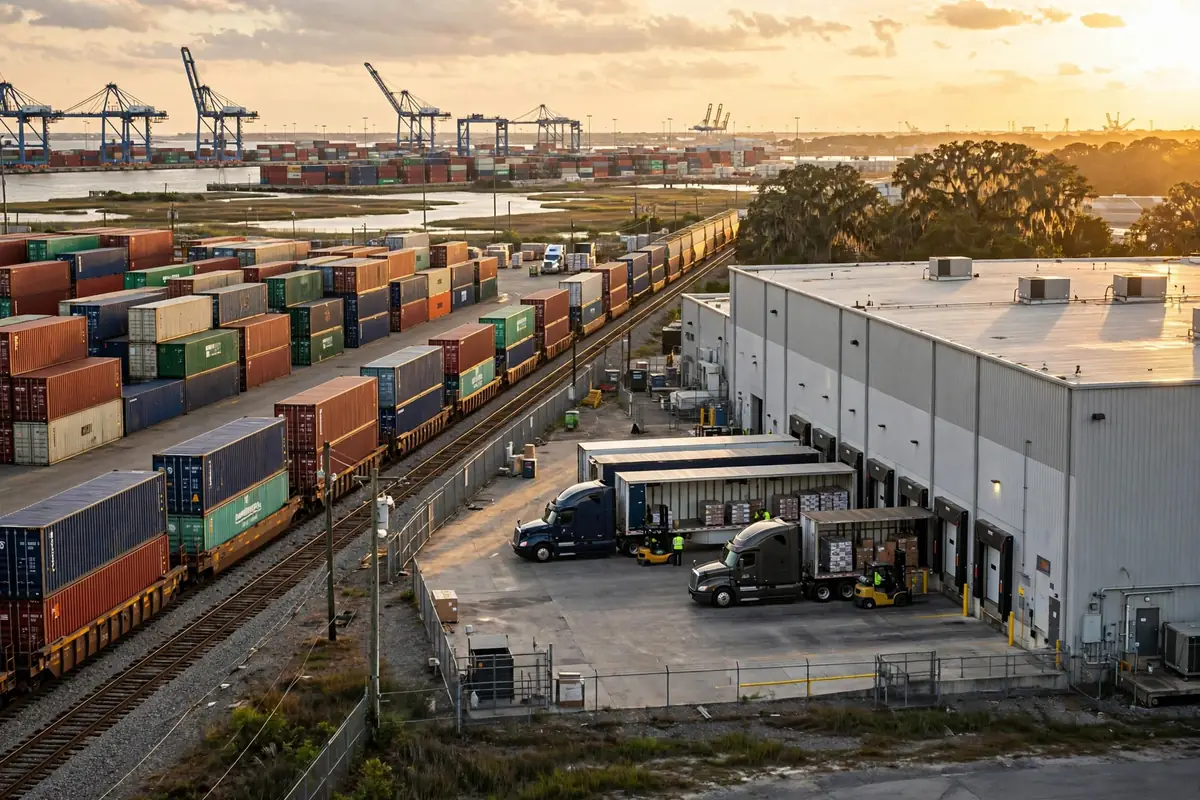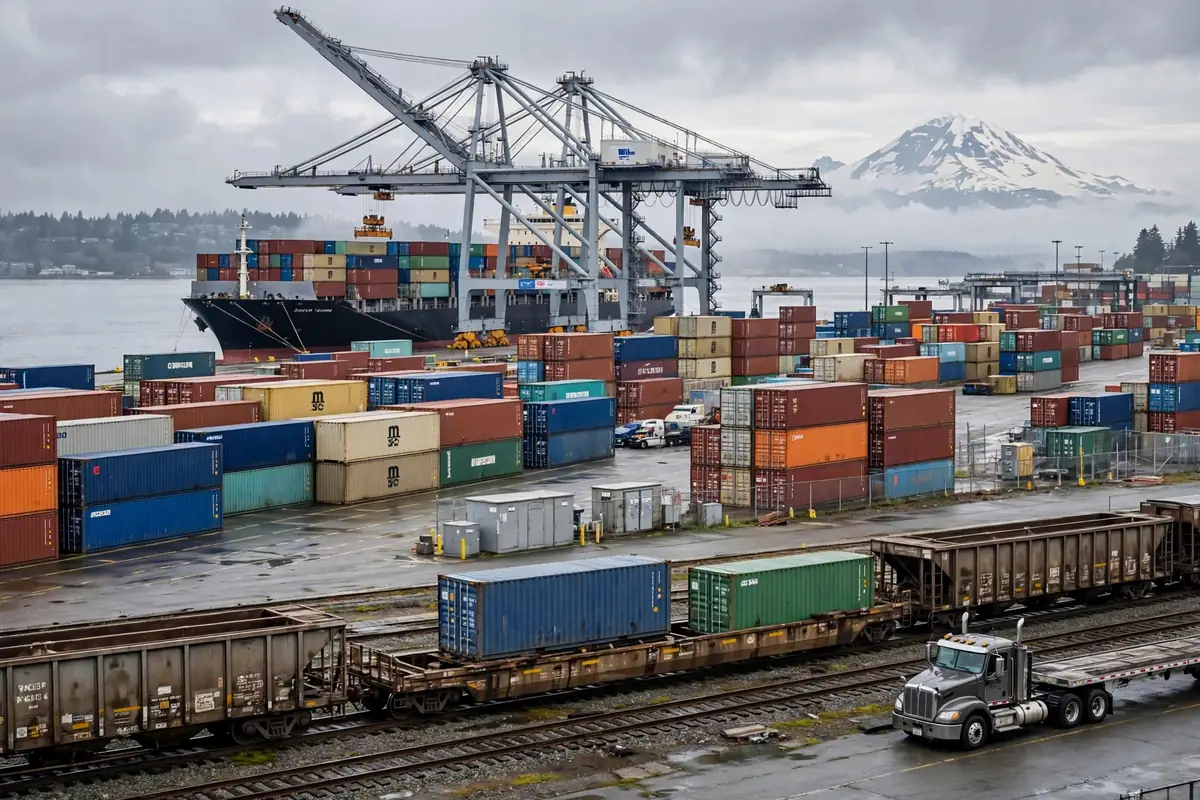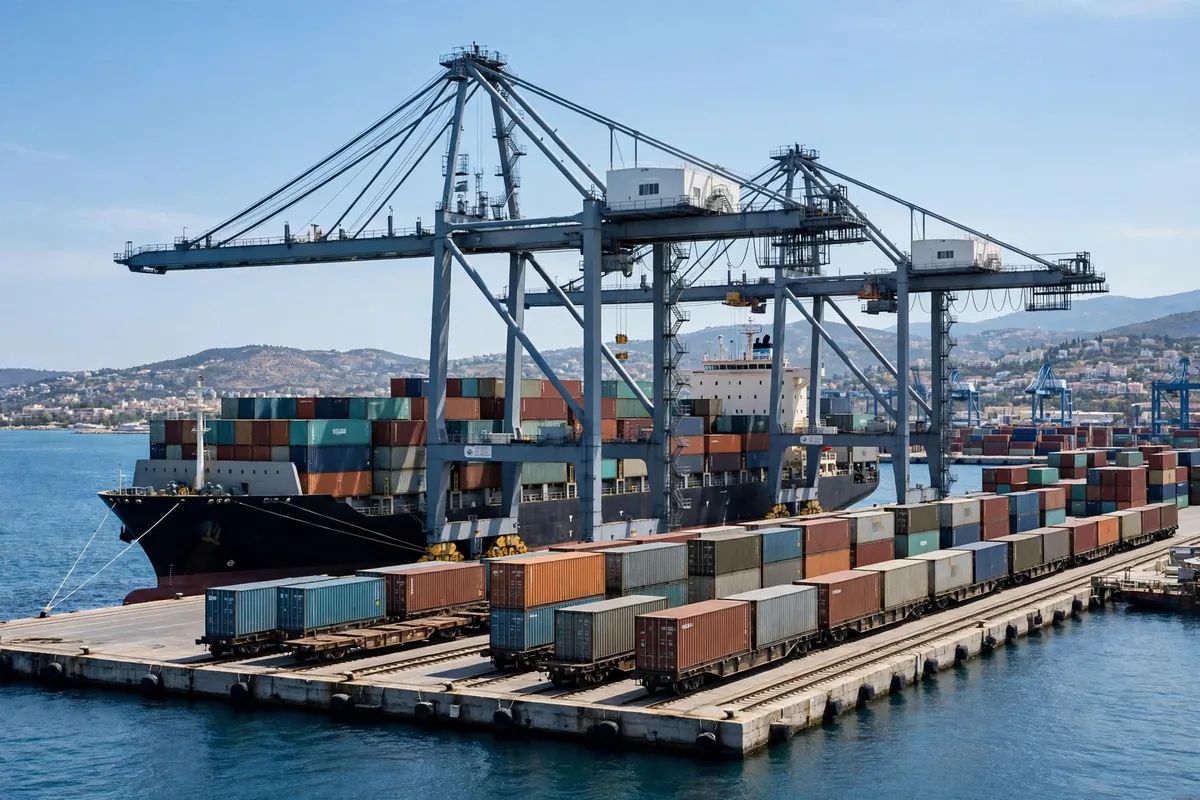
Let me start with the conclusion: what makes Piraeus Greece port warehouse logistics valuable is not the quay. It is the railway behind the quay. Cargo sails from China, passes through the Suez Canal and reaches Piraeus, and that is only the first half. The second half is getting it off the ship, onto a train, and into Central Europe. People who judge this port by throughput alone are doing someone else's math. People who run this lane do the math on the handover.
I have seen too many decisions made off a port ranking. Piraeus is Europe's fourth-largest container port. In 2023 it handled more than 5 million TEU, and in 2024 it handled 4.8 million TEU, down 5.8% from 5.1 million in 2023. Put those numbers on a slide and plenty of people conclude the port is fading. This story has two sides. When the Red Sea crisis hit in 2024, large numbers of vessels diverted around the Cape of Good Hope, and Piraeus, sitting right after Suez, took the hit first. The volume drop was an external shock, not a port falling apart. Judge a port not by one year's number, but by where it falls when it falls, and whether it bounces back.
What really changed behind Piraeus' 4.8 million TEU
Piraeus climbed from 880,000 TEU in 2010 to more than 5 million TEU in 2023, better than fivefold in thirteen years. That was not built by adding berths alone. It was built on positioning: the first deep-water European port after Suez, so Chinese cargo bound for Central and Eastern Europe no longer has to sail all the way around to the North Sea to unload.
The China-Europe Land-Sea Express is that positioning turned into a service. In 2022 it carried 181,000 TEU, up 18.4% on the year before. Today it reaches 9 European countries and more than 1,500 service points, and cargo bound for Central Europe arrives up to 10 days faster than by sailing to a northern European port. Ten days is real money for seasonal goods and replenishment stock. Cargo that arrives ten days late for the Christmas season does not sell at the same price.
But let me pour some cold water on that. 181,000 TEU against a port total of 4.8 million TEU is under 4%. The Land-Sea Express is a good lane, but it is not the port's mainstream today. The mainstream is still sea transshipment and short-sea traffic around the Mediterranean. Anyone making decisions needs that ratio in mind, and should not let the words "express line" create the impression that every box can ride the rails into Central Europe.
What the Red Sea year really showed about Piraeus
2024 was the year The port showed what it is made of. When the Red Sea crisis pushed vessels around the Cape of Good Hope, The Greek port, sitting right at the mouth of the Suez route, took the first wave of the impact in full. The port handled 4.8 million TEU for the year, down 5.8% from 5.1 million in 2023. Piers II and III together handled 4.2 million TEU, down 7.8%, while Pier I actually grew 10% to 563,000 TEU.
Here is the interesting part: earnings did not fall with volume. The Port Authority took in about 251 million euros in 2025, up 8.6% year on year. And in the third quarter of 2025, the port handled 1,090,284 TEU in a single quarter, up 11.4%, with volumes climbing back. What does that tell us? That this port's foundation is not one that collapses the moment the canal route is disrupted. Routes come back, and cargo comes back with them. The real risk for anyone running this lane is not one crisis. It is concluding during a crisis that the port is finished, moving all the cargo away, and then finding, when you want to return, that the train slots and yard positions have been taken by someone else.
Three places where the handover breaks down
Put simply, the hardest part of sea-rail intermodal was never the sea leg or the rail leg. It is the yard where the two meet. In my experience, the chain breaks in three places.
The first is the yard itself. Boxes come off the ship and wait in the yard for a train. Trains do not run on demand; block trains run on fixed schedules. When a sailing slips, yard cargo has to be moved and re-sorted. Once the yard fills up, discharge slows down, sailings slip further, and the cycle feeds on itself. When volumes dipped in 2024, yard pressure eased. The moment volumes bounce back, the yard is the first bottleneck.
The second is train frequency. The rail ramp at The port can handle up to around ten trains a day, which sounds like plenty until you spread it across 9 countries and more than 1,500 service points. Each direction gets only so many departures. In peak season, cargo that misses a train waits in the yard or shifts to road. Road can rescue a shipment, but its cost and timing play by different rules.
The third is the paperwork handover. The ocean bill of lading, the rail consignment note and the EU customs file all have to line up at the same moment. If any one of them arrives late, the box spends another day in the yard. My rule is to have the customs file ready before the vessel berths, not to start the process after the cargo is ashore. One day of process brought forward is one day less of yard pressure.
Who this lane is actually for
When you do the math, do not count freight alone. A The Greek port sea-rail calculation breaks into three parts: the sea leg saves the time of sailing around to northern Europe, the rail leg costs more than all-sea but far less than air, and the yard and transfer charges are the part people most often forget. My judgement is that this lane suits three kinds of cargo best: Central European replenishment that needs speed but cannot pay for air freight, seasonal goods, and cargo whose destination is already in Central and Eastern Europe, with no need to loop back from a northern port.
And there are three kinds of cargo it does not suit: cargo bound for Western and Northern Europe, where routing through The port and hauling back is a detour; bulk cargo with no time pressure, which ships cheaper through a big northern port; and cargo with complicated documentation, where every extra transfer adds another risk.
There is one more trade-off that many people never think through. Ten days faster is an advantage, but train frequency and yard flexibility are weaknesses. Certainty of transit time is sometimes worth more than transit time itself. One block train departing two days late turns a ten-day advantage into eight. Anyone building a plan should price that swing in, and never schedule production against the most optimistic timetable.
The The Greek port Port Authority earned about 251 million euros in 2025, up 8.6% year on year, which says the port's ability to make money did not fall with its throughput. The port is moving toward smarter, greener operations, with equipment upgrades and process changes under way. But equipment and process fix efficiency inside the port. They do not fix the flexibility of the handover. That flexibility depends on three things together: train frequency, yard capacity and paperwork prepared in advance.
So here is the question I will leave you with: when your cargo moves through The port, are you chasing those ten days, or are you buying a stable corridor into Central Europe? The two goals demand different playbooks. Chasing ten days means watching sailings and train departures. Buying a stable corridor means watching the yard, train frequency and customs prepared in advance. Know which one you are after before you decide whether this lane is worth it.
By Lao Mi, Supply Chain Veteran (20 yrs)