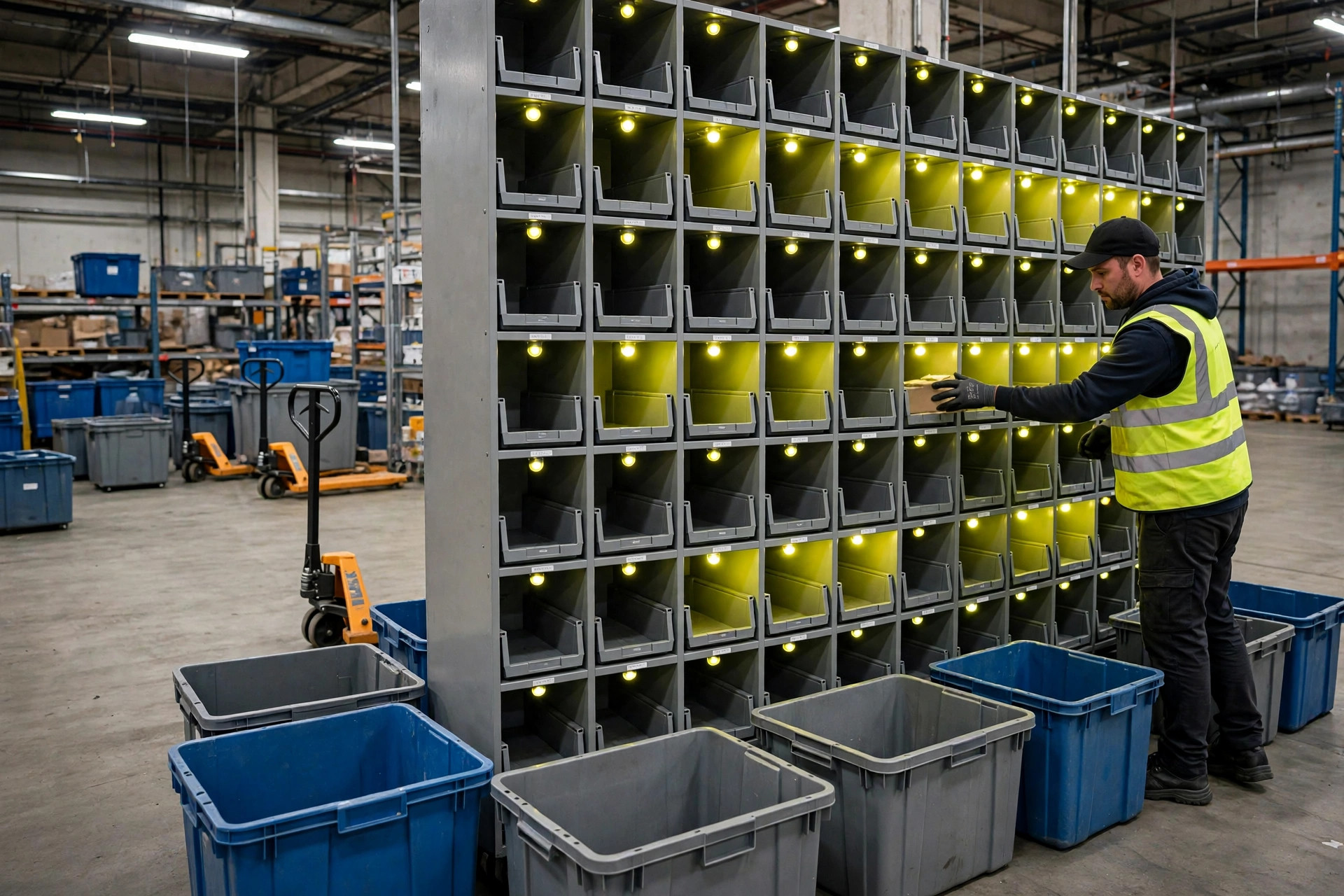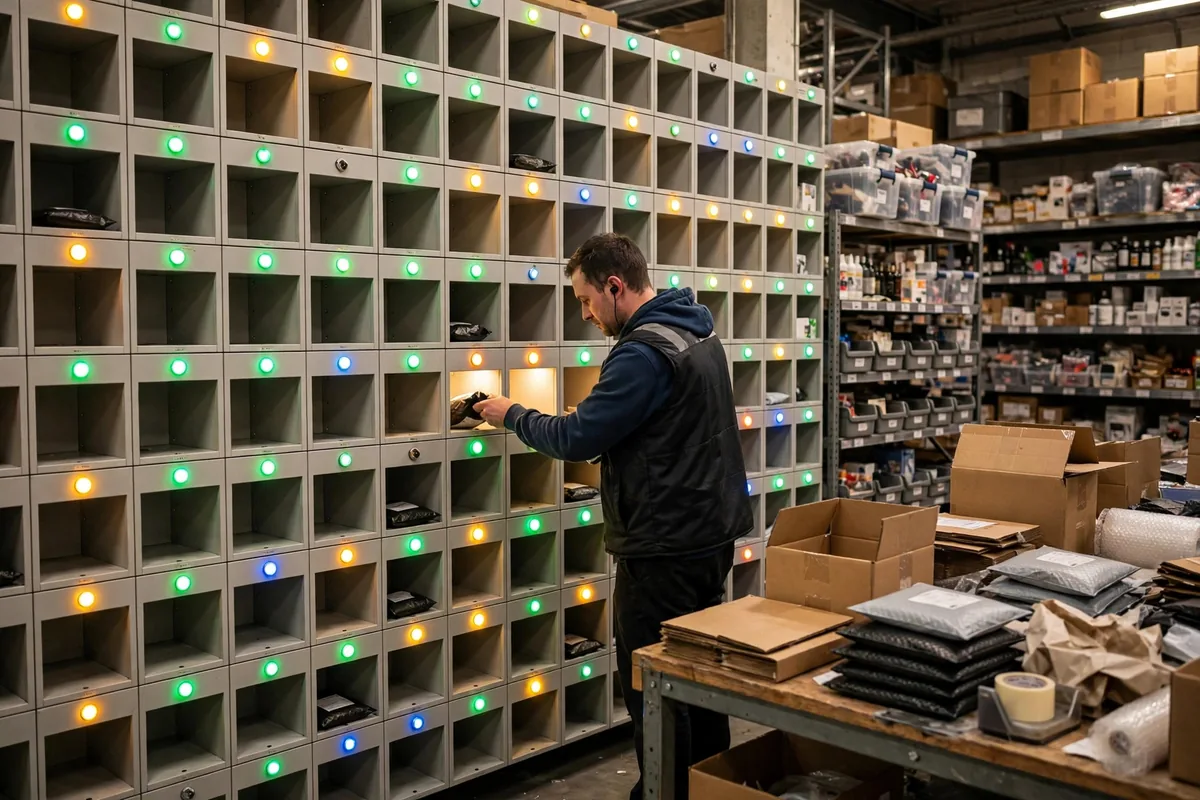
Last fall I walked into an e-commerce warehouse in Dongguan for a routine inspection. The pick to light system had been running for two years, more than 300 light positions across the pick face, and a whole row was dark. The warehouse manager told me those lights had been dead for almost two months. Nobody had fixed them. Pickers were working from memory and paper lists, and the error rate was climbing in plain sight. So I asked him the obvious question: when you bought this system, did the vendor ever quote you an annual maintenance price? He shook his head. They had only ever talked about the installation price.
That is what most people miss about pick to light. Everyone stares at the one-time price and forgets the system behaves like a car: the fuel, the servicing, and the replacement parts are the real long-term cost — that is the pick-to-light system cost nobody puts on the quote. Lamps burn out, modules age, controllers fail, and the moment the business grows you need to add pick faces. If you want the broad picture of how a pick to light system works and where it fits, start with the overview of pick-to-light systems. This piece does something narrower: it works through the running bill, year by year, after the installers have left.
Where the Money Actually Goes
The whole thing has three layers: the light modules at the bottom, the zone controllers in the middle, and the software on top. The light modules are the consumable layer. There are the most of them, and they fail first. One zone controller covers a whole section, so when it dies, the whole section goes dark. The software is the least trouble — usually one annual service fee and you are done.
I have seen too many warehouses budget exactly zero for maintenance. Not because they do not care, but because nobody ever told them the number. The vendor's quote lists the installation price in black and white, and the maintenance line either says "to be discussed" or "first year free." First year free is the worst of the two. The lamps are brand new in year one, so of course nothing breaks. Then year two arrives, and so does the bill.
Here is my rule of thumb: the annual pick-to-light system cost should run about 5 to 8 percent of the installation price. Below that range, either your pick face is small and your picking intensity is low, or somebody is quietly holding the line — leaving dead lamps unrepaired and paying for it in errors instead. Above that range, you should be asking whether a batch of controllers is failing or whether that lamp batch was defective from the start.
Pick-to-Light System Cost: Lamps and Modules Are Cheap to Replace, Expensive to Ignore
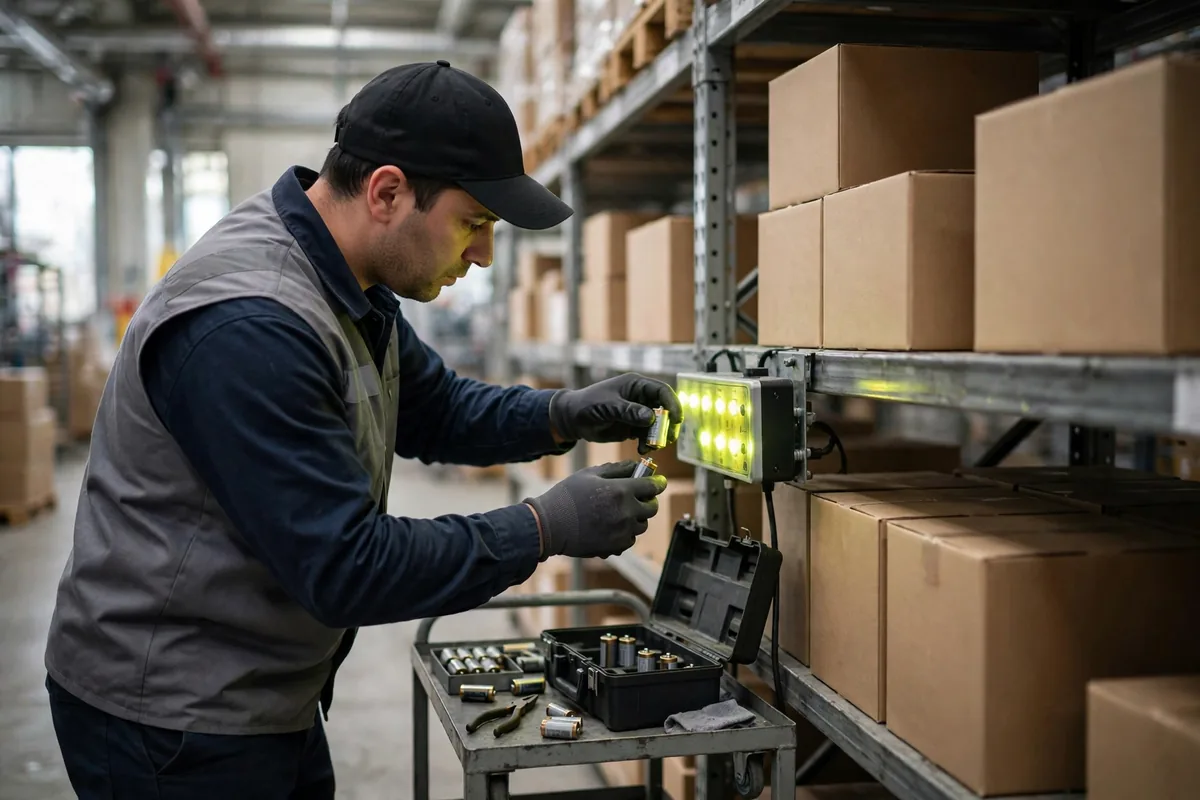
Lamps and light modules are the biggest slice of the maintenance bill. A picker presses that confirm button hundreds or even over a thousand times a day, the button is a mechanical part, and the lamp runs hot for hours on end. Nothing lasts forever. From the projects I have followed over three or four years, a warehouse of medium picking intensity should expect an annual module failure rate of roughly 3 to 5 percent. That is not a vendor datasheet number. It is the figure I carry in my head after watching several warehouses live with these systems.
Take a 300-position pick face. At that failure rate, 9 to 15 modules die every year. Replacing one module, parts plus labor, runs in the range of 40 to 70 US dollars in the hypothetical example I am using here, so the yearly parts bill is only a few hundred dollars. That sounds like nothing. The expensive part is the downtime. A dead pick position either sits idle or falls back to manual picking. The picker walks further, double-checks more, and throughput drops while errors climb. Back in that Dongguan warehouse, 12 dead positions sat unrepaired for two months, and pickers were losing half an hour a day in that zone just finding stock and checking quantities. When peak season hit, the zone blew up. Nobody books that loss under maintenance, but it is real money all the same.
One more trap: buy spares in the same batch and the same model. Lamps from different batches differ slightly in brightness and color, and when they are mixed along one pick line, pickers' eyes tire faster and the chance of reading the wrong lamp goes up. Do not buy cheap off-brand spares to save a few dollars either. If the connector does not match or the protocol does not talk, you end up replacing the whole batch, and that costs far more.
Pick-to-Light System Cost: Controllers and Wiring, the Maintenance Nobody Budgets For
A controller rarely fails, but when it does, it takes a whole section with it. One zone controller drives dozens of light positions, and it hates two things: dust and heat. Warehouse dust gets into the control box, cooling gets worse, and once summer temperatures climb, you get crashes, reboots, and lost configurations in rotation.
I visited an auto parts warehouse in Changzhou where the controllers were mounted on the racking right above the pick face. In summer the warehouse hit 38 degrees, and inside the control box it must have been close to 50. Two controllers died in one year. We moved the boxes onto ventilated columns, fitted dust screens, and cleaned them out once a quarter. The following year, not one failed.
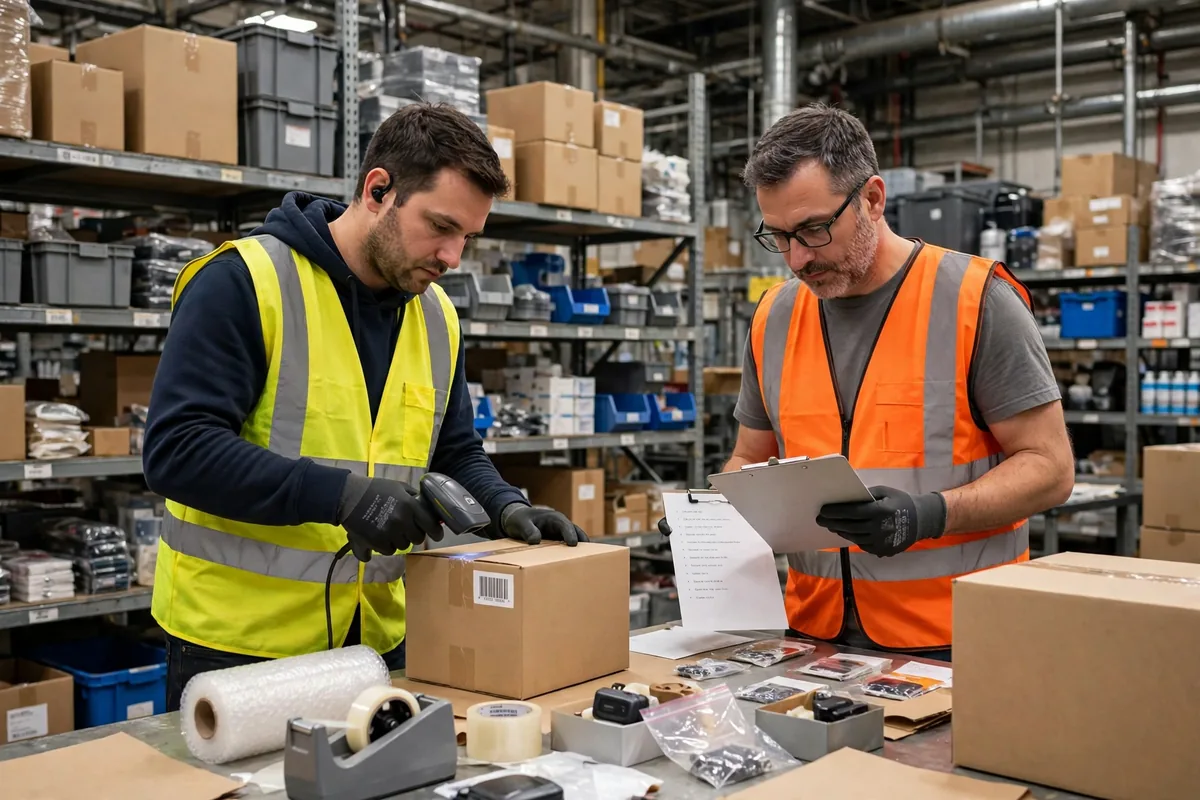
Wiring is the same story. A cable gets clipped by a forklift or crushed under a carton, and slowly the connection goes intermittent — a lamp that flickers on and off until you finally discover an oxidized connector. Most maintenance work is exactly this kind of unglamorous job: clearing dust, tightening screws, checking connectors. My recommendation is a full-line inspection every slow season: press every confirm button once, check every controller status light, and log anything odd. It takes less than a day, and it catches most problems before they become peak-season emergencies.
Expansion: When to Add Faces, When to Replace the Lot
When the business grows and you need more pick faces, that is the biggest variable item in the maintenance bill. Adding a row of lamps looks simple — a few modules, a few cables — but it depends on whether the controller still has free ports, whether the software license covers more positions, and whether the power supply has headroom. If the controller ports are full, one extra row means one extra controller plus a license upgrade, and the cost jumps all at once.
Here is the decision framework I use, built on three numbers. First, the utilization of your existing positions: if a large share of lamps light up only a few times a day, the problem is slotting, not capacity. Fix the slotting and the batching before you add lamps. Second, the marginal cost of expansion: take the all-in cost of adding one pick position and divide it by the extra order lines it picks each day. If that number is higher than the per-line cost of a picker doing the same work, expansion does not pay. Third, the remaining life of the system: if the controllers are more than five years old and spares are going out of production, ask the vendor how many more years this generation will be supplied before you add a single face. To give a sense of scale, all figures here are hypothetical examples: a 300-position warehouse might run roughly 500 to 800 dollars a year on module replacements, 300 to 500 on controller and wiring inspection, and 700 to 900 on the software service fee — a little over 1,500 to 2,000 dollars a year in total. Adding 50 positions in one go might cost roughly 3,000 to 4,000 dollars all in, under the same hypothetical assumptions.
Here is the counterintuitive part: the most expensive moment in a pick to light system's life is not the purchase, and it is not the repair. It is the moment when you should have replaced the generation but keep patching the old one instead. The old controller is out of production, spares come from cannibalized units, the lamp model is discontinued, and adding one face takes three months of waiting. Every dollar after that point is sunk cost, and the pick-to-light system cost stops being maintenance and becomes good money after bad. My dividing line is this: if a single year's maintenance bill passes 12 percent of the installation price, or if lead time on a core spare passes one month, stop patching and seriously evaluate a full replacement.
So is the money worth it? That comes down to one number: the maintenance cost per thousand order lines picked. Work it out against manual picking and rework, and the answer writes itself.
By Da Liu, Automation Engineer