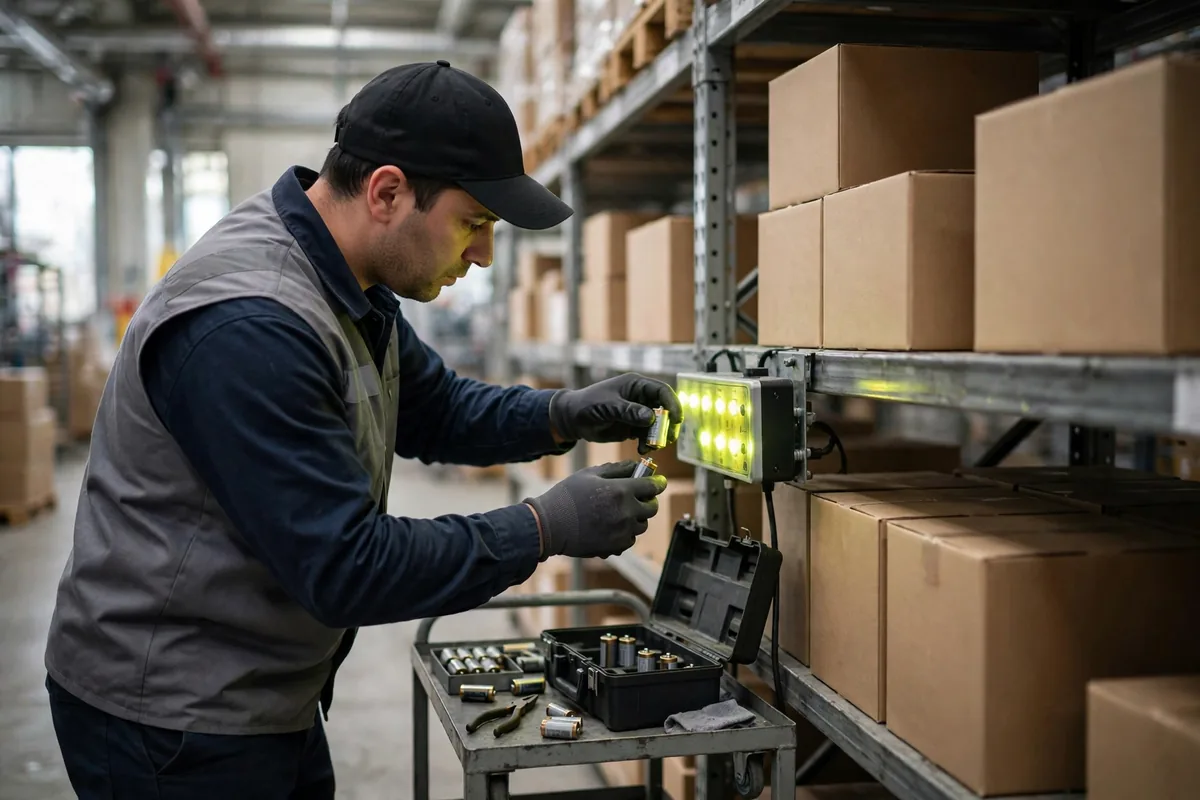
Principles first, price second. That is the only order in which a pick-to-light conversation does not end in regret, and it is the right way to judge pick to light system cost. Think of it this way: pick-to-light puts a small talking light on every pick location. The system tells the picker which bin to go to and how many units to take, and the picker presses the light to confirm. The light itself is cheap. What costs money is making hundreds or thousands of lights all obey the same conductor.
In 2023 I worked on a retrofit at an e-commerce warehouse in eastern China with roughly 800 pick locations and more than ten thousand order lines a day. Before the retrofit, pickers worked from paper lists and memory, and the mispick rate sat around 0.6 percent. After the lights went in, pickers stopped hunting for locations on a sheet, and the mispick rate fell below 0.1 percent. The owner later told me something honest: the lights were the small part of the bill. Wiring and integration were the parts that hurt. So this article is not about how clever pick-to-light is. It is about what pick to light system cost actually consists of.
Pick to Light System Cost, Broken Into Five Lines
Most buyers start by asking the price of one light. That is like renovating a house and only asking the price of one brick, while ignoring the wiring and the labor. Here is the cost structure of a mid-sized system. Treat the proportions as a budgeting guide, not a vendor quote, because prices vary widely by supplier, rack type, and region, so always price against a real quote for your own building:
| Cost line | What it pays for | How it behaves |
|---|---|---|
| Lights and display modules | The light, quantity display, and confirm button at each location | Scales linearly with location count, and unit price improves with volume |
| Controllers and zone control | One controller conducting a group of lights, like a conductor leading a section of an orchestra | Fixed per zone, so the cost per light falls as locations grow |
| Wiring and installation | Power, signal cable, cable trays, and mounting labor | Retrofits cost more than new builds, and taller racks cost more again |
| System integration | Connecting order flow, inventory deduction, wave release, and exception handling to the warehouse system | The most underestimated line, and the most likely to be reworked |
| Maintenance and spares | Replacement lights, spare controllers, and annual inspection | Budget a small percentage of system cost per year, not zero until something breaks |
Do you see the pattern? Pick to light system cost is dominated not by lights but by making lights obedient. Controllers must be sized per zone, wiring must follow the racks, and integration must carry orders, inventory, and exceptions without gaps. A buyer who only compares light prices will always pay the difference back in integration later.
Here is a second case that draws the boundary. In 2024, an auto-parts warehouse in northern China had just over 300 locations, a messy catalog, and few lines per order. The owner wanted lights too. But when we ran the numbers, the fixed costs of wiring and integration, spread over only 300 lights, made the cost per light far higher than at the 800-location site. That warehouse skipped lights and went with barcode verification plus zone picking instead, and its mispick rate came down anyway. That is the dividing line: when location count is too small, fixed costs cannot be spread thin enough, and lights stop making sense.
The Payback Math for Pick to Light System Cost: Fewer Mispicks, Faster Training
With costs broken down, here is the payback framework. Payback depends on exactly two savings: the cost of mispicks you no longer have to fix, and the training time you no longer have to pay for. Plug your own warehouse's real numbers into these formulas:
- Monthly mispick savings = monthly order lines x (mispick rate before - mispick rate after) x cost per mispick, including returns, reshipment, customer service, and freight
- Monthly training savings = new hires per month x (days to proficiency before - days after) x daily labor cost
- Payback in months = total system investment / (monthly mispick savings + monthly training savings)
Work through an illustrative example so the mechanics are clear. A warehouse processes 100,000 order lines a month, and its mispick rate falls from 0.6 percent to 0.1 percent, which means 500 fewer mispicks a month. At an illustrative handling cost of 20 currency units per mispick, that saves 10,000 a month. New hires reach proficiency in 3 days instead of 10, saving several thousand more a month. Together, roughly 15,000 a month in savings against a 360,000 total investment gives a payback of about 24 months. That figure is not a promise. It is arithmetic. Change your mispick rate, your handling cost, or your investment, and the payback moves with them, so pull all three numbers from your own reports before you decide.
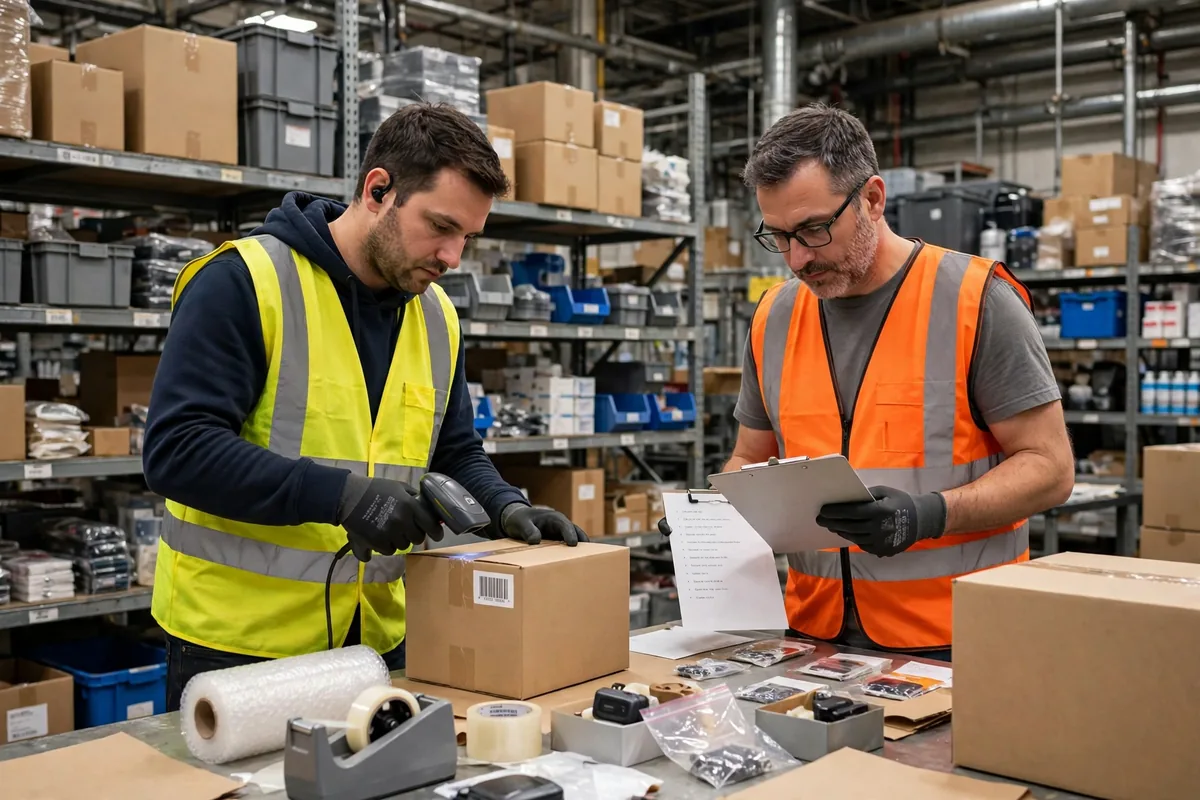
Now the counterintuitive judgment, and I will be blunt about it: warehouses with an already-low mispick rate are the hardest ones to justify lights for. If you are already below 0.2 percent, there is little room left for lights to improve, and the savings may not even cover maintenance. Pick-to-light rescues warehouses where finding stock is slow, mispicks are frequent, and new hires take forever to get up to speed. It is not decoration for a warehouse that already runs well. And let me call out a fake requirement directly: a warehouse with a few hundred order lines a day and a small catalog does not need lights at all. Barcode verification and zone discipline will do the job for a fraction of the price.
So here is the selection line in plain terms. High daily order lines, dense locations, and fast picker turnover make pick-to-light worth pricing seriously. Low volume and a fast-changing catalog mean you should fix zoning and scanning verification first. If you want the engineering side, how the lights and controllers actually talk to each other, that is covered in this overview of how pick-to-light systems work. This article had one job: to make the money clear.
Whether this money is well spent comes down to one number: payback in months.
By Da Liu, Automation Engineer