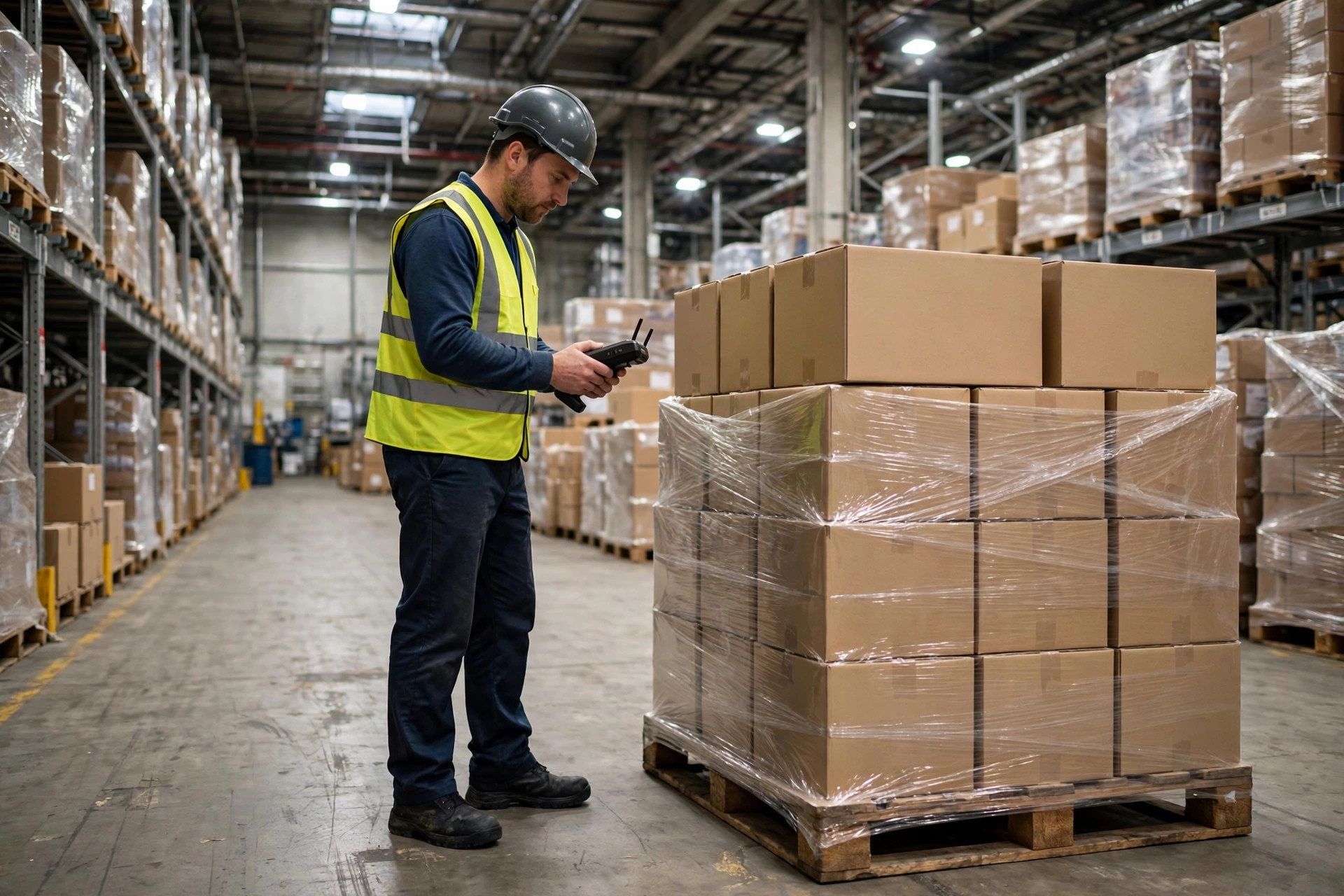
Here's my verdict up front. If your warehouse picks fewer than 3,000 order lines a day, pick-to-light is burning money. If you pick more than 8,000 lines a day out of a dense flow-rack zone and you're still married to scan guns, you're subsidizing your equipment budget with labor cost. Voice sits in the middle — genuinely flexible, but it turns your people into the hardest variable in the system to manage. Get these three equations wrong and whichever one you buy is wasted money.
Those cutoffs are my rules of thumb from twenty years on the floor, not an industry standard. Where your building actually sits — read on.
Speed: lights win because nobody has to think
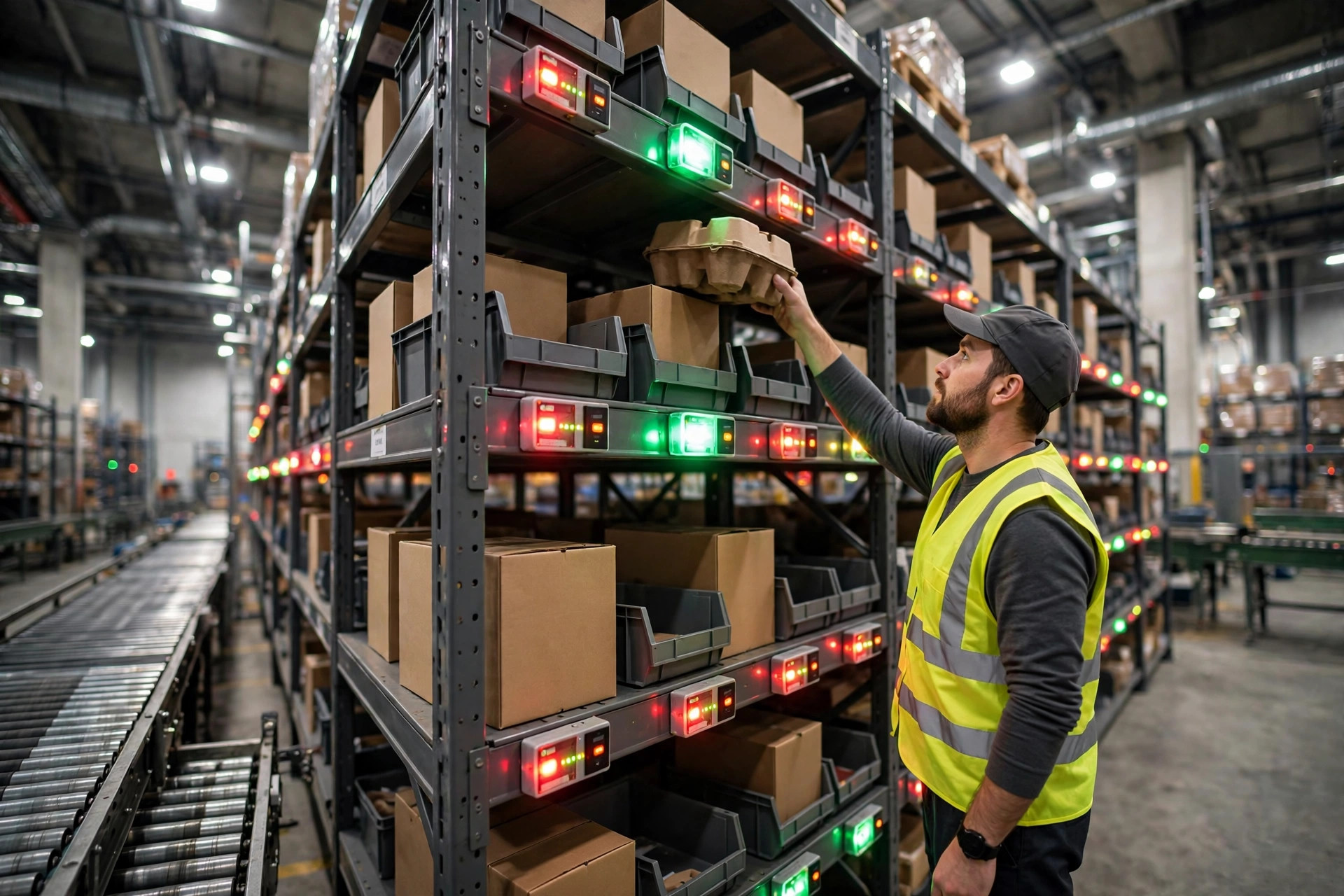
Pick-to-light's speed advantage has nothing to do with people moving faster. It wins because people don't have to think. A light comes on, the display tells you the quantity, you press the button to confirm, you move on. No reading orders, no hunting for locations, no decisions. Published comparisons from vendors and integrators put a well-designed pick-to-light zone at 350-plus order lines per hour; voice generally lands under 300.
But "well-designed" is doing all the heavy lifting in that sentence. Lights are bolted to the rack. They're fast only where pick faces are dense, SKUs are concentrated, and the zone won't be reconfigured for years. Put lights in a pallet area, or in a seasonal zone where the SKU mix rotates every few weeks, and the speed advantage drops to zero — leaving you with a very expensive row of glowing decorations.
Voice plays a completely different speed game. It wins by freeing both hands. The headset calls out the location, the picker speaks back a check digit to confirm, and the hands never stop working. Eyes never bounce between gun, product, and label. A published case I keep coming back to: a food distributor in Santa Barbara, California — a 100,000-square-foot DC running 14,000 SKUs, six days a week across three shifts. After going voice, throughput went from 135 cases an hour to 160, close to a 20% lift, and new-hire training time got cut in half.
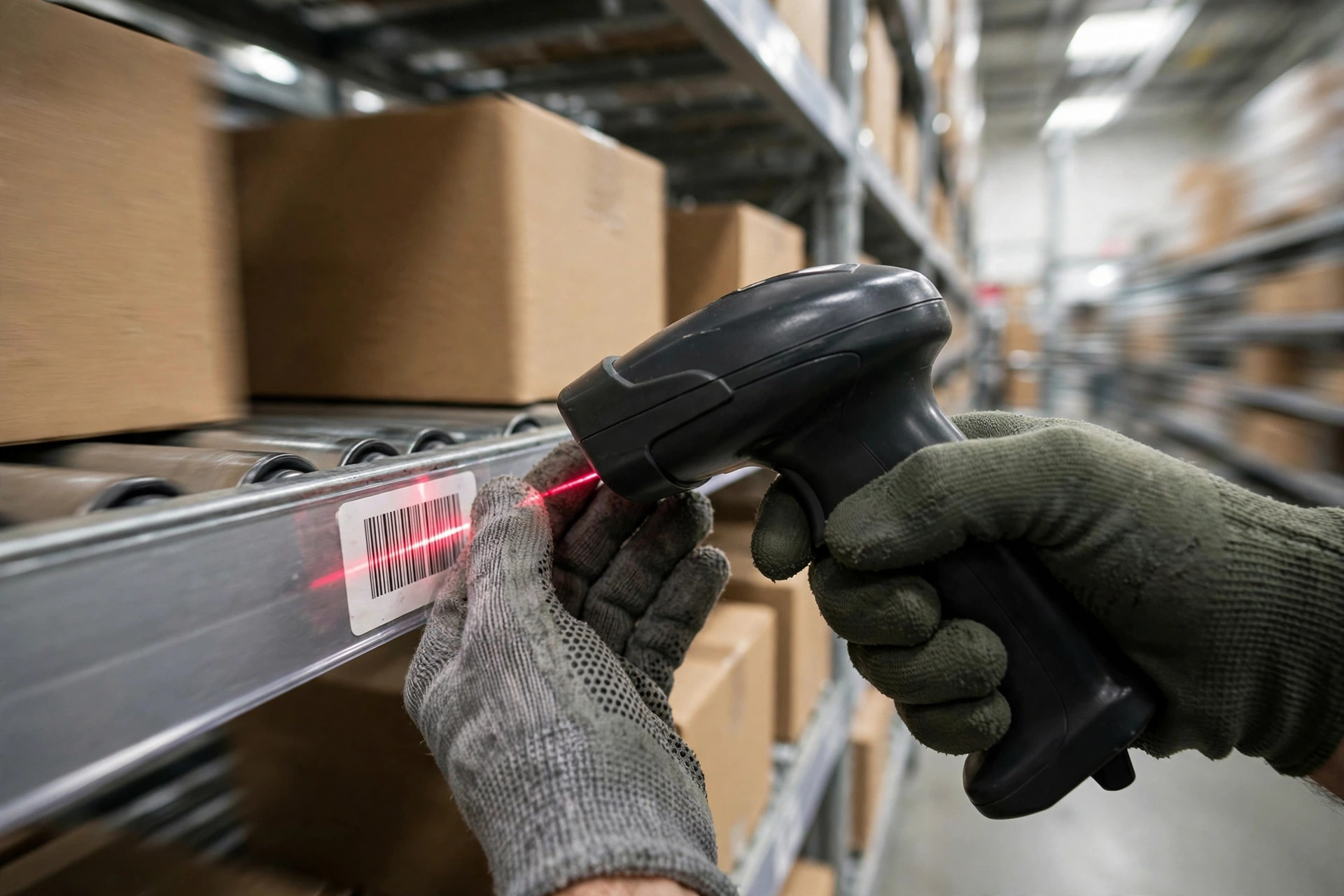
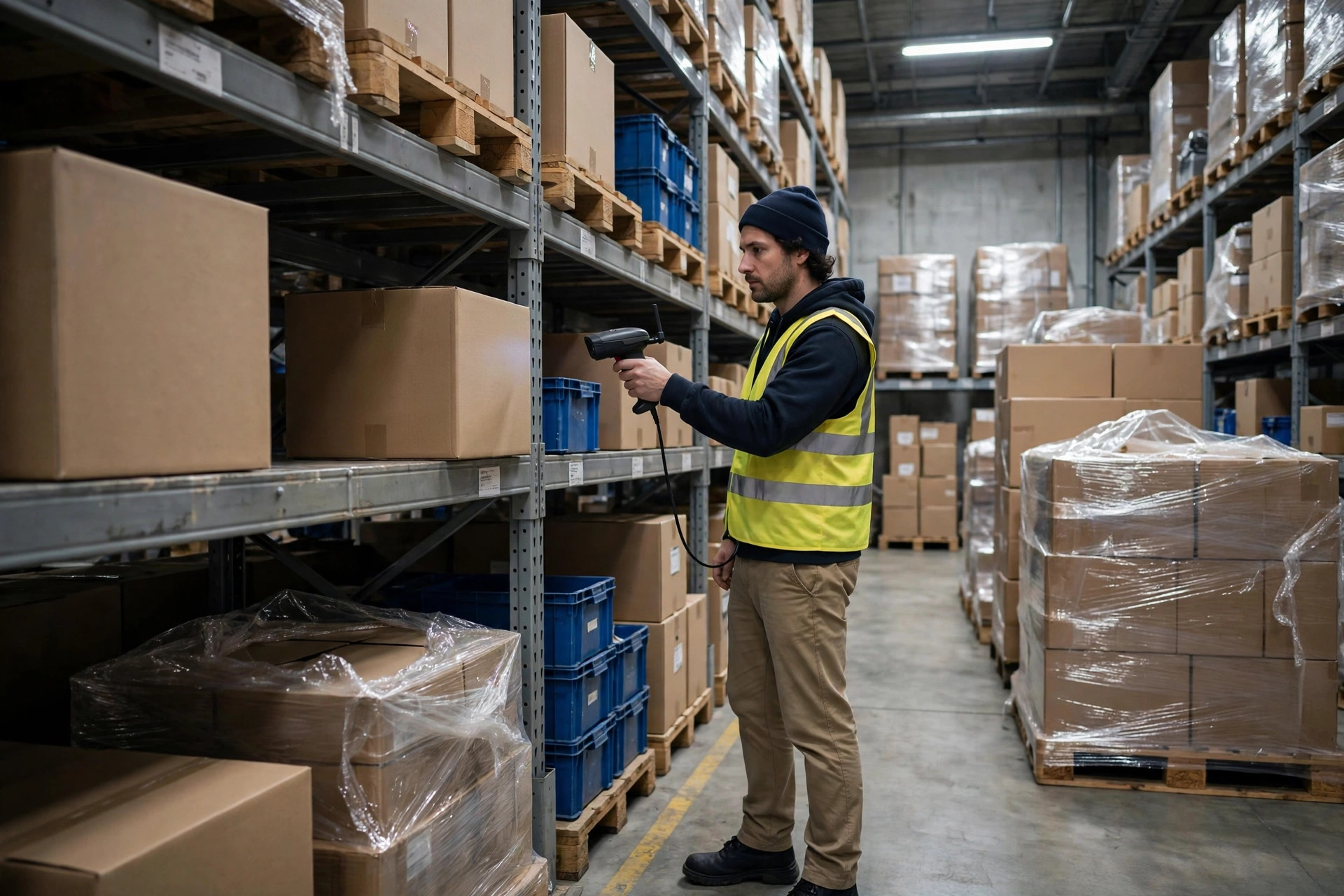
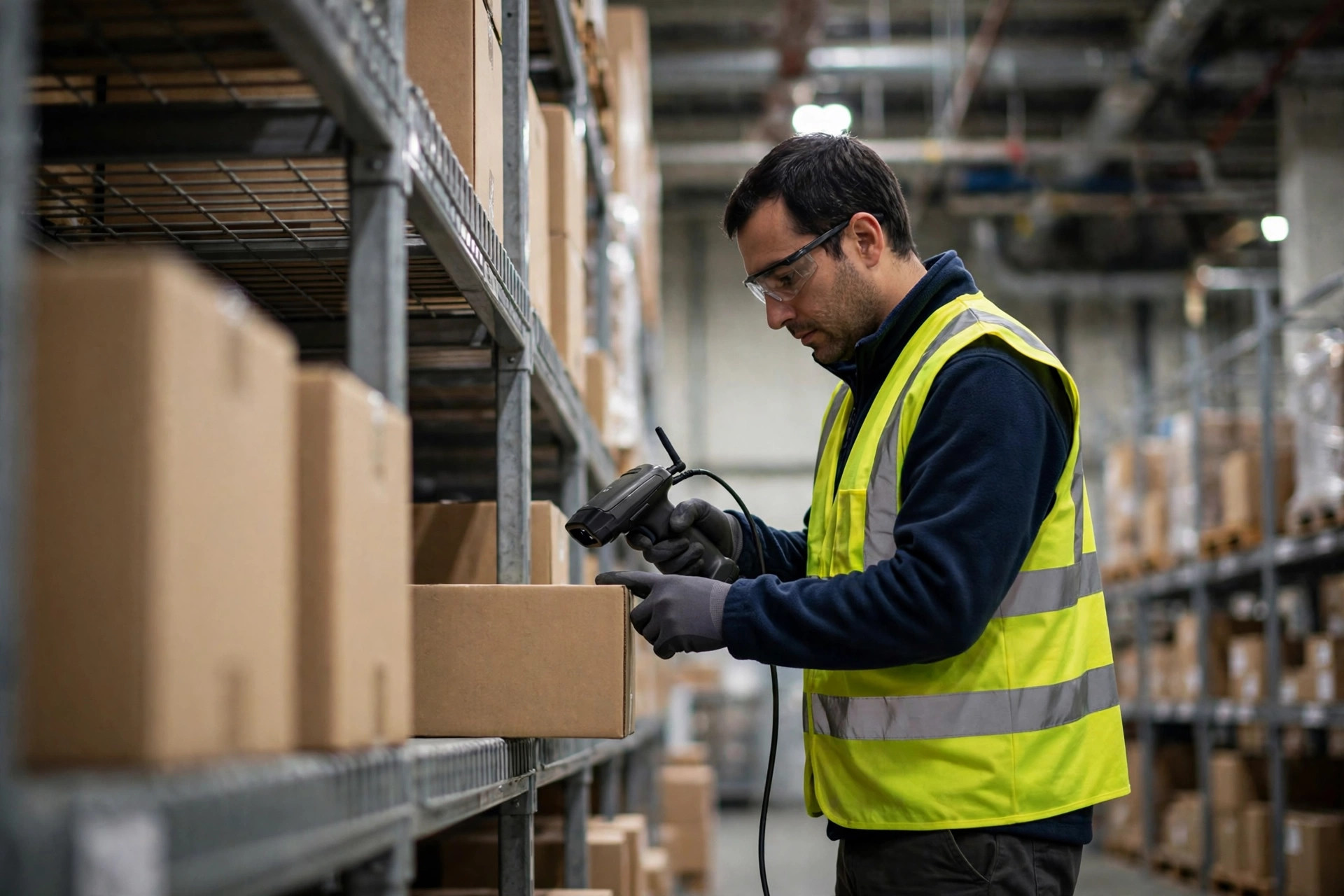
And scan guns? The "confirm" action itself — one trigger pull — isn't slow. The loop around it is what's slow: pick up the gun, aim, wait for the beep, set the gun down, free up your hands to actually grab the product. One scuffed or reflective label and the gun won't read; the whole pick line waits on one person. In full-case picking the penalty is worse — the cases are big and heavy, and one hand is permanently holding the gun.
So any speed ranking that ignores the scenario is nonsense. Dense eaches zone: lights win. Big-footprint full-case work with long travel: voice wins. Scan guns are the baseline — not there to win, there to hold the line until you can afford better.
So how big is the accuracy gap, really?
Vendor numbers all look great: voice systems routinely claim 99.9% accuracy; pick-to-light vendors claim errors under 0.1%. Claims are claims — I trust measured results. Back to that Santa Barbara distributor: before voice, one error per 1,000 cases; after voice, one error per 14,000 cases. Errors down 93%, accuracy at 99.995%. Those numbers were published in the trade press, not in a sales deck.
But there's a trap inside the accuracy number: it never tells you what kind of error. Pick errors come in three flavors — wrong item, wrong quantity, wrong carton. And the three confirmation methods don't even defend against the same one.
Lights defend against picking from the wrong location. The light is on that slot, you go to that slot — the odds of reaching into the wrong one are tiny. But lights can't verify what your hand actually grabbed. If the slot was stocked with the wrong product, the light still shines, you still press confirm, and you make the mistake faster and more confidently. That's a weakness the light-directed vendors openly admit.
Voice defends against wrong quantities. The system makes you speak the location check digit, forcing you to confirm where you are; then it makes you speak the quantity, and a miscount gets caught on the spot. In any operation where counting matters, voice has the most complete verification chain.
Scan guns defend against wrong items. The barcode is on the product itself — the wrong product won't scan, full stop. Of the three, scanning is the hardest lock against shipping the wrong SKU. But it's nearly helpless against wrong quantities: scan once, grab two extra handfuls, and the system never knows.
So don't ask me which one has the lowest error rate. Ask yourself: last quarter, were your errors mostly wrong items or wrong quantities? The answer flips the recommendation.
Follow the money: lights charge by location, voice charges by headcount
This is the fundamental difference between the three, and the one most often miscalculated.
Pick-to-light charges by location. The industry pricing band for a light module runs roughly $150 to $250 per pick face — and that's just the module. A 2,000-face fast-mover zone means $300,000 to $500,000 in modules alone, before controllers, software, and installation. Every new SKU face means buying more hardware; every rack reconfiguration means tearing lights down and reinstalling them. The technology has been mature since the 1980s — genuinely stable, genuinely expensive.
Voice charges by headcount. One setup is a headset plus a voice client license plus the server, and the cost follows the number of pickers, not the number of locations. Grow from 5,000 SKUs to 15,000 and voice hardware costs you nothing extra. But voice's hidden costs are all human: accent recognition, background noise from freezer fans and conveyors, headset hygiene and battery charging across shifts. That Santa Barbara distributor shared headsets across shifts to save on batteries — cheaper, sure. Think about what that costs in management headaches.
Scan guns charge by device — and you probably already own them. Your WMS already has an RF module; adding a few guns gets you running with the lowest incremental investment. The price you pay is dropped guns, cracked screens, swollen batteries — and the speed tax described above.
The decision rule is really one sentence: is your cost concentrated in locations or in people? Dense pick faces, stable zones, slow SKU churn — the light math works. Big footprint, fast SKU churn, multiple temperature zones — voice is the better deal. Volatile order volume and a tight budget — run your scan guns properly and put the money into slotting and ABC analysis instead; the return is higher.
In practice, hybrid is the norm. The most common combination I see: lights in the fast-mover eaches zone, voice or scan guns in slow-mover and full-case areas; a scan verification step for high-value SKUs inside light zones; voice zones falling back to scanning when a label is damaged. No warehouse runs on a single method — and the ones that insist on it are usually still paying off an old selection mistake.
Pull your error records from last quarter: more wrong items, or more wrong quantities? Until you've answered that, every quote for a confirmation system is just paper — sign it, and you'll keep making the same mistakes, only through a more expensive method.