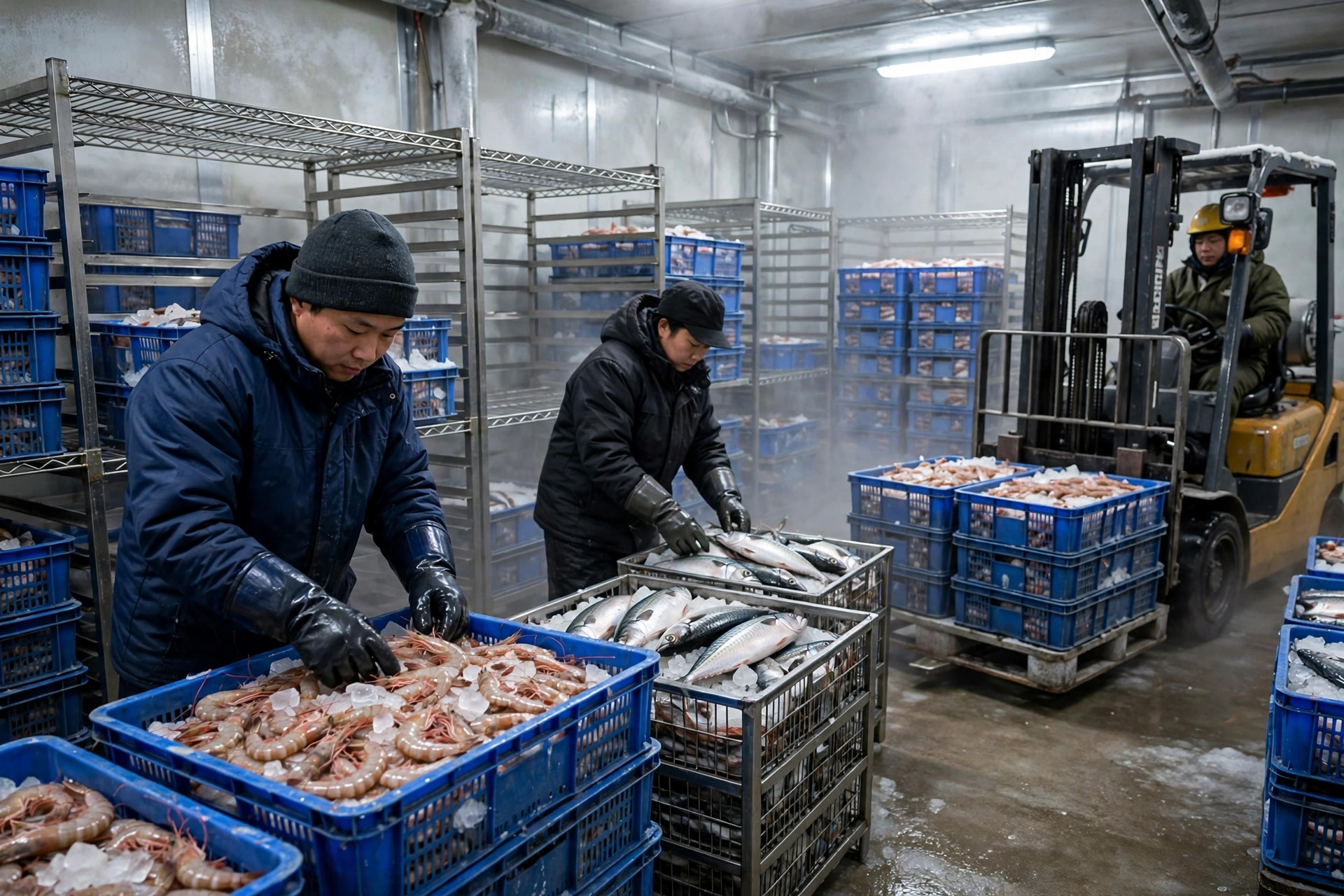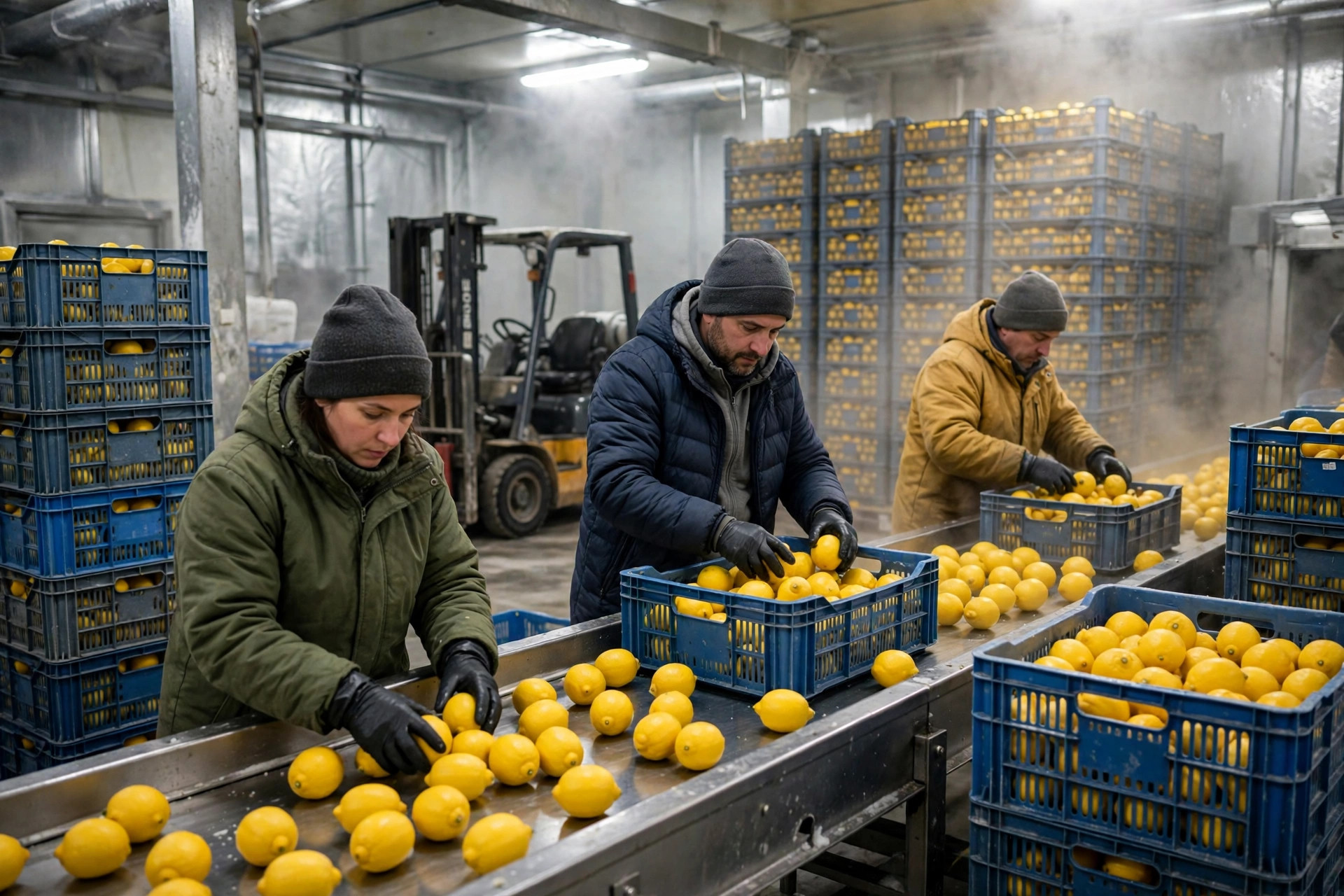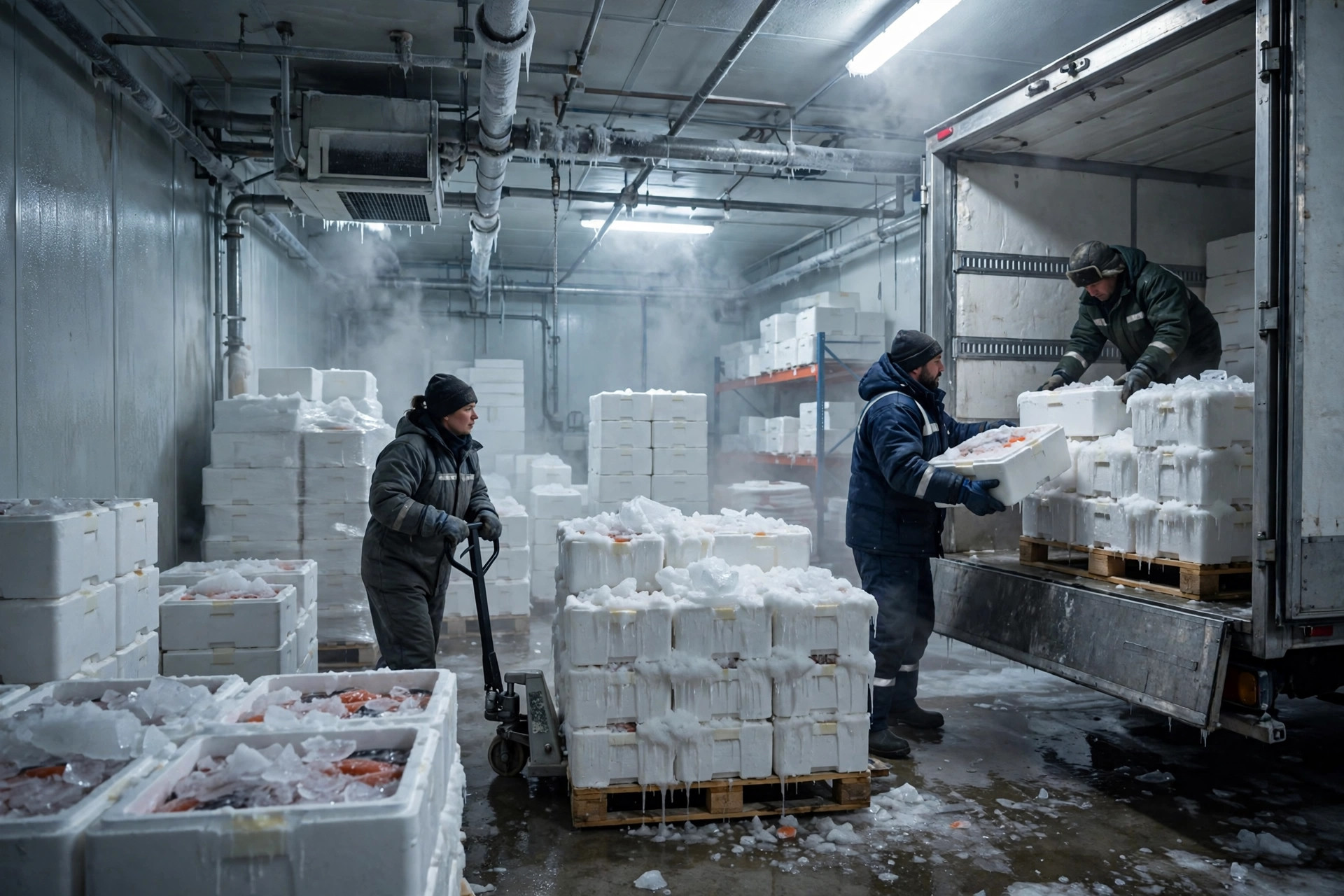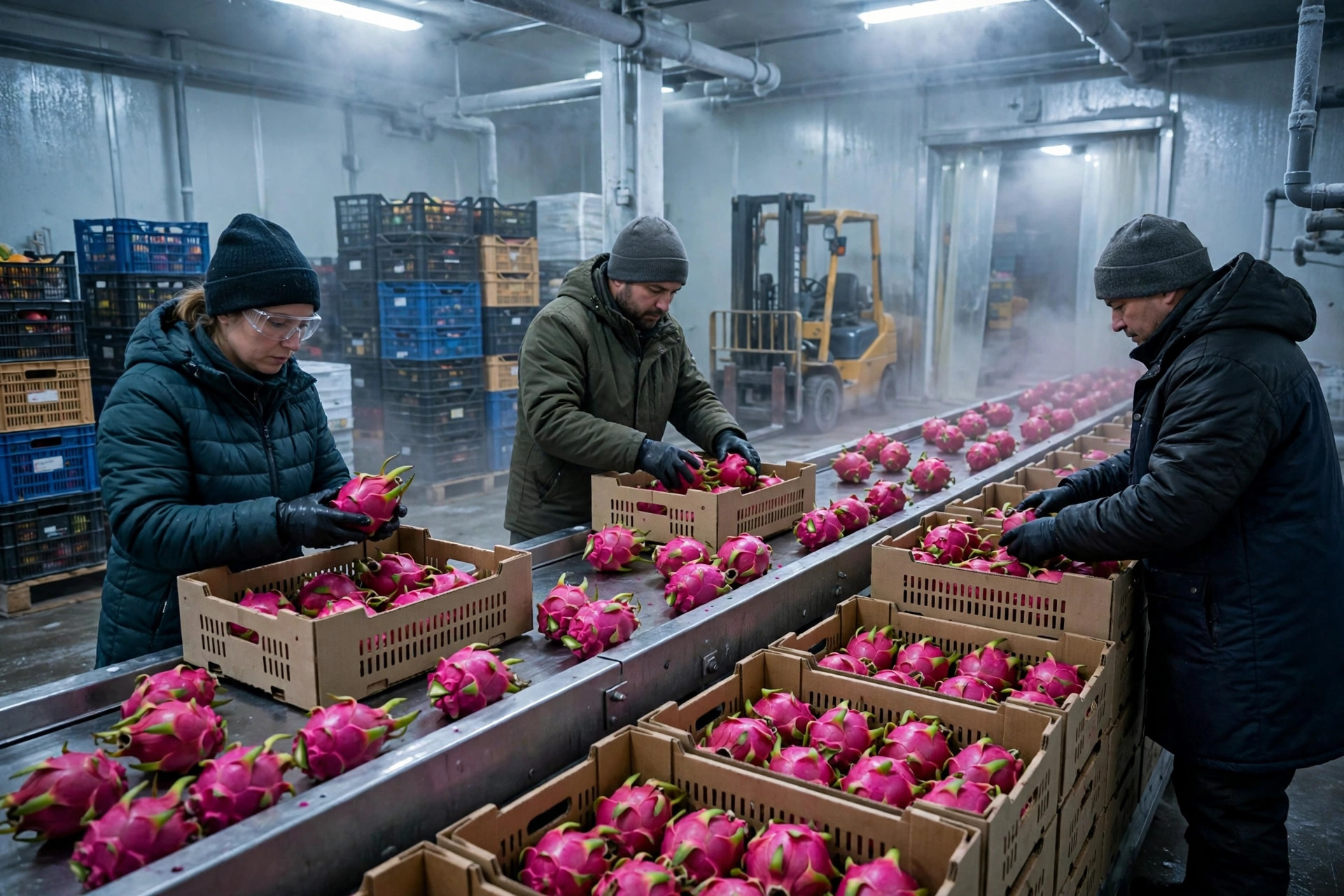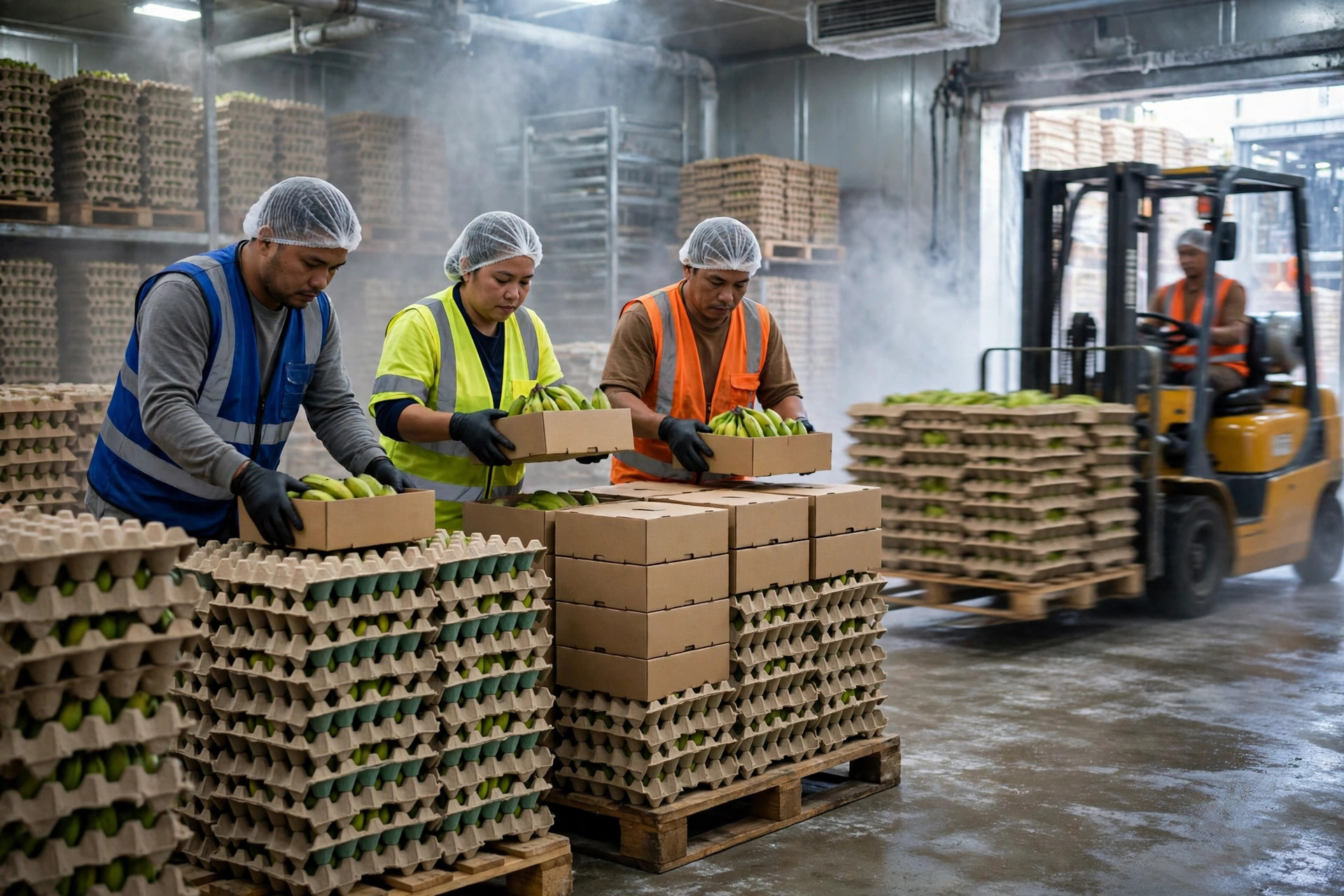
At half past five in the morning, the cold room door at the Davao packinghouse swings open and the cold air hits your face. That is how the shift starts. The night crew has just brought in yesterday's Cavendish harvest, the cartons still carrying field heat, and the forklifts are already stacking pallet after pallet into the cold room. I stand at the door with the shift's check sheet in hand: in the Philippines banana export cold chain, one break and the whole container is on the line.
Let me be blunt. Bananas do not wait for you. They keep ripening from the moment they are picked, and the cold chain only slows that ripening until the buyer can sell them on arrival. Push too hard and you get chilling injury, blackened peel, and a rejected load anyway. So the contest is never about who has the biggest cold room. It is about whether every handover, from the packinghouse to the container, holds without a break.
Philippines Banana Export Cold Chain: The Break Happens at the Packinghouse Door, Not at Sea
One peak-season morning, the picking teams sent in extra truckloads, and a queue formed at the cold room door. The old routine was: register the delivery, grade it, then move it into the cold room. But that day the grading line was short-staffed, and several pallets sat under the shed by the door. The shed blocked the sun but not the heat. By the time those pallets finally went inside, a pulp-temperature check showed them running warmer than the batch that had gone in first.
That is the real lesson. Most people assume the cold chain's enemy is the long sea voyage. It is not. Once a controlled-atmosphere container is shut, the temperature holds steady. The dangerous gaps are the few dozen meters at the packinghouse: picked fruit waiting to be graded, graded fruit waiting to enter the cold room, cooled fruit waiting to be loaded. Every wait lets the temperature climb. We changed one rule after that morning, and it is now non-negotiable: check the fruit's temperature on arrival, and if the grading line cannot keep up, slow the picking teams down rather than let picked fruit sit in the shed.
The second scene happened on a night shift. The reefer container had arrived early, and the door stood open while the crew loaded. The night foreman wanted to finish in one push, so the door stayed open while someone went to fetch the seal. Cold air poured out, and the temperature inside crept up. By the time the door finally closed, the refrigeration unit needed a long while to pull the temperature back down.
A cold chain is not saved by the most advanced machine in the building. It is saved by someone watching the door for those few minutes.
The 13.3°C Line: How the Cold Room, the Checks, and the Roster Line Up
Our set point for the Philippines banana export cold chain is 13.3°C. The industry commonly cites the ASHRAE reference of 13–15°C and 90–95% relative humidity, but a reference is not a work instruction. On the floor, the crew needs one executable sentence: set 13.3°C, and the pulp-temperature check has the final say.
Why pulp temperature and not room temperature? Room temperature is the air's temperature, and the fruit in the middle of a pallet does not necessarily match the air. Freshly arrived fruit still carries field heat, so the room thermometer can read fine while the core of the stack is still warm. Our rule is to probe several cartons from every arriving batch and record the pulp temperature, the batch number, and the time, plus who measured it. If something goes wrong later, we can trace it back to a batch and a person instead of everyone blaming everyone else.
The roster has to follow the same line. We used to run it as two separate jobs: the day shift handled intake, the night shift handled loading. Then we realized that if the day shift's fruit had not cooled down, the night shift was loading a container full of warm fruit. So we changed the handover: before the day shift hands over, it must leave time for a repeat pulp-temperature check, and any batch that fails that recheck stays in the cold room to cool further, even if that means missing a shift. The crew grumbled at first, but once it ran smoothly, the arguments over rejected loads dropped. A roster is not just a list of names; it is the rhythm at which the temperature actually comes down.
Here is the counterintuitive part: colder is not better. Some people think pushing the set point a couple of degrees lower buys extra safety. It does not. Bananas suffer chilling injury, and the peel shows it first, so the buyer rejects on appearance. The skill is not how cold you go but how steady you hold. Steady around 13.3°C beats swinging hot and cold every time, and equipment, checks, and rostering all have to line up to hold it.
Philippines Banana Export Cold Chain Costs: Cheap Minutes Versus an Expensive Container
When you cost this out, do not stop at electricity and the refrigeration unit. The real money sits in the container that breaks the chain. Here is the comparison table we use inside the team. The magnitudes are deliberately rough; the point is the trade-off, not false precision:
| Approach | What the shift saves | What a break costs later |
|---|---|---|
| Check pulp temperature on arrival; slow picking if grading cannot keep up | A few extra minutes and one extra check | Almost nothing; the temperature curve never breaks |
| Leave pallets under the shed until the grading line clears | The grading line looks unblocked | The whole batch ripens faster and the buyer inspection risk jumps |
| Load in stages with the container door mostly shut | One extra door closing per pallet | Almost nothing; the container recovers its temperature quickly |
| Leave the door open and load in one push | Faster loading and an earlier finish | The unit chases temperature for hours and the container temperature swings |
| Hold a failed batch in the cold room instead of loading it | A missed loading slot | Almost nothing; only fully cooled fruit ships |
| Load warm fruit and gamble that it cools in transit | An on-time departure that looks good on paper | A whole container at risk on arrival, with the most expensive arguments of all |
The table makes one trade-off plain: the slow option costs visible minutes, while the rushed option costs an invisible risk that, when it lands, costs a whole container. Every shortcut on the cold chain gets repaid somewhere else, with interest, and every fussy-looking step that protects the temperature curve turns out to be cheap.
One trend the crew should know: where banana exports once moved heavily on bulk reefer vessels, more and more now moves in containerized controlled-atmosphere units. The pressure is that once the container door closes, the line of responsibility is clear: the fruit the packinghouse handed over is what it is, and there is no blaming the vessel later. So intake check sheets and loading temperature records must be kept on file. TR4 wilt disease remains a background risk for the industry, and we cannot control what happens in the field. What we can control is our own stretch of the chain, so that when the fruit leaves us, its temperature record is clean.
The Fixed Routine: A Pre-Shift Checklist for Fellow Operators
So here is where it all lands: a pre-shift checklist. Every shift, the foreman walks the crew through it in a few sentences:
First, measure pulp temperature on arrival; pulp temperature rules, and the room thermometer is only a reference. Second, if grading cannot keep up, slow the picking down; never let fruit wait under the shed. Third, load in stages with the door mostly shut, and keep forklift movements fast in and out. Fourth, recheck before handover, and never load a batch that failed its recheck. Fifth, file the check sheet and the loading temperature record on the same shift, with batch number, time, and the name of the person who measured, none of them missing.
It is not a fancy list, but it was bought with two shifts' worth of mistakes. There is no shortcut in the banana export cold chain. It is the few dozen meters by the door, the few minutes at the container door, and the one recheck at handover, done properly every single day. When something goes wrong, the first thing anyone asks for is your shift's record. So run through the checklist, write the sheet clearly, and your shift has done its job.
By Chen Feng, Warehouse Operations Manager