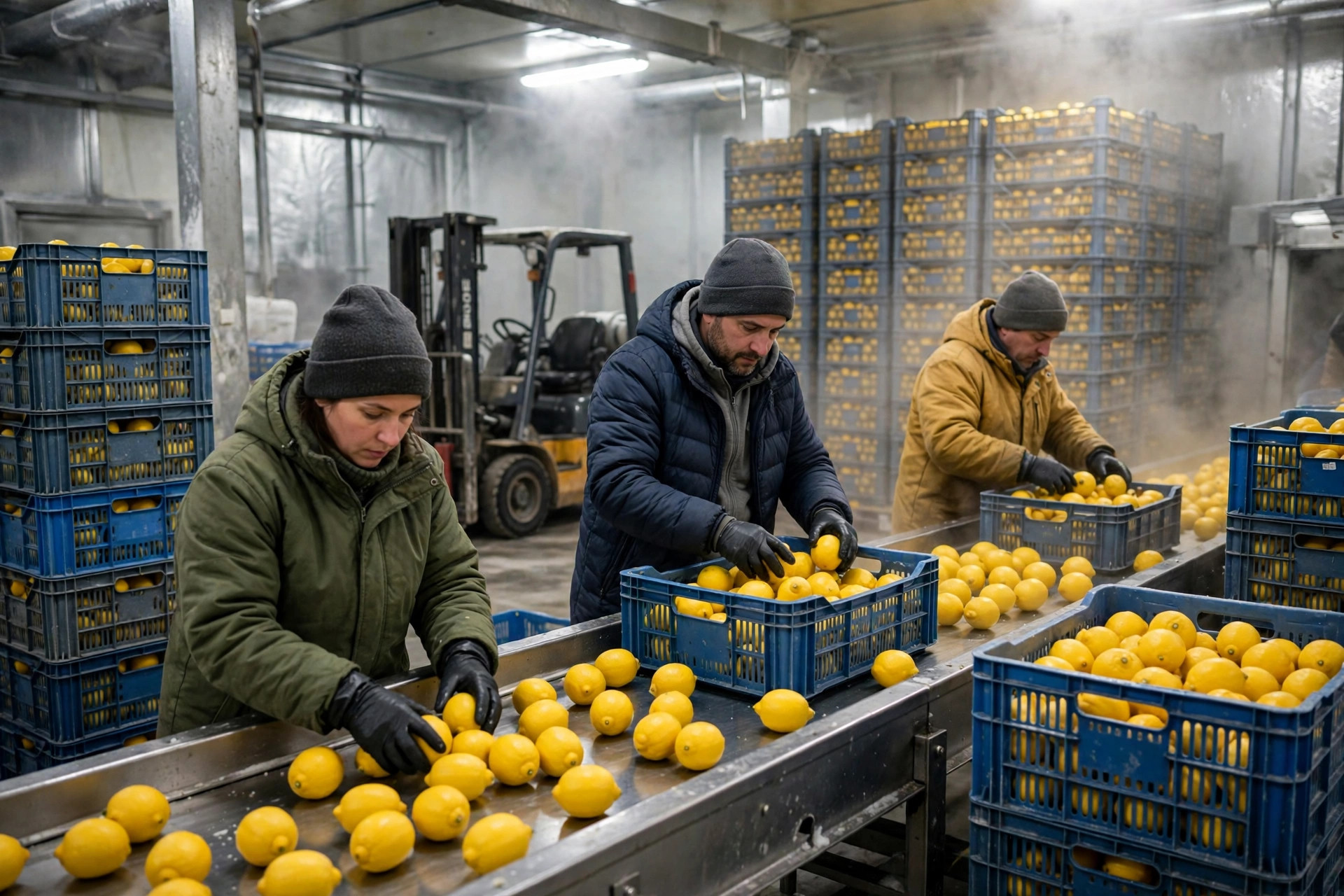
Let me give you the answer first: in Argentina lemon export cold chain warehouse work, the order of the checks matters more than the speed of cooling. Lemons leave orchards in Tucuman, pass through a packhouse and cold storage, then travel to Buenos Aires port for shipment. Every handoff adds cost and risk. Any step left vague will come back later, usually at the port, usually at a worse price. I run warehouse go-lives for a living, and my rule is simple: if an action is not on a checklist, it is not planned, and if a task has no named owner, nobody owns it. A lemon chain works the same way. Good cold chain performance is not one heroic link. It is a chain with no broken link.
Why Tucuman Lemons Test a Cold Chain
Tucuman is the main lemon-growing region in Argentina, so orchards, packhouses and cold stores sit close together. That closeness looks like an advantage, and it can quietly become a trap. Fruit that reaches cold storage quickly is not automatically safe fruit. The hours after harvest still decide the outcome: grading, pre-cooling, packing, labelling and phytosanitary paperwork all compete for the same short window. When records are thin, tracing one pallet back to its orchard becomes a matter of memory, and memory carries no weight against export documents.
Phytosanitary requirements deserve the most careful attention on this route. The destination market's rules, orchard registration details, packhouse credentials and the descriptions on the packing list must match before a container leaves. I worked on one season where a packhouse mixed fruit from two orchards into a single shipment while the documents named only one source. At the port, inspectors asked for the shipment to be split and rechecked. The container waited for days, cold chain charges kept running, and the sailing window closed. The real loss was not a line on a freight invoice. It was the selling window that moved out of reach.
The second decision is the split between fresh fruit and processing fruit. Fruit that does not meet fresh export standards for appearance, size or skin condition must leave the fresh line at the grading table. This is where soft hearts cost real money. Keeping borderline fruit in a fresh container looks like a gain of a few extra boxes. In practice, one weak box can pull down the inspection result for the whole shipment. Buyers do not relax their standards because you packed more boxes. They judge the shipment by its weakest box.
The third decision is time. Port handling does not start when a truck reaches Buenos Aires. Departure time from Tucuman, the port entry window and the loading sequence must be worked backwards from the sailing plan while the packhouse is still scheduling production. A truck that arrives at the port but cannot enter leaves a refrigerated container waiting. Waiting time is not neutral. Every extra day of waiting adds uncertainty about fruit condition, even when the temperature record looks clean. That is the discipline Argentina lemon export cold chain warehouse work comes down to: one timetable, followed by everyone.
| Decision | Action on the floor | Cost of delaying it |
|---|---|---|
| Meets fresh export standard | Pack it separately, with documents matched to its source | None, if the plan holds |
| Borderline or skin-damaged fruit | Divert it at grading to the processing channel | Mixed into fresh stock, it drags down the whole inspection |
| Documents do not match the fruit | Stop and fix the documents before loading | Split and rechecked at the port, with sailing and cold chain costs compounding |
The Seven Steps From Orchard to Port
Step one: fix the batch on the day of harvest. Record which orchard block was picked, on which day, and which batch goes to the packhouse first. Put it on that day's work sheet. If batches are unclear, every later traceability claim is empty talk. Harvest bins from different orchards should never be stacked together, because mixing them doubles the grading work downstream.
Step two: grade before packing, and grade against a written standard. Post the standard where the grading line can see it. Workers should judge fruit against that description, not against feel. Skin condition, size and appearance each need a workable description. A vague phrase like good fruit is not a standard. It is an invitation to argue.
Step three: divert at the grading table, immediately. Fresh fruit and processing fruit need separate pallets, separate label colours and separate stacking areas. Physical separation beats reminders. When two channels share one stacking area, a busy shift will mix them. I have seen that mistake more than once, and it never happens because people are careless in general. It happens because the layout made the wrong move easy.
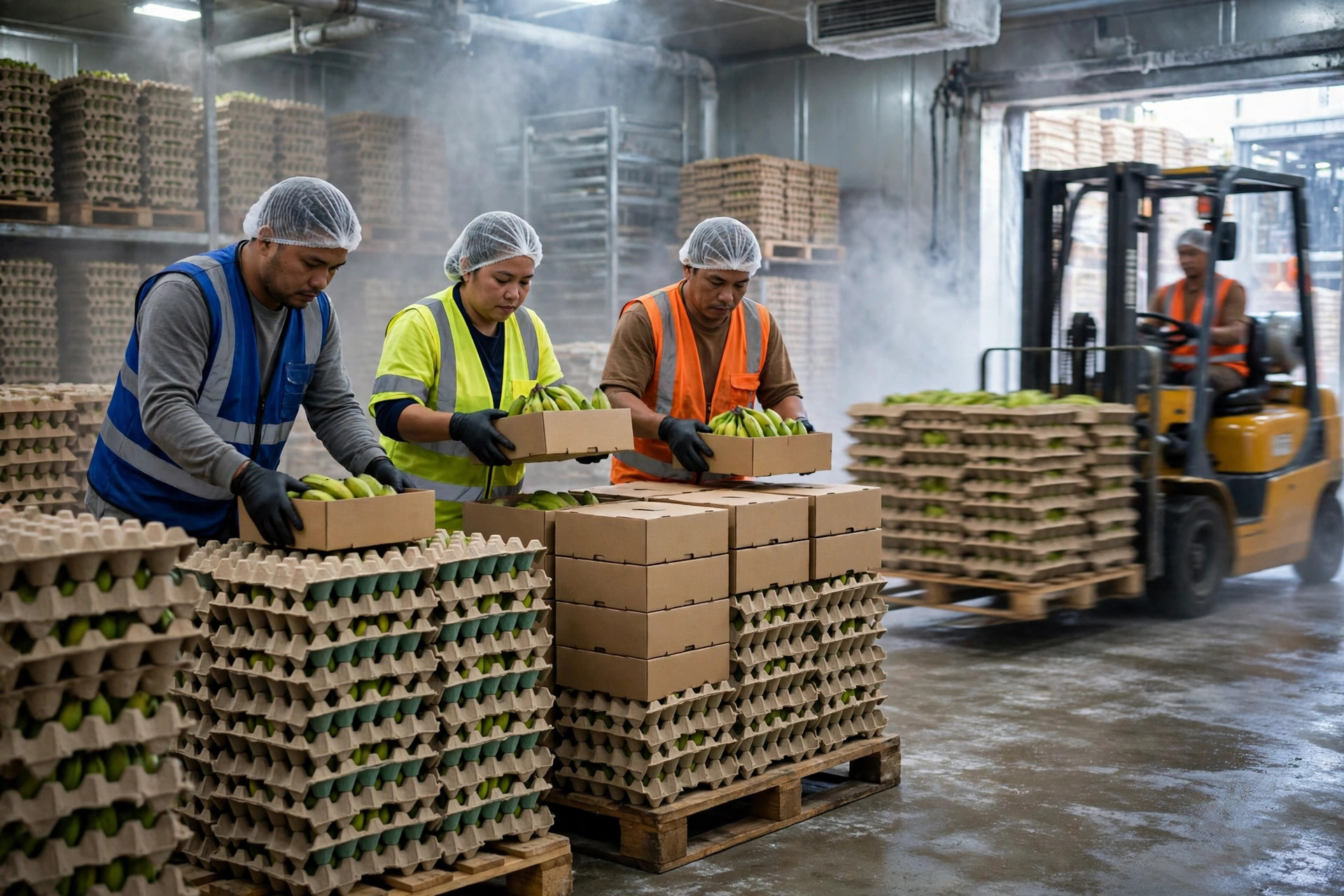
Step four: pre-cool and pack batch by batch, without jumping the queue. If one batch is not finished, the next batch does not enter the cold store. The cold store door is where order breaks down, and the cause is usually everyone trying to move their own fruit first. A visible queue looks slow. It is the fastest honest way to work.
Step five: check documents against physical pallets, one pallet at a time. Box counts, pallet counts, orchard source, product description and phytosanitary details get ticked off as each pallet is verified. This work cannot be left to memory, and it cannot be saved up for loading day. A team that writes documents in a rush on loading day will guess at least one detail, and the guessed detail is the one the port will find.
Step six: plan the truck movement backwards from the port. The port entry window, loading sequence and transit time from Tucuman all go on the dispatch sheet. Before departure, someone checks the refrigerated container and signs for that check. An unsigned check is an unmade check, whatever anyone remembers saying at the gate.
Step seven: keep someone on the port handover. Delivery to Buenos Aires port is not the end of the job. Entry, loading and departure each need a receipt, and someone must chase any receipt that does not come back. If the tail of one shipment is left open, the head of the next shipment starts in confusion. Treat every departure like a go-live night checklist: nothing leaves until each item is ticked.
The Failures I Have Seen Three Times
I have seen this failure three times: the grading standard lives only in the supervisor's head. The supervisor takes one day off, and the grading line quietly adopts a different standard. The fix is unglamorous and it works. Write the standard down, post it, and read it at the start of every shift. New workers stop guessing, and experienced workers stop grading by mood.
Another failure is treating faster cooling as better cold chain performance. That is a counterintuitive trap in this work. Cooling speed alone does not protect fruit. Pre-cooling rhythm, packing density and airflow inside the cold store all matter, and a shipment can look fine on the surface while its internal condition drifts. Sometimes the better trade is to slow down by half a step, finish grading and documents properly, and protect the sailing window. Time saved by rushing is often repaid several times over at the port.
A third failure is the missing processing ledger. Fruit diverted to processing still needs its own record: quantity, destination and receiver. Without that ledger, month-end counts will not reconcile, and managers will start doubting the fresh channel as well. Trust leaks away in exactly that way, one unexplained gap at a time.
The last gap is information drift between the packhouse, the trucking team and the port. The packhouse expects trucks tomorrow, the trucking team expects loading the day after, and the port expects a shipment that has not arrived. Three timetables, no shared timetable. The fix is a fixed weekly alignment, with any change sent to all three parties and confirmed as received. There is no shortcut for shared information. There is only discipline.
In the end, Argentina lemon export cold chain warehouse work is not a contest for the most advanced equipment. It is a test of whether orchards, packhouses, cold stores, trucking teams and the port can work from one checklist, one set of data and one timetable. Detailed checklists reduce arguments. Clean data smooths port handling. An accurate timetable protects the value of the whole container. Get those three things right, and the cold chain account for a lemon shipment starts to balance.
By Lin Xiao, WMS Implementation Consultant