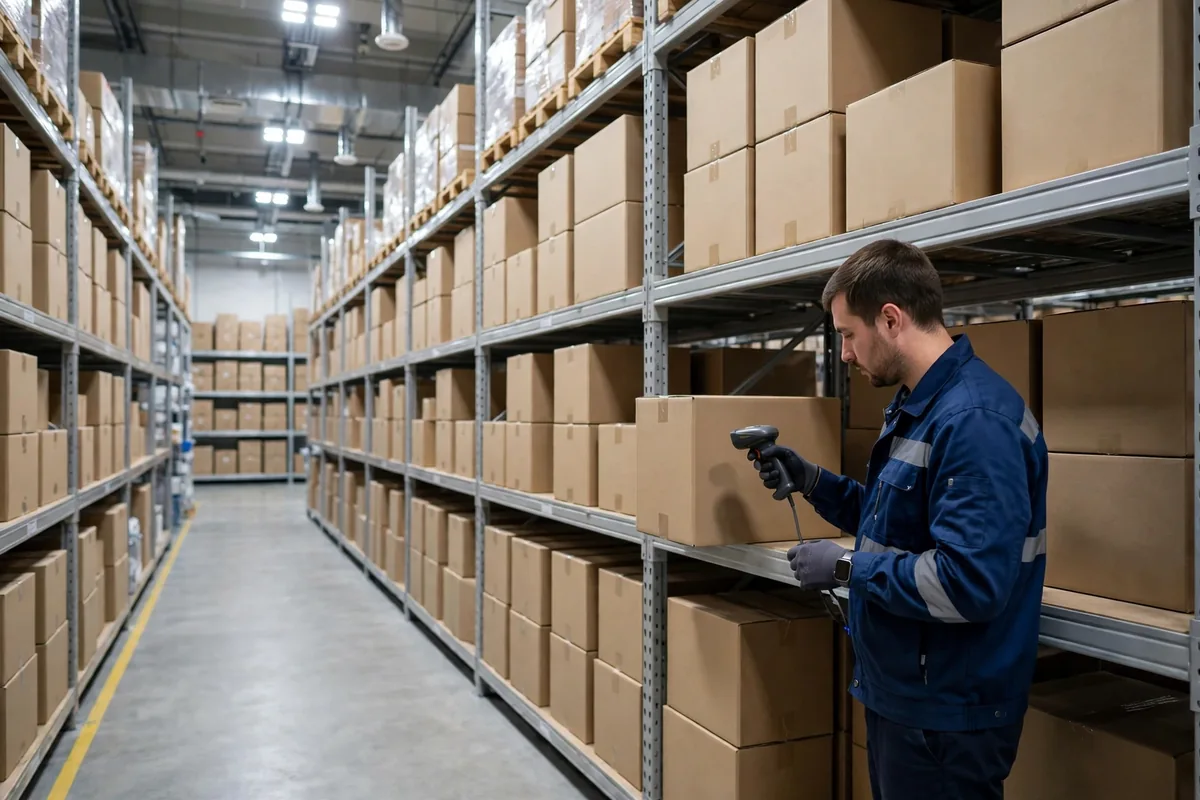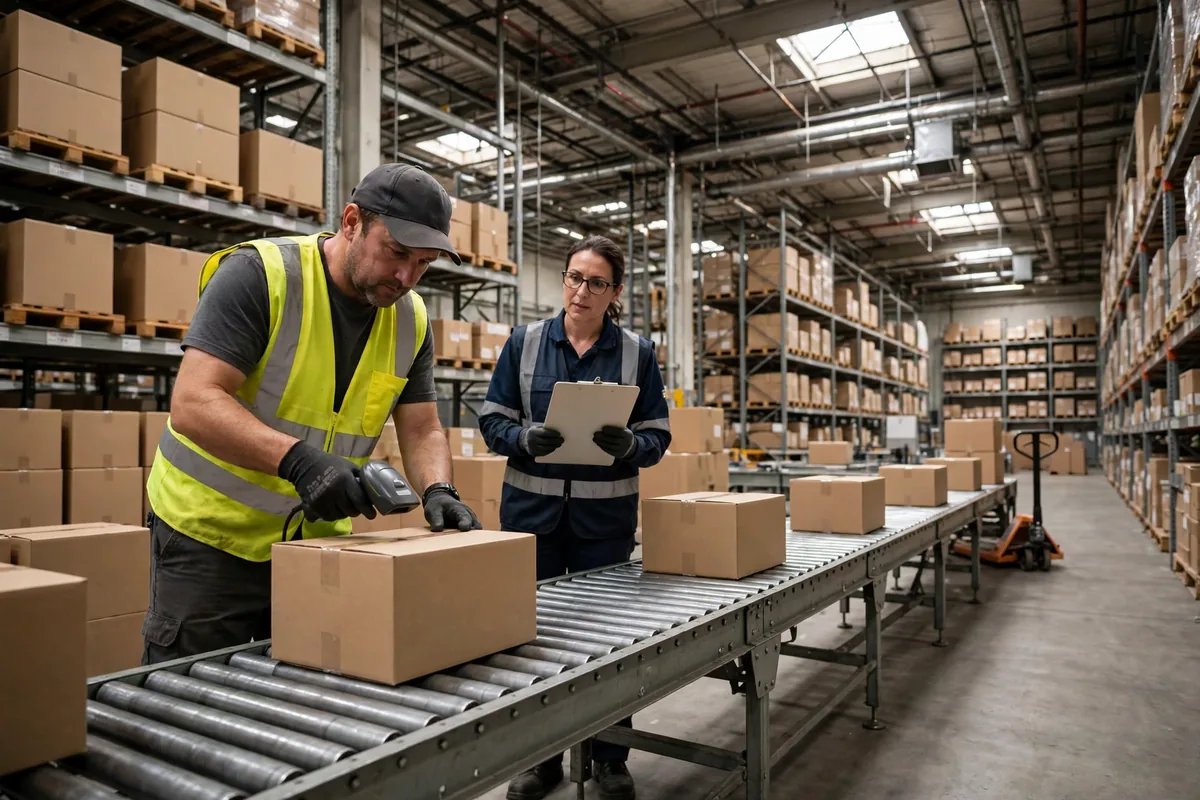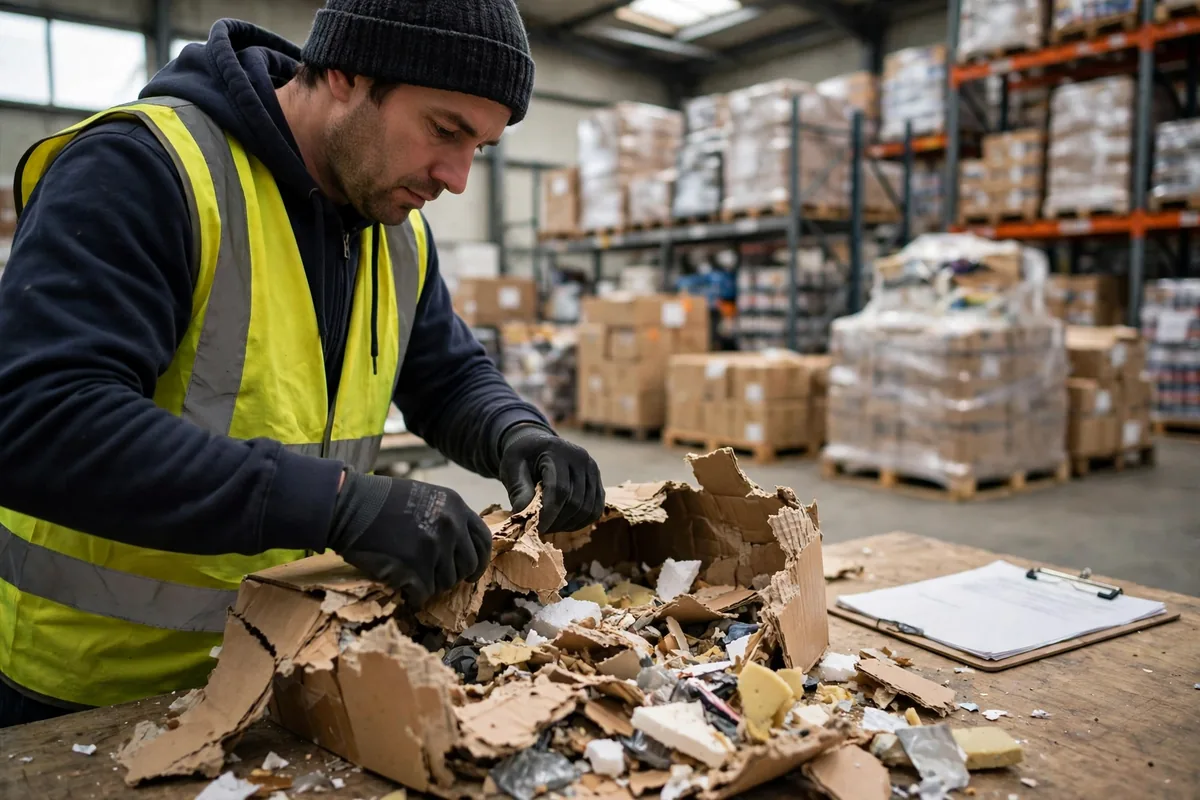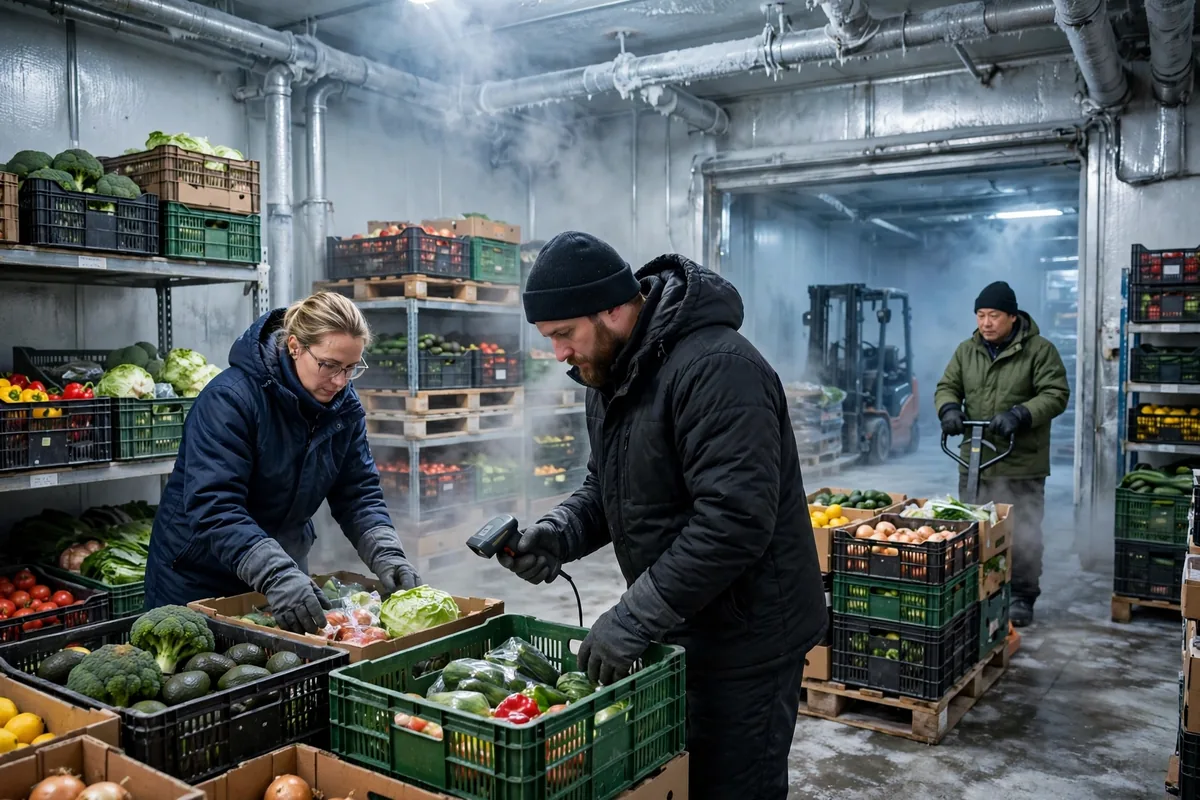
Let me be honest up front: we run a 3,000-square-meter warehouse, and when the first pharma customer called, my palms were sweating. Their first question was not "what is your price per pallet." It was "how do you do pharma cold chain gdp temperature monitoring warehouse work, and can you show us the temperature records?" My only thought was: we cannot afford this. A full cold chain validation package from a big warehouse costs enough to cover our rent for half a year. But guess what? We took the order, and we kept it, not by spending big but with a set of cheap workarounds plus one compliance line we never cross.
Our problem: the customer wanted GDP, we had one cold room and an old compressor
First, the rules, so nobody thinks I am teaching shortcuts. GDP, Good Distribution Practice, boils down to one sentence: medicines must stay inside their specified temperature range through the whole distribution chain, and you must be able to prove it with continuous records. Most refrigerated medicines sit at 2 to 8 degrees Celsius. Below 2 they can freeze and break; above 8 they can lose potency. A twice-daily manual reading is a spot check, and GDP wants continuous monitoring. Under USP <1079>, continuous logging generally runs at intervals no greater than 15 minutes. Sensors need regular calibration traceable to a standard, commonly annual calibration with accuracy around plus or minus 0.5 degrees Celsius, subject to the latest official guidance and the customer's quality agreement.
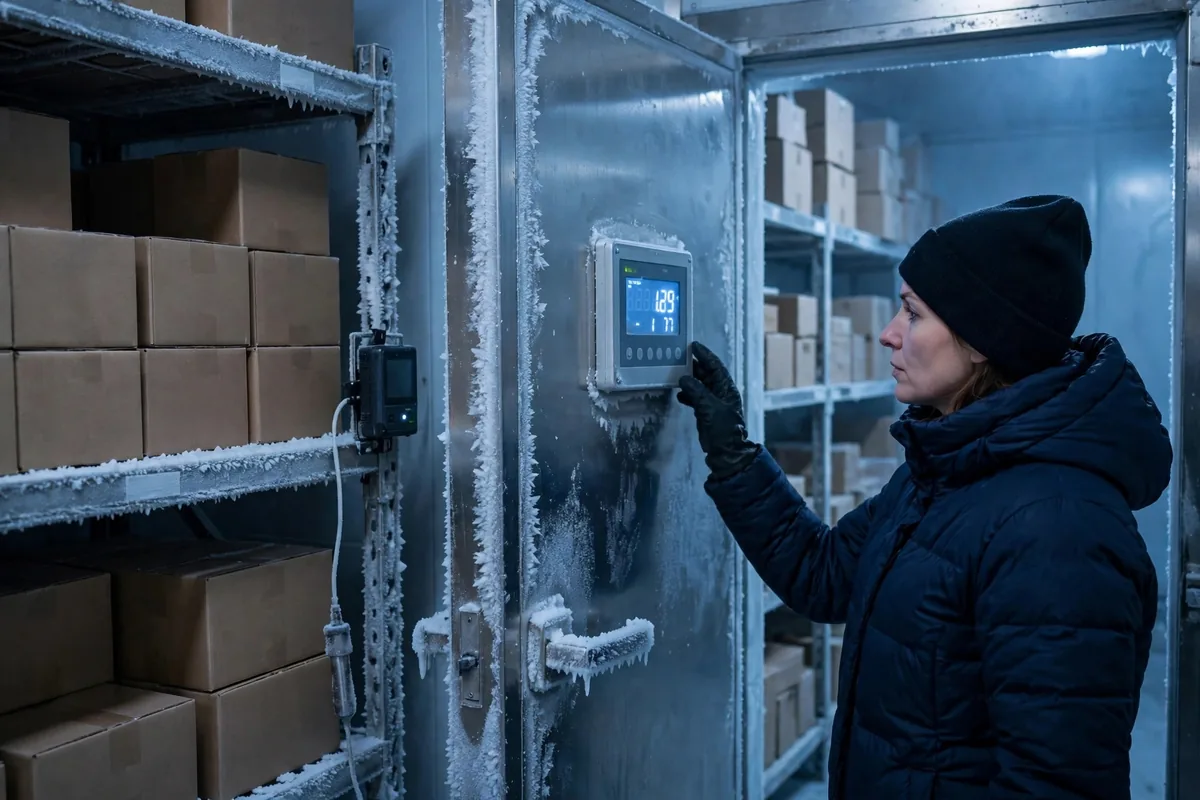
Our starting position was one cold room, a compressor that had already seen better years, and a wall thermometer by the door. On audit day the customer's quality lead pointed at that thermometer and asked three questions: who calibrated this, who finds out when it goes out of range, and where is the record if the power fails at night? I could not answer one of them. That night I did the math. A full big-warehouse validation was out of reach, but turning away every pharma customer was not an option either. So we took a third road: spend money only where it matters, cover the rest with cheap workarounds, and never compromise on records and alarms.
Workaround one: map the cold room's temperature monitoring gaps before buying anything
We did not buy equipment first. We spent a week learning our own cold room. A cold room is not the same temperature everywhere. The door, the spot under the fan, and the racks against the wall can differ by several degrees. GDP expects a temperature mapping study, and big warehouses hire a third party for it. We could not afford that, so we mapped it ourselves: we borrowed a few recording loggers and placed them at the door, in the middle, in the corners, on the top shelf, and on the bottom shelf, running for days, including the hottest days of summer. No surprise: the door swung the most, and the spot under the fan ran coldest.
That cheap mapping gave us two things. First, sensor placement stopped being guesswork: probes went on the warmest spot and the coldest spot, not in the comfortable middle. Measuring only the middle means measuring the number you want to see. Second, our alarm limits had a basis. We set an alert level tightened inside the 2 to 8 degree range, and an action level at the real boundary. Cross 2 or 8 and we act at once: isolate, investigate, and report to the quality lead. Those limits were measured in our own room, not copied from a brochure, and the customer's quality lead later singled that out as a good sign.
Workaround two: loggers plus people, so the cold chain is always watched
On equipment we did not buy the most expensive system. We bought loggers that record continuously and export data, plus SMS alarms. We set the logging interval to 10 minutes, leaving margin under the 15-minute ceiling. If the temperature goes out of range at 2 a.m., the duty phone rings. During the day a person still checks twice: current temperature, any gap in the curve, and whether the alarm is alive, signed off each time. Logger data gets exported weekly and filed by date, so when a customer asks, we can pull it up on the spot.
That combination saved us last summer. That is the part of pharma cold chain gdp temperature monitoring warehouse work that pays for itself: unbroken records are evidence when it matters. During the hottest week, the compressor quit in the middle of the night. The alarm woke Xiao Li at around 2 a.m. He moved the stock into the backup cold cabinet first and called me second. In the morning the curve told the whole story: the excursion lasted under an hour and never crossed the action limit. We isolated the batch, wrote a deviation record, and sent it to the customer's quality team for assessment. They released it and the goods shipped as normal. Without continuous records we would have been gambling on a feeling. Win that gamble and it is luck; lose it and the whole batch is written off. Those loggers cost a few thousand yuan, and what they bought was evidence when it mattered.
Here is the counterintuitive part. People think cold chain compliance is about how expensive your equipment is. It is really about gaps. If your record goes dark for two hours, you cannot prove the goods were fine during those two hours. Equipment can be cheap. Records cannot have gaps, alarms cannot go silent, and calibration cannot be forgotten. Get those three right and a small warehouse stands on the same compliance baseline as a big one. The difference is scale and automation, not honesty.
Advice for other small warehouses: hold the baseline first, upgrade later
The results speak for themselves. That pharma customer has stayed with us for almost a year, passed two audits, and referred a peer to us. On our cold room door there is now a sheet with the sensor map, the alarm limits, the duty phone number, and the excursion procedure. New hires read it before they start. Here is a scenario cost comparison, with the figures marked as illustrative: our workaround setup cost roughly a fraction of a full big-warehouse validation package, and we put the savings into a backup cold cabinet, which matters far more than a fancy system when the power or the compressor fails.
If you run a small warehouse and want pharma cold chain work, my advice is three things. First, map your own cold room before you buy anything, and put sensors on the warmest and coldest spots. Second, log at intervals no greater than 15 minutes, set alert and action limits separately, and make sure an excursion reaches a person who acts and signs off. Third, calibrate the loggers on schedule, export and file the data regularly, and write down every deviation and report it instead of quietly releasing the goods yourself. You can upgrade equipment gradually. The baseline has to be in place from day one.
Small warehouses have their own way of surviving. That is what pharma cold chain gdp temperature monitoring warehouse compliance comes down to: prove the goods stayed where they were supposed to stay, and a small warehouse can do pharma work too.
By Xiao Ma, Small Warehouse Owner