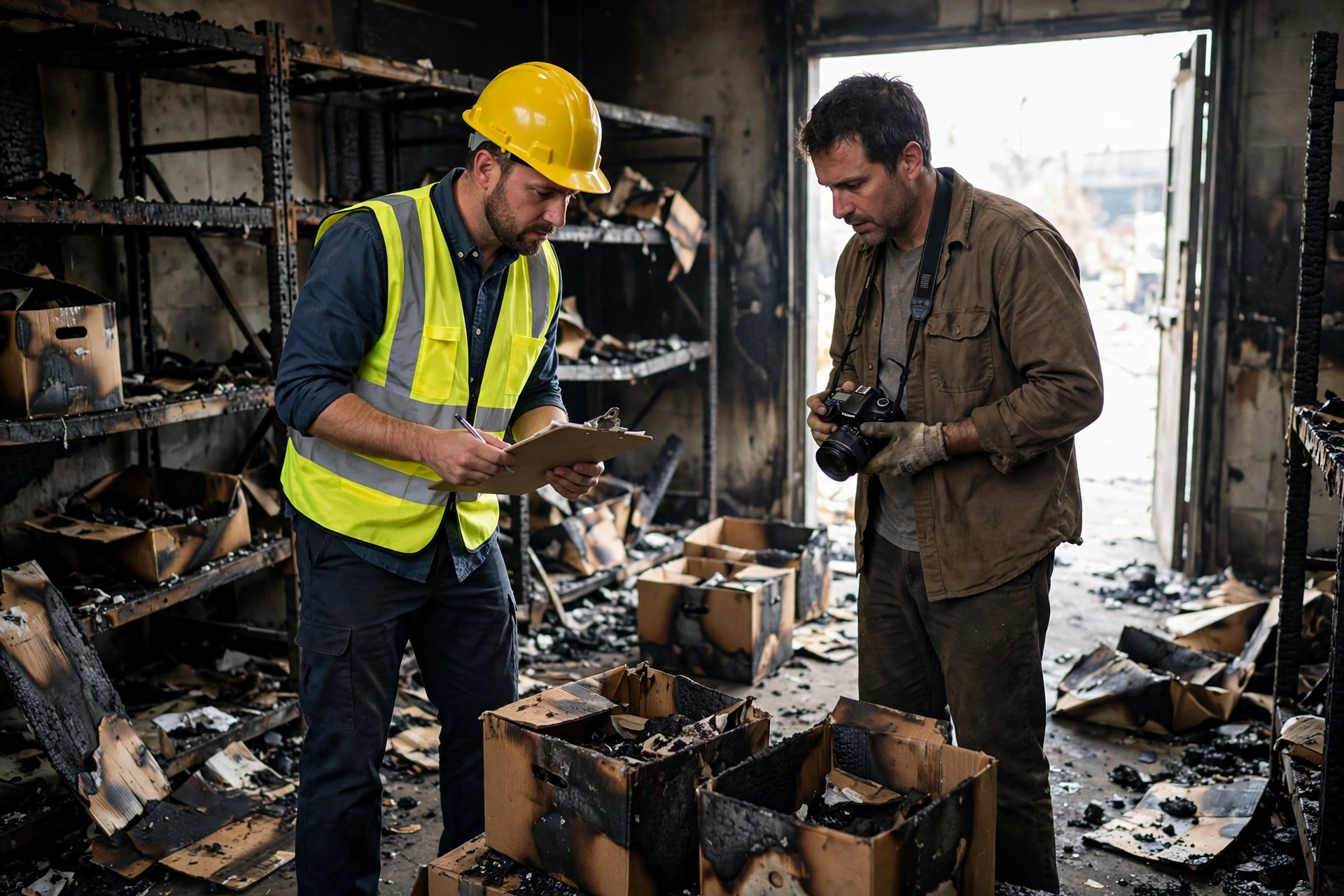
Let's start with the numbers. A shipment worth 500,000 dollars leaves the warehouse, gets rained on in transit, and arrives at the customer with crushed packaging and half the goods water-damaged. You file a warehouse cargo insurance claim. The insurer replies: denied — a cargo insurance claim denied because the evidence chain broke inside the warehouse. You paid tens of thousands a year in premiums and got nothing back when it mattered. The worse part: the denial reason was written in the policy all along, and the warehouse had a chance to block it — but nobody kept the evidence.
I've spent years in logistics cost analysis, and I've seen plenty of denied cargo claims. Here's my conclusion up front: insurers rarely deny claims out of bad faith. Most of the time, the evidence chain broke inside the warehouse. The adjuster traces it backward, finds the gap, and the denial writes itself.
| Denial reason | The insurer's logic | Where the warehouse failed | Evidence to keep beforehand |
|---|---|---|---|
| Improper packaging | The packaging didn't meet transport requirements, so the loss was self-inflicted | Packing method, bracing, waterproofing | Packing photos, packaging material records |
| Under-declared value | Insured value below actual value, so payout is reduced proportionally or denied | Declared value written too low at outbound | Declaration form, invoice, value list |
| Below the deductible | The loss didn't exceed the deductible | Nobody worked out which small losses the warehouse absorbs | Loss list, repair quotes |
| Late notification | Reported past the deadline, so the cause can't be verified | Nobody tracked the clock after outbound | Notification record, discovery-time log |
| Missing evidence | No proof of what happened at each stage | No photos or signatures at inbound and outbound | Inbound acceptance form, outbound handover form, photos |
Reason one: improper packaging — a classic cargo insurance claim denied
This is the most common denial, and the one where the warehouse takes the blame most often. The policy logic is simple: insurance covers accidents in transit, not defects in the packaging itself. If goods arrive with collapsed boxes, torn cartons, or shifted loads, the adjuster's first question is: was this packaging fit for transport?
I saw a real case. A warehouse shipped small appliances in reused old cartons — no corner protectors, no cushioning inside. Three out of ten cartons arrived crushed. The insurer looked at the photos and denied the claim: the packaging didn't meet normal transport requirements for this kind of goods. The warehouse felt wronged — we've always packed this way. But "nothing went wrong before" doesn't mean the packaging was adequate. One incident, and the whole history gets re-examined.
What can the warehouse do? Pack to a standard that would survive an adjuster looking at the photos. For every high-value shipment, take three photos after packing: the goods inside the carton, the sealed carton, and the side with the shipping label. Keep them for at least three months. Say a shipment is worth 200,000 dollars (hypothetical example — all figures in this piece are illustrative). The premium is a few hundred dollars. Skip the photos, and one denial costs you the full 200,000.
Reason two: the declared value was too low, so the payout shrinks with it
This is the one finance teams get blamed for. Some warehouses under-declare the value to save on premiums, figuring nothing will go wrong anyway. Then something goes wrong, and they discover the insured value was only half the real value. The insurer pays proportionally — less than half. Some policies go further: under-declare past a threshold and the claim is denied outright.
Suppose a shipment is worth 1,000,000 dollars (hypothetical example) but was declared at 500,000. The premium saved is a few hundred dollars. A real loss of 400,000 gets paid at the insured proportion — only 200,000. The warehouse absorbs the other 200,000. The saving versus the payout lost isn't even close.
The fix is one sentence: declare the actual value, and make the invoice, the value list, and the declaration form match. Add one check at outbound review: if the declared amount doesn't match the system value, the shipment doesn't leave. Hold that gate and nobody can quietly save on premiums.
Reason three: the loss didn't clear the cargo insurance deductible
Many warehouses sign the policy without ever reading the deductible. The clause says "5,000 dollars deductible per incident" — losses below that aren't paid at all, and above it only the excess is paid. Then a shipment arrives with two water-damaged cartons, the loss comes to a little over 3,000, and the claim gets sent back with one sentence.
Is that money wasted? Not exactly — the clause was there in black and white. The failure is that nobody did the math beforehand: which losses fall below the deductible and belong to the warehouse, and which exceed it and belong to the insurer. My advice: pin the deductible figure to the desk of whoever handles claims, and ask one question first — does it clear the deductible? If not, skip the insurance process, log it as an internal loss, and move on.
There's a trade-off worth calculating. A high deductible means a cheaper premium; a low deductible means a pricier one. Suppose a warehouse has three small losses a year (hypothetical example), 4,000 dollars each. With a 5,000 deductible, all three — 12,000 total — come out of your own pocket. Drop the deductible to 2,000, pay 3,000 more in annual premium, and you recover 6,000 — a net gain of 3,000. Every warehouse's numbers differ, but you have to run the calculation. Never sign on a feeling.
Reason four: you reported too late, and the insurer can't verify anything
Cargo policies usually set a hard notification deadline — 48 hours in some, 72 in others. Miss it and the claim can be denied. Warehouses trip on this one not because nobody cares, but because nobody treats "time of discovery" as a real data point.
The classic scenario: goods reach the customer, the customer signs, and three days later reports water damage found on unpacking. The insurer asks: when did the goods arrive? When was the damage found? Are there photos from signing? Did the delivery receipt note any exception? No answers. The denial stands. After that much time, nobody can prove when or where the goods got wet.
The warehouse can close two gaps. First, the outbound handover form should record the condition of the goods, with the carrier signing on the spot; any exception gets written down then, not added later. Second, watch the customer's signing step: ask the customer to note "outer packaging intact" or "outer packaging damaged" at signing, with photos taken on the spot if there's damage. Those two documents establish the starting point of the notification clock.
Reason five: missing evidence — a cargo insurance claim denied for want of proof
The first four reasons all come down to this one: the evidence chain. An adjuster works backward along a chain: were the goods fine at inbound? Were they stored properly? What condition were they in at outbound? Did the carrier sign for them? Any link that can't produce documentation hands the insurer a reason to deny.
The most regrettable case I saw: decent value, packaging fine, declaration correct, notification on time — and it died on the outbound photos. Peak season, the checker was swamped, and nobody took them. The adjuster asked: how do you prove the goods were fine when they left? The warehouse had nothing. The case dragged on for two months and ended in a partial payout. That lesson stuck with everyone.
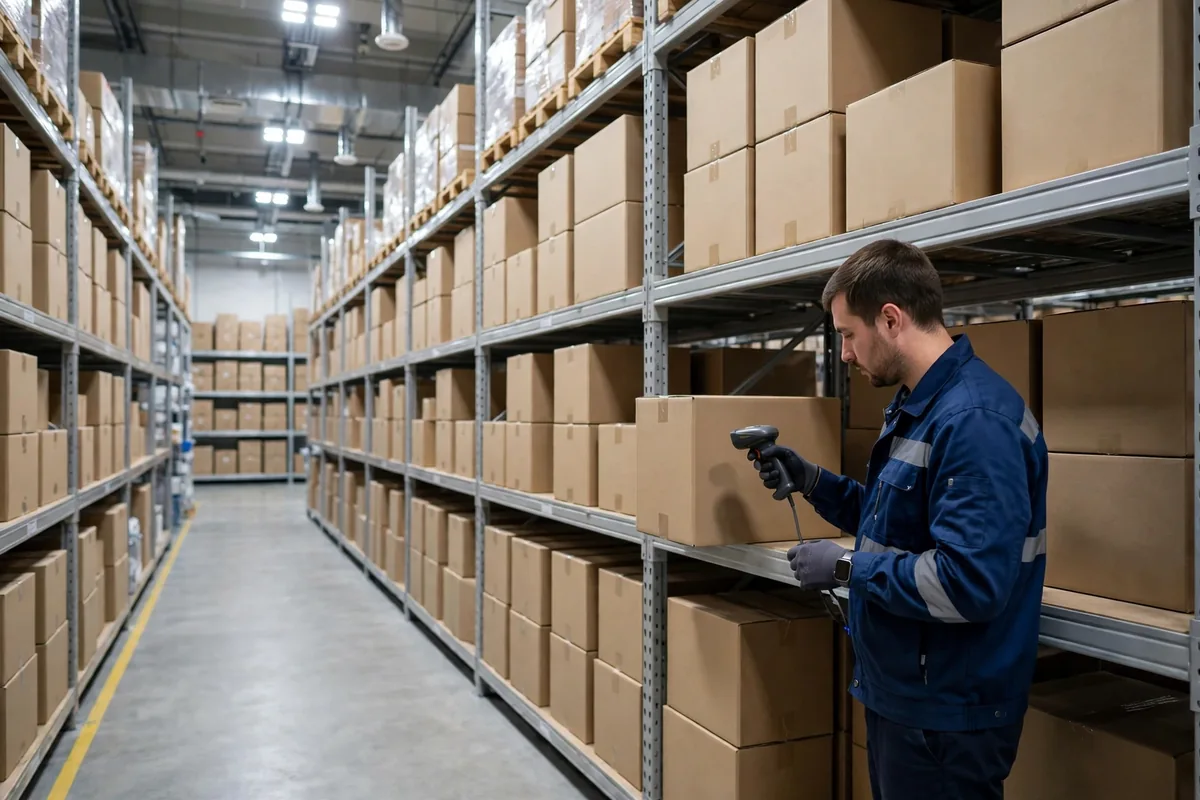
So my recommendation is specific. The warehouse evidence chain is five items, and all five are required: the inbound acceptance form, in-storage spot-check records, the outbound review form, outbound photos, and the handover form signed by the carrier. With all five, an insurer has to think twice before denying. Missing one, and the adjuster has one more handle to pull.
Let's close with the total. Suppose a warehouse ships 2,000 orders a year (hypothetical example), pays 50,000 a year in premiums, and suffers five cargo losses a year averaging 30,000 each — 150,000 total. If half gets denied over evidence problems, 75,000 vanishes — the equivalent of a year and a half of premiums wasted. Flip it around: doing the evidence work properly costs a few thousand a year in extra labor. The premium is small money. The evidence chain is what decides whether you get paid.
Cargo insurance feels like spending money when you buy it. You only learn what you bought when you claim. The policy won't keep evidence for you. The warehouse has to keep it. By the time something goes wrong and you go looking for proof, it's already too late.
By Lao Zhou, Logistics Cost Analyst