Last October, a friend who runs a pet treat brand called me. His brand was taking off on Amazon and his own site, two to three hundred orders a day, and his little storage room had burst at the seams. Would I take over his fulfillment? The words "pet treats" rang like a cash register in my head: high repeat purchase rates, decent order values, brand owners who usually pay on time. I said yes before he finished the sentence.
Then the inventory arrived, and my jaw dropped.
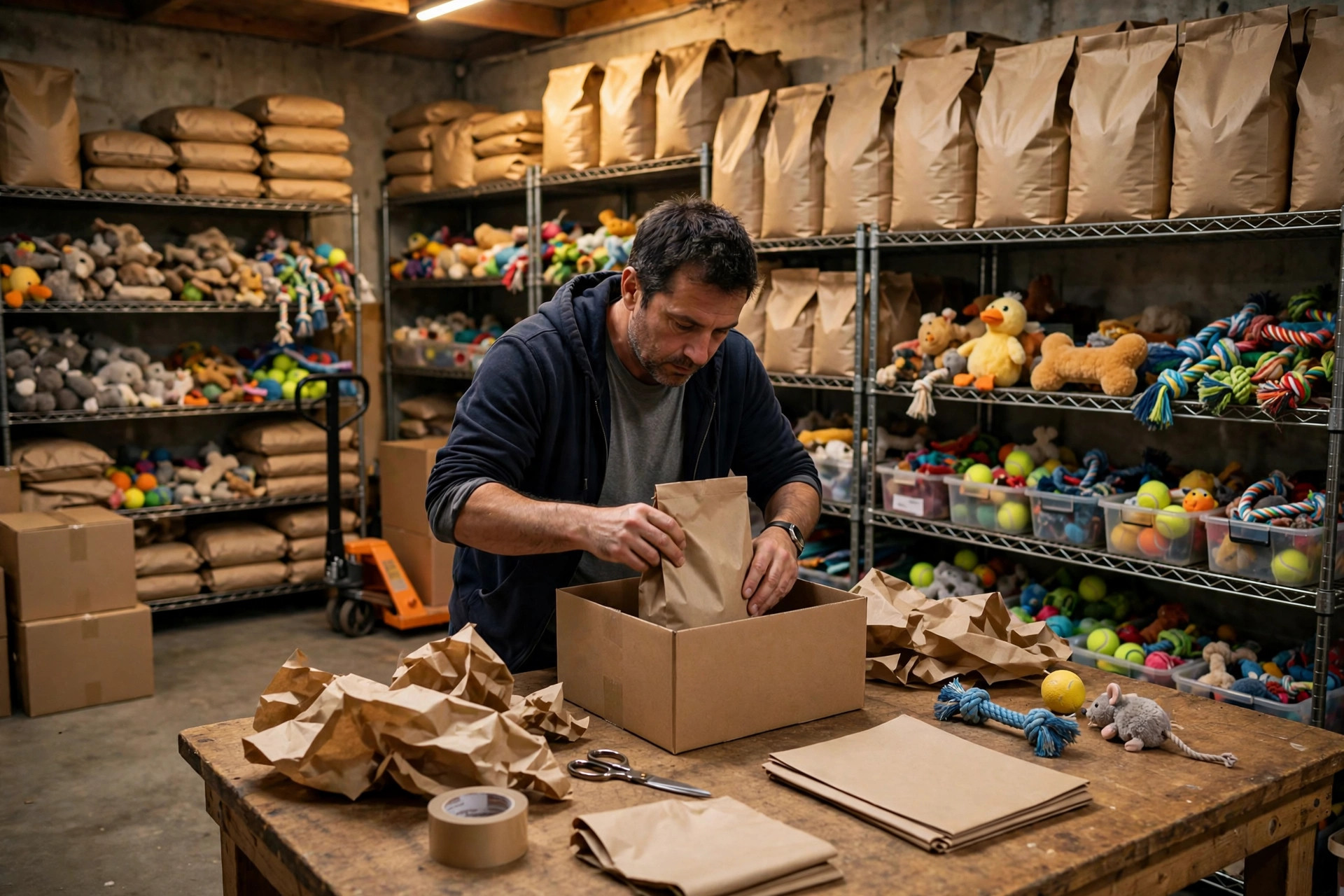
Sixty-plus SKUs. Sounds manageable, right? Except it was a three-dimensional explosion of flavor × weight × packaging: chicken, beef, salmon; 2-lb, 5-lb, 12-lb bags; single bags, two-packs, trial-size samplers. One flavor alone splintered into nine SKUs. My 3,000-square-foot warehouse was already packed to the rafters, and this shipment blew up my slotting plan completely. Worse was the order profile: about 3 items per order on average, typically something like "one 5-lb chicken bag plus three trial packs plus a chew toy." My pickers ran the whole warehouse with a pick list in hand, racking up 20,000+ steps a day, and mispicks kept climbing.
That was the first time in three years of running this warehouse that I questioned my life choices. This money, it turned out, was not as easy as it looked.
Quick disclaimer: every number below comes from my own warehouse's books. These are experience values, not industry reports. Take the ideas, leave the decimals.
We Bit Off More Than We Could Chew
The first two weeks were brutal. Our location coding was, shall we say, approximate: dog food in Zone A, treats in Zone B, and the exact shelf for each SKU lived entirely in my veteran picker's head. The pet treats broke that system. A 2-lb chicken bag and a 5-lb chicken bag look nearly identical, and picking meant squinting at tiny print.
On our worst day we shipped 240+ orders and mispicked 11 of them. The brand's customer service got chewed out by buyers, then turned around and chewed me out. I did the math: one mispick costs me 6–8 dollars in reshipping and labor. Eleven mispicks, nearly a hundred bucks down the drain — a whole day's profit, gone. And pet food buyers are unforgiving: the dog won't eat the wrong flavor, and the one-star review writes itself.
That night I sat outside the warehouse and faced the truth: in the multi-variant small-item game, square footage doesn't win. What wins is whether you can keep dozens of lookalike SKUs perfectly organized. Big warehouses have systems and light-directed picking. We can't afford that kind of money. So it was time for some good old-fashioned redneck engineering.
Milk Crates and Handwritten Labels: The Poor Man's Pick Wall
Our homegrown fix came in three steps, all born of desperation.
Step one: give every SKU an ID card. I bought a used label printer and compressed "flavor-weight-pack" into 6-character codes — chicken 2-lb single bag became JR02S1 — printed big and slapped on the shelf edge, readable from ten feet away. Laugh all you want. Before that we used the manufacturer's original barcodes, printed so small pickers had to bend down and squint. Necks were breaking.
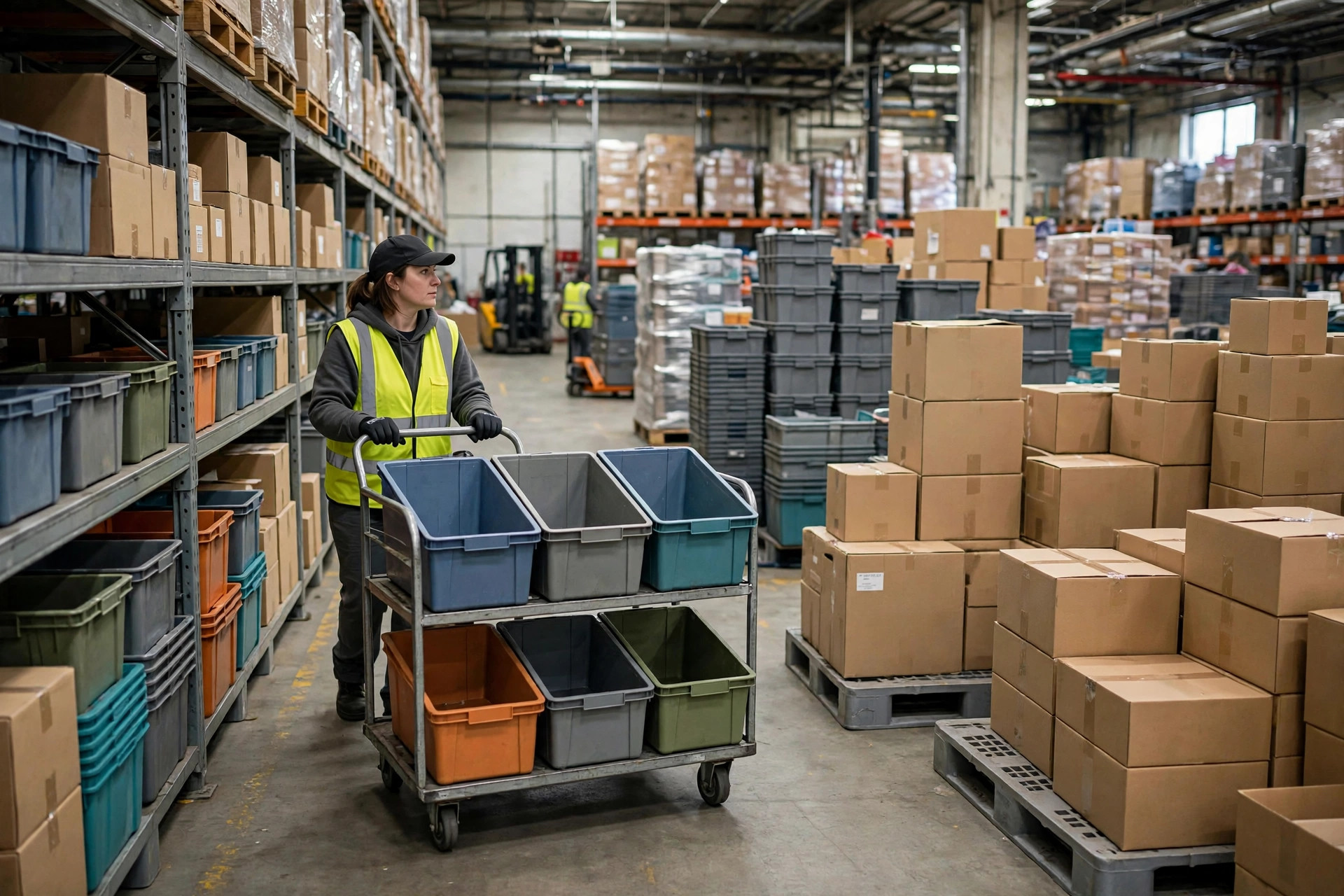
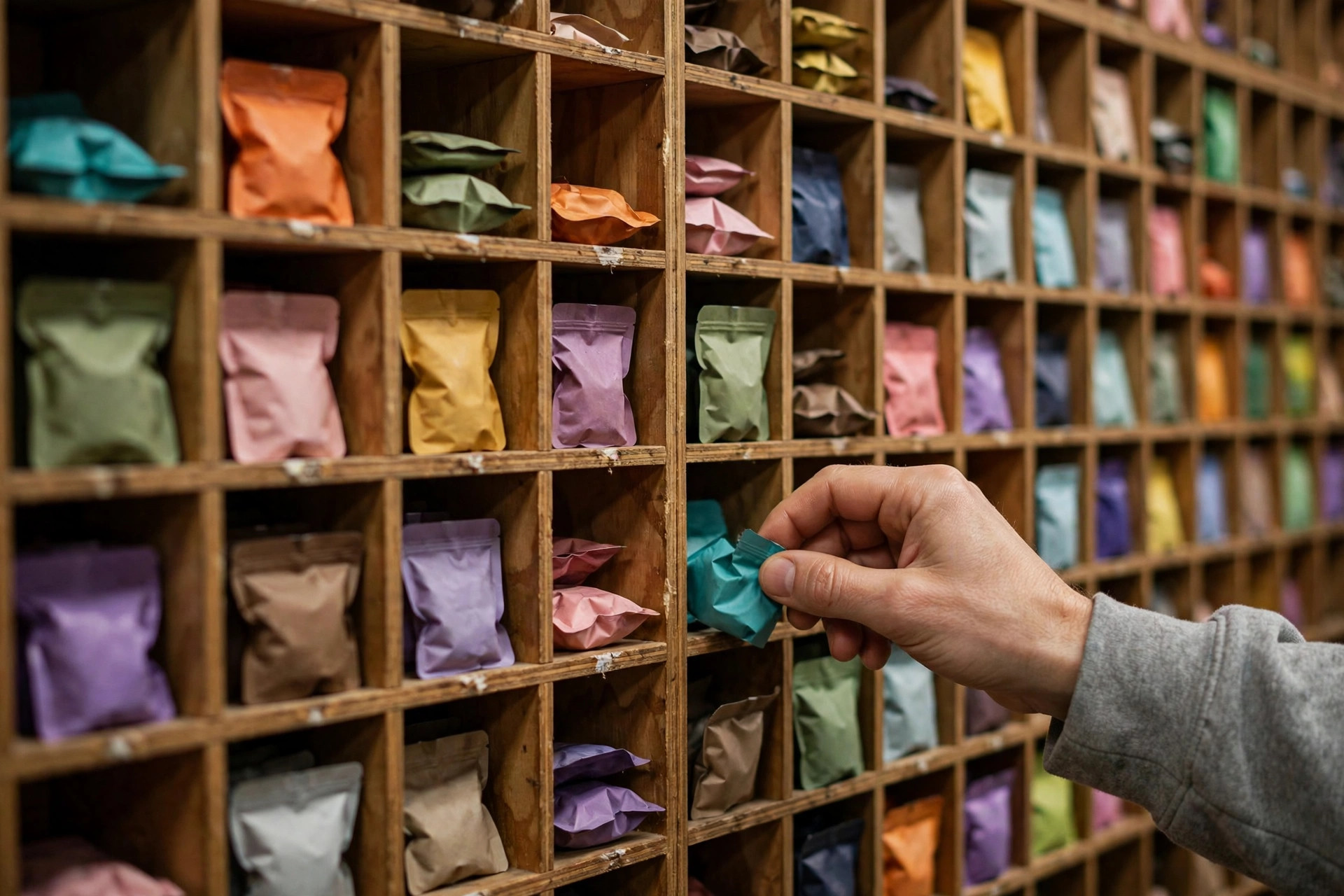
Step two: build the poor man's pick wall. I scored two rows of light-duty shelving secondhand, loaded them with a few dozen plastic totes — one SKU per tote — and slotted by velocity: the top 20 sellers at waist height in the golden zone, slow movers on the top and bottom shelves. Orders get picked with a supermarket-style flatbed cart, one pass down the wall, 3–5 items per order, almost no backtracking. In the first week, average pick time per order dropped from over 4 minutes to just above 2, and daily step counts nearly halved.
Step three: wave picking. Daily orders get cut into three waves by cutoff time; orders in the same wave are picked together, then sorted by order. Big warehouses call it wave picking. We call it "save up a batch before you run." In peak season at 300 orders a day, this trick saves us a full headcount.
I ran the numbers seriously, and here's the comparison for fellow small operators:
| Option | Upfront cost | Result |
|---|---|---|
| Poor man's pick wall (used shelving + totes + label printer) | Under $800 | Mispick rate from 4%+ down to under 1% |
| Basic pick-to-light system | Several thousand to $10k+ | Better results, but payback takes over a year at our volume |
| Put wall with scan verification | $10k+ | We can't afford that kind of money |
The verdict is simple: at 200–300 orders a day, the homegrown fix beats the professional setup on ROI, no contest. When volume triples, I'll think about pick-to-light. Until then, every dollar saved is profit.
Returns: The Opened Treat Bag Nobody Can Save
With picking fixed, returns punched me in the gut.
This March, a batch of returns included two cases of opened freeze-dried treats. The brand's new operations girl called: "Could you sort through them and relist the ones that look fine? Freeze-dried isn't cheap." I said no, photographed everything, logged it, and scrapped the lot. About $400 worth of product. It hurt to throw away.
But there's no negotiating this. I put three red lines in the fulfillment contract:
First, opened pet food gets scrapped. Always. No "sort and resell." It's food that goes into an animal's mouth — what environment it sat in, what got mixed in, nobody can say for sure. If a pet gets sick, it torches the brand's reputation, and the fulfillment partner doesn't walk away clean either.
Second, unopened returns only go back to sellable stock with 6+ months of shelf life remaining. Anything shorter goes to a clearance zone for the brand's disposition, never mixed into normal inventory. That 6-month line is our own rule of thumb — it leaves enough runway to actually resell the unit.
Third, return unpacking happens in a dedicated zone, the table gets sanitized daily, and return totes never mix with outbound totes. Pet food leaves odor residue; if it migrates into someone else's order, the buyer opens the box, smells something funky, and there's your one-star review.
One note: pet food in the US falls under the FDA. Which regulation, which section — I'm a small warehouse owner, I can't recite it, so check the latest official policy. My principle: regulations are the floor, and the contract red lines sit one notch above the floor. I'd rather scrap a little extra than gamble on food safety.
Here's the funny part: after that "ruthless" scrapping incident, the brand handed us their entire fulfillment across all channels. The founder later told me: "You dared to throw away $400 of product. That's when I knew I could trust you with my brand." See the counterintuitive trade-off: the stricter you are with returns, the more the client trusts you. Four hundred bucks in the short term bought the client's crown jewels in the long term.
Three Honest Tips for Fellow Small Warehouses
One, don't fear SKU proliferation. Most people see multi-variant small items as a headache. I see a moat — the messy orders big warehouses won't touch are exactly what feeds small warehouses like mine. If you can keep 60 SKUs perfectly organized, that IS your competitive edge.
Two, homegrown fixes aren't embarrassing. Used shelving, oversized handwritten labels, a supermarket cart — under $800 to fix a mispick problem that was bleeding real money. Do your ABC slotting and SKU ID cards first, then talk automation. Don't start by shopping for software.
Three, put return red lines in the contract, not in your head. Verbal agreements evaporate the moment peak season hits. Write it down, photograph every scrap for the record. It protects the brand, and it protects you.
A year in, this pet treat client is now our steadiest cash flow: 200–300 orders a day, mispicks under 1%, second-year contract renewed. Small warehouses have their own way of surviving. Big companies compete on equipment; we compete on the patience to squat down and fuss over every single SKU. That kind of patience, no machine has.
By Xiao Ma, Small Warehouse Owner