
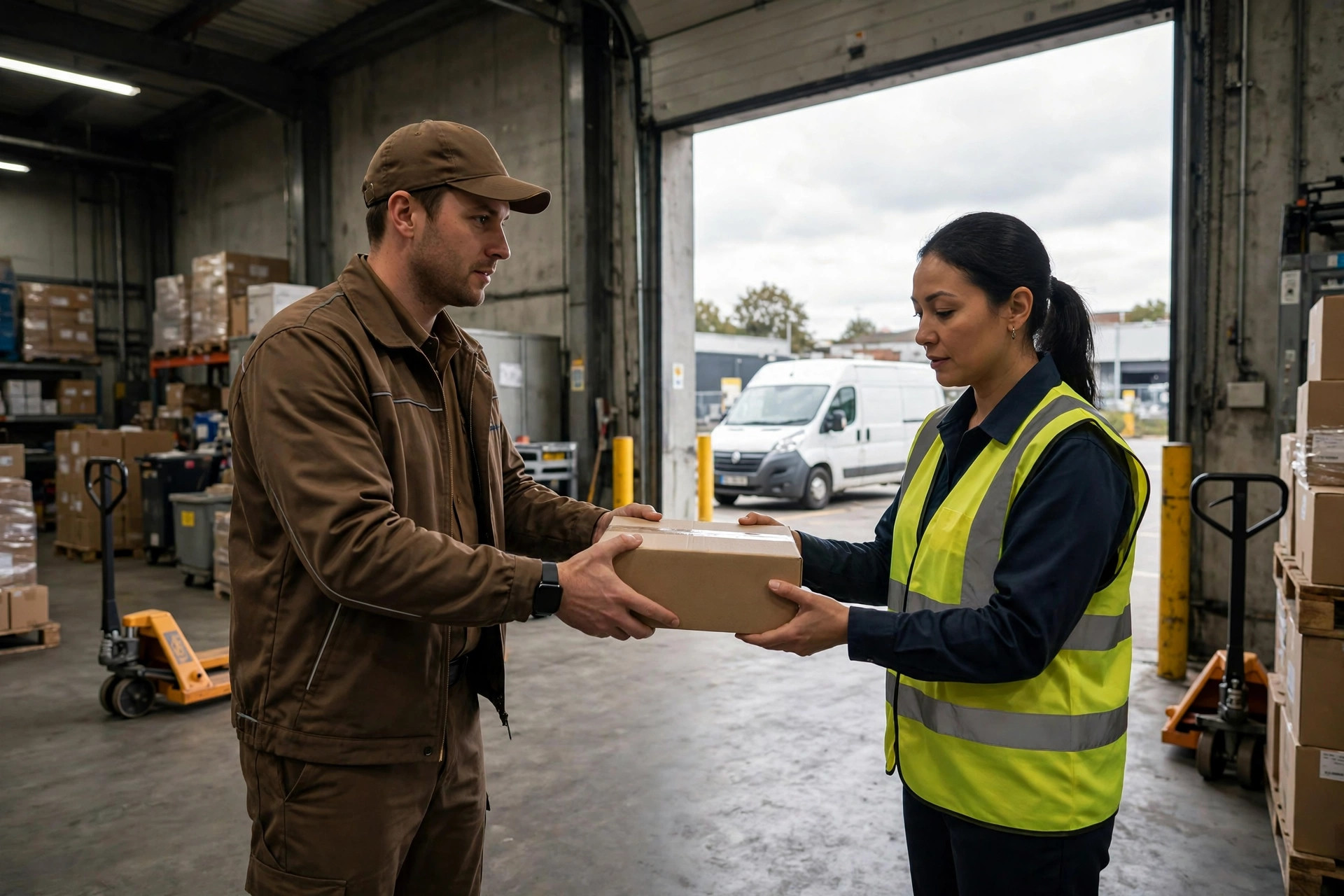
Two winters ago I sat outside a 3PL warehouse in Fontana for four and a half hours — a textbook bad parcel carrier driver dock handoff. Rain, twelve dock doors, only two open, seven trucks ahead of me. When my turn came, the warehouse guy asked: "Appointment number?" I didn't have one. "No appointment? Then keep waiting." I nearly put my fist through the steering wheel — not because of the wait, but because nobody told me beforehand. One appointment number, and I'd have been inside three hours earlier.
Fifteen years behind the wheel, and I've figured this much out: the dock handoff is where drivers hate warehouses for being slow and warehouses hate drivers for not following the rules — but both sides pay for the same thing: uncertainty. The driver doesn't know how long he'll wait. The warehouse doesn't know when the truck shows up. So here are my five rules, written from the driver's seat. Shippers and warehouse managers — these save your drivers' time. Drivers — these save you from eating losses in silence.
Rule 1: The Dock Appointment Isn't Paperwork — It's a Clock the Driver Can Plan Around
A lot of folks treat the appointment as a formality. It's not. For a driver, an appointment number's real value isn't "priority" — it's predictability.
This job pays by the load, and your working hours are a fixed pot. Tell me to be there at 8, I show up at 7:30, and then you say "five trucks ahead of you, no-appointment goes last" — half my day is gone. But tell me "your pickup is in the 2 PM window, roll in at 1:30," and I can squeeze in another run that morning.
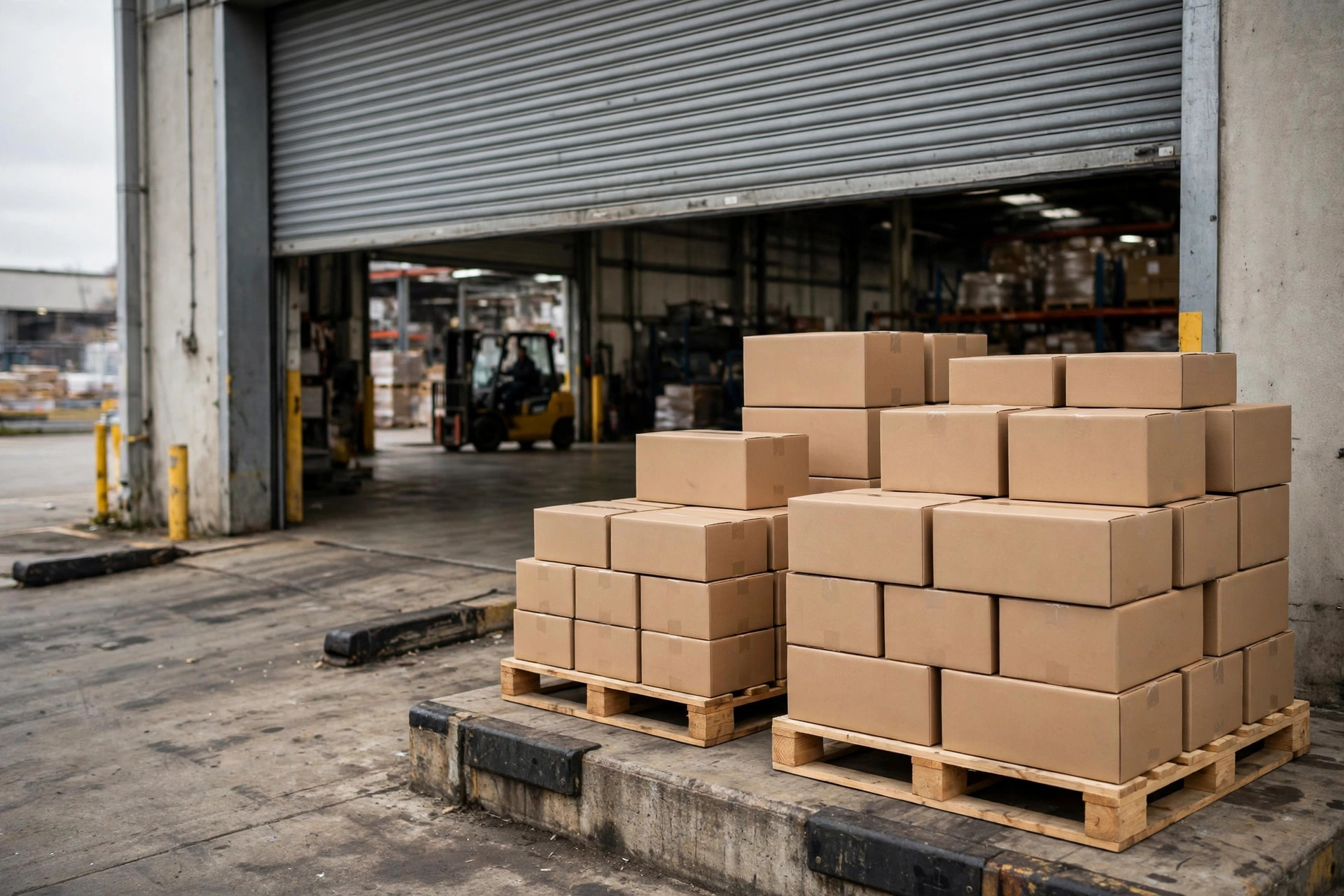
The best warehouse I've seen, out in Chino, texts every appointment: window time, dock door, a contact number, plus one line — "running 30+ minutes late? Call this number first." That one text visibly lifted their on-time rate. The worst treat appointments as decoration — you book 10 AM, they call you at 11:30, and next time the driver stops believing you and camps at the gate two hours early. Vicious cycle.
So here's my advice to warehouses, one sentence: keep your appointments — and if you can't, say so early. Drivers don't fear waiting. They fear not knowing how long the wait is.
Rule 2: First Thing at the Warehouse — Find the Right Person, Say the Right Thing
Rookie drivers roll in and look for the office. But who you find and what you say — that's a skill. The dock lead deals with dozens of drivers a day: rattle off your appointment number, BOL, and PO, and he knows your load instantly. Mumble "I'm here to pick up freight" and you're parked on the side.
My habit: truck stopped, engine off, walk in with three things — the appointment confirmation (a phone screenshot works), the BOL, the pickup PO. First sentence, always: "Hi, driver with XX company, appointment XXXX, here for PO XXXX — which door?" Three sentences, everything covered.
One small trick: remember the person's name. "Hey buddy" versus his actual name gets you different treatment. He sees dozens of drivers a day — you remember his name, he remembers you, and next time your truck has an issue he'll take an extra look.
Rule 3: Paperwork Is Where Handoffs Die — One Wrong Letter Costs an Hour
The easiest place for a dock handoff to fall apart isn't the loading. It's the paperwork.
Last summer at an e-commerce warehouse outside Vegas, I went to pick up forty-some cartons. The consignee name on the paperwork was off by one letter — "Jonson" instead of "Johnson." System wouldn't match, no release. I called dispatch, dispatch called the broker, the broker chased the shipper. An hour and a half, back and forth. The freight sat right there on the dock. I could see it. Couldn't touch it.
Fifteen years on the road taught me the driver's "three checks":
First, before loading, make sure the quantity, piece count, and PO number on the appointment and the BOL actually match. Fix problems at the office counter — not after the freight's on your truck.
Second, at sign-off, check the piece count and the packaging. Box crushed, pallet leaning — note it on the paperwork right then. Don't be shy. If you don't write it down now, every bit of damage belongs to you at the receiver.
Third, take photos. Before the doors close, three shots on your phone: the loaded trailer, the paperwork, the seal number. If anything goes sideways on the road, those photos are your armor.
And to shippers: getting the paperwork right before the truck arrives beats everything. The five minutes you save skipping a double-check can cost the driver an hour at the dock.
Rule 4: Load Sequence Decides Whether You Curse at Delivery
Here's the counterintuitive one: fast loading doesn't mean a good handoff. Correct loading does.
A lot of warehouses chase loading speed — forklift shoves boxes in, ten minutes, driver rolls out happy. Then at the receiver the unloading crew stares: the first stop's freight is buried in the nose. The whole trailer gets reworked. An extra hour, plus damage risk.
The right way is to load in reverse delivery order: the last stop's freight goes in first, deepest; the first stop's freight goes in last, by the doors. These days I always ask: "Direct or multi-stop? If multi-stop, which drops first?" An experienced warehouse hears that and knows how to stack. An inexperienced one — one reminder saves everybody.
One more detail: heavy on the bottom, light on top. Sounds like common sense, but when everyone's rushing I've seen it loaded backwards — opened the doors at delivery once to find three cartons of light freight crushed flat on top because the forklift guy was in a hurry. If you see that happening, don't let it slide to save five minutes. Make him restack. You save five minutes now, the road shakes it loose, and the damage is the driver's problem.
Rule 5: Getting Along With the Dock Supervisor Is a Driver's Best Investment in the Handoff
This last rule doesn't look proper on paper, but it works best.
My takeaway after all these years: the dock supervisor's little bit of discretion decides whether you wait one hour or three. Which door opens first, which load gets staged first, whether your truck can jump the line — none of it's written down. It's all human.
How do you build that relationship? Three moves, none of them cost a dime. One: be on time — appointment at 10, you're there at 9:50. That's the biggest sign of respect there is.
Second, don't argue when they're slammed. Wait for a breather, speak calmly — the difference is night and day.
Third, don't hold back on the small favors. A box leaning — give it a push. Empty pallets around — stack them while you wait. They see it. Next time your truck has a small problem — seal mismatch, a missing signature — they'll help you figure it out instead of sending you back to start over.
I've got a regular warehouse in Mira Loma, seven, eight years now. The dock lead — he told me to call him by his nickname — my truck rolls in and basically skips the line. Not privilege, just years of making each other's lives easier. He knows I'm on time, paperwork clean, dock left tidy. I know what he looks like when he's buried, and I don't add to it.
Do the Math: What an Hour of Waiting at the Warehouse Dock Really Costs Both Sides
A lot of people think a driver waiting around is no big deal. Let me run the numbers and you'll see both sides are bleeding.
For the driver, the workday is fixed — say two short hauls a day, paid per load. Two hours at your gate eats time that could have covered two-thirds of a third run, and waiting time pays zero. For the warehouse: limited dock doors, one truck backed up at the gate backs up every truck behind it, forklift operators on the clock doing nothing. And the hidden cost — drivers stop taking your loads, dispatch pays more to find trucks, and your transportation cost creeps up, dollar by dollar.
So a smooth dock handoff isn't a "customer service" issue — it's a cost issue. Every bit a warehouse invests in the appointment system, the notification text, the paperwork check comes back as drivers who want your loads and show up on time — and your freight cost goes down. The sharp warehouses can all do this math.
One Last Thing
Systems can be as advanced as you want, but in the end it's two people — a driver and a warehouse hand, a few sentences between them — deciding whether a load moves smooth.
There's an old saying I live by: respect given is respect returned. Drivers: on time, paperwork clean, no trouble. Warehouses: keep your word, keep information flowing, treat drivers like people. Both sides do that, there's less heat at the dock — and the freight moves.
Next time your truck is in line at a warehouse gate, don't just sit there fuming. Run through these five rules — nail any one of them and that run goes smoother. Out here on the road, smooth is money.
By Shifu Zhao, Trucking Veteran (15 yrs)





