Same box, same carrier, same lane. One shipper pays $13.20 through the UPS website, the warehouse next door pays $9.80 on its contract account. In August 2024, an apparel e-commerce company in Ontario, California asked me to audit its parcel spend: 6,000 shipments a month, Ground alone running $74,000. I pulled three months of invoices apart. The discount rate looked impressive at 42%. The net price, though, was barely 20% below the published rate. The problem was not the discount. It was the annual rate hikes and the surcharges quietly compounding underneath. They changed their negotiation playbook after that. A year later, their total parcel bill was down $160,000 a year. That money did not go to the carrier. It stayed in their pocket.
A finance person sees carrier negotiations one way: you are not negotiating a discount rate, you are negotiating a net price. The discount rate is a number on the table. The net price is the number on your P&L. Below is the playbook, six levers.
Read Your Own Bill Before You Open Your Mouth
Before the talking comes the math. Export your last three months of invoices and split them along three axes:
- Zones: what share of your volume is zones 2-4 (short haul) versus zones 7-8 (long haul). Long-haul shipments cost the most per piece and are your most valuable bargaining chip.
- Weight bands: how much is 1-5 lb small parcels, how much is oversize. Oversize surcharges routinely make up 30% or more of the total on those shipments.
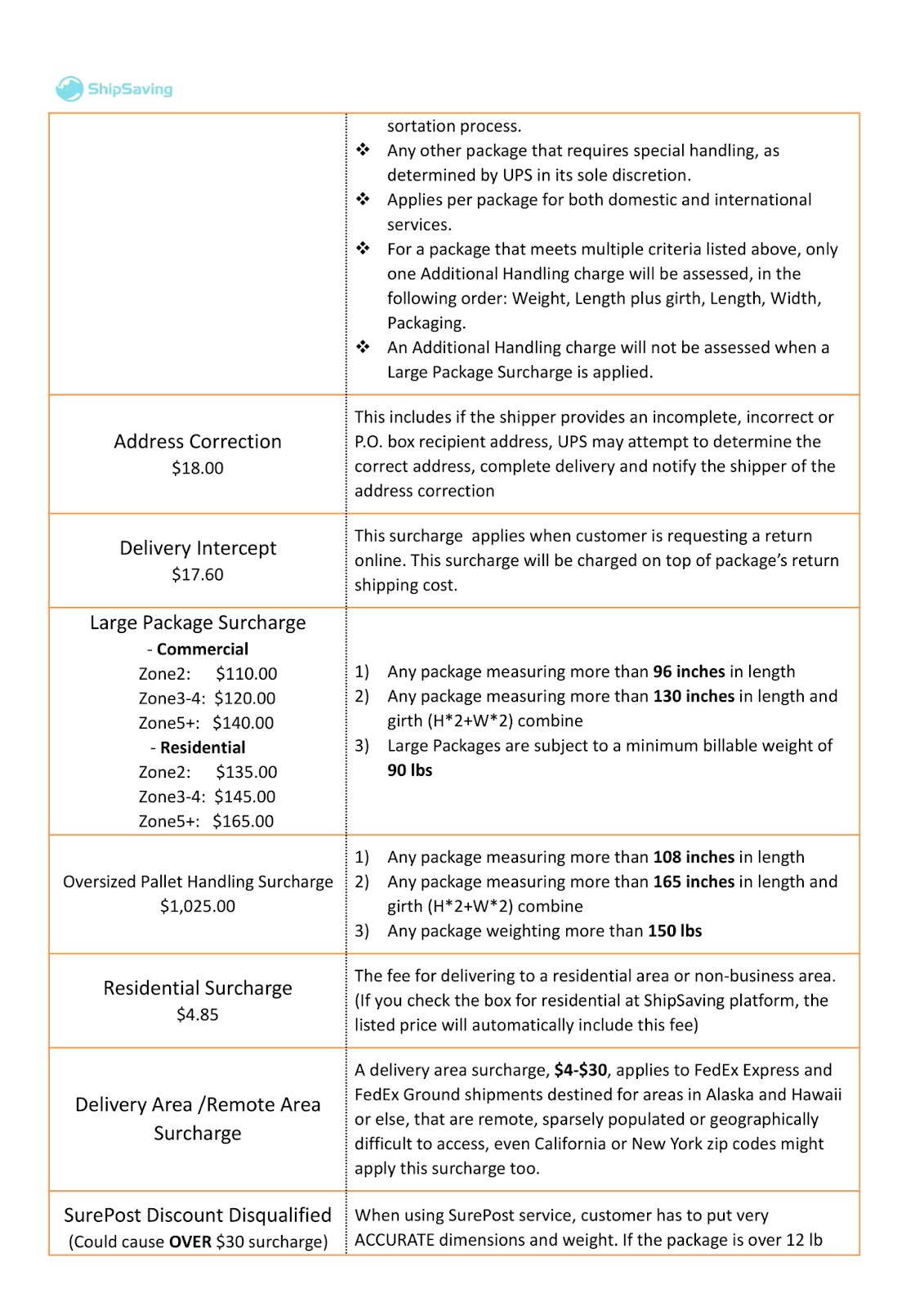
- Surcharge detail: address corrections, delivery area surcharges (DAS), residential surcharges, fuel surcharges, each listed with its dollar amount and share of the total.
A typical bill, broken open, looks like this (a mid-size seller shipping 5,000 parcels a month, early 2025):
| Cost item | Monthly amount | Share of bill |
|---|---|---|
| Base transportation (after discount) | ~$56,000 | 68% |
| Fuel surcharge | ~$11,000 | 13% |
| DAS / residential / correction fees | ~$10,000 | 12% |
| Oversize surcharges | ~$6,000 | 7% |
Notice: surcharges add up to nearly a third of the bill. And yet most shippers negotiate only the base-rate discount, which means they are haggling over two-thirds of the invoice while leaving the rest untouched. Step one of any negotiation is mapping where the other side's money actually comes from.
One fact first: UPS and FedEx each publish an annual general rate increase (GRI), recently around 5-6% (check the carriers' official sites for the current figure). If your discount has not moved in three years, you have taken a price increase every year. Negotiation is not a one-time event. It is annual homework.
The Six Levers
Lever one: data is your leverage. Walk into the negotiation with your bill already dissected. Tell the rep: 38% of my volume is zones 2-4, average 3.2 lb, 55% residential delivery. The more granular your data, the less room they have to hand you a standard template. Reps hold discount authority, and they spend it on shippers who can read their own bills. Those are the accounts they cannot afford to lose.
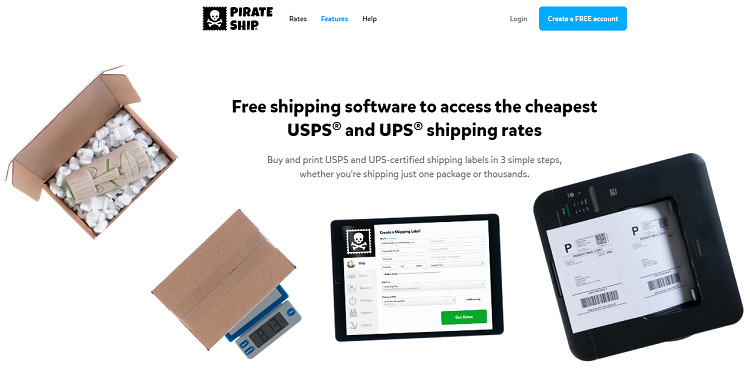
Lever two: bring an outside quote. Aggregator platforms like Pirate Ship and Shippo are free to join, and their rates on sub-2-lb parcels often beat what you negotiated yourself. Pull the prices for your most common weight bands and zones, print the screenshots, and put them on the table: "Can you match this? If not, I move the small parcels over." That is the market price. Aggregators work because they pool thousands of small shippers' volume to bargain with the carriers. You cannot out-bargain them alone, but you can borrow their volume.
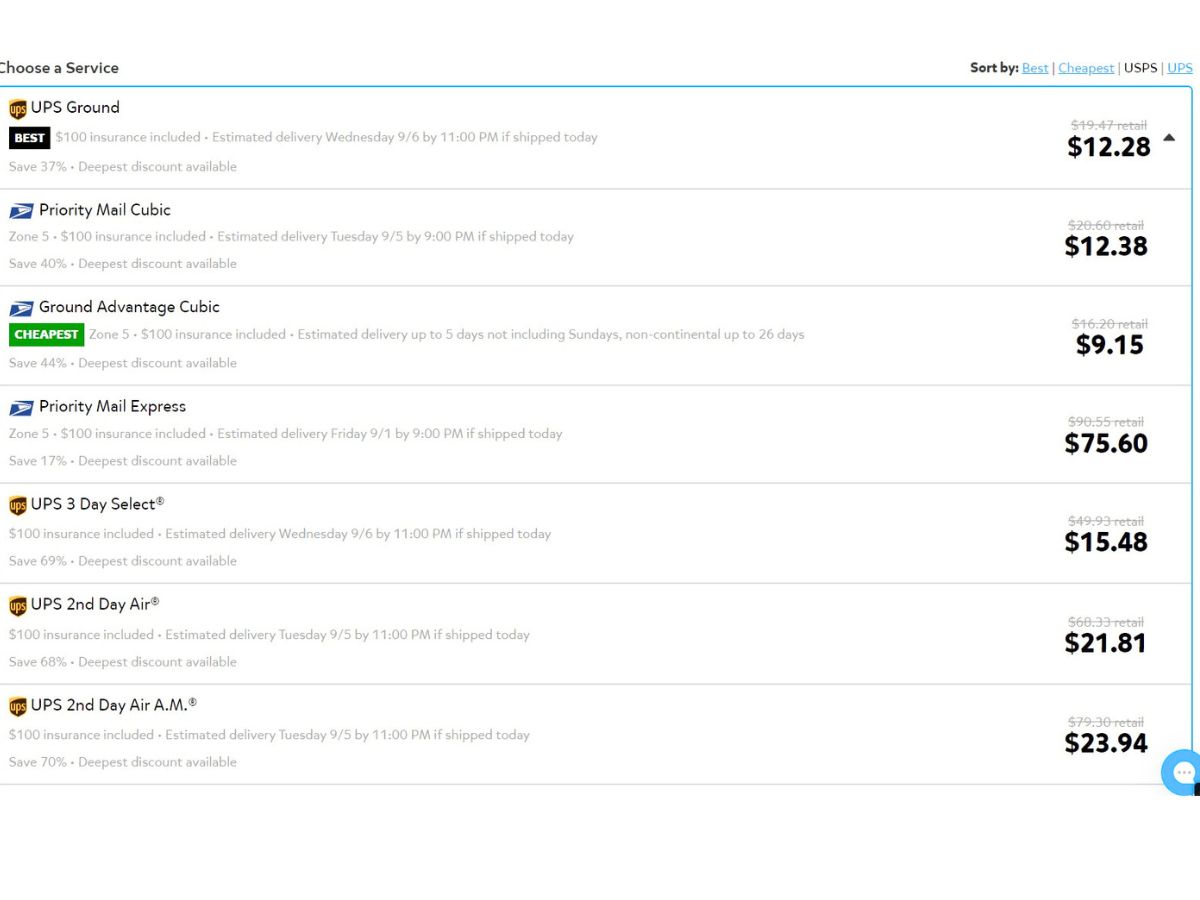
Lever three: negotiate the surcharges, not just the discount. A 45% published discount sounds great, but if surcharges get zero relief, the net price stays ugly. The insider move is to ask for reductions or caps on address correction fees and DAS surcharges, plus a separate discount on oversize fees. That line item is 12% of your bill. Cut it by a third and you have taken 4% off the total. Surcharge relief is often easier to win than a deeper base discount, because it is not on the rep's standard discount sheet.
Lever four: match the service level to the need. Plenty of companies default everything to 2Day Air or 3Day Select because it is simpler. The worst case I have seen: 70% of the ship-to ZIPs were zones 2-3, where Ground already delivers in 1-2 days, and they had been shipping 2Day for years. The extra spend would have bought two forklifts a year. Export three months of destination ZIPs, tally by zone, and drop everything non-urgent within zone 4 to Ground. This is not negotiation. It is stopping money that never needed to leave, and it hands you a bigger Ground volume to negotiate with.
Lever five: trade a volume commitment for depth, but read the penalty clause. Carriers give deeper discounts when you sign an annual minimum volume commitment. Bigger volume, deeper discount, that is the iron rule. But contracts carry a shortfall penalty: miss the volume, and part of the discount gets clawed back. Before signing, do the math honestly. Is your volume steadily growing or seasonal? Do peak-season shipments count toward the commitment? If the terms do not work, walk away. A shallower discount with no strings beats a deep one that can strangle you.
Lever six: run two accounts and let them bid against each other. Never put all your volume with one carrier. UPS and FedEx reps have quarterly targets, and the end of the quarter is your best negotiating window. Every quarter, take carrier A's invoice to carrier B: "This volume, this price, will you take it?" An exclusive partnership means voluntarily surrendering your bargaining power.
The Discount Rate Is a Vanity Metric. Net Price Is the Only KPI.
Here is the counterintuitive call that makes people argue with me the first time they hear it: the account with the highest discount rate does not necessarily have the lowest net price.
The reason is arithmetic. Discounts apply to the published list rate, and that list rate climbs 5-6% a year. Company A gets 50% off this year's list price. Company B gets 45% but negotiated half its surcharges away and got oversize priced separately. At year end, Company B's net price is 8% lower. The discount rate is for the sales rep's report. The net price is for your boss. At the table, there is only one question that matters: "Same box, from my warehouse to this ZIP, what do you charge me?" Make them quote the net. Never the discount.
The trade-off deserves a clear head too. Aggregator accounts (Pirate Ship and the like) are cheap and frictionless, but there are three red lines. First, the account is not yours. When the platform's policy changes, the price can vanish overnight. Second, claims go through the platform's process, which runs a beat slower than a direct contract account. If your category has a high loss rate, weigh that. Third, buying a "ready-made discount account" from a reseller is deep water. My recommendation: use aggregators as a benchmarking tool and a bargaining chip, route some small parcels through them, but keep your core volume on a contract you signed yourself. Split the eggs across baskets, but do not hand the basket to someone else.
Three more pitfalls, all paid for in real money:
- Do not rush the account opening. Open a business account directly on the UPS or FedEx website, submit your tax ID and projected volume through the normal process, and a rep will contact you. Third parties offering to "open a discount account for you" are usually stuffing your parcels into someone else's volume pool. When it blows up, the bill is in your name.
- Claims have deadlines. Lost, damaged, and delayed shipment claims all have filing windows, and late filings are not accepted (check the official sites for current time limits). When finance reconciles each month, sweep the exception scans while you are at it. Do not wait until quarter end to remember.
- The fuel surcharge moves monthly. It floats with a fuel price index. Ask for the calculation basis when you sign. When fuel prices fall, your bill does not always fall with them, because the base moved too. Track this line separately.
The Closing Math: A Formula You Can Reuse
Before any negotiation, finish this arithmetic:
Net price = published list rate x (1 - discount rate) + total surcharges
Compute the net price for every shipment over the last three months, average it by zone and weight band, and that is your baseline cost. The negotiation target is one line: under the new contract, the same shipment mix must come in 10-15% cheaper on net price. If they cannot get there, they are not serious. Keep talking, or move the volume.
Whether the money was well spent is decided by the ledger, not the pitch. The discount rate is for the rep. The net price is for the owner. Spend two weeks a year doing this properly, and every dollar saved is pure margin. There is no better-paying finance work than this.
By Lao Zhou, Logistics Cost Analyst