The phone rang at 4:50 in the morning. It was the night-shift lead, keeping his voice down: last night's freight missed the parcel carrier cutoff time. The truck had gone. Thirty-odd orders would not ship today, and customer service was already getting hammered. I threw on my jacket and drove to the warehouse, with one thought in my head the whole way: you do not get to relax about the carrier cutoff time, not for a single day.
To be honest, a parcel carrier cutoff time sounds like a timetable to a newcomer. Anyone who has run a floor knows it is a rope pulled tight. The carrier truck comes at a set hour. Before that hour, every order has to be packed, labeled, and staged on the dock. One minute late and the truck leaves. When the truck leaves, the freight waits until tomorrow. And the customer does not care about your problems — the customer only remembers the "ships today" promise they saw at checkout.
Building the Shift Around the Parcel Carrier Cutoff Time
Here is how we run it in our warehouse now. Every afternoon at three o'clock, the cutoff time rings in everyone's ears like an alarm clock. That is not an exaggeration — there really is an alarm. On the packing-area wall hangs a big whiteboard with each carrier's cutoff time for the day, and a countdown next to it. Anyone still holding orders can see at a glance where things stand.
Let me tell you about a mistake we made. Before the peak season last year, a carrier moved its cutoff an hour earlier. The notice went out by email — to the inbox of a colleague who had already left. We scheduled the shift on the old time, and that day we ran about forty minutes late. The truck left, and more than two hundred orders rolled into the next day. The next day was worse: the backlog plus the new orders blew up the packing area, and the night shift worked until three in the morning. After that I made a rule. The carrier cutoff time is the first thing the lead reads out at the morning huddle, every day, until everyone can recite it by heart. Do not trust email. Do not trust the group chat. Trust the voice at the morning huddle.
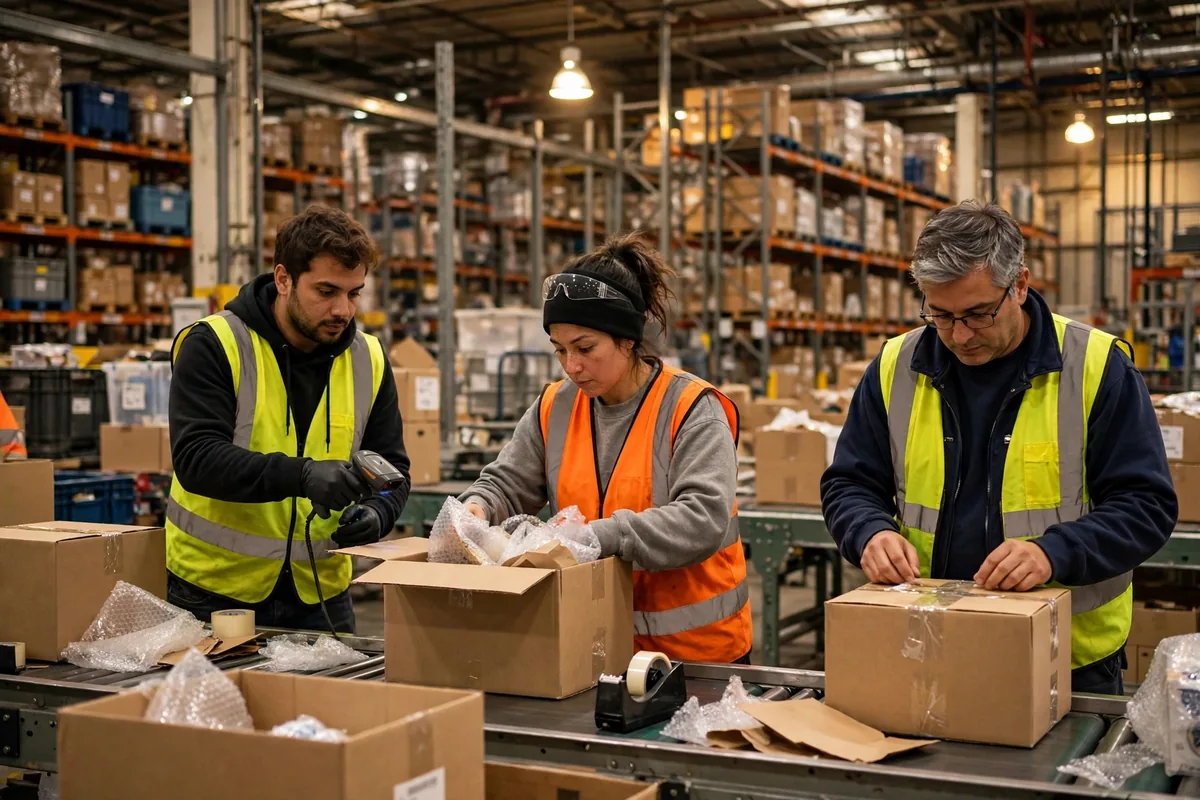
The scheduling math works like this. The table below is a hypothetical worked example — numbers I made up from our warehouse's rhythm on an ordinary workday, to show how the scheduling logic works, not an industry standard. Say the day's volume is 800 orders, the carrier cutoff time is 5 p.m., and a skilled packer handles roughly 40 orders an hour. Then you need at least 8 people on the packing line before 3 p.m. One person short means somebody works overtime. Two short and the night shift is a certainty.
| Time block | What is happening | Staff (hypothetical example) |
|---|---|---|
| 08:00–10:00 | Picking and putaway, clearing yesterday's backlog | 6 people |
| 10:00–12:00 | Packing peak — labels, boxing, weighing | 10 people |
| 12:00–13:00 | Lunch rotation, 4 people hold the line | 4 people |
| 13:00–15:00 | Packing continues, exception orders handled | 10 people |
| 15:00–17:00 | Cutoff sprint, freight staged on the dock | 12 people, everyone |
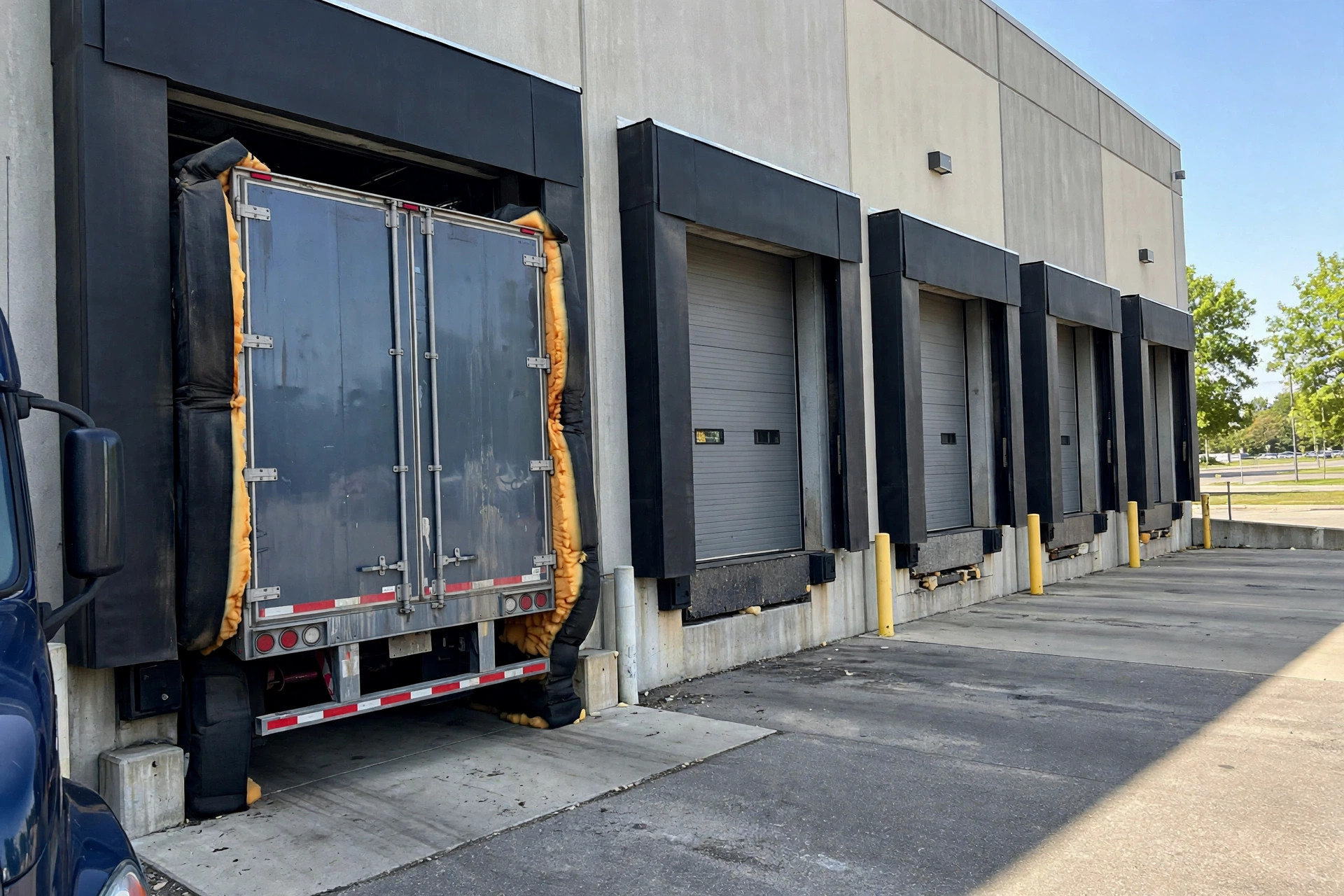
| 17:00 cutoff | Carrier pickup, handover sheet checked | Lead + 2 people |
The table looks simple, but the trick in it is this: staff is not spread evenly, it is stacked in front of the cutoff time. Plenty of warehouses schedule flat — ten people in the morning, ten in the afternoon — which looks fair until four o'clock, when freight is piled to the ceiling and there are not enough hands, and everyone watches the truck drive away. Scheduling follows the cutoff time, not the clock.
When the Cutoff Moves, the Whole Warehouse Moves With It
Folks, the thing to fear about a carrier cutoff time is not that it is early. It is that it changes. Carriers pull cutoffs earlier in peak season, dispatch early in bad weather, and shift times the day before a holiday. Schedule to a fixed time and sooner or later you will pay for it.
We run three standing rules now. First, the morning huddle covers three things before anything else: today's carrier cutoff times, the volume forecast, and whether any exception orders from yesterday are still open. Ten minutes, then everyone works. No long meetings. Second, one hour before cutoff we set a red line: at 4 p.m. the packing lines stop taking new orders and only finish what is already moving. New orders roll to the next day. Better a customer waits one more day than the whole line loses its rhythm for a single order. Third, stay on good terms with the carrier drivers. What time the driver arrives, whether the truck is full today, whether he can wait ten extra minutes — none of that is in the contract, all of it is in the relationship. Our regular driver, Lao Wang, greets the lead every time he pulls in, and if he is running late he says so in the group chat ahead of time. Do not underestimate those ten minutes. Ten minutes is thirty more orders out the door.
Here is a counterintuitive call: the tighter the cutoff time, the less you should push workers to go faster. Speed squeezed out of people always brings the mis-ship rate up with it. Last year on a night shift, trying to beat the cutoff, the lead stood behind the packing line shouting "faster, faster." That night we mis-shipped a dozen orders, and the returns, reships, and freight claims cost far more than whatever we gained by shipping on time. After that I made a deal with the leads: if the freight is not ready half an hour before cutoff, let it roll to tomorrow rather than forcing it. A customer getting their parcel a day late is, at worst, a bad review. A wrong parcel means a return, a reship, and freight paid twice. The math is not close.
Peak Season Shipping Lives or Dies on the Parcel Carrier Cutoff
The peak-season math is the one that stings most. A normal day is 800 orders. Peak can hit 2,000, and the carrier may pull the cutoff earlier on top of that. Run peak volume on a normal-day roster and you are fighting a peak-season battle with a normal-season crew. You will lose.
What we do for peak: two weeks ahead, we lock cutoff times and pickup frequency with the carriers — can we get a second pickup a day, an extra morning truck — and we negotiate it early, because negotiating on the day is already too late. Temporary workers arrive three days early, paired one-to-one with experienced staff, practicing on packing before they touch a real order. And every peak afternoon at two o'clock we hold a stand-up that asks exactly three questions: how many orders are still unpacked, can we finish before cutoff, and do we need to borrow people from another team. Asked and answered, no small talk.
To be honest, a parcel carrier cutoff time on paper is just a few numbers. On a warehouse floor it is dozens of people's livelihoods and hundreds of customers waiting. Schedule it well and the customer gets "shipped today." Schedule it badly and the customer gets "we're sorry, your order will be delayed." The distance between those two sentences is the math a warehouse manager does every morning with their eyes barely open.
Tomorrow morning at the huddle, ask your lead three questions: what time does each carrier cut off today, what is the volume forecast, and are there any exception orders still uncleared from yesterday. Answer those three and your shift plan will not go far wrong. The rest is up to the whiteboard on the wall and the three o'clock alarm.
By Chen Feng, Warehouse Operations Manager