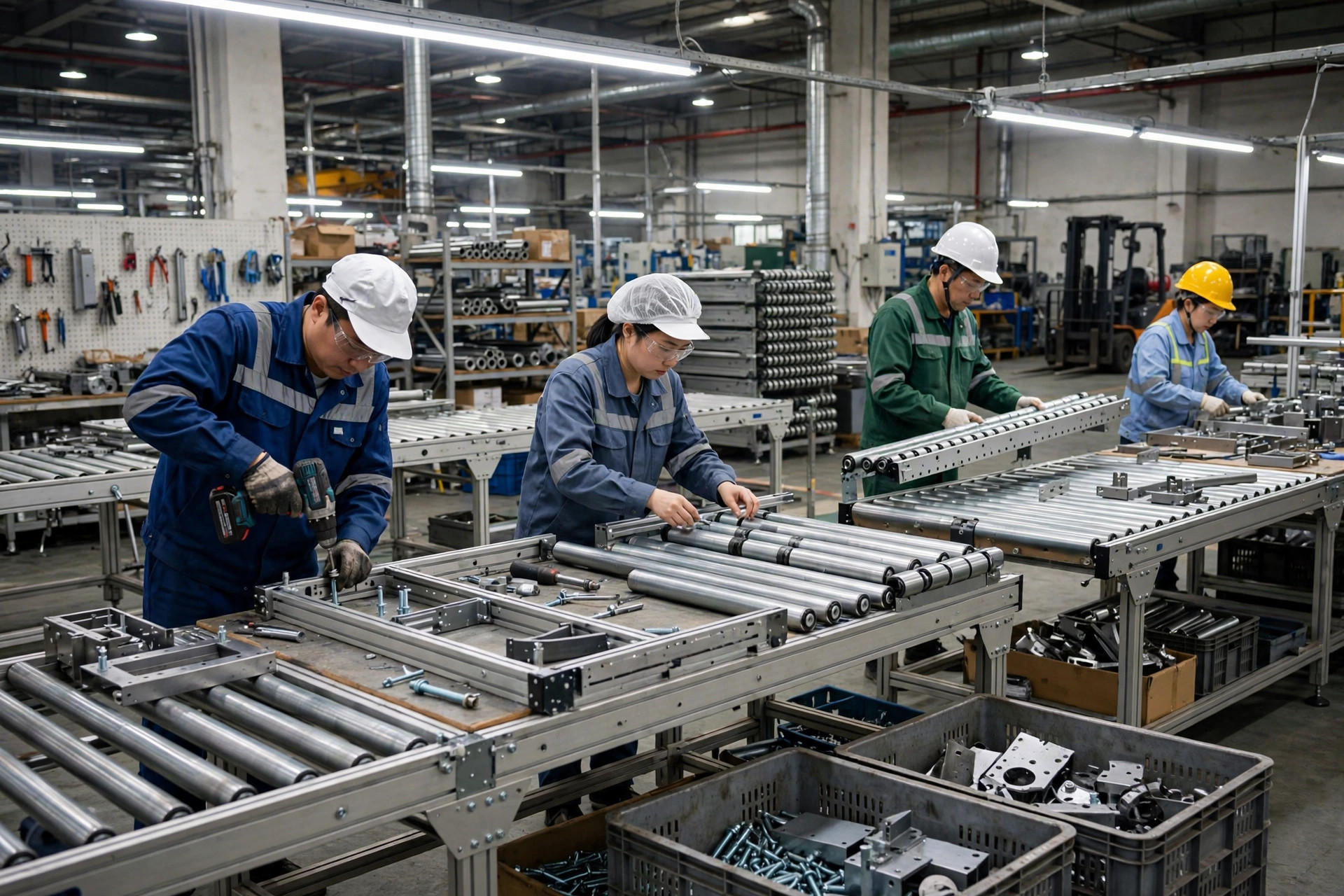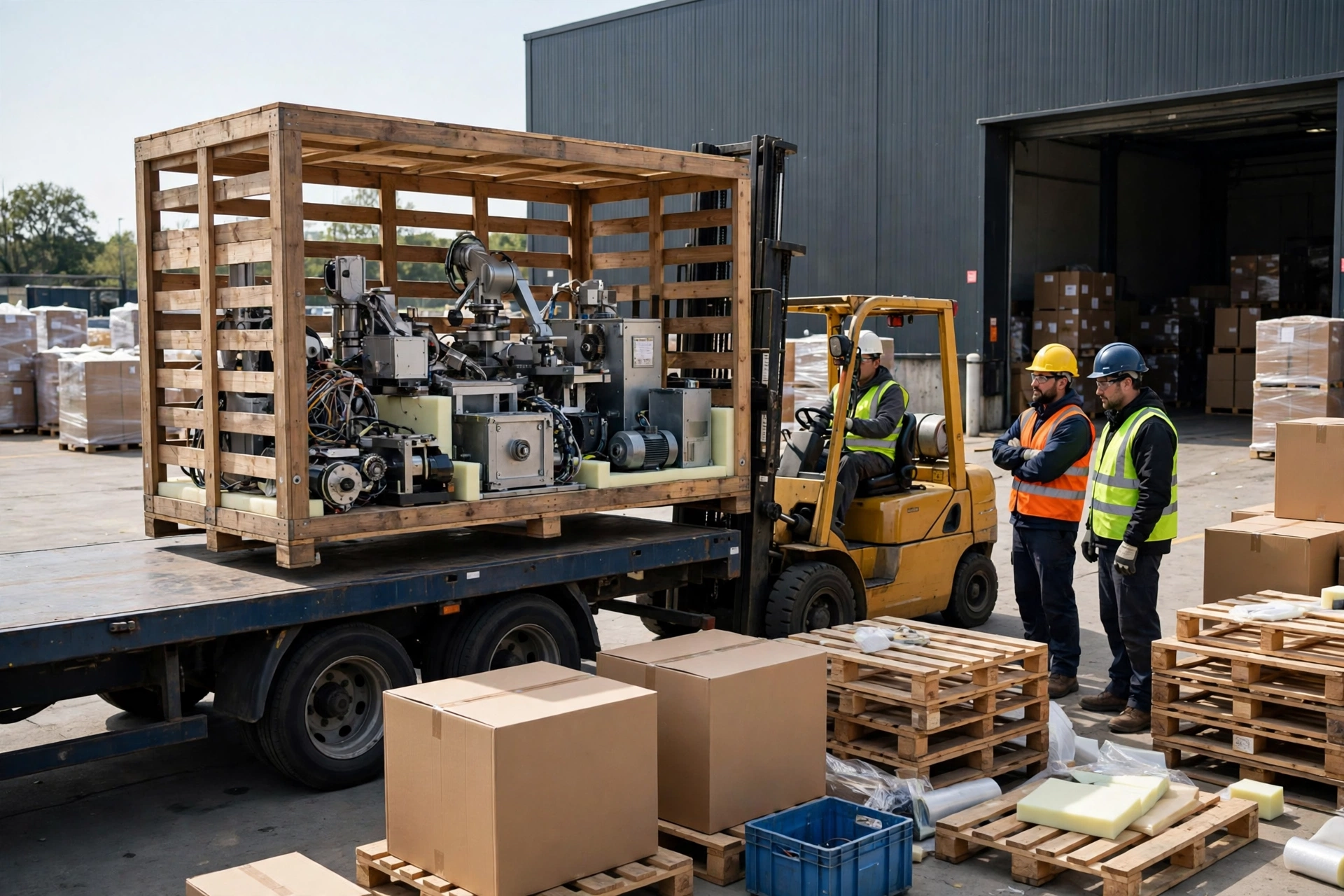
In October 2024, I walked a US importer through a small-appliance factory in Ningbo as part of an importer factory audit checklist exercise. The showroom was bright, the sample wall was tidy, and the owner promised 200,000 units a month with a 25-day lead time. Then we opened the warehouse door, and the smell hit first: finished cartons stacked straight on the floor, the bottom layer damp and discolored, no location codes anywhere. The owner was still talking about his new assembly line. I had made up my mind.
That is how I look at a factory. Think of it as one system: the production line does the work, the warehouse is the buffer, and quality control is the feedback loop. If any one of those three is weak, output becomes unstable.
The importer factory audit checklist starts in the warehouse
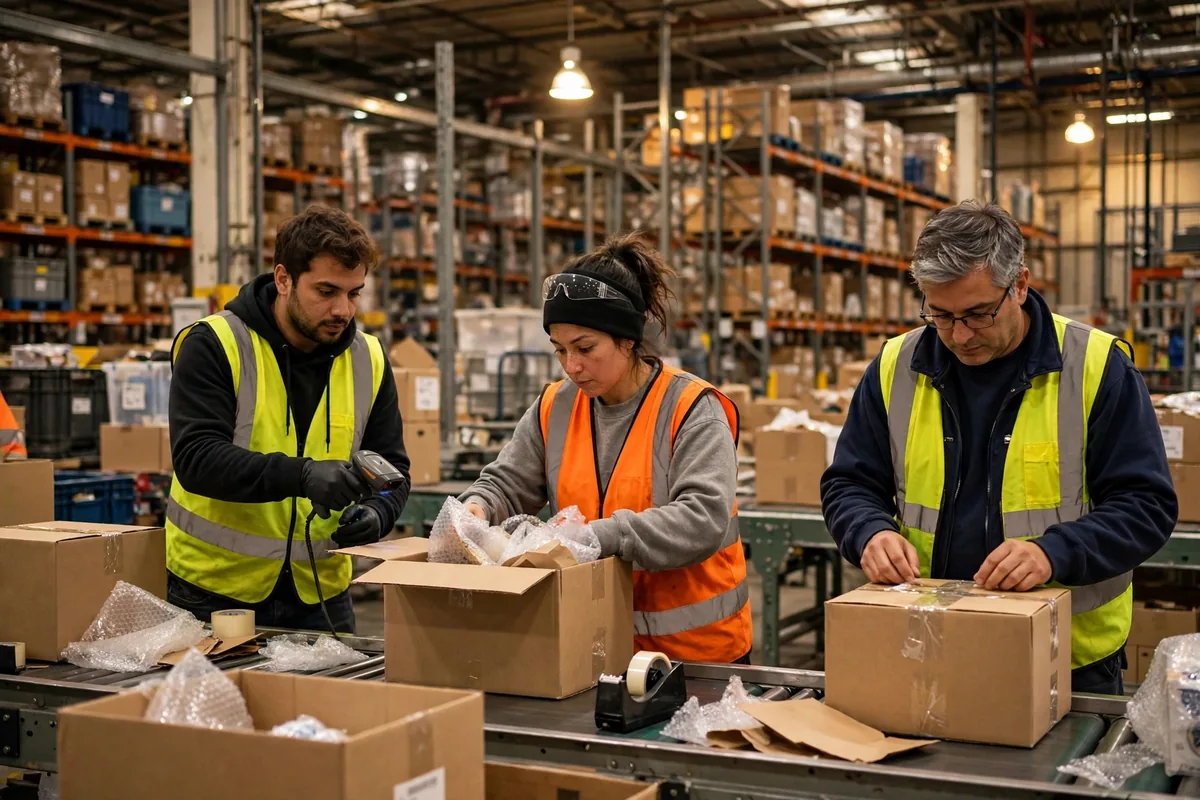
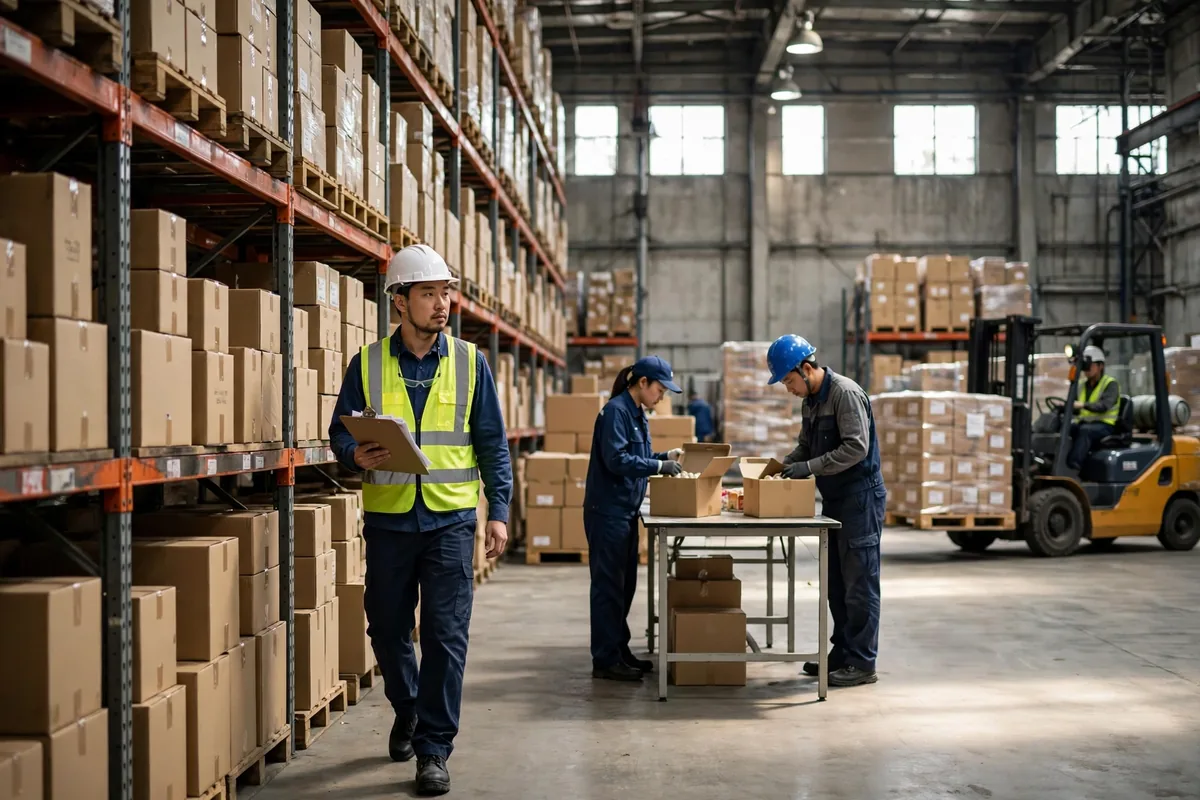
The warehouse tells the truth about a factory because it cannot hide anything. How it stacks, whether stock can be found, whether first-in-first-out actually happens — you can see all of it in one sweep.
Start with location coding and a real system. A location code is like a street address for a shelf. Without it, finding stock depends on the memory of veteran pickers, and the day one of them quits, the stock becomes unfindable. In May 2023, I visited a lighting factory in Dongguan with a 6,000-square-meter warehouse where the shelves carried handwritten paper labels, some faded, some fallen off and never replaced. The manager said his pickers knew the place by heart. I asked how long a new hire needed before picking alone. He said two months. In a warehouse with location codes and barcode scanning, that is a one-week job.
Then look at the floor and the stacking. Finished goods sitting directly on the floor, cartons pressed against the wall, aisles blocked by semi-finished stock — any one of these is a reason to ask who carries the risk of moisture damage, crushing, and blocked fire exits. Temperature and humidity records are even more revealing. A thermometer on the wall means nothing; I want a continuous log, filled in daily, with a recorded action when readings go out of range.
Next, test inventory and flow. Ask two numbers: how many days of finished stock are on hand, and how many days work-in-progress sits in the warehouse on average. If the answer is a shrug, nobody is managing inventory. I run one quick check: monthly capacity divided by 30 days, multiplied by the days finished goods sit in stock, then compare it with what is actually piled in the warehouse. If the two numbers are far apart, either the capacity figure is inflated or the warehouse is holding slow-moving stock (illustrative example).
Finally, check fire safety. Are extinguishers within their valid dates, are evacuation routes clear, are flammables stored separately? China's Fire Protection Law sets requirements for places that produce and store flammable and explosive goods, and factory and warehouse fire design must comply with national technical standards such as GB 50016 — check the latest official policy for the current text. In that Ningbo visit, a warehouse extinguisher had its pressure gauge sitting in the red zone, with cartons stacked beside it. I marked that item red on the spot.
Quality control: incoming, in-process, and outgoing
Quality control is the feedback loop, and I check it at three points: incoming, in-process, and final quality control — IQC, IPQC, and FQC. Miss one, and quality becomes a matter of luck.
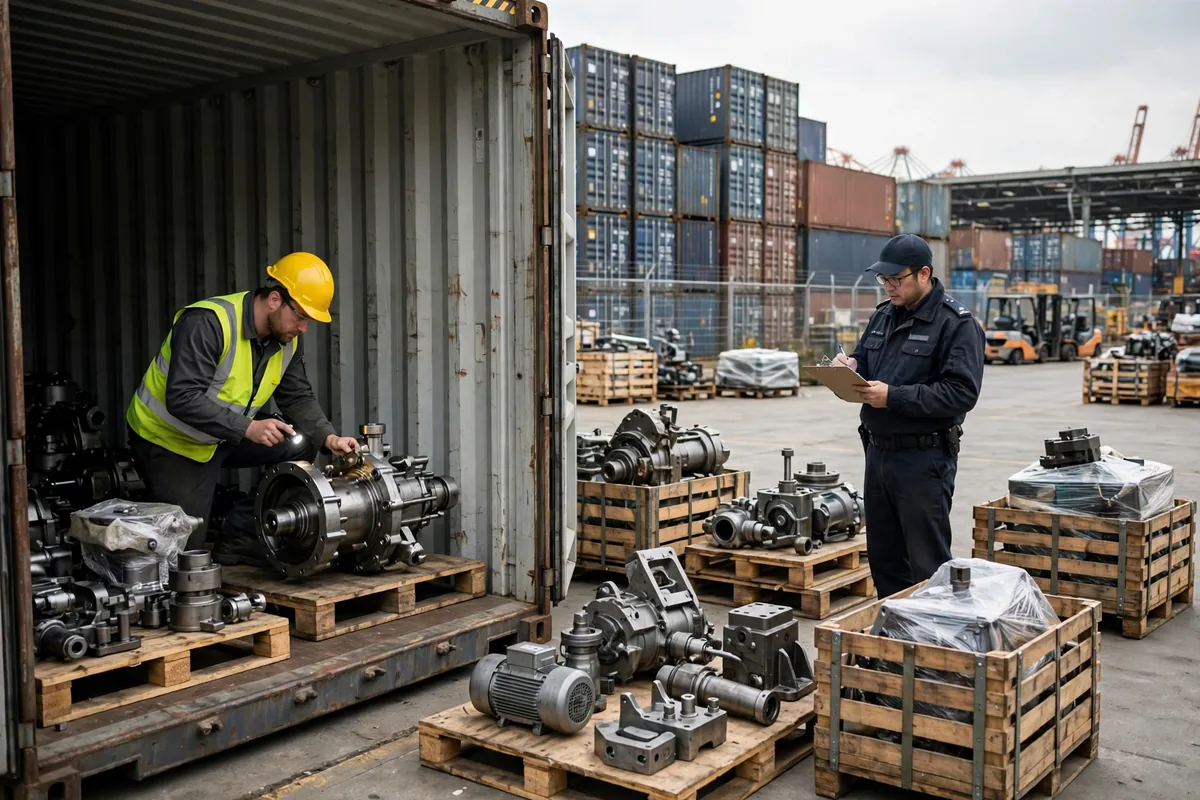
Incoming inspection starts with the quarantine area. A serious factory keeps rejected material physically separate, tagged in red, with the batch number and the reason written on it. If you cannot find a quarantine area anywhere in the plant, either they never inspect incoming material, or they inspect it and never isolate the failures. Both are bad. Then look at the incoming inspection records for the last three months. If there is not a single rejection in them, do not celebrate: a zero-defect record usually means there is no system, not perfect quality. Real production always fluctuates, and fluctuation without records means nobody wrote it down.
In-process control has to be checked on the line itself. Does first-article approval happen, how often do patrol inspections run, are the records filled in during the shift? I pick one workstation at random, pick up its work instruction, check the revision number, and ask the operator what goes wrong most often at this step. If the operator can answer, the training is real. In Dongguan in 2023, only one of five assembly stations had inspection records; the other four logbooks were blank, and the line leader said they filled them all in before going home. Records filled in from memory at the end of the day deserve half their face value.
Outgoing inspection comes down to the sampling standard. Most consumer-goods final inspections use the sampling plans in ISO 2859-1, commonly at general inspection level II, with an AQL of 0 for critical defects, 1.0 to 2.5 for major defects, and 2.5 to 4.0 for minor defects. Do not just ask whether they use AQL. Ask what the three numbers are, who signs the release, and what happens to a batch that fails sampling. A factory that cannot state its own AQL values is probably releasing shipments after a quick look at a few cartons.
Here is a counterintuitive judgment: more certificates do not mean a better system. An ISO 9001 certificate is a good sign, but check whether its scope covers your product, who issued it, and when it expires — then ask for the internal audit plan and the management review minutes. A factory that cannot produce internal audit records may well have bought the certificate for the wall.
Capacity and lead time: do not trust the promise, calculate the takt
Capacity is where an engineer earns his keep, because capacity is not a promise from the owner — it is a takt-time calculation. Ask four numbers: people per shift, takt time per unit in seconds, approximate overall equipment effectiveness, and shifts per day. Multiply them, and you have the theoretical capacity. Compare it with the monthly capacity the owner quoted, and the inflation shows up immediately.
My crude but reliable method is to find the bottleneck. The whole line runs at the speed of its slowest step; every other step being faster does not help. It works like a water pipe: the narrowest section sets the flow. A factory claiming 200,000 units a month, with a bottleneck takt of 4 seconds per unit, can make roughly 187,000 units in a month of 26 days at 8 hours a day before deducting changeovers, downtime, and rework (illustrative example). If the owner's number is higher, ask where the extra capacity comes from: overtime, an extra line, or subcontracting. Subcontracting is not a problem by itself. The problem is subcontracting you were never told about.
To verify lead time, ask for the production schedule for the next four weeks and see whether your order can fit in, then ask how many customers are queued ahead of you. A schedule packed solid means the lead-time promise needs a discount; a schedule that is nearly empty suggests an order shortage. Also ask about the history: in the last six months, were there orders delayed by more than a week, and why?
Documents and certificates: the importer factory audit checklist page most often faked
The last stop is the paperwork. I only trust originals and verifiable channels: the business license, export qualifications, product test reports, the ISO 9001 certificate, and social compliance audit reports. On social compliance, many retailers require schemes such as amfori BSCI or SMETA.
There is a trade-off to think through here. A third-party factory audit day costs roughly 300 to 800 US dollars, according to published market information — check the latest official policy for current pricing. Flying to China yourself costs more once you add flights, hotels, and time. But going yourself buys something a third-party report cannot: the damp smell in the warehouse, the hesitation in a worker's answer, the half-second pause when the owner is asked about the bottleneck step.
My scoring is simple. Four areas — warehouse, quality control, capacity, and documents — each rated only three ways: pass, conditional pass, or fail. Any fail means the partnership pauses until the fix is made. Two conditional passes mean cutting the first order in half and starting with a trial batch. Re-audit key suppliers every 12 months — check the latest official policy.
Whether the money was well spent comes down to one number: the first shipment's outgoing inspection pass rate, and the defect rate you find when you open the cartons in your own warehouse. If both look good, what you saw was real. If either looks bad, read that day's checklist once more before the next order.
By Da Liu, Automation Engineer