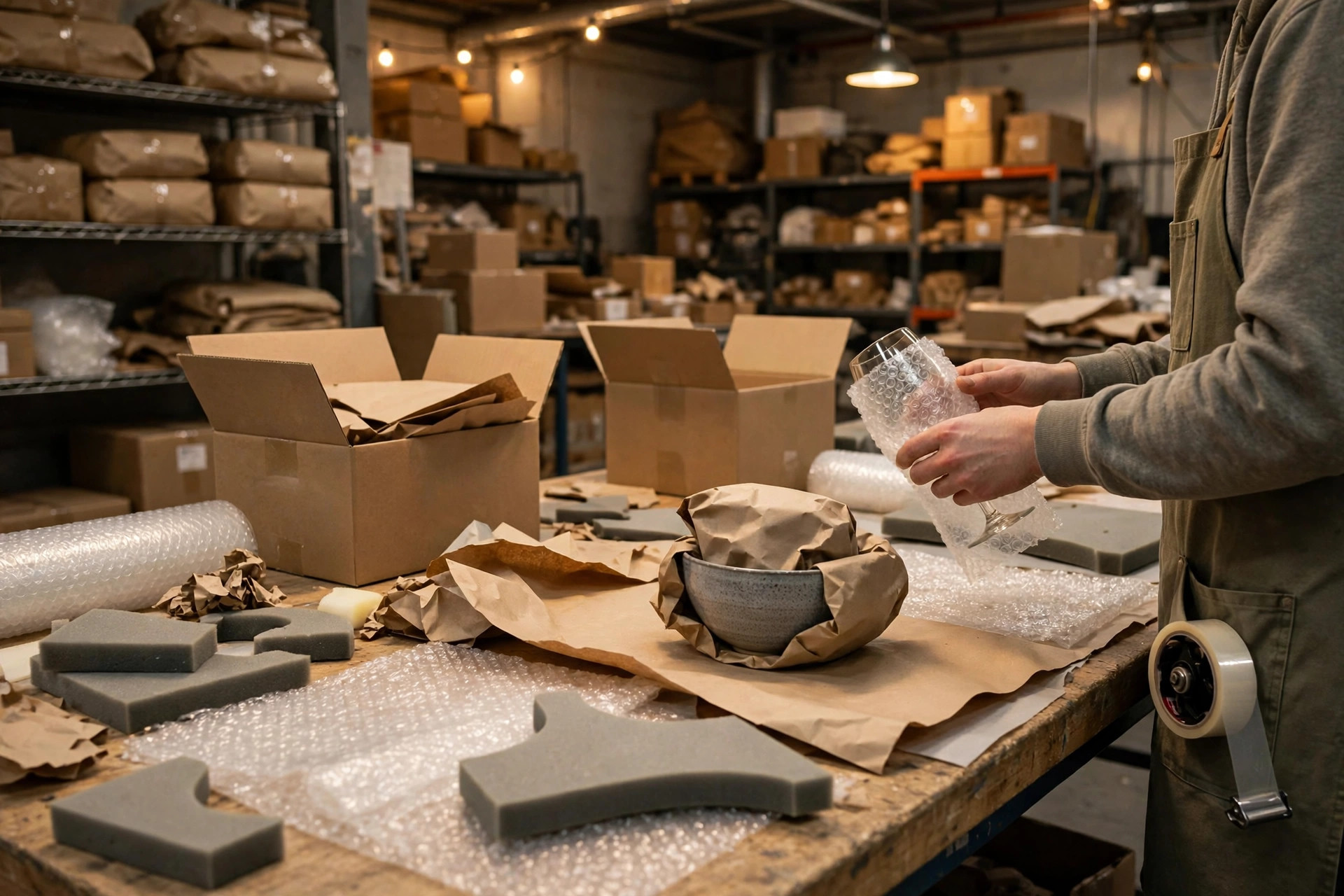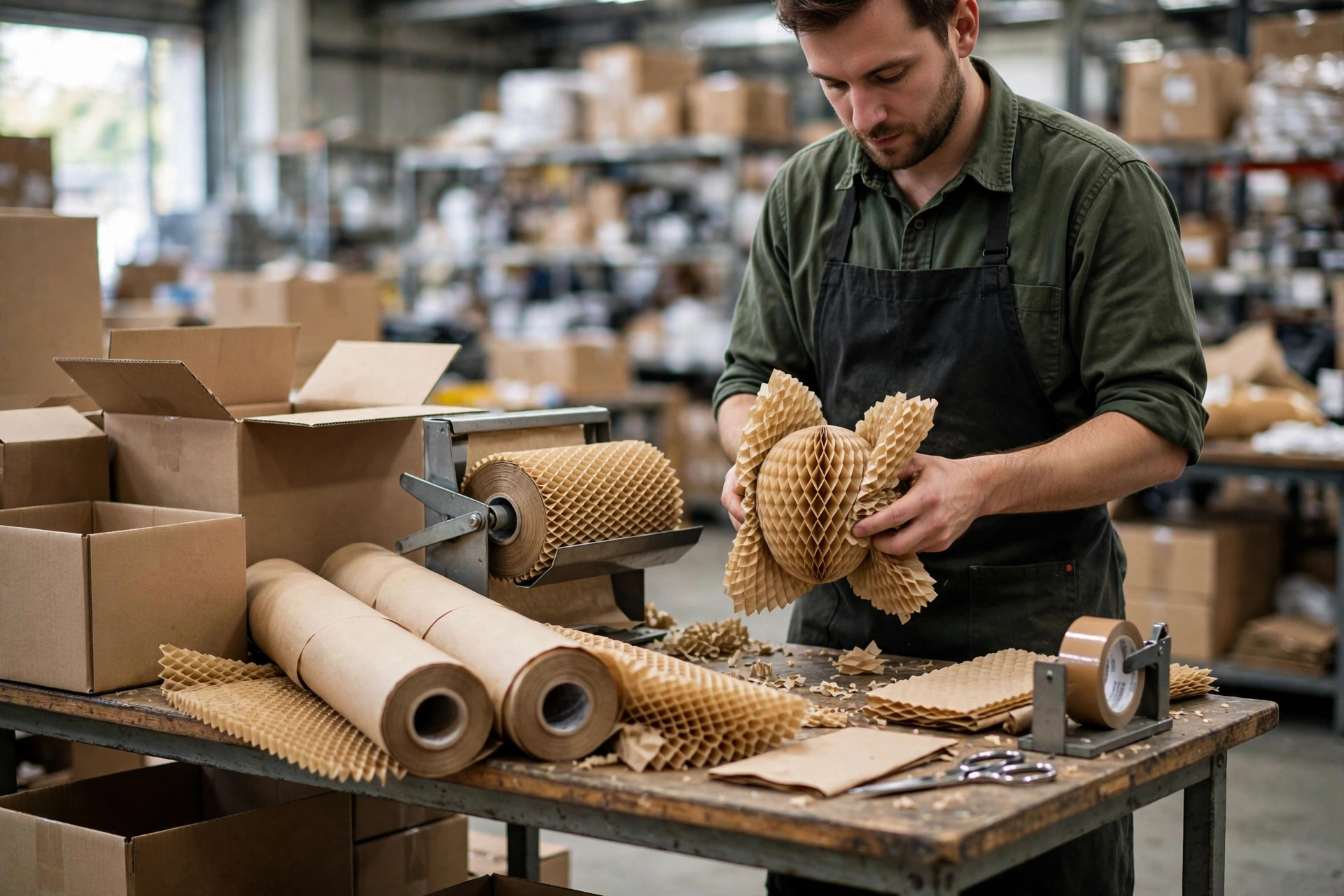
Let me state the conclusion first. When a packing station bench is set at the wrong height, workers' backs fail first, throughput follows, and the workers' compensation bill arrives last. Many warehouses measure packing efficiency only in orders per hour and never count the hidden cost of back injuries. I have seen this mistake three times: a bench too high leaves workers packing with raised shoulders, and a bench too low leaves workers packing bent over. Within three months, the sick notes for back pain start piling up.
Why does height matter so much? Standing packing is a repetitive motion. Hundreds of bends, reaches, and label applications a day, and a five-centimeter height error means hundreds of extra bends a day. There is no mystery to ergonomics. It comes down to four words: elbow height. The packing bench work surface should let a worker stand straight with elbows hanging naturally and forearms roughly level. Above elbow height, shoulders stay raised. Below elbow height, the back stays bent. Both are wrong in different ways, and both cost the same.
Packing station height step by step: how to set the height
Step one, measure people, not benches. Take the tallest and shortest workers in the team, measure each person's elbow height standing straight, and use the middle value as the baseline, then adjust slightly by job type. For light, small items where the work is mostly handwork, the surface can sit slightly above elbow height. For heavy items that need downward pressure, like pressing boxes or wrapping film, the surface should sit slightly below elbow height. I have seen this mistake three times: a warehouse buys benches at a catalog "standard height," everyone adapts to the bench, and tall workers bend while short workers stand on tiptoe. Nobody is comfortable.
Step two, buy height-adjustable benches. A fixed-height bench can only suit the average worker. An adjustable bench suits each worker. Count the cost this way: one adjustable bench costs more than a fixed bench, but the direct and indirect cost of one back injury buys how many adjustable benches? Anyone who has done that math stops hesitating. Adjustable benches need a footrest and an anti-fatigue mat. With support underfoot, the load on legs and backs drops.
Step three, set rotation. Nobody should pack standing for more than two hours straight. Rotate every two hours into work that involves walking or sitting, like checking or replenishment. Rotation is not slacking. It is recovery time for back muscles. Many supervisors fear rotation hurts throughput. In reality, back-pain absences hurt throughput far more.
| Bench height | Worker posture | Consequence |
|---|---|---|
| Above elbow height | Raised shoulders, arms held up | Shoulder and neck pain, fast at first, slow later |
| Around elbow height | Forearms roughly level | Least effort, suits most packing work |
| Below elbow height | Bent back, head down | Back injuries, absences rising within three months |
Common packing station failure points
Failure point one: adjusting bench height without adjusting what is underfoot. The floor surface and the bench surface are relative heights. Add an anti-fatigue mat and the bench height has to be adjusted with it. Adjust only one side and nothing has changed.
Failure point two: buying adjustable benches that nobody adjusts. The whole value of an adjustable bench is that each worker adjusts it once per shift. Buy one and leave it at a fixed height, and it is no different from a fixed bench. Add one line to the start-of-shift checklist: bench height set for the worker on duty, signed off after adjustment.
Failure point three: treating ergonomics as a comfort project instead of a cost project. The back injury bill belongs on the same sheet as the packing throughput bill: absence days, replacement training costs, and injury handling time are all downstream costs of a bench set at the wrong height. Set the height right and those bills come down on their own.
Failure point four: new hires never get their height set in the first week. New workers do not dare to ask, so they work at whatever height the bench happens to be, and within a month their backs complain first. My approach is for the team leader to personally adjust the height with each new hire in the first week, let them pack ten orders as a trial, and ask one question: do your shoulders ache, does your back bend? If anything feels off, adjust again on the spot. Set it right in the first week and the next three months run smoothly. Miss the first week and the next three months of sick notes will include that worker's name. I have seen this mistake three times, and every time it follows the same script.
Rechecking packing station height: set it in the new hire's first week
Once the height is set, it still needs rechecking. Rechecking is not a yearly inspection. It is three things. First, set it for new hires in the first week, as described above. Second, reset it when the team or the job type changes. Moving from light items to heavy items means the bench height has to change with the work, not one height for every job. Third, recheck within 48 hours whenever a worker reports back discomfort, instead of waiting until they call in sick. Keep recheck records simple: who, which day, set to what height, and what the worker said, four items on one line, posted on the team board.
Rechecking has another benefit. It surfaces bench problems nobody reports. A lift mechanism that sticks, an anti-fatigue mat worn flat, or a loose footrest all show up at recheck time. Benches are tools, and tools need maintenance. The maintenance bill and the height bill are the same bill.
Here is a final checklist for team leaders to run through weekly. Is bench height set to elbow height? Are adjustable benches adjusted every shift? Are anti-fatigue mats and footrests in place? Is the two-hour rotation actually happening? Are workers reporting back discomfort? When all five boxes are checked, the packing bench ergonomics bill is finally a real bill.
By Lin Xiao, WMS Implementation Consultant