Here's the ruling up front: if you ship fewer than 5,000 parcels a month, your 3PL's carrier account will probably beat the account you open yourself. Past 20,000 a month, staying on your 3PL's account is just donating margin.
Run the math on one real parcel and it clicks. A 5-pound box, Ontario CA warehouse to a residential address in Queens, NY, via UPS Ground — the workhorse of US domestic small parcel. Same parcel, two modes, two completely different invoices.
Same Parcel, Two Invoices
| Cost item | Your own account | Your 3PL's account |
|---|---|---|
| Base rate | Carrier bills at your account's rate tier | Carrier bills at the 3PL's rate tier |
| Discount source | Negotiated on your own volume | Negotiated on the 3PL's pooled volume |
| Markup | None — the carrier invoices you directly | Usually there is one, flat or percentage |
| Surcharges | Itemized on your bill | May be rolled into an all-in rate |
| Label handling fee | You print labels, no such line | Some warehouses charge per label |
| Who you pay | The carrier, directly | The 3PL, bundled with warehousing |
| Claim filer | You | The account holder — the 3PL |
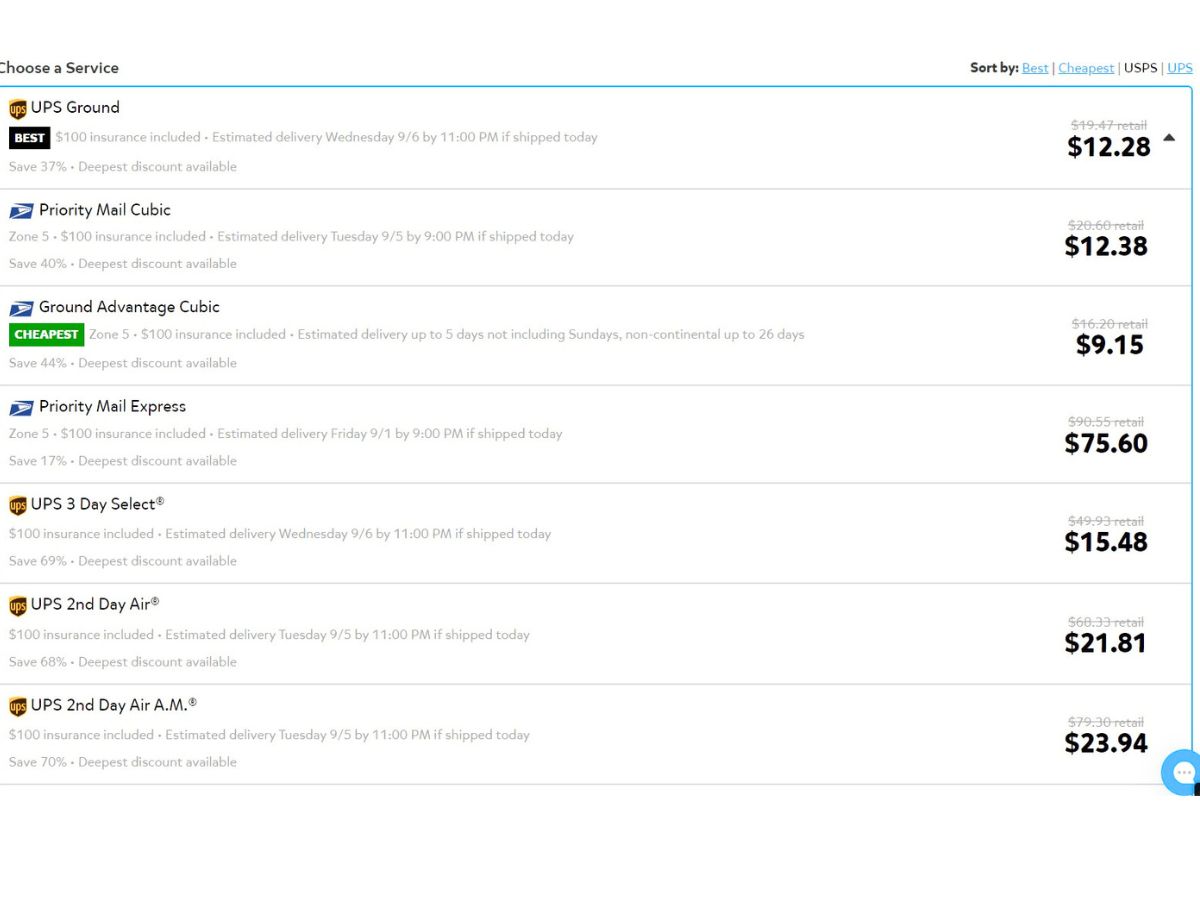
The key to reading this table is one sentence: the carrier may collect exactly the same money either way. The difference is who keeps the discount and who pockets the markup. Pirate Ship's rate screen makes the point brutally clear: UPS Ground, same service — $19.47 retail, $12.28 discounted, a 37% gap. That 37% is the value of account ownership. Whoever's name is on the account eats that spread.
Discounts Are Negotiated, Not Given
UPS and FedEx commercial discounts track your weekly volume, average weight, and delivery zone mix. No volume, no leverage — the rep won't even bother building you a rate proposal. That's the awkward truth of opening your own account: the account is free, but what you get is close to retail pricing.
A 3PL plays a different game. It pools dozens of clients' volume and negotiates as one shipper — weekly volume dozens of times yours, wholesale discounts to match. Hence the counterintuitive outcome: your own account's "discounted" rate can lose to the 3PL's wholesale rate, even after the 3PL stacks its markup on top.
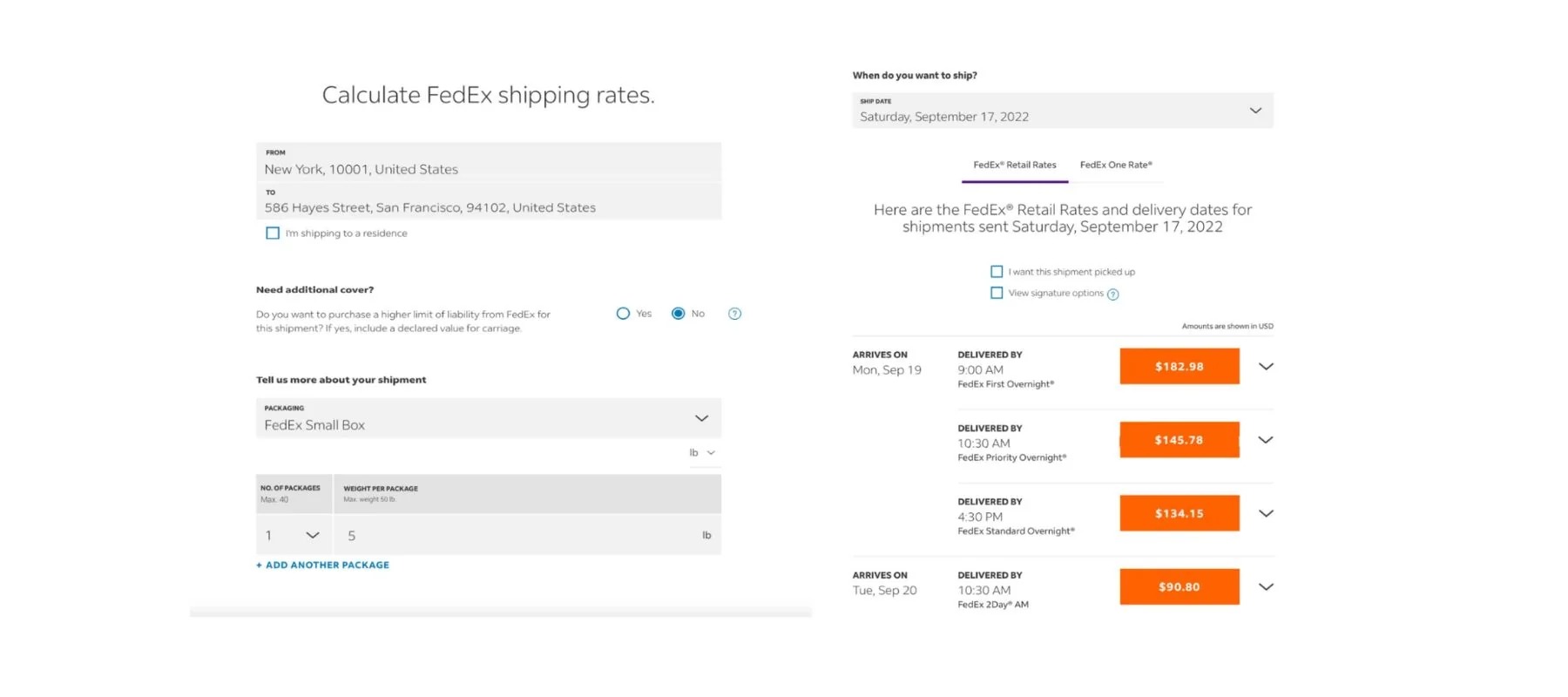
FedEx's own rate calculator is the perfect reference point. New York 10001 to San Francisco 94102, a 5-pound small box — Standard Overnight quotes $134.15. That's the naked retail rate, zero discount. Whatever your commercial account shows you is this number with a discount applied; how deep that discount goes depends entirely on the deal you negotiated.
So stop asking "which account gets the bigger discount." The right question: in whose pool is my volume worth more? Small volume — your parcels are worth more inside the 3PL's pool. Big volume — only your own pool talks.
Three Ways In, Step by Step
Route one: open your own carrier account. Free registration on the UPS or FedEx site, done in minutes, and you get retail rates. For commercial discounts you talk to a sales rep, which usually means committing to steady volume. Weekly or monthly billing, full line-item detail, and you open claims with the carrier directly. Best for high-volume shippers who want control.
Route two: ride an aggregator platform. Pirate Ship, Shippo, Stamps.com and the like pool every user's volume to negotiate discounts, and you ship at the platform's discounted rates. Pirate Ship charges no subscription — pay per label — which makes it the friendliest starting point for small and mid-size sellers. Shippo offers pay-as-you-go and subscription tiers with clean API integrations into ecommerce platforms. Stamps.com leans traditional postage, subscription-based. One caution: policies change often. Some platforms now require you to link your own UPS account to access UPS discounts — check the current policy on the official site before you sign up, not some two-year-old blog post.
Route three: just use your 3PL's account. Negotiate the parcel-account terms when you sign the 3PL service agreement: ship on the 3PL's account, freight billed at the 3PL's discounted rate plus the agreed markup. Operationally it's the simplest — pick the service level in the 3PL's system, print the label, and the freight lands on the same invoice as your warehousing. But lock down three things before you sign: is the markup flat or percentage-based, is there a per-label handling fee, and do you get line-item billing detail. Leave those vague and every invoice becomes an argument.
What's Hiding in the Invoice
First, the hidden surcharges. Residential delivery, extended delivery area, oversize, peak-season surcharges — the carrier collects these regardless of whose account it is. The difference is presentation: on your own account every line item shows up; under a 3PL's account some warehouses roll them into an "all-in rate" and you'll never know the true cost. Get the surcharge pass-through in writing before you sign.
Then claims. Parcel lost or damaged — who files with the carrier? The account holder. On the 3PL's account, claims go through the 3PL's process, and the timeline and payout standards live in their service agreement. On your own account, you open the case yourself and control the timeline. Aggregator platforms run their own claims channels with their own rules — read them before you need them, not after a parcel disappears.
Account risk cuts both ways. On your own account, chronically under-declared weights or prohibited items get your discounts downgraded or the account suspended — your problem alone. On the 3PL's account, if their account gets suspended — unpaid bills, compliance flags — your parcels stop moving too. Write the contingency into your SLA when you pick a warehouse; don't discover it on the busiest day of peak season.
Finally, data transparency. Your own carrier invoices are the best cost-analysis material you'll ever get: which zones run hot, which service levels get abused, all visible. Under a 3PL's account, insist on line-item billing — never accept a single lump sum. A warehouse that won't show you the detail isn't a partner you can optimize costs with.
The verdict
Under 5,000 parcels a month: use the 3PL's account. Less hassle, probably cheaper — but get the markup formula, surcharge pass-through, and billing detail locked into the contract. Above that: negotiate your own carrier discounts, or use an aggregator as a bridge. Volume is leverage; once you have it, borrowing someone else's pool is just giving money away.
One recommendation, whatever you use today: every quarter, take one real parcel, rate it under both modes, and put the two invoices side by side. There's no black magic in last-mile cost optimization. There's only the invoice.