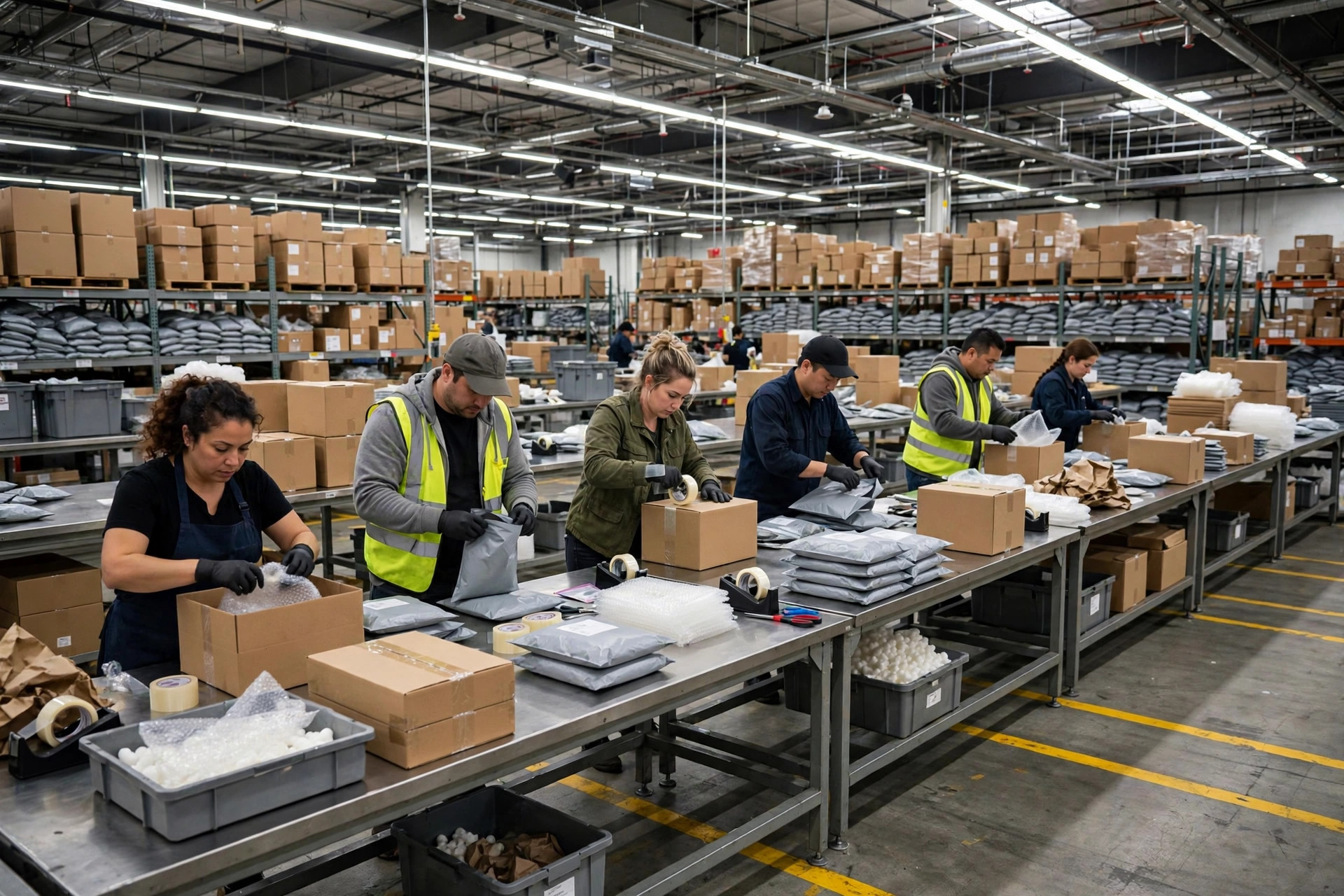
Let me call it a spade first: in US third-party logistics, storage fees are a break-even business. The real money hides in the unglamorous work — labeling, repacking, kitting, light assembly. I've watched too many warehouse owners run a full building all year and finish with less profit than their landlord's rent increase. The money was either made or lost in value-added services. It cuts both ways: for the 3PL, VAS is the profit engine; for the shipper, it's outsourced peace of mind — but only if both sides do the math honestly. Get the math wrong and both sides lose.
Back in 2019, a 3PL owner I know near Ontario, California — 50,000 square feet — was barely hanging on. A 40-foot container sitting for two months generated storage fees that, after rent, labor, and insurance, left almost nothing. Then he picked up a few Amazon sellers. FBA labeling, repacking, kitting: a few dozen cents a label, a dollar or two per repack, a few dollars per kit. Individually trivial; at volume, a different business entirely. Two years later he told me his blended gross margin had climbed from single digits to roughly the 30% range, and nearly all the new profit came from VAS. Storage is a rent business; VAS is a labor business. Rent margins have a ceiling. Labor margins depend on how well you run the floor.
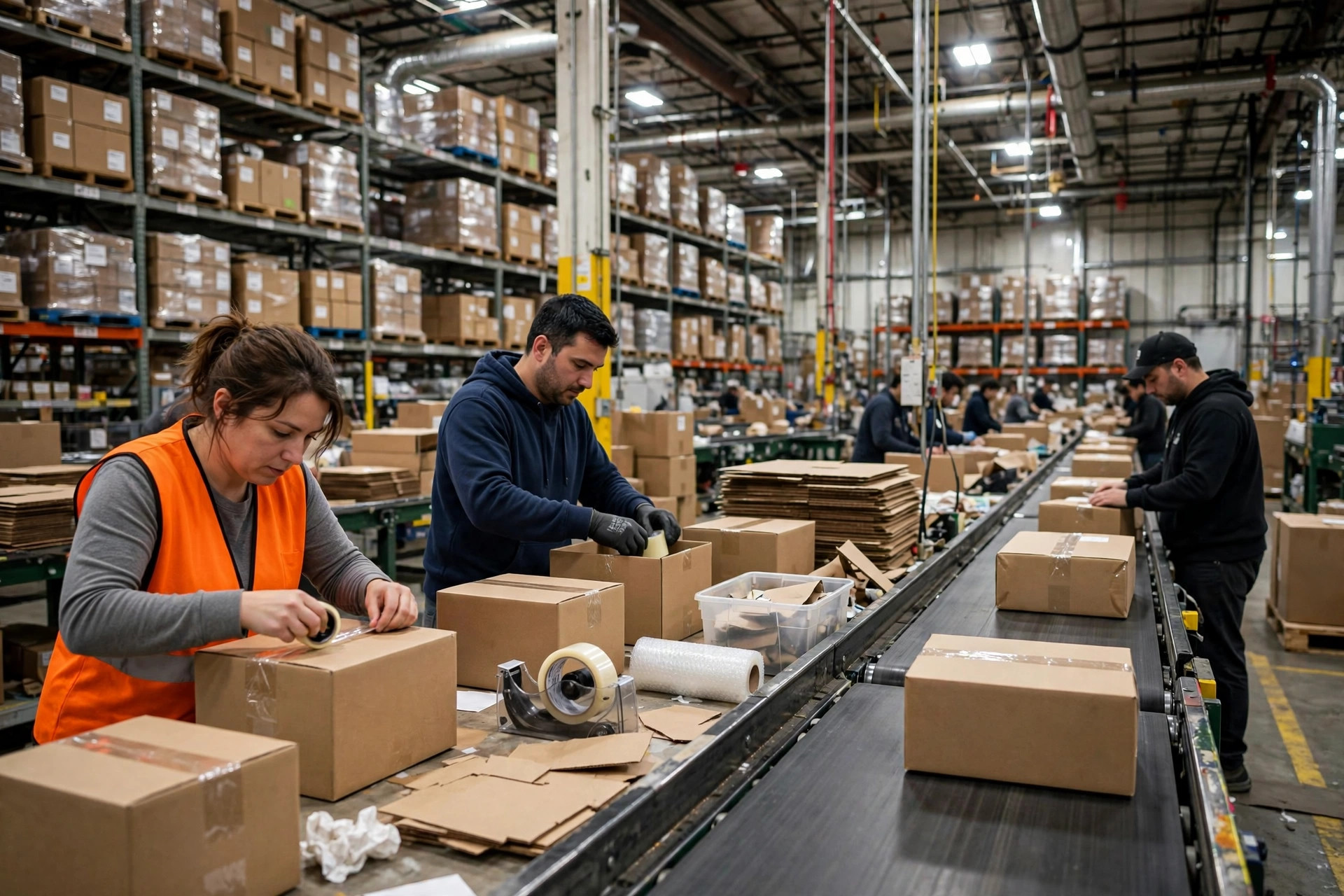
He went all in on the shift. He carved out 3,000-plus square feet as a dedicated VAS zone, hired two veterans as line leads, and ran labeling, repacking, and assembly as three separate lines. In the slow season the crew flexed over to outbound; in peak they came back. He showed me his numbers: the same 40-foot container earned him more from one round of repacking than from two months of pure storage. After that he started qualifying new clients by their VAS volume and pushed pure-storage accounts to the back of the line. That's the mental switch most 3PLs never make — from renting pallet positions to selling labor.
But VAS money is hard money, and I've seen it go wrong. In 2021, another 3PL took on a kitting job for an electronics brand — a few thousand sets, quoted per man-hour, looked safe on paper. The temp crew ran at maybe 60% of a veteran's pace, mislabeled a batch, burned two days on rework, and nearly missed the delivery window. When the job closed out: labor over budget, materials over budget, essentially worked for free — and the client left the following year. One lesson, and it's the only one that matters: the danger in VAS isn't in the quote, it's in efficiency and rework. Your price is fixed; the crew's pace isn't. The gap between the two is your profit — or your loss.
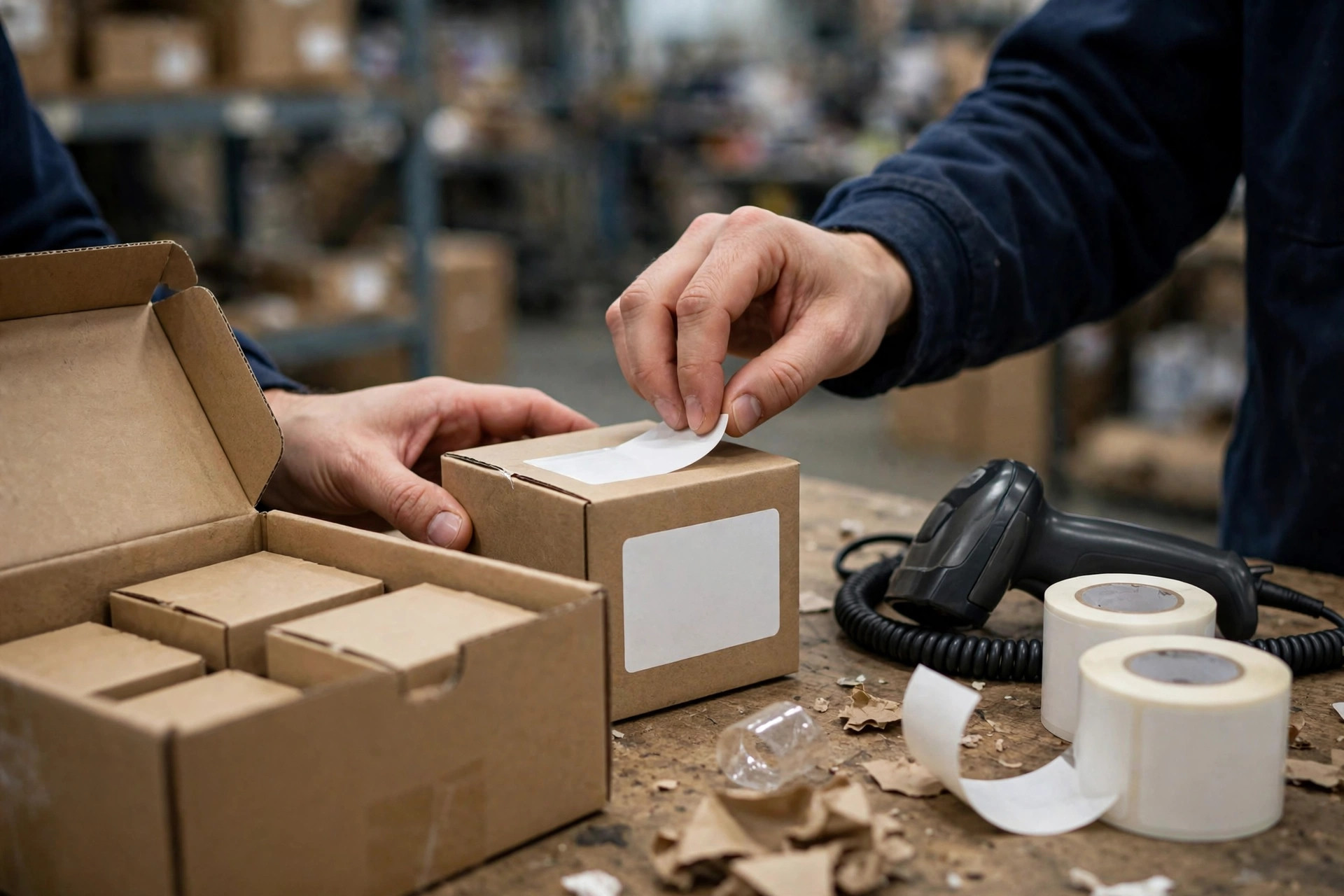
So how do you price it? The framework I walk 3PL friends through has three levers: per unit, per hour, or monthly bundle. Labeling — standardized, repeatable — goes per unit. Assembly and QC, where the hours are hard to predict, go per hour. Big stable clients can get a monthly bundled rate, which locks in your margin and locks in the client. Then there are four cost buckets most people forget: labor (hourly wage plus taxes and supervision — never just the wage), space (every square foot of the VAS area gets allocated, especially in peak season), consumables (labels, cartons, tape, dunnage — pennies per unit that add up at volume), and a rework reserve (budget 5–10% for rework while the crew is green).
The quoting formula I use:
Quote = (labor cost × efficiency factor + space allocation + consumables) × (1 + rework reserve) × (1 + target margin)
The efficiency factor is the part most people skip: about 1.1 for veterans, 1.3–1.5 for new hires. In plain terms, it's your cushion — never quote a rookie crew at veteran speed. Plenty of 3PLs quote at veteran efficiency and then staff the job with temps; that spread, in both directions, is where the margin disappears. Take labeling: a few cents of labor per label, times a 1.3 efficiency factor, plus space and consumables, plus a 5% rework reserve and a 30% target margin — you land at a few dozen cents per label. The shipper thinks it's cheap, and you still make money. The point is every line item has a number. No guessing.
Storage and VAS are fundamentally different businesses:
| Pure storage | Value-added services | |
|---|---|---|
| Margin profile | Single digits, rent logic | 30%–50% range, labor logic |
| Core cost | Rent, insurance | Labor efficiency, rework |
| Biggest risk | Vacancy | Quality incidents, missed deadlines |
| Cash flow | Stable but thin | Lumpy but thick |
| Moat | Location and price | Craft and reputation |
That table is really a trade-off statement: VAS pays better because it's harder money. Labor: temps are cheap but inconsistent; full-timers are reliable but expensive to carry in the slow season. My rule is full-time staff on the core steps, temps for the peaks, tuned to your seasonality. Space: a VAS zone eats real pallet positions, and in peak season every square foot of it is an opportunity cost most owners never calculate. A pallet position in peak season earns visible storage revenue; fifty positions given to a VAS zone means you forfeit that revenue first, then go earn the labor margin — so track the zone's productivity per square foot separately, or the whole P&L is guesswork. Quality is the killer: one mislabeled batch can get a whole shipment rejected by Amazon, and the rework plus claims can wipe out a month of profit.
Which brings me to the counterintuitive part: the 3PL with the cheapest VAS quote usually does the worst VAS work. It's craft work — the only way to cut the price is to cut labor, and cutting labor breaks quality. I've seen a shipper switch warehouses to save a few cents a unit, then eat a mislabeled batch: returns, relabeling, delays, and the total damage covered several years of the price difference. In 2022 a home-goods seller told me he gave his repacking to the lowest bidder, who used the wrong carton size; the whole container got rejected at the Amazon warehouse, came back for rework, lost three weeks, and missed the promo season. He told me afterward: what he saved wouldn't have covered one drayage trip. When a shipper buys VAS, they're really buying "no mistakes," not a low price. Do the total math, not the unit math.
So which VAS should a shipper outsource? Three questions: Is the volume stable? How expensive is a mistake? And what's your true all-in cost of doing it yourself — including your management time? Run the candidates through that: labeling, repacking, and kitting are the clearest wins — standardized, high volume, and more expensive to staff yourself. Say you need 20,000 units labeled a month. Hiring in the US, with taxes and insurance, runs several thousand dollars a month before you even manage the person. A 3PL does it for a few dozen cents a unit — call it roughly ten thousand a month — with zero management overhead. The math decides itself. Returns inspection and sorting depends on volume: eyeball it yourself when it's small, outsource when it's big. Keep in-house anything tied to your brand's core craft or subjective quality calls, like final inspection on premium products — judgment calls drift even with a written process, and that's not money worth saving.
One last thing: 3PLs, stop treating VAS as a favor you throw in. It's the most important line on your P&L. And shippers, stop comparing storage rates alone — the VAS quote and the error rate are your real cost. What share of your warehouse's profit comes from VAS today?
By Lao Mi, Supply Chain Veteran