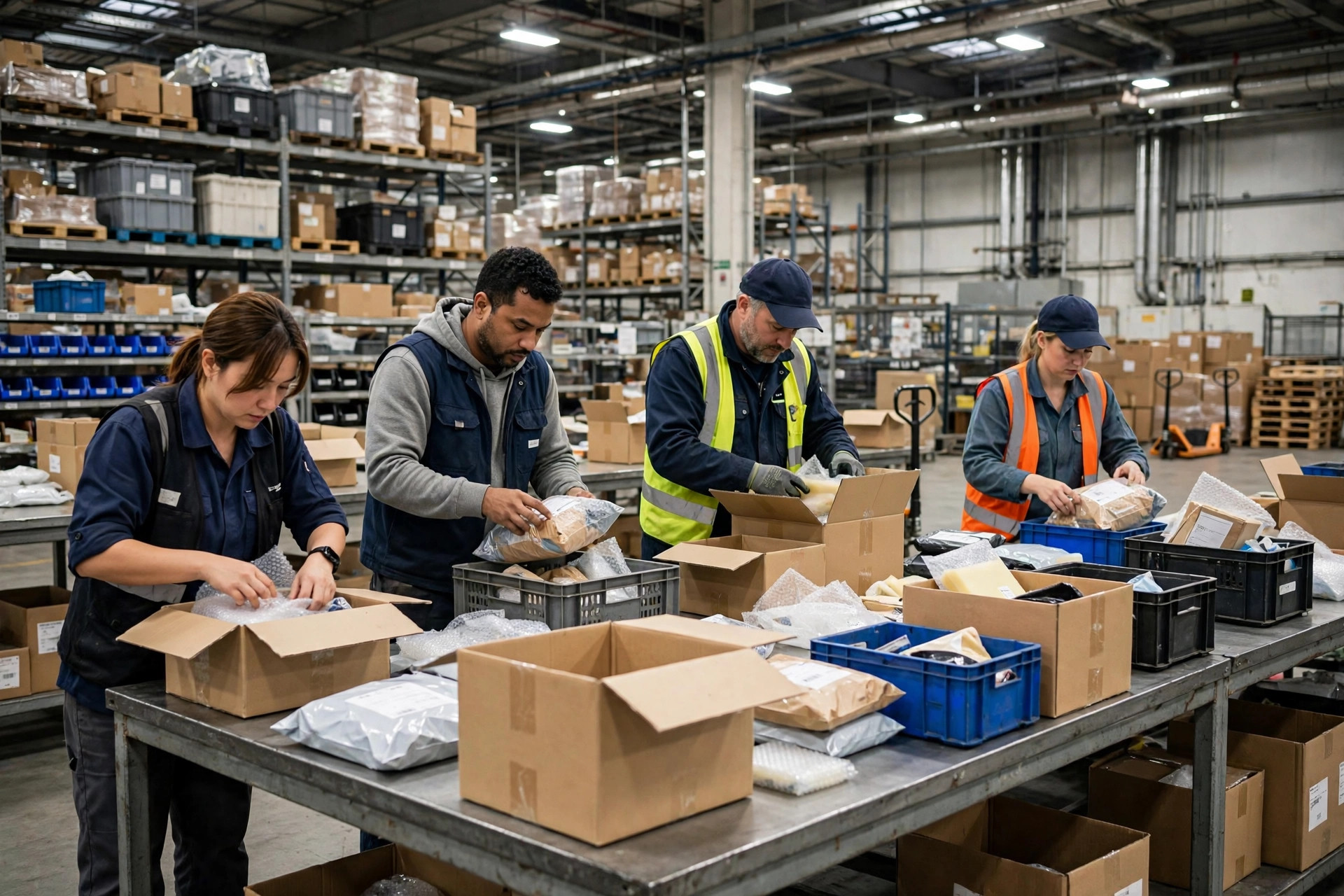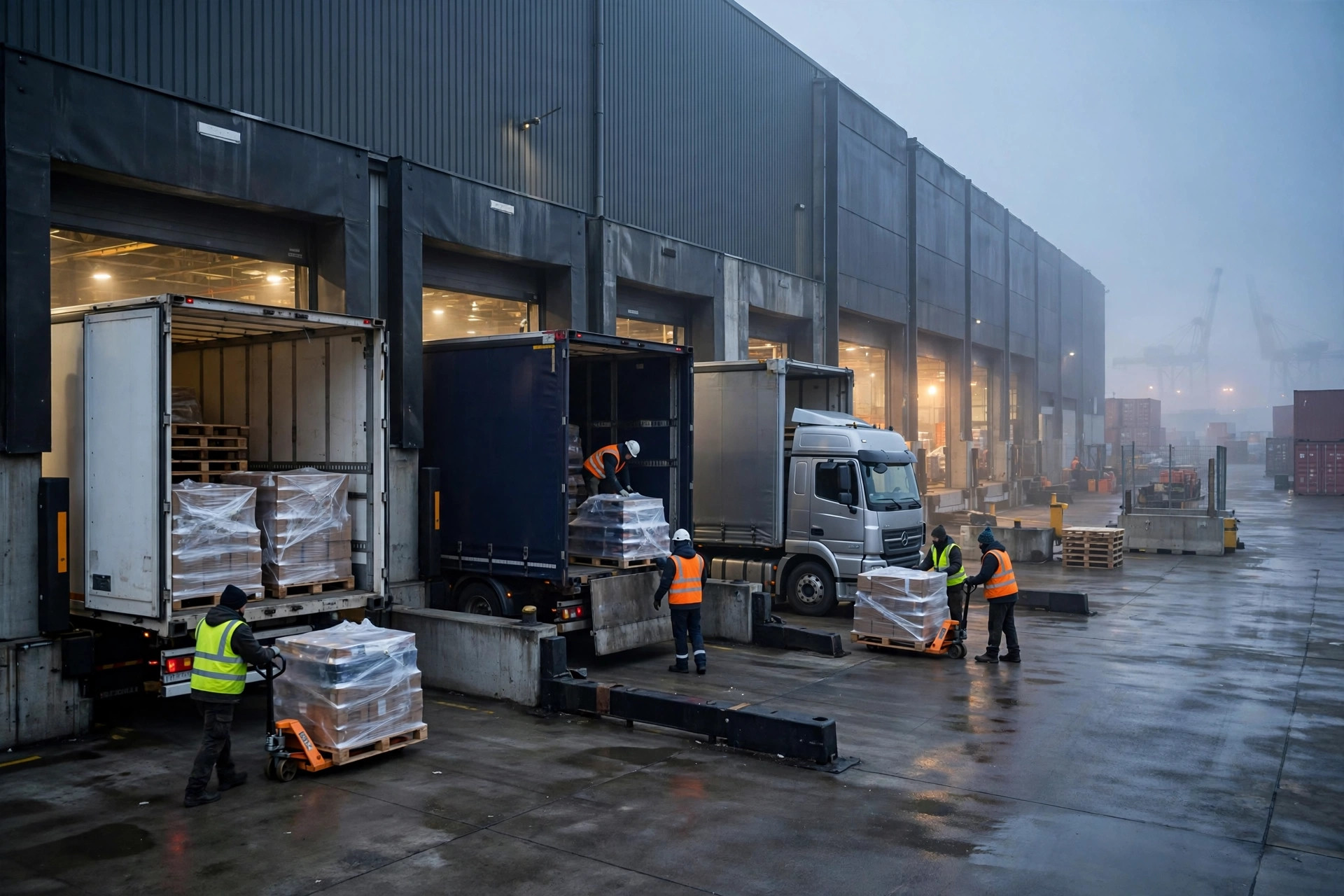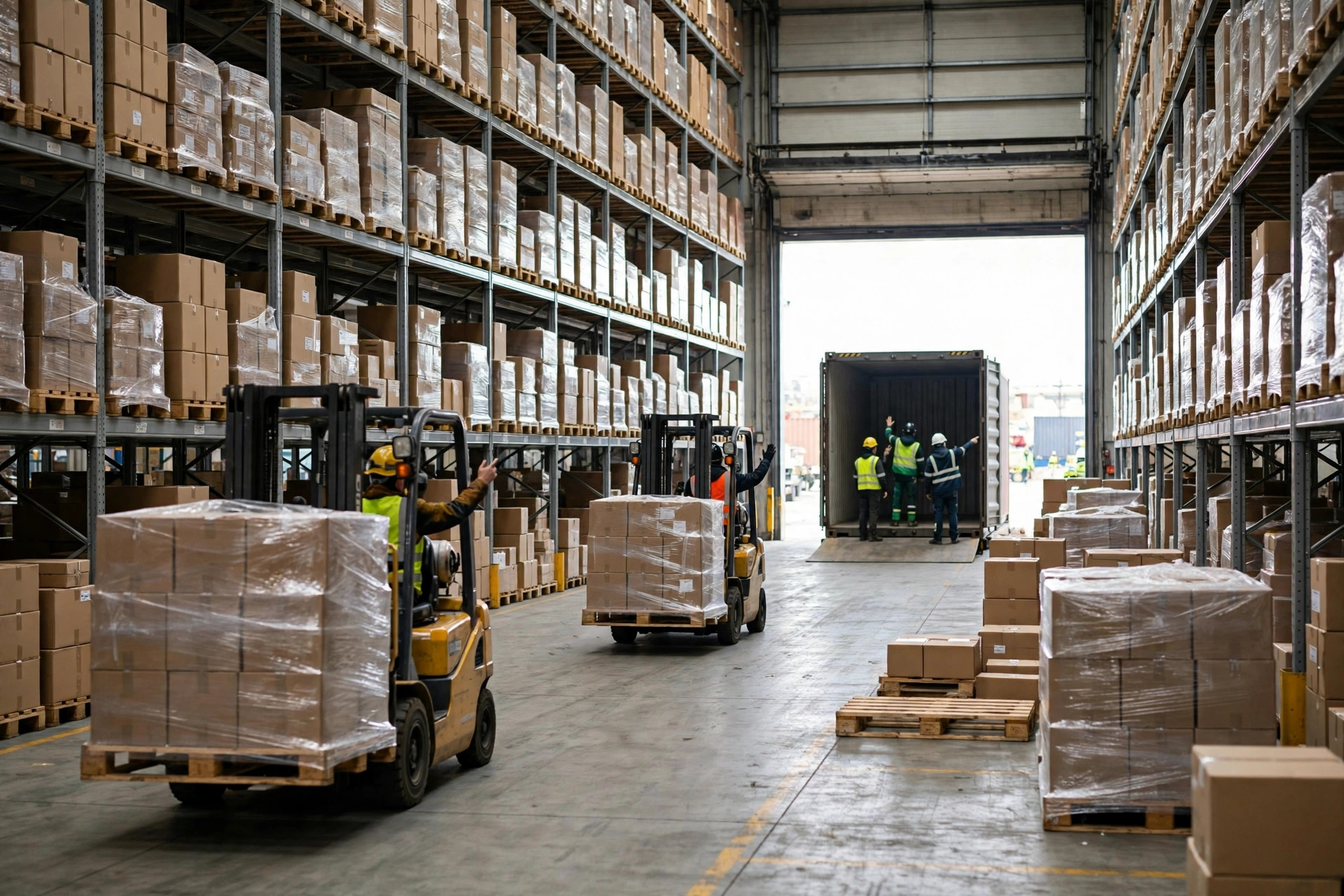
We had a client who rented an overseas warehouse east of Los Angeles in the fall of 2024. First FBA transfer: 2,000 cartons. He told me, "Susan, it's just moving boxes from point A to point B, right?" Three weeks later he called me, voice hoarse — the entire batch had the wrong labels, Amazon rejected it, and the freight sat at the carrier's warehouse for over two weeks. Re-labeling plus detention burned through tens of thousands of dollars, and he missed his pre-Black-Friday replenishment window.
Here's what I told him: in an overseas-warehouse-to-FBA transfer, the risk isn't on the road. It's at the warehouse door — and in the contract you signed.
Invoice one: who labels, who pays
Labeling is the cheapest step in an FBA transfer — and the most expensive one when it goes wrong. Every unit needs an FNSKU label. It's the only ID Amazon's receiving system recognizes. Wrong label, missing label, a crooked label covering the barcode — the scanner rejects it and the whole shipment goes nowhere.
Insider stuff from the 3PL side: plenty of overseas warehouses quote "labeling service, per unit" but never write down "who pays when we mislabel." That's exactly what happened to our client — a warehouse worker grabbed the wrong roll of labels, and all 2,000 cartons got the wrong SKU. The warehouse said, "We charge per unit; we only stick them on." The seller said, "But you stuck the wrong ones on." The contract said nothing. Three weeks of arguing, and the seller paid for the re-labeling himself.
Negotiation advice: put labeling liability in the quote — who pays for re-labeling, within how many days, and what happens if you miss your replenishment window. It feels fussy on the first deal. It's cheaper than the lawyers later.
Invoice two: an appointment is not a suggestion
Once the freight is ready, you create the shipment in Seller Central and book a delivery appointment. First-timers assume: book a slot, truck shows up, done. Wrong. Amazon's appointment windows are measured in minutes. A late truck waits hours in the queue — or gets turned away and rescheduled.
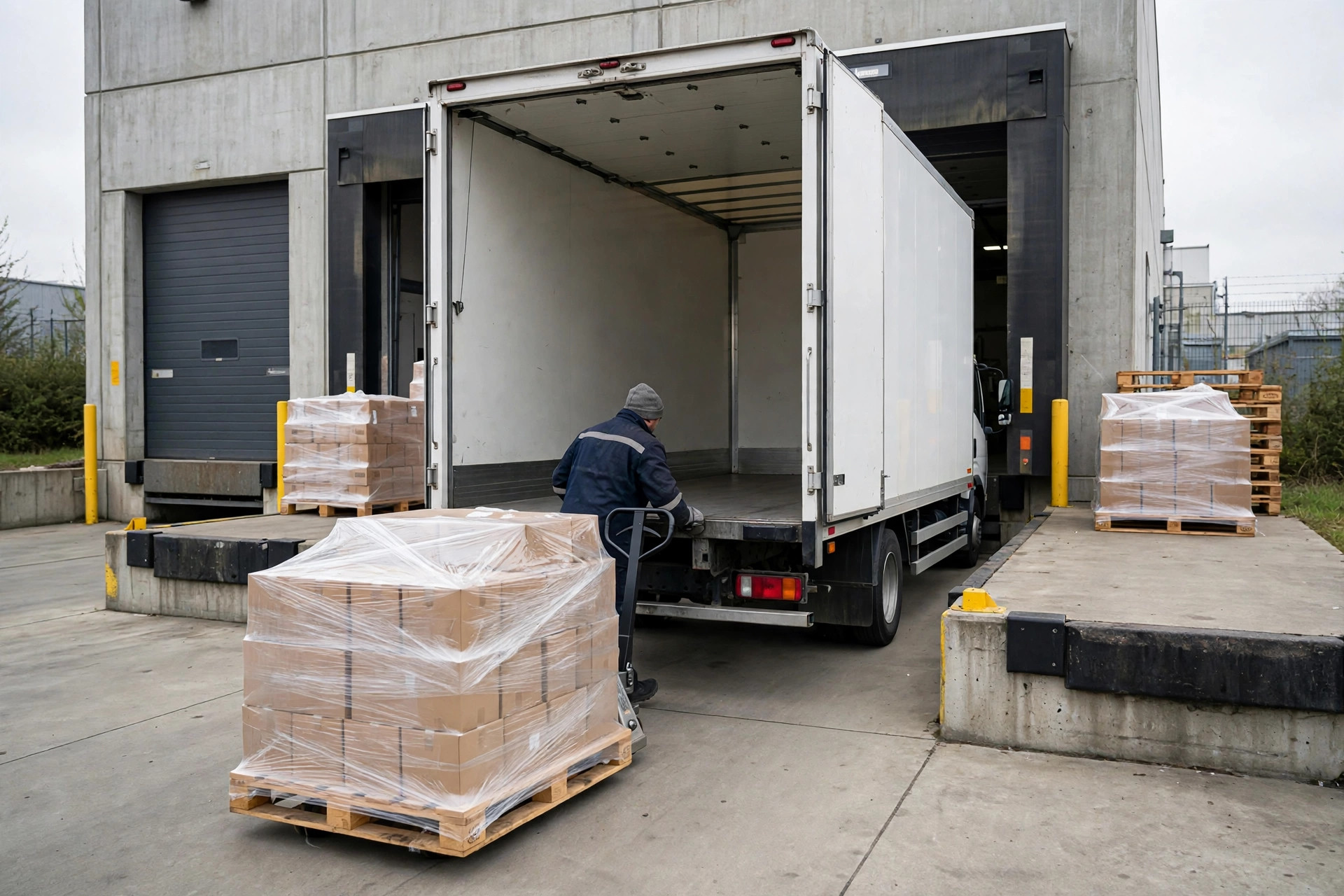
Another client of ours shipped from a New Jersey warehouse in early 2025. The LTL carrier quoted 20 percent below market. The seller was delighted. Turns out the carrier had no reliable appointment process — the driver arrived at the fulfillment center and was told, "No appointment for you today." The freight sat on the trailer for two extra days, and the seller paid the truck detention anyway. The 20 percent discount ended up costing double.
Insider stuff: when an LTL quote looks too good for FBA freight, the trick is almost always in the appointment. Serious FBA carriers put their appointment success rate into the SOP and send you the confirmation screenshot. The cheap ones gamble on luck — and bet that you don't know the difference.
Box specs: check the policy before you touch a carton
Amazon Seller Central publishes the current limits — max weight per box, max dimensions, pallet height, stretch-wrap requirements — and updates them from time to time. Always verify against the latest policy on Amazon Seller Central before your warehouse starts packing. I've seen entire shipments rejected for overweight boxes and pallets torn down on the dock for exceeding height limits. On-the-spot re-palletizing labor costs ten times what you saved on cartons.
Choosing your head-haul: FTL, LTL, or parcel direct
I send this table to every new client:
| Full truckload (FTL) | Less-than-truckload (LTL) | Parcel / small parcel direct | |
|---|---|---|---|
| Best for | 15+ pallets | A few pallets | Top-ups, small frequent replenishment |
| Speed | Fastest, point to point | Medium, depends on consolidation | Fast, but split across FCs |
| Cost structure | One flat truck rate | Per pallet plus fuel surcharge | Per unit |
| Biggest risk | Missed appointment, a whole truck idling | Dropped from consolidation, shaky appointments | Split shipments drive per-unit cost up |
| Who it's for | Peak-season stocking, deconsolidation | Routine replenishment | Emergency restock |
Rates move daily — get live quotes from your carrier; this table is about structure, not price. Picking the wrong mode costs more than picking an expensive carrier: a few pallets on a full truck means paying for empty air; a dozen pallets broken into parcels means placement fees that make you cry.
The quote game: don't just look at the total
Here's where the 3PL business gets interesting. The tricks in an FBA transfer quote aren't in the total — they're in the line items. A proper quote breaks out: receiving fee, in/out handling, labeling, palletizing and stretch wrap, head-haul freight, appointment service fee. Some warehouses deliberately quote a low total and bury "appointment service billed separately" or "oversized pallet surcharge" in the fine print. You sign, then discover you're paying more than the other guy.
My habit: make three warehouses quote against the same line-item template. Put them side by side, and whoever is playing games with the total shows up immediately. Before you haggle, make the other side itemize. An itemized quote is a quotable quote.
After check-in: stranded inventory is where the bill starts
Getting into the fulfillment center isn't the finish line. If label data doesn't match the system, or the listing has issues, inventory goes stranded — unsellable, still racking up storage fees. Fixing stranded stock means repairing the data or filing a removal order, and every step costs money and time. The care you put into labeling and shipment creation today decides whether you're paying for stranded inventory three months from now.
The counterintuitive bit: faster isn't better
Many sellers think the earlier freight lands at FBA, the safer they are. Wrong. Appointment windows, long-term storage fees, and inventory surcharges pull in the opposite direction — freight that arrives too early starts aging, and aged-inventory surcharges quietly eat your margin. The right move is to work backward from your sales velocity: use Amazon's restock recommendations and your days of cover to back-solve the ship date, landing the freight in the window between "never stock out" and "never overstock." Fast is good. Precise is better.
Before you sign, ask these three questions
One: if you mislabel, who pays for re-labeling, how fast, and what if I miss my replenishment window? Two: if the appointment falls through, who pays the truck detention and rescheduling fees? Three: if my freight sits in your warehouse, when does free storage end, and what's the rate after?
Get the answers in writing. Do that on your first overseas-warehouse-to-FBA transfer, and you'll dodge the traps that catch 80 percent of sellers. Saving money isn't about haggling — it's about saying the awkward things up front.
By Susan, 3PL Sales Director