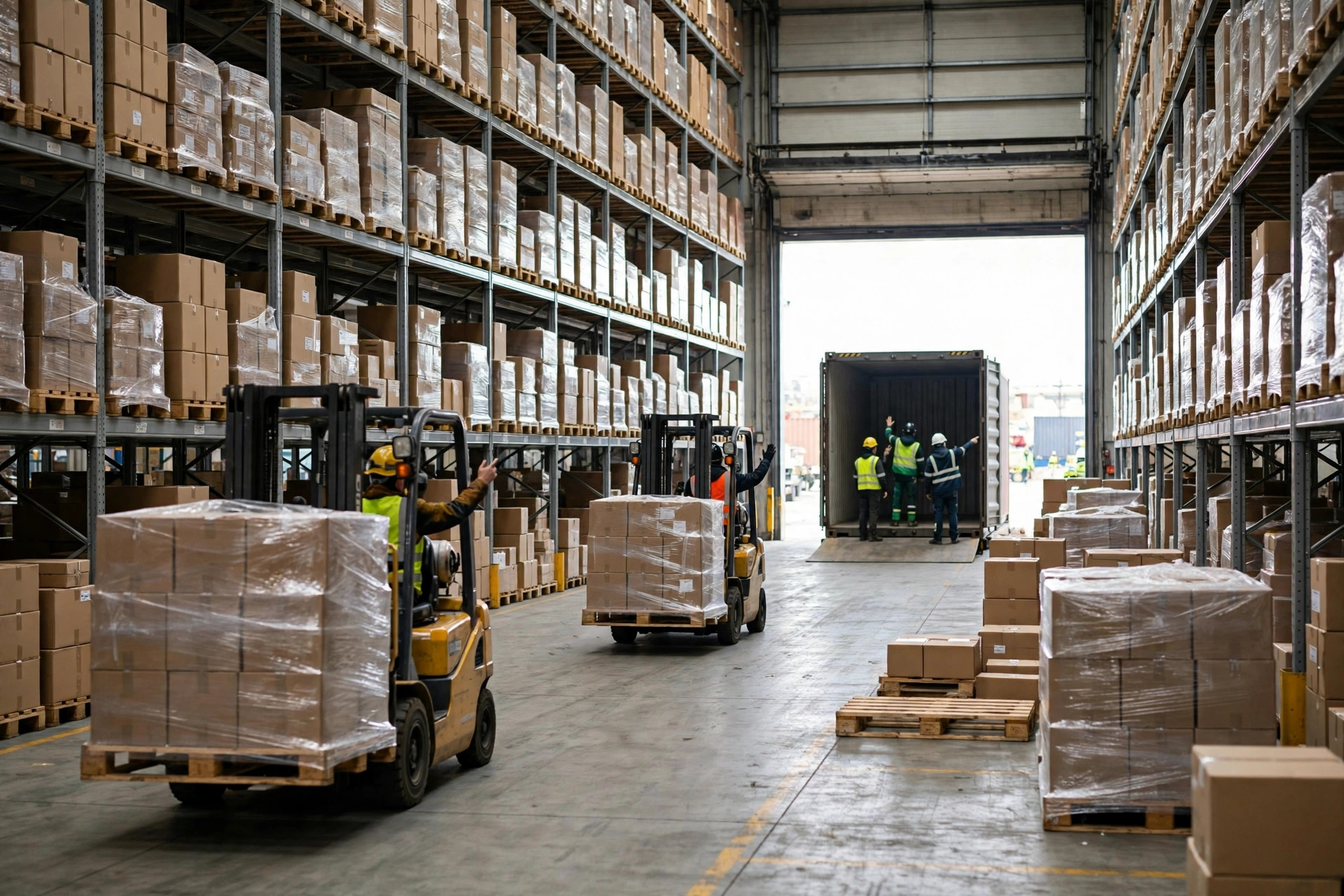
We had a client, a Shenzhen-based outdoor gear seller, whose overseas warehouse lease in New Jersey was coming up for renewal in the fall of 2024. It was a two-year deal signed in 2023. A month before expiry, the landlord sent over the renewal quote: storage rates up nearly 20%, plus a brand-new clause — any inventory left past the lease end date would be charged a daily holdover fee. The boss was deep in Q4 peak-season prep, barely glanced at it, and replied: "Just extend it three months, we'll figure it out later."
Three months later he came to me to vent. Those three months of "we'll figure it out later" cost him close to twenty thousand dollars in extra storage fees. Worse, the 2023 tent models sitting on his racks hadn't moved a single unit — still there, still racking up storage charges every day. I asked why he didn't just transfer to a cheaper warehouse. His answer: "Transfers aren't free, you know? A cross-state truckload costs thousands, outbound handling is charged by the carton — it basically cancels out the rent hike."
It sounds reasonable. But the math was wrong — wrong because he treated "transfer" and "clearance" as an either-or choice. Anyone who's spent years on the 3PL side of the table knows the real play in the 90 days before an overseas warehouse lease expiry: you do all three at once — clear, transfer, and negotiate. Do only one, and you're just handing money to your 3PL.
Your 90-Day Countdown to an Overseas Warehouse Lease Expiry
A lease expiry doesn't start on the expiry date. In my experience, 90 days out is the last safe line. Any later, and all the leverage sits with the 3PL:
| Timeline | Must-do | What happens if you're late |
|---|---|---|
| T-90 days | Full inventory count; split stock into winners, slow movers, and dead stock; start renewal talks or shop for a new warehouse | No classification, no decisions — everything after this is guesswork |
| T-60 days | Decide: renew or transfer; sign the new warehouse, get written quotes | Good locations get taken; what's left is expensive and far away |
| T-45 days | Launch clearance sales on slow movers (marketplace promos + discount channels) | Not enough time to clear — forced to dump or haul dead stock |
| T-30 days | Book transfer trucking, lock in outbound schedule; tell the old warehouse to stop large inbound | Peak-season trucks get booked out; expedited rates can double |
| T-14 days | Old warehouse ships only, no inbound; new warehouse sets up SKUs in its system | Inventory mismatches across two sites; stockouts |
| T-7 days | Final outbound, closing count | Small parcels go missing, cartons get mixed up |
| T-0 | Handover sign-off, settle the bill, get a written settlement statement | Deposit disputes, surprise tail charges |
What Does an Overseas Warehouse Transfer Actually Cost?
Most sellers calculate transfer cost like this: freight + labor = transfer cost. Wrong. A real transfer has four parts:
Total transfer cost = outbound handling + linehaul freight + new-warehouse inbound fees + stockout losses
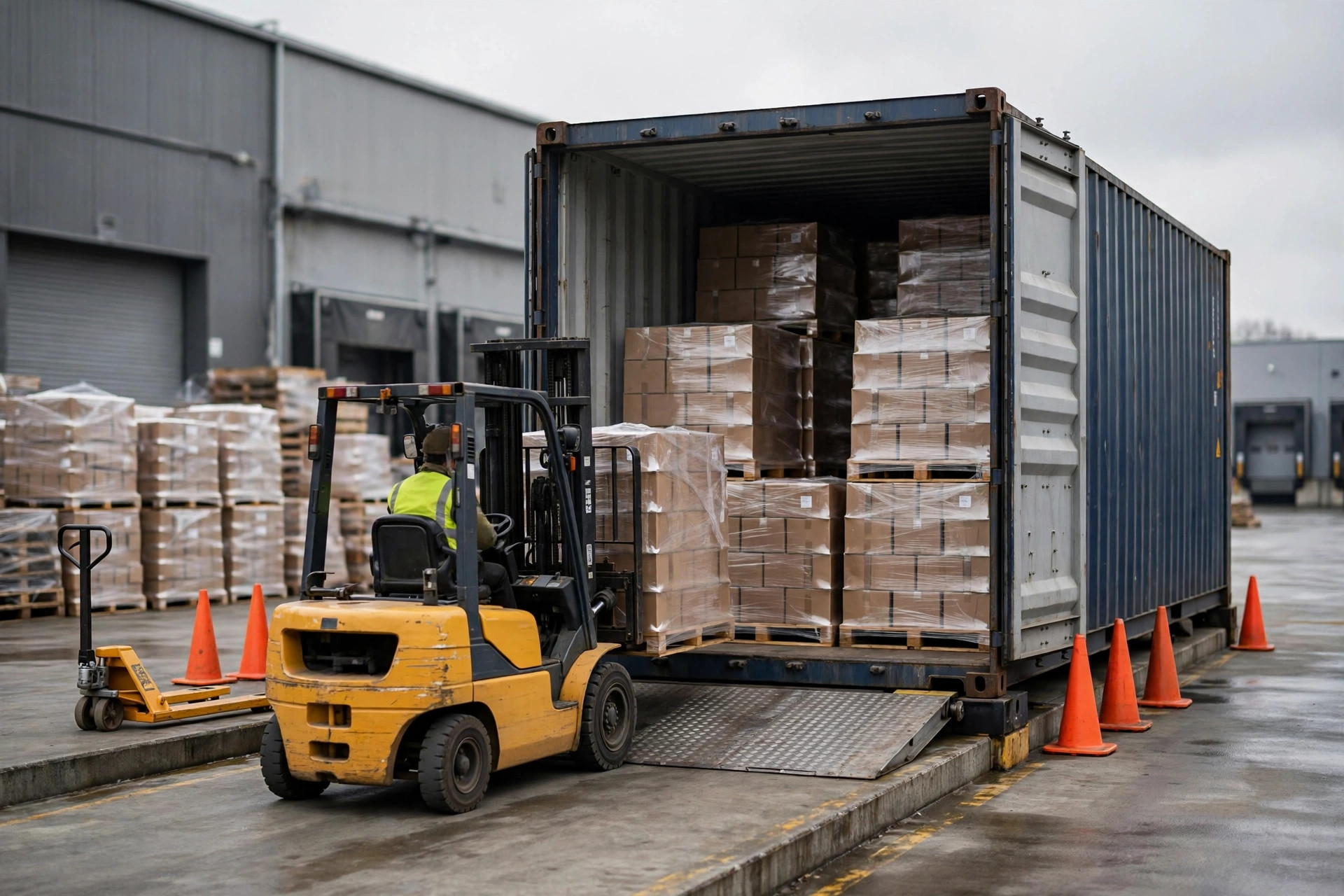
The first part, outbound handling, is the most underestimated. Many 3PLs charge it by the carton or by the pallet — and at signing time, this line is either blank or marked "to be discussed." Then on moving day, a quote lands on your desk that makes your eyes water. For a 40-foot container's worth of goods (roughly 67 cubic meters), outbound handling alone running into the low thousands of dollars doesn't surprise me at all. Here's the insider truth: 3PLs make their real margin on one-off jobs like move-outs. The monthly storage fee? Barely covers costs. One more detail: everyone measures differently — some charge by carton, some by pallet, some a flat fee. Nail down the unit of measure at signing, or the number on the quote will have nothing to do with the number in your head. A by-the-carton warehouse turning one container into hundreds of cartons produces a very "surprising" invoice.
The second part, linehaul freight. Same-city transfer: hundreds of dollars per truck. Cross-state full truckload: thousands, scaling with distance and urgency. Remember: the more urgent the truck, the more expensive. Booking 30 days out versus 3 days out can double the price.
The third part, new-warehouse inbound fees. Unloading, putaway, system receiving — the new warehouse charges for these too. Don't assume switching warehouses means a free ride.
The fourth part, stockout losses — the most invisible and the most expensive. During the transfer, the old warehouse stops shipping while the new one isn't ready yet. A few days of stockout, your ad weight drops, rankings slip, and the ad spend to climb back often exceeds the first three parts combined.
Clear, Transfer, or Renew: A Decision Framework
Another client of ours, a small-appliance seller from Guangzhou, played the Q1 2025 lease expiry much smarter. Ninety days out, his count showed 30% of inventory was slow-moving. Instead of hauling everything, he cleared the slow 30% at a discount — marketplace promos plus discount channels — and transferred only the winning 70% to the new warehouse. When he ran the numbers, the discount he gave up on clearance was less than what it would have cost to move that 30%: outbound fees plus freight plus new-warehouse inbound. He basically pocketed the difference of "not moving it."
| Clearance sale | Full transfer | Renew | |
|---|---|---|---|
| Best for | Slow movers, seasonal, long-tail SKUs | Fast-turning winners | Healthy inventory in an irreplaceable location |
| Direct cost | Discount given up | Outbound + freight + inbound | Hiked storage rates |
| Hidden cost | Brand price erosion | Stockout risk | Death by a thousand annual hikes |
| Biggest trap | Can't clear in time | Outbound fees spike at the last minute | Boiling frog — small hikes every year |
Here's the counter-intuitive call, and after years in 3PL sales I'll stand by it: a clearance sale isn't taking a loss — it's the cheapest line item in your transfer budget. Dead stock sitting in a warehouse doesn't just sit there; every month it pays a "squatting tax" in storage fees and occupies prime rack space. The discount you give up looks painful, but stacked against outbound fees plus cross-state freight plus new-warehouse inbound, clearance wins nine times out of ten. The classic mistake sellers make is thinking "inventory on hand = asset." Slow movers in an expiring warehouse aren't assets. They're liabilities.
What Only the 3PL Side Knows: Three Traps in the Contract
First, the renewal markup. The first renewal quote from a landlord or 3PL almost always has haggling room baked in — quoting 20% high and expecting you to negotiate down is standard industry practice. If you don't push back, they take it as a yes. That's why renewal talks must start 60 days before expiry, with competing public quotes from nearby warehouses in hand. That's your only leverage.
Second, outbound fees. At signing, everyone stares at "how much is storage" and nobody asks "how much is outbound." The 3PL salesperson won't volunteer it either — it might kill the deal. Then on moving day, a by-the-carton outbound quote lands, and you have to pay whether you like it or not. Get unit prices for outbound, labeling, and returns processing written into the contract appendix at signing.
Third, the holdover clause. Many contracts hide a line: inventory remaining past the lease end gets charged a daily holdover fee, often several times the normal storage rate. That Shenzhen client who said "just extend three months"? This clause is what forced his hand — don't renew and the goods have nowhere to go; renew and you swallow the hike. The only cure is starting 90 days early. Time is the one negotiating chip the client side ever truly owns.
Next Time You Sign, Ask These Three Questions
Years on the 3PL side taught me that three questions at signing prevent 80% of later pain:
One: How far in advance do renewal talks start, and can we cap the annual increase in the contract? Get "renewal talks begin 90 days before expiry, annual increase capped at a fixed percentage" in black and white.
Two: Give me written outbound and transfer handling rates — now. Don't trust verbal promises. If it's not in the appendix, it doesn't exist.
Three: Is there a grace period after lease end, and exactly how is the holdover fee calculated? Leave yourself at least 15 days of buffer. Never let the handover date sit on a knife's edge.
An overseas warehouse lease expiry isn't scary. What's scary is doing nothing for the 90 days before it. And here's the honest truth from the 3PL side: we're not afraid of you transferring — transfers still earn us outbound fees. What we're afraid of is you starting clearance, negotiation, and warehouse shopping 90 days early. Because that's when the pricing power moves back to your side of the table.
By Susan, 3PL Sales Director