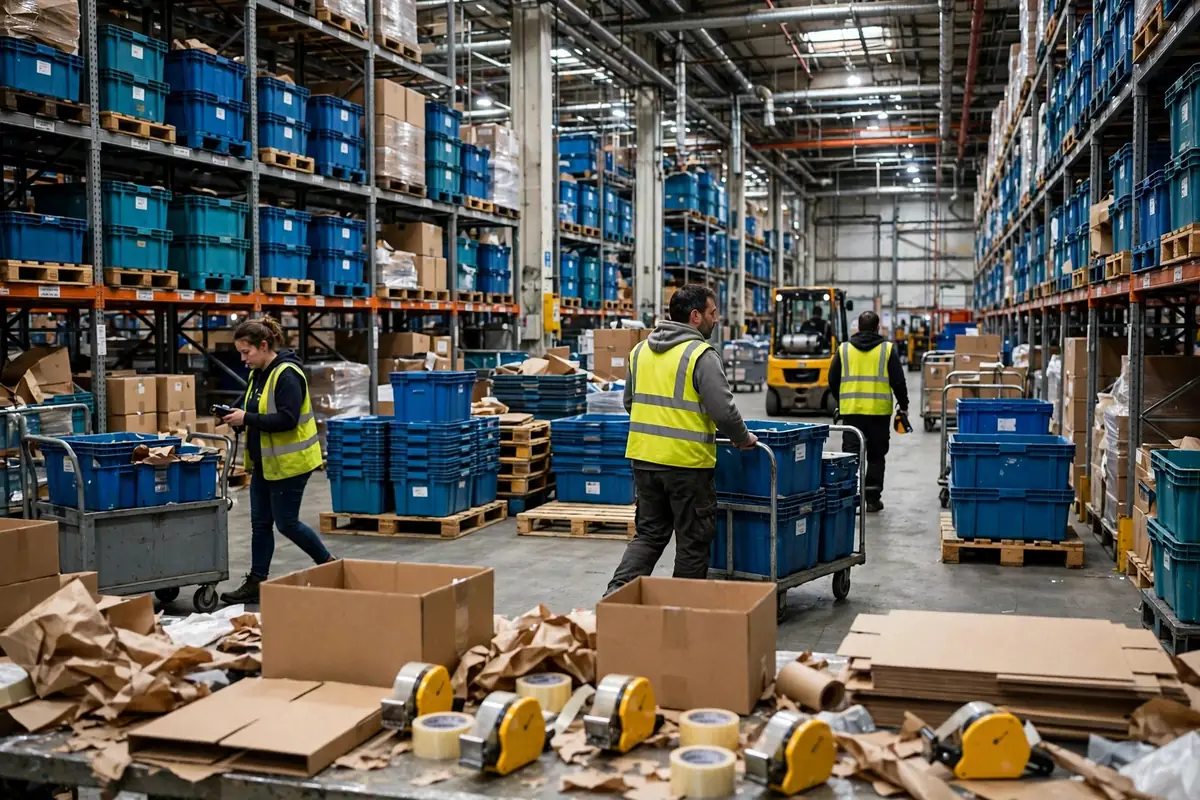
We have a client who sells small appliances. In the fall of 2024, his overseas warehouse returns had piled up to more than 800 units in a warehouse near Ontario — air fryers, humidifiers, electric kettles, stacked across two pallet zones under dust covers like two small hills. He called me and his first words were: "Susan, tell me straight — do we refurbish these and sell them again, or do we scrap the lot?" I didn't answer right away. I asked him to send the returns list and photos from the warehouse floor. One look at the photos and I had to laugh: more than eighty percent of the boxes had never even been opened. The factory tape was still intact.
That is the most common truth about overseas warehouse returns refurbishment: returned does not mean broken. Plenty of it is buyers changing their minds, ordering the wrong size, or packaging that got dinged in transit. The units that genuinely need repair are usually less than a third of the pile. Yet most sellers handle returns in only two ways: they let everything sit untouched, or they scrap the whole lot. The first burns storage fees. The second burns product value. Both lose money.
Refurbishing Returns Starts With the Math: What Does Saving One Unit Really Cost?
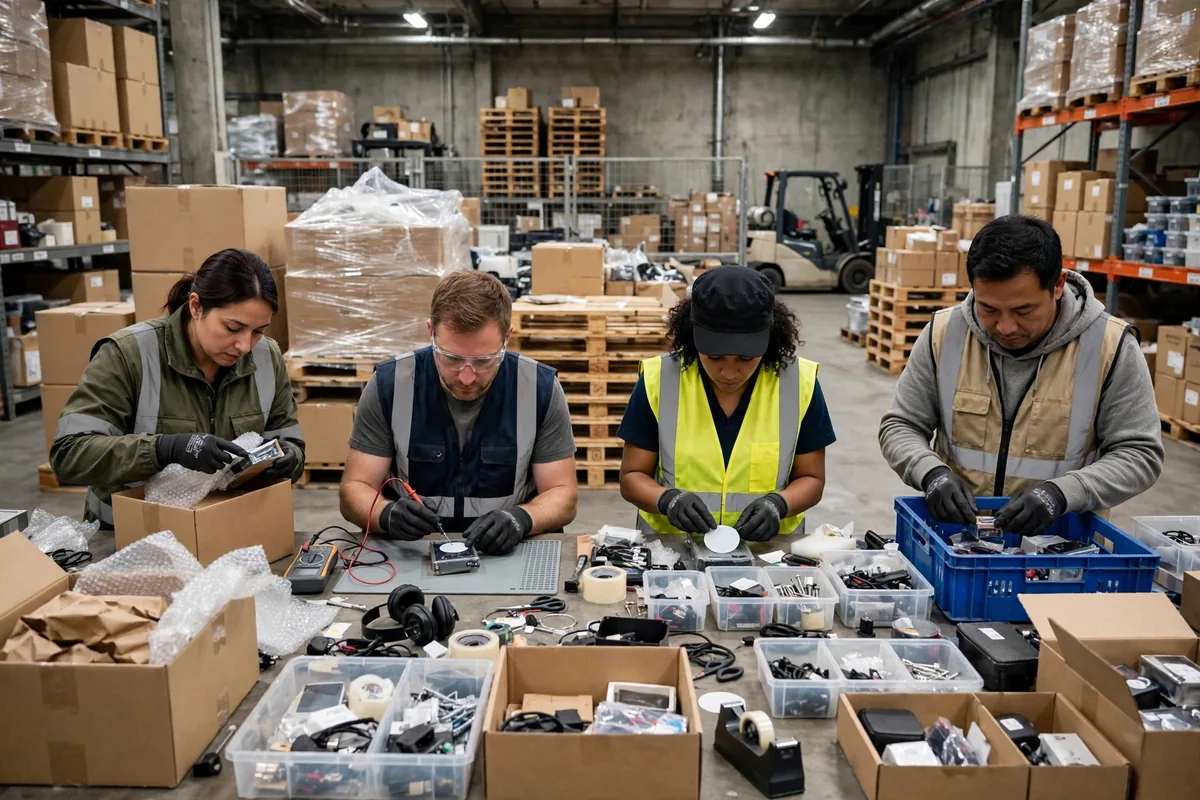
Let's run the numbers on that small-appliance client. His 800-plus returns went through piece-by-piece inspection at the warehouse. The result: 560 units needed nothing more than a new outer carton, a replacement manual, and a fresh label. Another 140 needed a power-on test and a small replacement part. The remaining hundred or so had cracked inner pots or burned-out motors — not worth repairing.
Refurbishing those 560 units cost a few dollars each for inspection, reboxing, and labeling. Compare that with the alternative. The same air fryer cost tens of dollars at wholesale, and shipping it back home plus customs clearance would have cost far more than refurbishing it — and taken over a month. Once you see the math, the answer is obvious: most of that pile should never have been on a scrap list.
But the refurbishment fee is only one line of the bill. Every extra day a return sits in the warehouse, storage fees keep ticking. While that client spent three weeks deciding what to do, the storage fees on those pallets added up to the equivalent of refurbishing dozens of units. In my experience, the worst mistake in returns handling is not choosing wrong — it is choosing slowly. Once returns land, their destination should be decided within a week. If you cannot decide, at least set a temporary plan.
There is one more cost people leave out of the calculation: if a refurbished unit gets returned a second time, you pay freight, inspection, and customer service all over again. Refurbishment is not a free second life. It is a bet, paid in real money, that this unit will stay sold the second time around. That second-return risk is the part of overseas warehouse returns refurbishment most sellers never price in.
Which Returns Deserve Refurbishment, and Which Get Scrapped on the Spot
Early in 2025, another client taught me a lesson in a New Jersey warehouse. He sold home lighting, and a batch of returned table lamps passed the warehouse power-on test, so they were refurbished as "fully functional" and put back on sale. The second-return rate on that batch was shockingly high. When we finally opened them up, we found a hairline crack inside each lampshade — invisible to a power-on test, obvious to any buyer the moment the box opened. After that, I changed my rule: the refurbishment standard for cosmetic items cannot just say "works fine." It has to spell out exactly what level of scratch or crack counts as acceptable, with photos attached.
For deciding whether a return gets saved or scrapped, I now give clients a four-tier framework. Follow it and you will rarely go far wrong:
| Tier | Condition | Action | Key point |
|---|---|---|---|
| Tier A | Unopened or outer box only opened, product intact | New carton, replace accessories, relabel, resell | Best value — handle first |
| Tier B | Works fine, minor cosmetic flaws | Sell at a discount or as open-box | Price must cover the second-return risk |
| Tier C | Needs a replacement part to work | Get a repair quote, compare against product value | If repair plus inspection passes half the value, don't save it |
| Tier D | Cracked, burned out, missing a key part, out of warranty | Scrap it | Don't hesitate — storage costs more than the goods |
The most counterintuitive part of that table is Tier B. Many sellers assume cosmetically flawed goods will damage their reputation if resold, so they scrap them. The opposite is usually true: a lightly flawed item sold at a discount, with honest photos and an accurate description, sets the buyer's expectations correctly — and second returns stay low. The dangerous ones are not the visibly flawed units. They are the ones that look fine and carry a hidden defect, like those cracked lampshades. Selling one of those is planting a landmine.
Tier C is where sellers lose the most money. Replacing a motor plus labor on a small appliance adds up fast. My line is simple: once repair plus inspection costs more than half the unit's resale value, call it dead and move on. Sellers trip up here because they compare the repair cost to the wholesale cost — "I paid tens of dollars for this, the repair is only a dozen, that's a deal." Wrong comparison. Compare the repair cost to what the unit will actually sell for, how long it will take to sell, and how long it will occupy a shelf while it waits.
Get the Returns Rules Into the Contract Before You Sign
At the root of it, returns refurbishment is not an operations problem. It is a contract problem. I have watched too many clients sign a warehousing contract that covers inbound rates, outbound rates, and storage fees in detail — and then skim straight past the returns page. Months later, when the returns pile up, they discover refurbishment is billed by the hour, the warehouse decides what counts as acceptable, and scrapping requires their email approval, with storage fees ticking the whole time approval is pending.
Here is a piece of inside truth from the 3PL side: returns refurbishment is a profit center for many warehouses. The more line items on the quote — inspection fee, reboxing fee, labeling fee — the more room there is inside those numbers. That does not mean the warehouse is cheating you. It means there is no standard price for this work, and whoever defines the rules first, wins.
So next time you negotiate a contract, ask these three questions: is refurbishment billed per unit or per hour, and can inspection, reboxing, and labeling come as one bundled price? Who decides whether a return passes or fails, and can that decision be backed up with photos? Does scrapping need your written sign-off, and how are storage fees charged while you are waiting to sign? Ask those three and the other side will know you have negotiated warehouse contracts before.
One more thing your 3PL will not volunteer: keep evidence for the scrap pile too. Before Tier D units are destroyed, have the warehouse photograph them, list them, and get both sides to sign off, with the photos filed by batch. If a brand owner ever asks where that stock went, or a platform audits the batch, you will have the paperwork. Scrapping without a paper trail means throwing the liability away with the goods — and the person left holding it is you.
In overseas warehouse returns, handling them well is profit. Handling them badly is a hole in the pocket. When goods come back, don't start by asking "can we still sell this?" Start by asking how much it costs to save, how long it takes, and whether it will come back a second time. Once you can answer those three questions, the choice between refurbishment and scrap makes itself.
By Susan, 3PL Sales Director