Overseas warehouse Q4 peak season is basically a war you see coming but still lose every year. Why? Because everyone is busy watching their ad account while the warehouse is on fire behind them.
I'll tell you about it so you don't pay the same tuition.
Overseas Warehouse Q4: the Biggest Risk Isn't Running Out of Stock
Most sellers' nightmare is: out of stock in Q4 = dead. But here's what actually happened to me last November in the Los Angeles warehouse.
Our best-selling humidifier accessory: inventory looked fine. FBA listings were stocked. Our own warehouse in Ontario had 8,000 units sitting there. Then Black Friday hit. Orders tripled overnight, and the 3PL warehouse told us: "Sorry, inbound receiving is backed up 12 days. Your pallet is still on the truck queue."
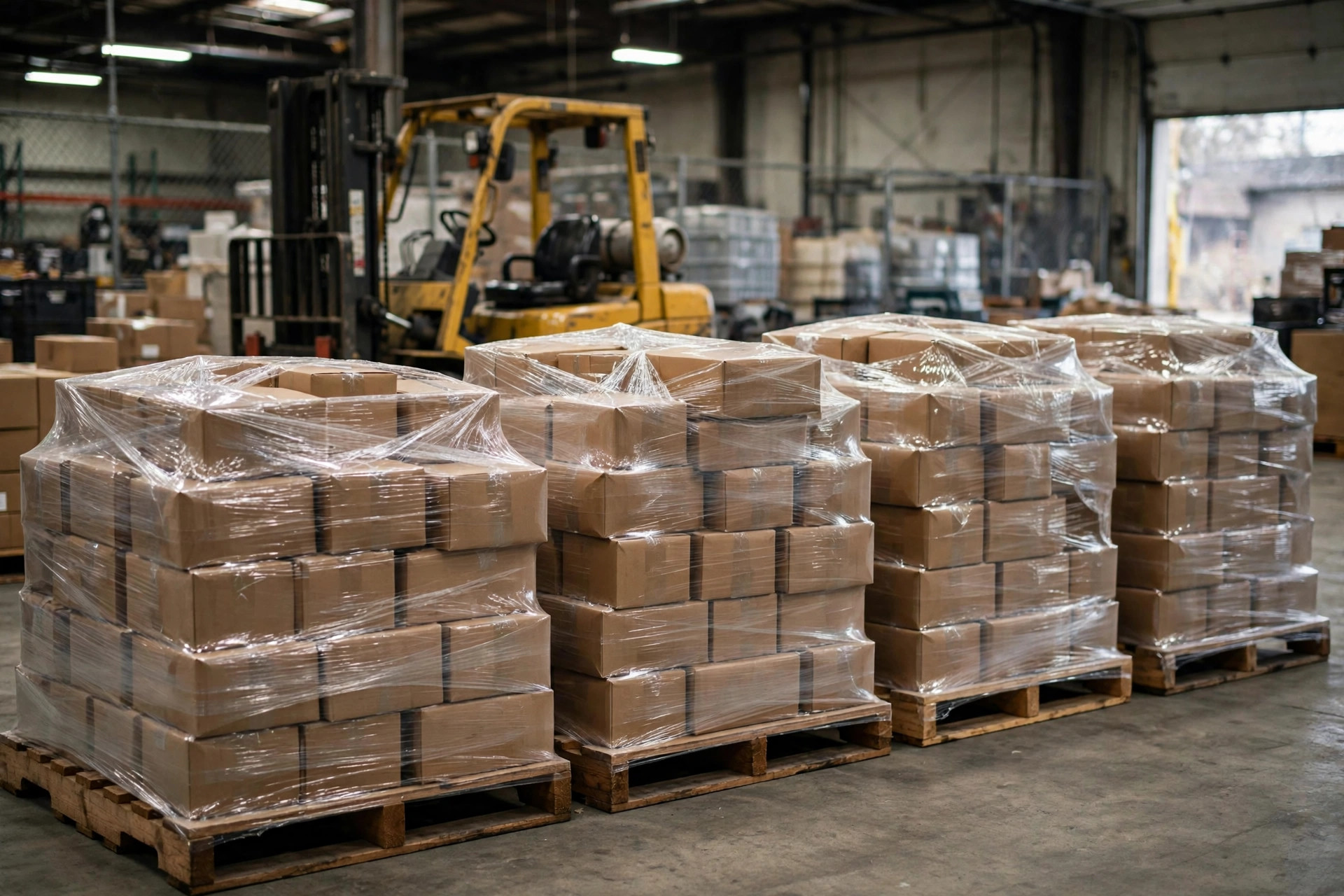
Goods arrived at the warehouse — and couldn't get onto the shelves. 12 days.
The orders came in, the stock was physically 50 meters away from the pickers, and we couldn't ship a single unit. We lost about 4 peak days and had to rush air freight to FBA at triple the cost — roughly $30,000–$40,000 in margin, by my math. All because I chased the shipping deadline and never asked how long receiving actually takes in Q4.
So here's my contrarian verdict: in Q4, the biggest risk for overseas warehouse sellers isn't being out of stock — it's stock arriving at the warehouse but never making it onto the shelf.
Fix: in the 60-day countdown, receiving lead time is item zero. Ask your 3PL point blank: what's your average receiving turnaround in November? Get it in writing. Then back-schedule your ocean cutoff from there, not from the vessel sailing date.
How I Plan Replenishment: Work Backwards From Ocean Cutoff
Here's my actual method, no theory.
Step one: pick your target "on-shelf date" — the day inventory must be available to sell. For Black Friday, I want everything on the shelf by November 10 at the latest. Not the 15th — always buffer.
Step two: subtract receiving time. My 3PL quoted 7–10 days normally, 10–15 in Q4. I use 15. 15 days before November 10 is October 26 — that's when the container must arrive at the warehouse dock.
Step three: subtract ocean transit and the cutoff. From South China to LA, I budget 30 days door to door in Q4 (port congestion adds a week, minimum). Plus a 7-day customs and drayage buffer. So the container must leave the origin port by around mid-September. Work backwards from there to your factory production date — and suddenly "60 days before Q4" isn't early at all. It's already late.
How much to stock? My rule of thumb: take last year's Q4 weekly sales, multiply by 1.2–1.5 for growth, and cover 8–10 weeks of that volume. Yes, it ties up cash — we'll do the math in a minute.
One more thing: I never put all eggs in one container anymore. 70% goes by ocean, 30% by air as insurance. If ocean gets delayed, air freight saves the launch. It's expensive insurance, but it saved my Cyber Monday in 2024.
The Math: Cash Tied Up vs. The Cost of Stockout
Everyone says "stock more for Q4" like cash grows on trees. I ran the numbers on a spreadsheet last September, and it changed how I plan.
Scenario: one SKU, unit landed cost $8, selling at $29.99. Last Q4 you sold 5,000 units. This year you plan for 6,500 (1.3x).
Option A — stock deep: 6,500 units × $8 = $52,000 tied up in inventory. Say 3,000 units don't sell and sit until February. Extra warehousing cost for 3,000 units over 3 months: roughly $1,500–$2,500 at typical 3PL storage rates. Plus the capital cost. Total "overstock penalty": maybe $3,000.
Option B — stock conservatively: you stock 4,500 units, run out on December 8. Those 2,000 missed units at $29.99 minus $8 cost = $44,000 in lost contribution margin. Plus the listing ranking drops because you're out of stock during the highest-traffic weeks of the year, which costs you sales well into January. Real total cost of that stockout: easily $50,000+.
$3,000 of overstock pain vs. $50,000 of stockout pain. The math isn't even close. In Q4, overstocking is the cheap mistake. Running out is the expensive one.
Caveat: deep stock is for proven winners only — don't gamble Q4 on untested SKUs.
Lock Capacity Early: Negotiate Peak Surcharges Before They Hit
Here's the part sellers forget: your 3PL is also getting squeezed in Q4. Warehouse space fills up, labor rates spike, and every carrier adds peak surcharges. If you don't negotiate now, you'll pay whatever they quote in November.
My 60-day checklist for the warehouse contract:
- Storage capacity: confirm your reserved pallet positions in writing. Ask what happens when they hit 95% utilization — do they turn away your inbound? What's the overflow plan?
- Receiving priority: will your pallets get priority receiving, or do you wait in line with everyone else? Put an SLA in the email.
- Peak surcharges: ask for the full Q4 surcharge schedule now — receiving, pick/pack, storage. Some warehouses add a per-order peak fee from October 15 to January 5. Know the number before it shows up on your invoice. (Carrier surcharge specifics change yearly — check the official carrier sites for the latest published schedules.)
- Labor plan: how many temp workers are they bringing on? A warehouse that staffs up 50% in November is a very different operation from one that "hopes the team can handle it."
I email my warehouse contact all of this in one message, 60 days out. The sellers who get priority in Q4 are the ones who asked in September, not the ones who panicked in November.
Carrier Accounts: Don't Let Peak Surcharges Ambush You
UPS and FedEx both run peak-season surcharges — extra per-package fees that kick in around October and run through mid-January. The schedules are published on their official sites every fall; the exact numbers move around, so check the current year's tables rather than trusting last year's memory.
My routine:
- Download this year's peak surcharge table for each carrier I use. Line up the dates and the per-package add-ons.
- Bake them into my Q4 pricing model. If a package costs me an extra couple of dollars in peak fees, my free-shipping threshold or my product price needs to absorb it — decide now, not on December 20.
- Have a backup carrier account ready. I keep two carrier relationships active year-round. When one's network is melting down in the second week of December, I shift volume. The time to set up that second account is September, not when you're already drowning.
- Daily pickup: confirm your warehouse's carrier pickup schedule for Q4. Some warehouses add a second daily pickup in peak season. If yours doesn't, your "shipped" orders are sitting on the dock overnight — and your tracking numbers look dead.
Returns Will Double. Plan Like It.
Q4's dirty secret: returns roughly double versus a normal month — wrong sizes, duplicate gifts, buyer's remorse. January is Returns Month.
My returns playbook:
- Staff the inspection line. Tell your 3PL to expect 2x return volume from December 26 onward. Returned units that sit uninspected for 3 weeks are dead inventory — they miss the January resale window.
- Triage fast: A-grade goes straight back to sellable stock. B-grade (opened box, fine product) gets listed as open-box or bundled. C-grade gets liquidated. Every day a return sits in limbo, its value drops.
- Watch the review wave. Returns and bad reviews travel together. I assign one person to monitor reviews daily from Black Friday through mid-January. A sizing complaint that shows up 20 times in December is a product-page fix you should have made in November.
- Pre-write your return responses. Holiday shoppers are emotional — pre-written, genuinely helpful responses save your support team hours and defuse one-star reviews.
Customer Service and Review Defense
Last one, the least glamorous: Q4 customer service.
Volume triples, and "where is my package" becomes 80% of your inbox. My setup:
- Extend support hours from mid-November. Even two extra hours in the evening catches the after-work shoppers.
- Pre-write answers for the top 10 questions. Shipping cutoff dates, gift messaging, return windows, tracking delays. Pin the holiday shipping deadlines on your storefront.
- Monitor reviews like a hawk. A bad review in December gets 10x the eyeballs of a bad review in March. Respond fast, respond human, offer the fix.
- Set expectations on the product page: "Order by December 15 for Christmas delivery" beats a thousand apology emails.
The 60-Day Countdown, One Page
If you remember one thing from this article: in Q4, the warehouse is the battlefield, not the ad account.
My 60-day list, in order: set the on-shelf date and work backwards to the ocean cutoff → ask the 3PL for receiving SLAs and peak surcharges in writing → stock deep on winners, split ocean/air → download carrier peak surcharge tables and adjust pricing → prep the returns pipeline for 2x volume → extend support hours and pre-write everything.
I paid $30,000–$40,000 to learn the receiving-delay lesson last year. You're getting it free. This trick — asking about receiving lead time before you book the container — I've personally tested it, and it works.
By Ah K, E-commerce Seller (5 yrs)