Let me tell you something. After all these years behind the wheel, I've seen plenty of shippers squeeze every penny out of the freight rate, only to lose the game on one small thing back at the warehouse: the loading sequence. One trailer, five or six customers' freight, and nobody thought about who gets loaded first and who gets loaded last. Guess who pays for that on the road? The driver.
Couple of summers ago, I picked up a multi-stop LTL load out of a warehouse in Ontario, California. Five stops, running south to north: San Diego, Carlsbad, Irvine, Anaheim, then back up toward Ontario to finish. Second stop, Carlsbad. The receiver wanted 8 pallets. I opened the rear doors and just stood there — those 8 pallets were buried at the nose of the trailer, with 20-some pallets for the later stops stacked in front of them. Me and the receiver, two guys with a forklift, spent the better part of 45 minutes digging that freight out. The receiver's face went dark and he called the shipper right there on the dock: "Can you send me a driver who knows what he's doing?" I wanted to laugh and cry at the same time. My fault? The warehouse loaded it. The warehouse decided the order. All I did was drive.
Why a Wrong Loading Sequence Costs You on the Road
Here's how the warehouse sees it: freight's ready, truck's here, load it, ship it, done. But every minute a driver burns on the road is money — fuel, wages, the reefer unit humming away, all of it. Add 40 wasted minutes at one stop and over five stops you've lost a whole extra run that day. Miss a 3 PM receiving cutoff and you're coming back tomorrow. That's a run and a half, gone.
And then there's the customer. The shipper thinks, "my freight left on time." The customer thinks, "your driver is slow." Nobody's happy, and the whole mess comes down to the loading sequence.
I've seen it get uglier. A 3PL doing food service delivery out of a Southern California cold storage — reefer truck, chain restaurants. The pallets for the first stop were loaded at the nose, dead last in unloading order, buried behind everyone else's freight. The driver ran 30-some miles to the first customer, opened the doors, and called dispatch: "I'm not touching this. Somebody loaded it wrong, somebody comes and fixes it." The reefer sat at the customer's dock for nearly three hours, compressor running, burning diesel the whole time. The receiving manager escalated it all the way to the shipper's headquarters. That 3PL ended up paying for an emergency redelivery, and from that day on, every loading sheet had a stop number next to each customer. The driver could match it at the doors before rolling.
The Numbers: Same Five-Stop Route, Before and After Fixing the Load Sequence
I know a dispatcher, Old Chen, running a fixed Wednesday route — five receivers across San Diego and the LA basin. They used to load whatever freight was ready first. Average run took the driver about 11 hours. After the third stop it was usually 4 or 5 in the afternoon, and any customer with an early receiving cutoff got pushed to the next day.
Then they changed the rule: load in reverse route order. First stop off, last stop loaded — sitting right by the rear doors. I asked the driver, Xiao Li, how it felt after the change. "Now I pull in, drop the pallets, twenty minutes, gone. Before, just digging freight out took me close to an hour." The whole run got nearly two hours shorter. On-time delivery went from the high seventies to the mid nineties. Over a month, the driver figures he gets back two or three working days he can spend on other runs.
Three Things the Warehouse Can Do to Match Load Sequence to the Route
This isn't hard. Ten extra minutes at the warehouse saves three hours on the road. Three things:
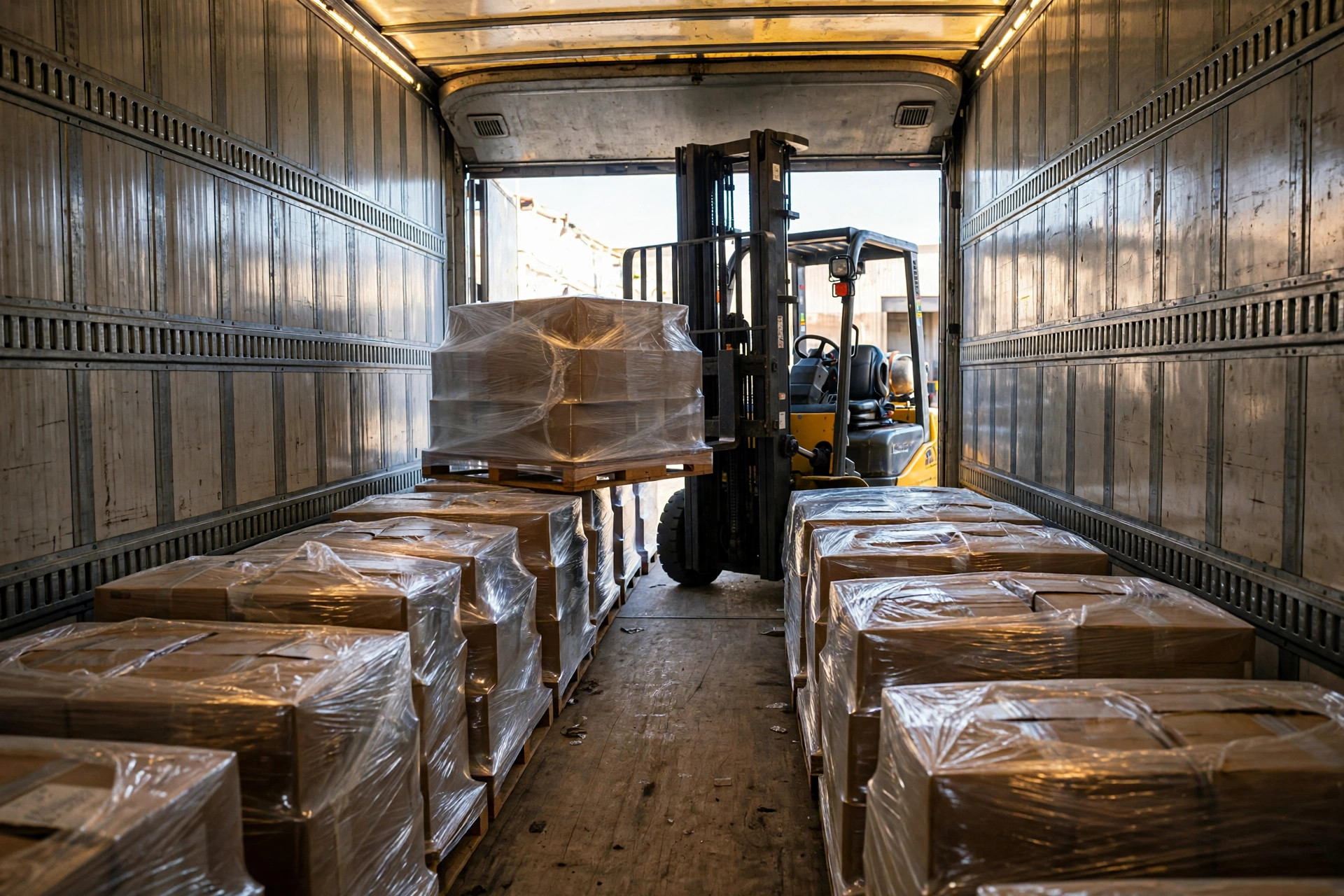
First, put a stop number on the loading sheet. Number each receiver by route — stop 1, stop 2, and so on — and load in reverse. First off the truck, last on the truck. The driver reads the sheet and knows exactly how that trailer is packed.
Second, stick a big route number on every pallet. A large printed number on the stretch wrap. Driver opens the doors, sees stop 1 sitting right there at the back, and knows the sequence is right. Costs pennies per label. Worth its weight in gold when there's an argument.
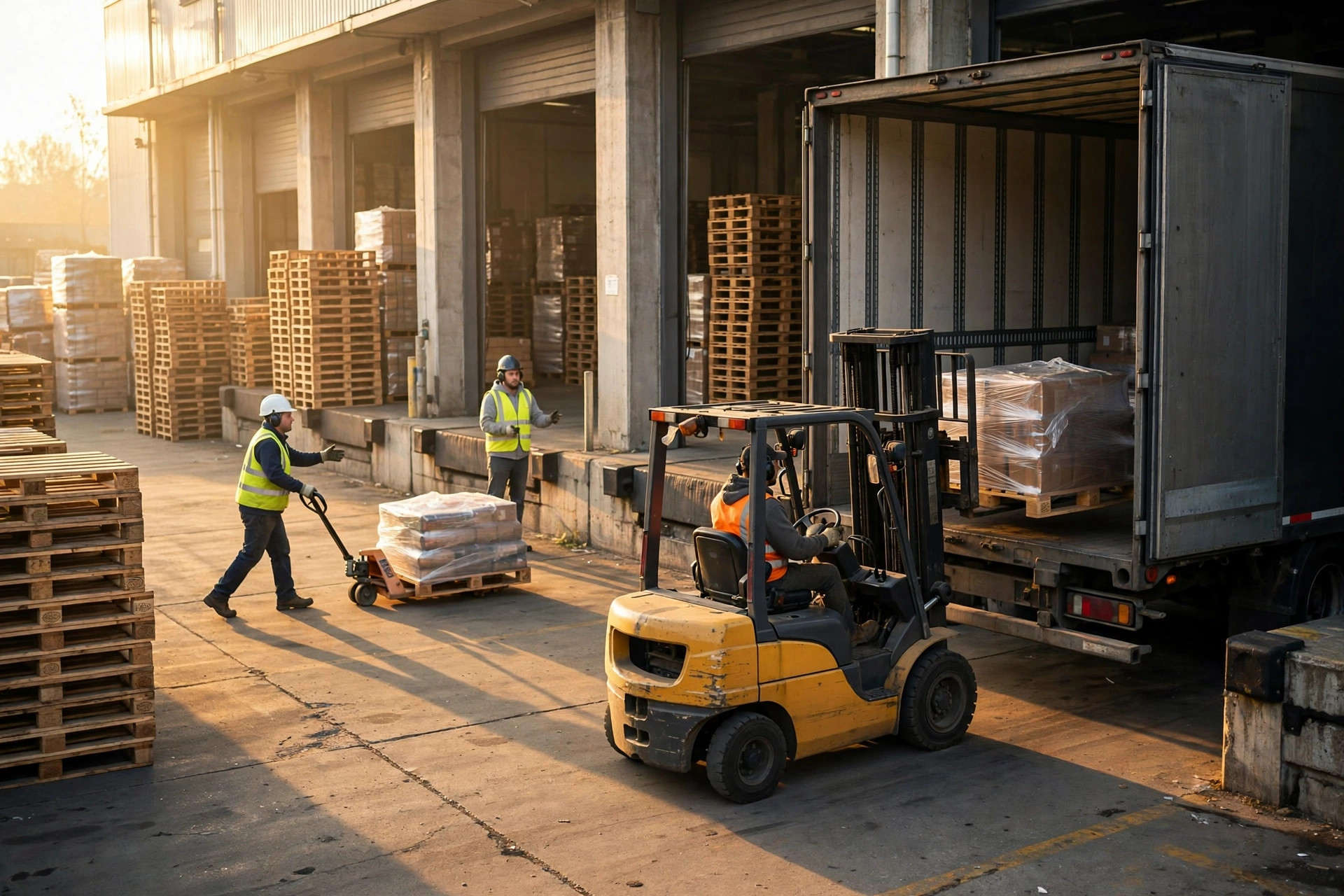
Third, stage freight by route at the dock. Before the truck backs in, line up that route's pallets in loading order — the ones going on first (last off) toward the back of the staging area, the ones going on last (first off) closest to the dock door. Don't make the forklift operator improvise. A man with a sheet beats a man with a guess.
And one more: let the driver open the doors and take a look before they close. Three minutes. Confirm stop 1 is at the rear, then shut the doors. Those three minutes can save three hours of pain on the road.
Count Both Sides: Reverse Loading vs Dock Efficiency
I know what the warehouse side is thinking: loading in reverse route order means sorting freight by route first, which adds ten or twenty minutes of labor. The dock efficiency numbers won't look as pretty.
That's half right. Yes, the warehouse adds a step. But you can't count only the warehouse's side of the ledger. Fifteen minutes saved on the dock can cost the driver two hours on the road — plus a customer complaint. Enough complaints and the shipper switches carriers, and the warehouse feels that too.
Here's the counterintuitive part: the warehouse with the fastest outbound numbers isn't always the one with the lowest total cost. Real efficiency is freight leaving the dock and flowing straight to the customer — no digging, no arguing, no rework. The loading sequence is the cheapest link in that whole chain, and the one most people ignore.
Sharpen the axe before you chop. Ten minutes of care at the dock saves three hours of grief on the road. Load it right, and the road treats you right — fifteen years behind the wheel, and I believe that more every year.
By Shifu Zhao, Trucking Veteran (15 yrs)