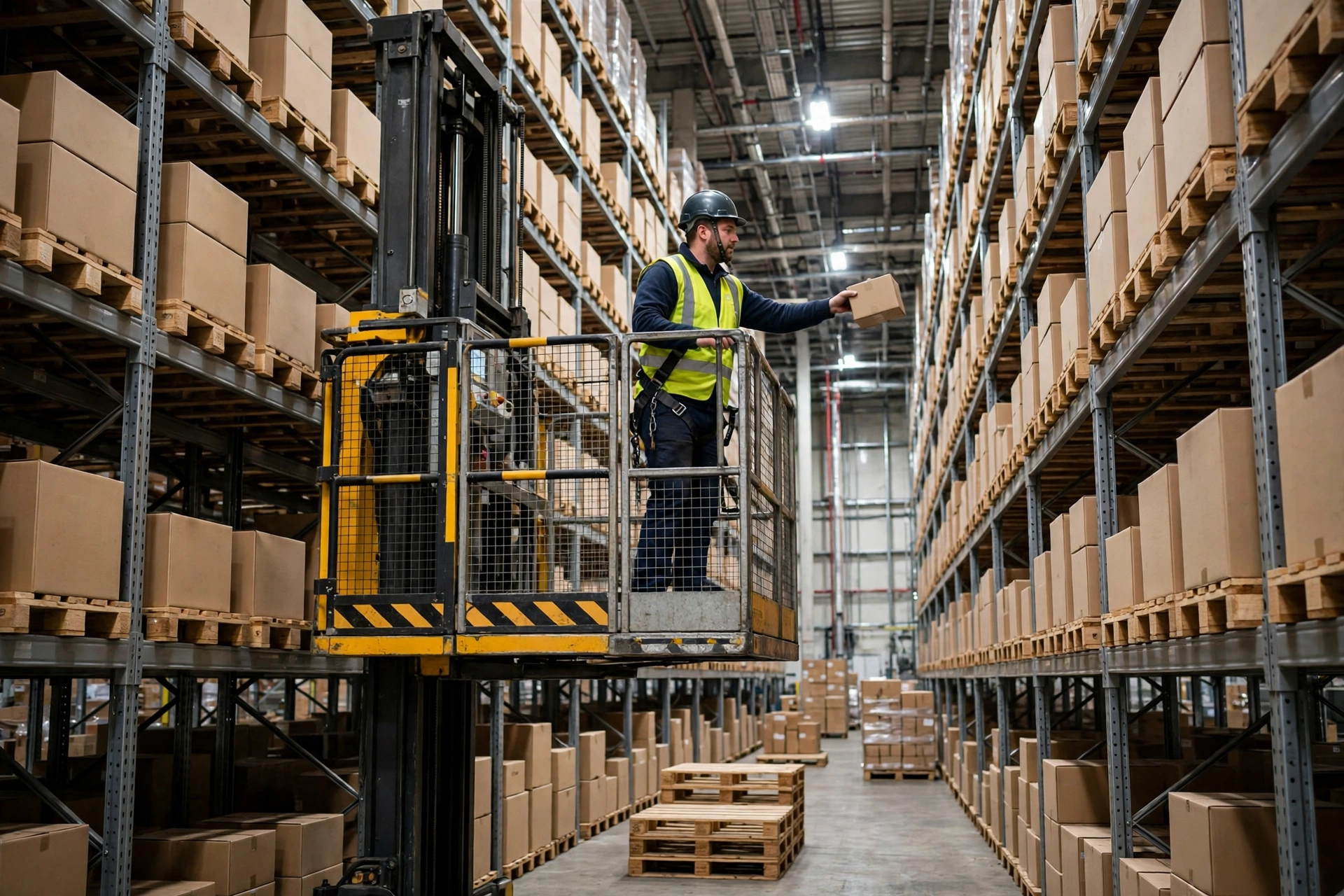
Listen, a month before peak season last year, our warehouse swapped in new order picker trucks along with a new run of high racking. On the first night shift I stood underneath and watched: a picker rode up to ten metres or so, grabbed the goods, wanted to come down, and the truck just sat there in mid-air, taking half a minute to descend. Half a minute per person, dozens of people taking turns all night, and the whole pick line slowed to a crawl. To be honest with you, a picker truck can look great on the spec sheet and still fail you on the floor.
There are really three ways to pick: a man-up high-level order picker, a low-level order picker, and the old forklift-plus-ladder workaround. Let me get the workaround out of the way first. Lifting a person on forklift forks is cheap, sure, but it fails on safety — standing on forks was never compliant, and if something goes wrong, nobody can carry that. We banned it in our warehouse years ago. Cross that one off the list and do not look back.
Man-Up Order Pickers and Low-Level Picking: Where the Line Falls
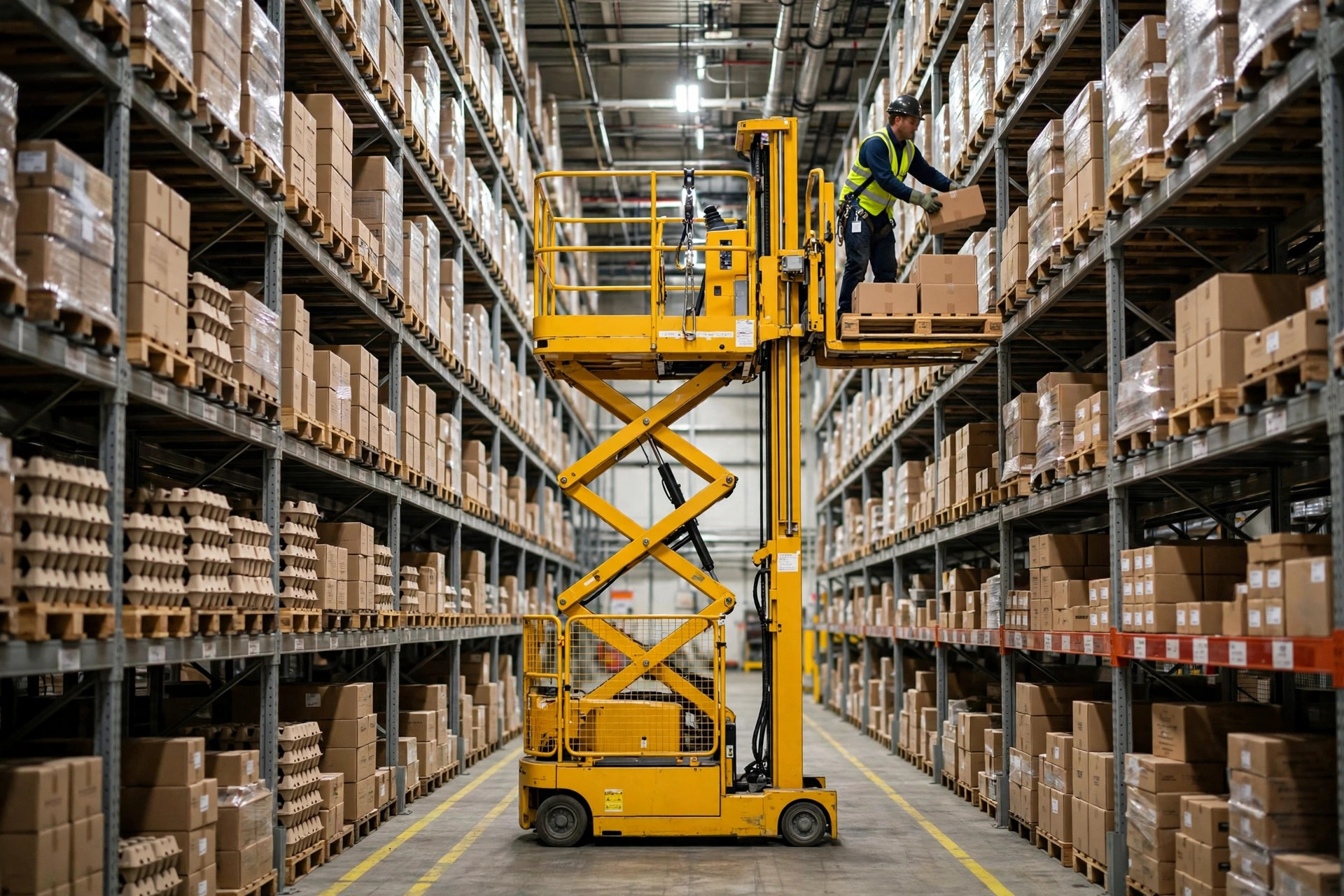
A man-up order picker truck lifts the operator up with the platform, so picking and placing both happen up high, with no climbing up and down to move goods. When the racking runs past six or seven metres and the pick faces are up high, man-up is the right answer. The upside is the picker works right at the location, with far less bending and carrying. The downside is just as real: the truck costs more, moves slower, and demands more from your aisles and your floor.
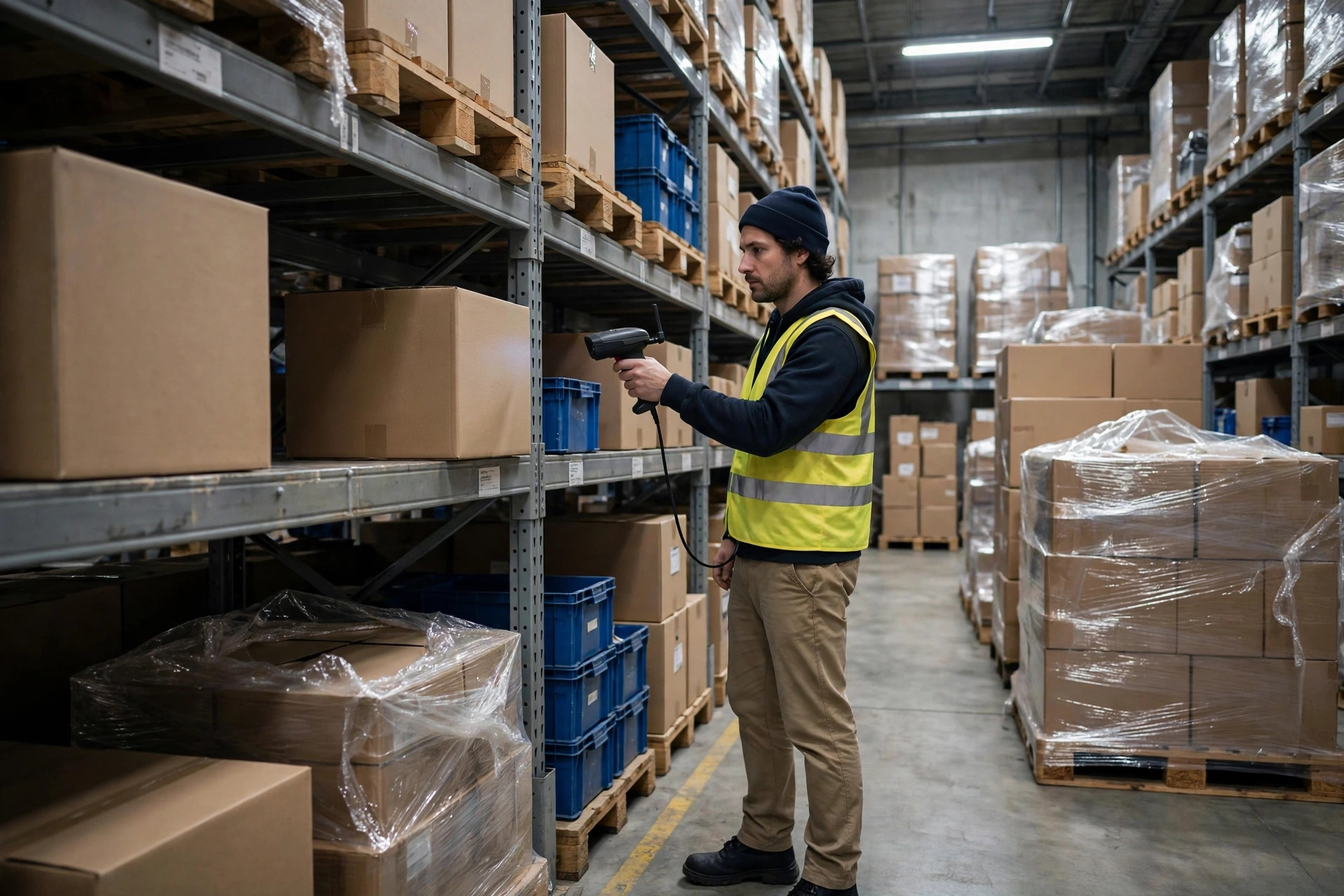
A low-level order picker is the opposite. The operator stays on the ground, the truck just carries the goods away, and the pick faces sit one or two metres up. E-commerce small-item warehouses love it: the picker walks the truck down the aisle, the pace is fast, the truck is cheap, and training is simple. Its weakness is reach — once the racking goes high, you are back to ladders or a different truck.
So where do you draw the line? Look at the height of your pick faces. If most picking happens at low level, use a low-level truck and do not burn money on man-up. If more than about a third of your picks come from high locations, man-up belongs in the fleet. There is also a mixed option: low-level trucks for the low faces, man-up for the high ones, two crews working their own zones without getting in each other's way. That is how we run it now.
Choosing an Order Picker Truck: Five Things I Look At
When I pick one, I look at five things. First is pick height. The truck has to reach your highest pick face, with margin to spare. Do not skimp on the margin — racking gets an extra level added, pick faces move higher, it happens all the time, and a truck that is too short cannot be fixed after the fact.
Second is aisle width. A man-up truck is not small, and its turning circle is what it is. In a narrow aisle it cannot turn around, so the picker has to reverse in and out, and the extra time lands straight on your pick rate. Measure the aisles properly: not just the straight runs, but the turns and the rack ends too. The end of the rack is where a picker truck most often gets stuck.
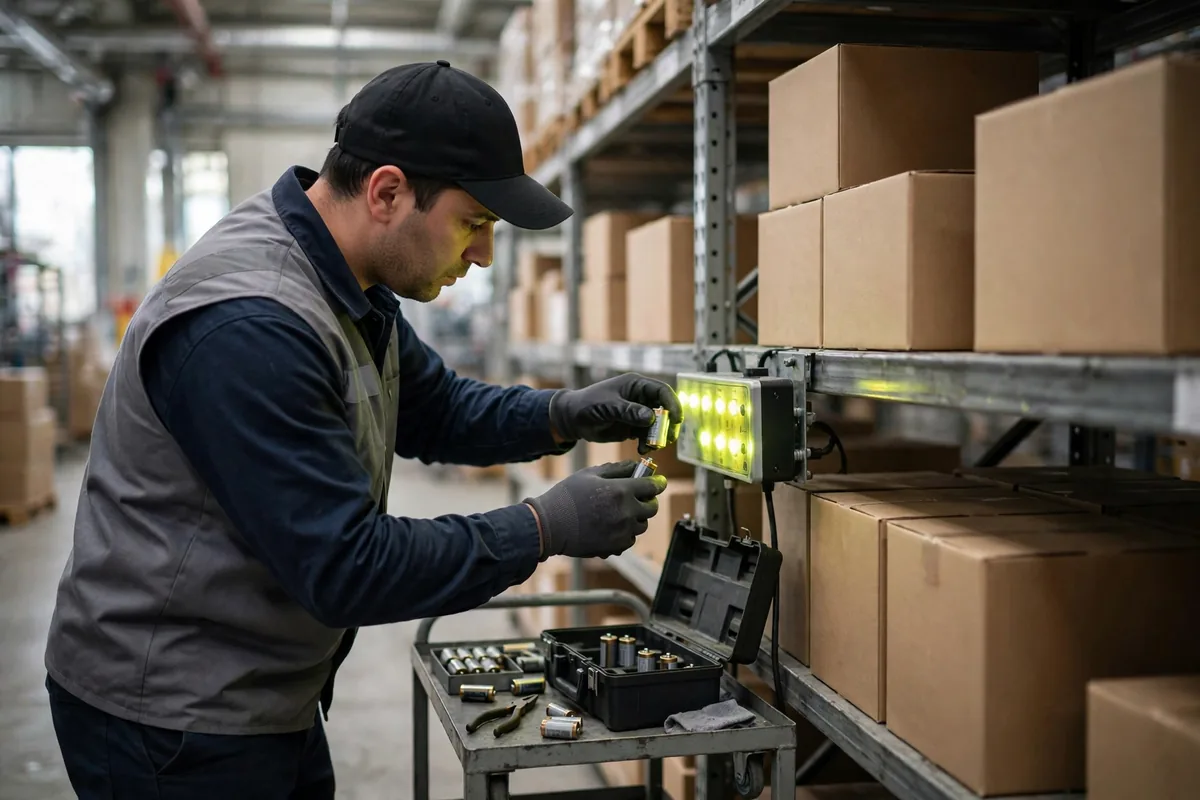
Third is battery life. To be honest with you, the battery is the most underestimated part of the truck. Peak season runs two shifts, and if the truck cannot last a shift, the line stops while batteries are swapped or charged. Our rule is simple: size the battery for the busiest day's shifts, keep a margin, and sort out in advance whether swapping is easy and whether there are enough charging points.
Fourth is rail and wire guidance. A high-level picker runs ten metres up, and no driver can line up with the racking by eye at that height — drift a little and the truck scrapes the uprights. Wire guidance buries a wire in the floor and the truck follows the signal, running straight, fast and steady; mechanical rail guidance fits rails along the aisles and the wheels run in the rails, holding the truck steady through turns. Both keep the truck straight up high and save the driver from constant correction. Which one fits depends on your floor and your budget: cut slots for rails where the floor allows it, go with wire where it does not. We ran a truck for a week in an unguided aisle before we fitted rails, and it clipped the racking uprights twice — that settled the decision. One thing to be clear about: once rails go in, the aisle layout is fixed, and changing the racking direction later costs real money, so think through the next few years of racking plans before you install.
Fifth is the safety gate and fall protection. On a man-up platform the safety gate has to be shut before the truck moves — that is a hard rule. Platform guardrails, fall protection, emergency stop buttons: not one of them is optional. When you inspect a truck, do not just check that it drives smoothly. Open and close the safety gate a few times, hit the emergency stop and see how fast it responds. Test it on the spot.
(Hypothetical scenario) Two years ago the warehouse next door bought man-up trucks and picked the cheap ones with slow lift speeds. Each trip up and down cost the picker nearly an extra minute, and over a day that meant dozens fewer picks per person. When peak season hit and the orders piled up, the night-shift lead was arguing with dispatch every single day. Later they ran the numbers: switching to a faster-lifting model cost more up front, but the extra money paid for itself in labour savings within two peak seasons. Half a minute slower looks like nothing; spread across a whole warehouse for a whole year, it is a big deal.
Three Ways to Pick, Compared
| Option | Best for | Strengths | Where it hurts |
|---|---|---|---|
| Man-up order picker | Many high pick faces, tall racking | Picker works right at the location, less carrying | Expensive, slow lifting drags the rate |
| Low-level picker | Low pick faces, e-commerce small items | Fast pace, cheap, easy to learn | Cannot reach high locations |
| Forklift plus ladder | Not recommended | Looks cheap | Unsafe and non-compliant, not worth the risk |
(Hypothetical example) One more quick calculation. Say a man-up truck picks 400 orders a day, and a slow lift costs an extra half minute per trip. Over a day that adds up to dozens of orders not picked; over a peak month, that is a shortfall in the thousands. Swap in a faster-lifting truck and the price difference spread over each day might be a small sum. You do the maths with your own calculator — the answer speaks for itself.
Here is a counterintuitive one: how good a picker truck is has little to do with how high it lifts or how fast it drives. It comes down to how little it makes people wait. Pickers waiting in mid-air, waiting on a battery, waiting for another truck to clear the aisle — that waiting time is the real killer of pick rates. A truck that lifts half a minute slower hurts your operation more than a truck that lifts a metre lower. When you choose, do not just stare at the biggest number on the spec sheet. Ask the people on the floor: how long does this truck make you wait in a day?
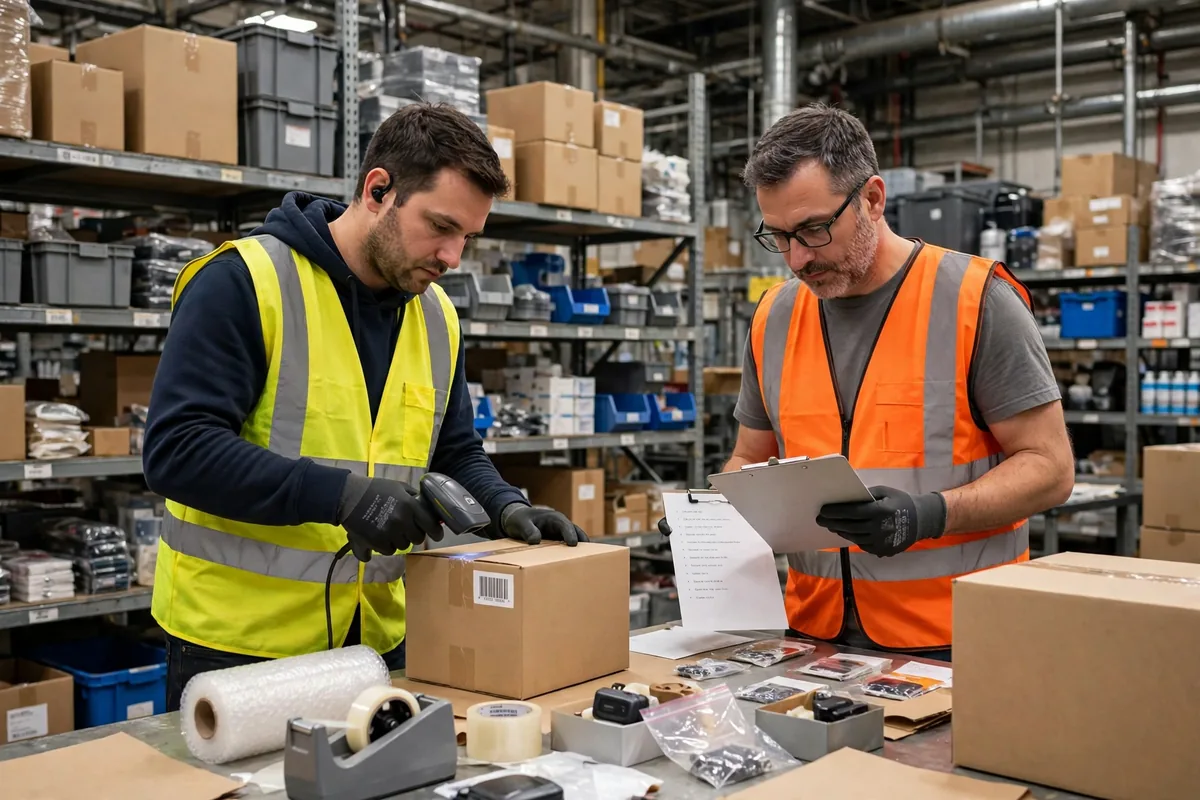
One reminder for fellow operators: before you buy, bring a demo unit into your warehouse and run it for a week. Let your pickers drive it, pick with it, and report what bothers them. No spec sheet, however good, beats your own crew saying after a week that the truck feels right. When the truck feels right, the orders follow.
By Chen Feng, Warehouse Operations Manager