Here's my verdict up front: whether you need order picker trucks or walking picks has nothing to do with warehouse size or order volume. It's about one thing — how high your pick faces are. Put bluntly: if more than seventy percent of your picks happen below two meters, spending tens of thousands of dollars per truck is burning money. But if most of your pick faces are up high and you're still sending people up ladders, you're gambling with injuries. There are two sides to this, so let's take them one at a time.
I've Seen Too Many People Get This Wrong
In 2023, a 3PL running e-commerce fulfillment in the Inland Empire went ahead and bought four electric order pickers — tens of thousands of dollars apiece, signed off without blinking. The result? Over seventy percent of their pick faces were at ground level. The trucks spent most of their time driving empty down the aisles — and the drivers complained the lift cycle was slow and killing their UPH. Within a year, the trucks were parked in a corner collecting dust while pickers went back to pushing carts on foot. Money well spent? Hardly.
But here's the flip side: that same year, another warehouse — racking over eight meters tall, every pick face above the second level — had an owner who couldn't stomach the price tag and kept everyone on ladders and hand carts. Then a picker fell off a ladder, and the settlement cost more than two trucks. And there's a third story I like better: a site near Fontana in 2024 that rented two trucks just for peak season first. The trial showed the trucks genuinely helped in the high-bay zone but walking was still faster at ground level — so they bought exactly two, dedicated to the high zone. That money landed exactly where it should.
One bought wrong and parked them. One didn't buy and paid for it in injuries. One rented first and bought just right. Spec'ing equipment on gut feel is how you end up as the first story.
Two Sides: The Costs First, Then the Payoff
Let's put the costs of an order picker on the table first. One: the price. A new electric order picker starts in the tens of thousands of dollars — and that's just the beginning. Spare batteries, charging infrastructure, annual maintenance, wear parts like tires and forks — over five years, total cost of ownership runs well above the sticker price, and most buyers never calculate that part. Two: the people. Drivers need training and certification, and in a warehouse with high turnover, you train someone and they quit — tuition wasted. Seasonal temps can't even operate the thing. Three: it's slow. A lift cycle of several dozen seconds is normal, and in a pure ground-level picking scenario, its UPH often loses to walking. Four: it's picky about the building — aisle width, floor load capacity, turning radius all have to check out, and retrofitting an older warehouse is another bill.
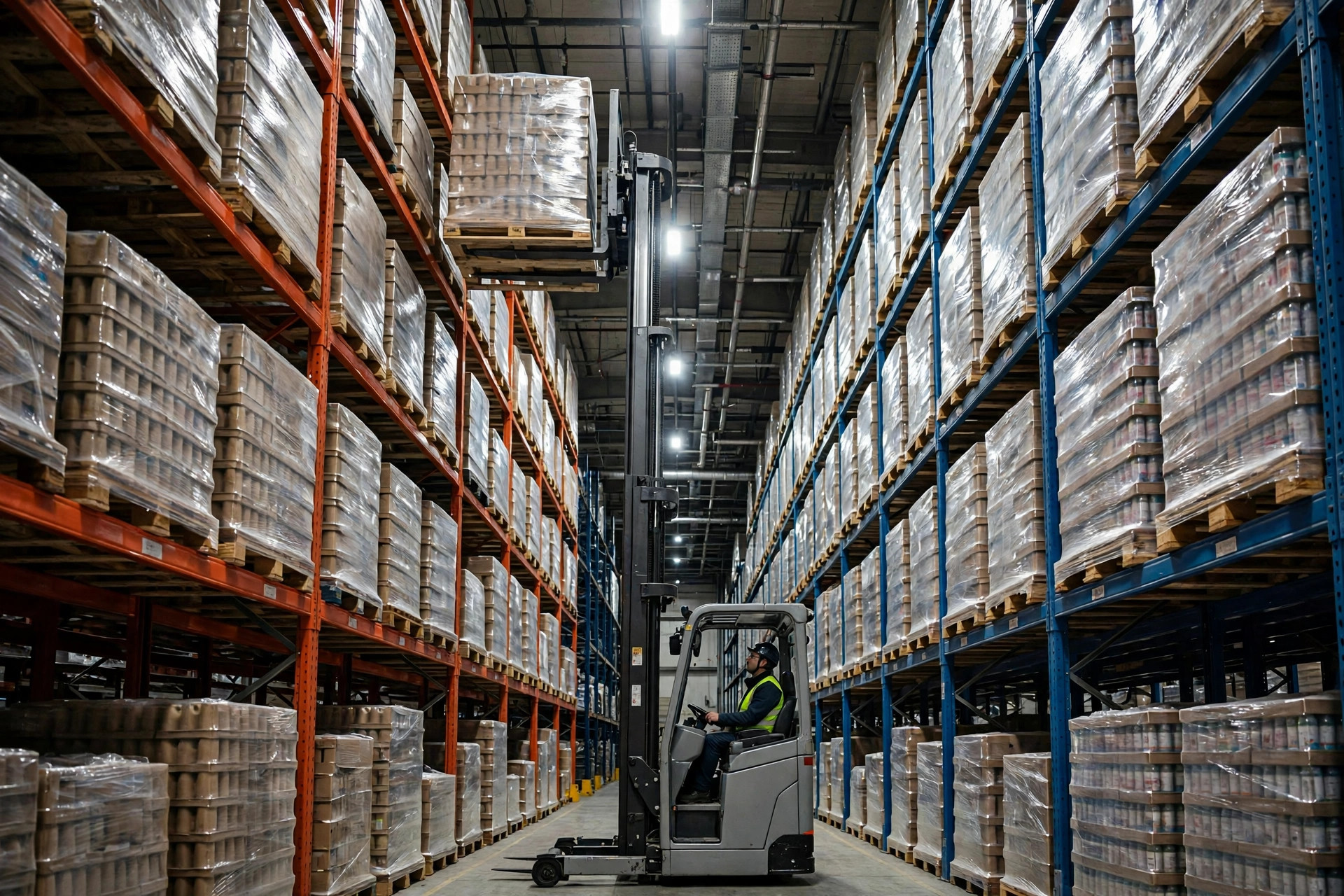
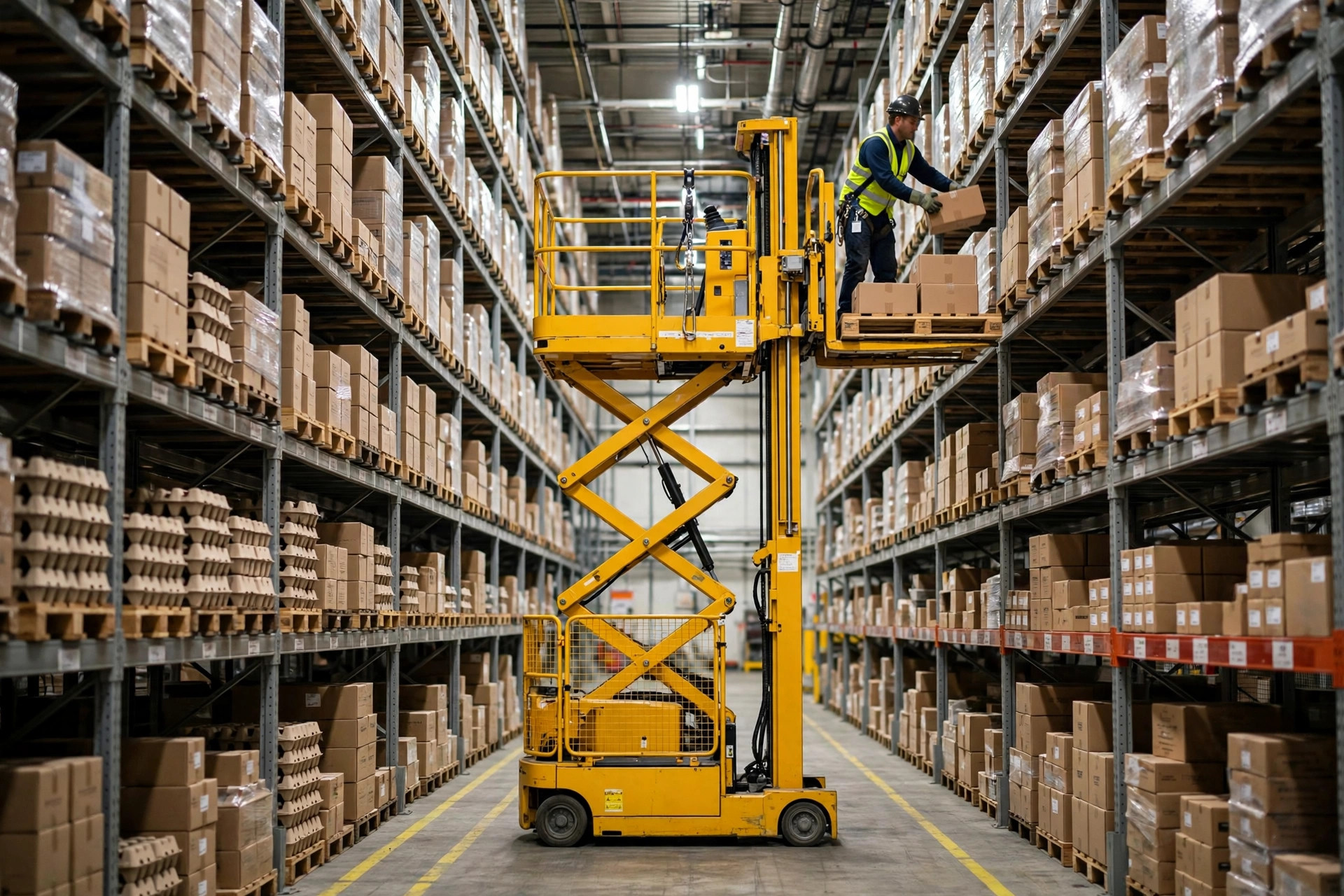
Costs covered — now the payoff: reach. With eight- or ten-meter racking, a person on the ground reaches about two meters; everything above that is the truck's job. Plus one operator works the high bay alone — no second person holding a ladder. That safety math actually pencils out: a single fall-from-height settlement buys several trucks. Every owner can do that math; they just don't want to do it until something happens.
Walking picks are the mirror image. The costs: no high reach, heavy physical toll, and the long-term injury risk to backs and knees. The payoff: cheap, flexible, higher UPH at ground level, and a new hire is productive in half a day — the fastest way to scale up for peak.
| | Order picker truck | Walking pick | | Costs | Expensive (tens of thousands $+), high ownership cost, training & certification, slow lift cycles, demanding on the building | No high reach, physically demanding, injury risk | | Payoff | High-bay reach, solo high-level work, safer | Cheap and flexible, high ground-level UPH, fast onboarding |
Where Exactly Is the Line?
Don't listen to the sales rep. Ask yourself three questions and the answer walks out on its own.
First: what share of your picks happens above two meters? Pull three months of pick tasks and plot them by slot height — that's your baseline for the line. My rule of thumb: above-thirty percent of picks over two meters, seriously evaluate a truck; over half, it's essentially mandatory. Buying without that distribution is betting blind.
Second: are your orders mostly full-case or eaches? Full-case operations can work high bays with a regular forklift doing full-pallet moves — an order picker adds little. High volumes of each-picking up high — that's the truck's home turf.
Third: does the building qualify? Aisle width, floor loading, where the charging area goes — check the latest specs on each manufacturer's official site, and have the dealer measure your aisles before you sign anything. Plenty of warehouses discover the truck can't make the turn only after it arrives. Nobody's laughing then.
Against those three questions, most warehouses fall into three types — find yours: the e-commerce small-parcel site, mostly flow rack and ground-level picking — stay on foot, don't touch a picker truck. The high-bay 3PL, racking over eight meters with heavy each-picking — the truck is close to mandatory. The mixed site with both — zone it: trucks in the high zone, walking at ground level, no one-size-fits-all. That Fontana operation did exactly this.
Here's the counterintuitive part: plenty of buyers purchase an order picker expecting speed. Let me be blunt — the order picker was never born for speed. Lift, position, buckle the harness — one full cycle routinely takes longer per line than walking. What you're buying is "I can reach it" and "nobody gets hurt," not UPH. If you're counting on it for speed, you'll be disappointed. Real speed comes from slotting and wave planning — that's where the fast lives.
Not sure? Rent before you buy. Most dealers offer leases — typically in the low-thousands of dollars per month (confirm the latest quote with your dealer) — run one truck through a peak season and let the data talk. Treat the rent as tuition. It's far cheaper than the tuition of buying the wrong truck.
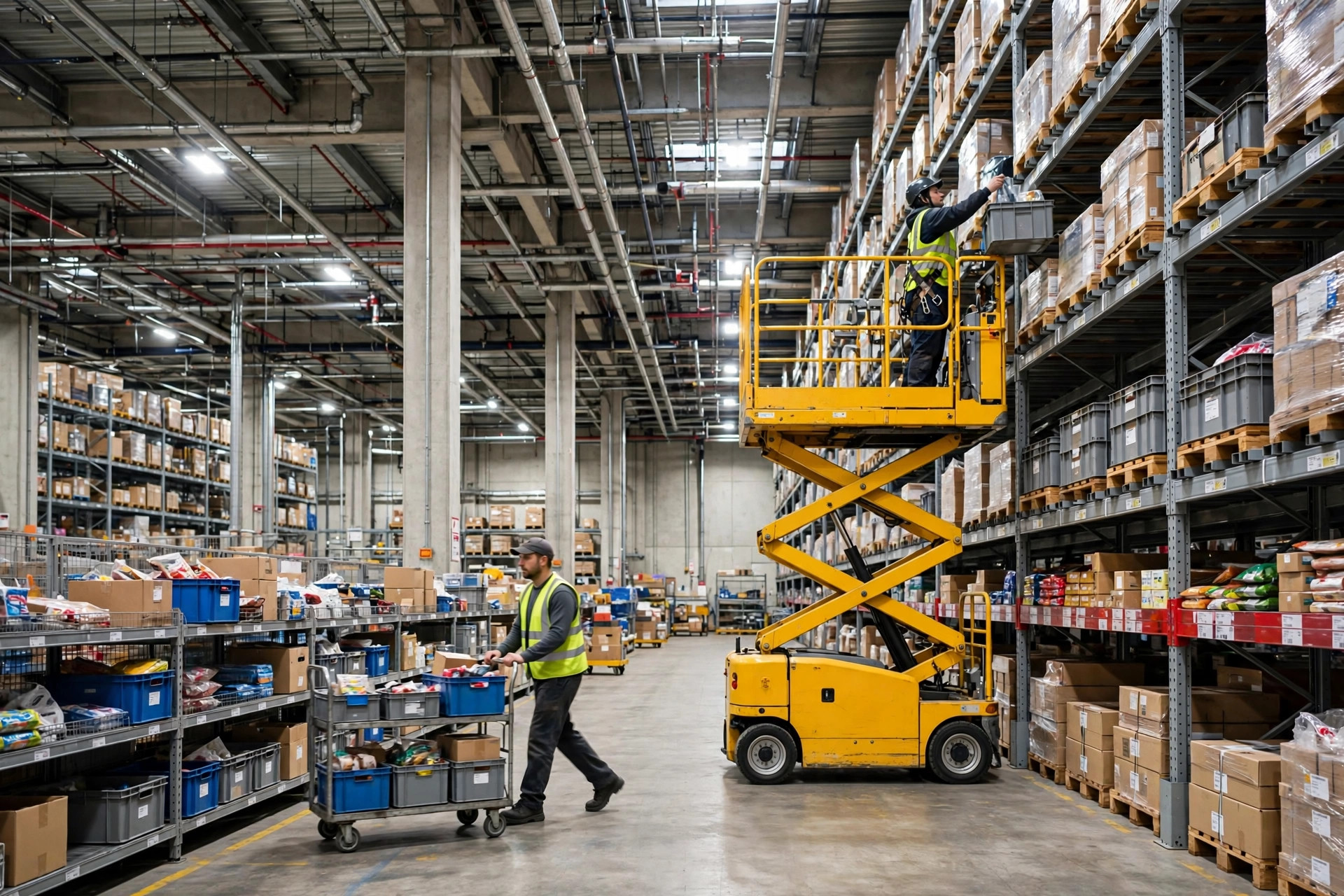
So don't start by asking the sales rep "how much is this truck." Start by asking yourself "how high up is my freight, exactly." If you can't produce that height distribution, whatever you buy is a gamble — win it and it's luck, lose it and it's tuition. Which one are you picking?
By Lao Mi, Supply Chain Veteran (20 yrs)