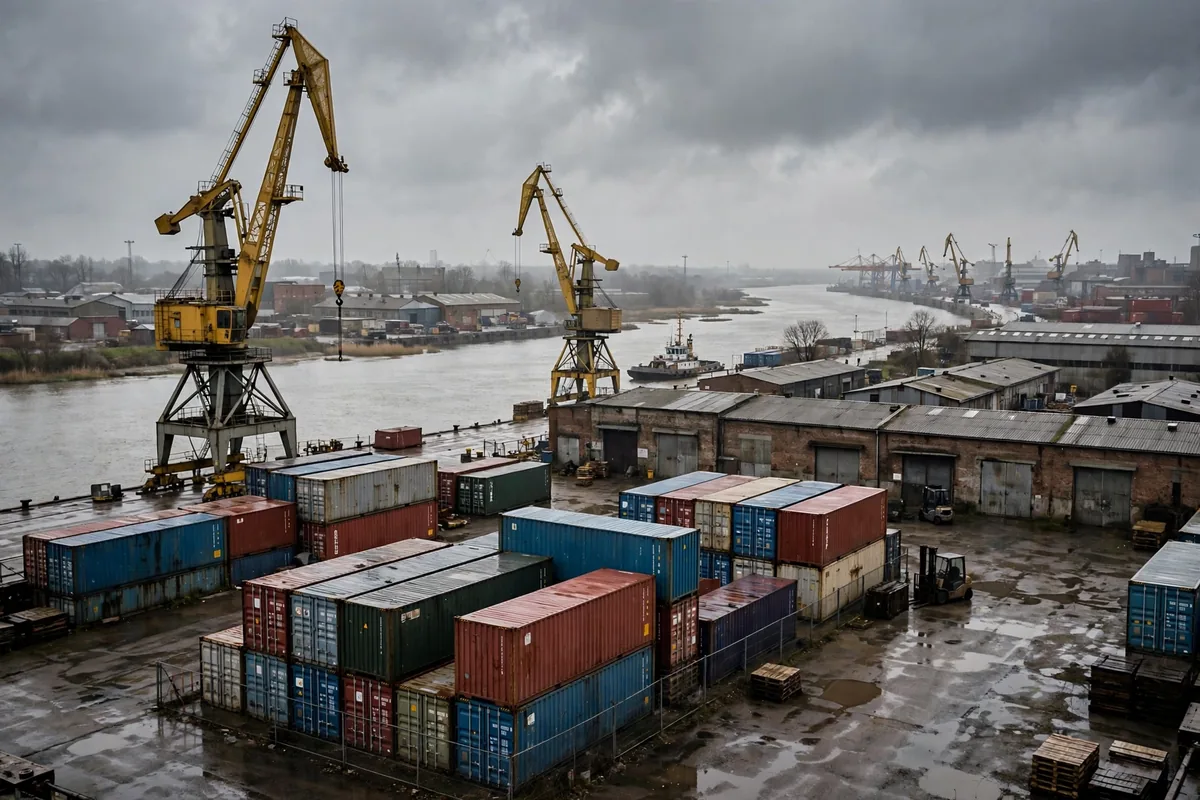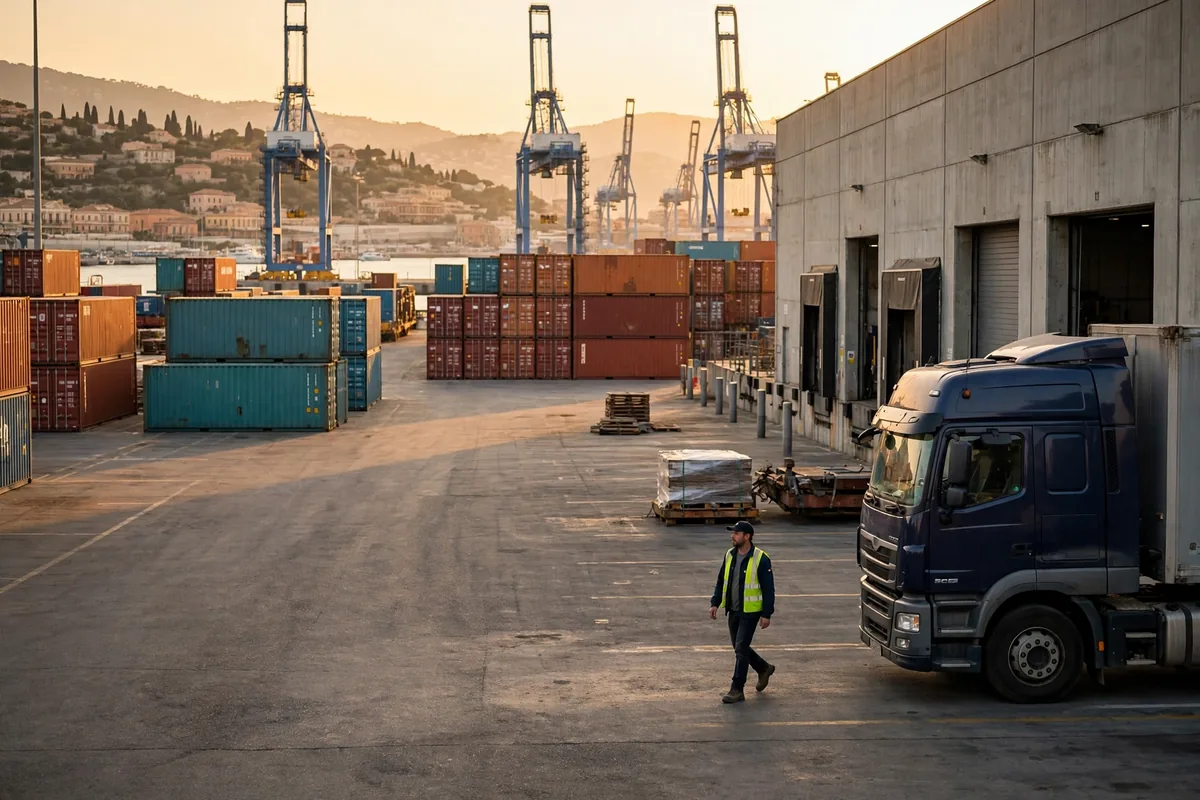
Let me tell you how a driver judges a warehouse. Shippers look at systems. Warehouse managers look at square metres. After fifteen years on the road, I look at one thing only: how long they keep me waiting. Picture an illustrative example. Early morning near the port, light barely up, and a line of trucks already sitting at the gate. Engines off. Drivers asleep in the cab, or out on the tarmac smoking and swearing. My load that day was not urgent. The second job behind it was — and the two hours burned at that gate were two hours the second job never got back. That is where marseille france warehouse logistics really starts: not with a grand network plan, but with the queue at the gate.
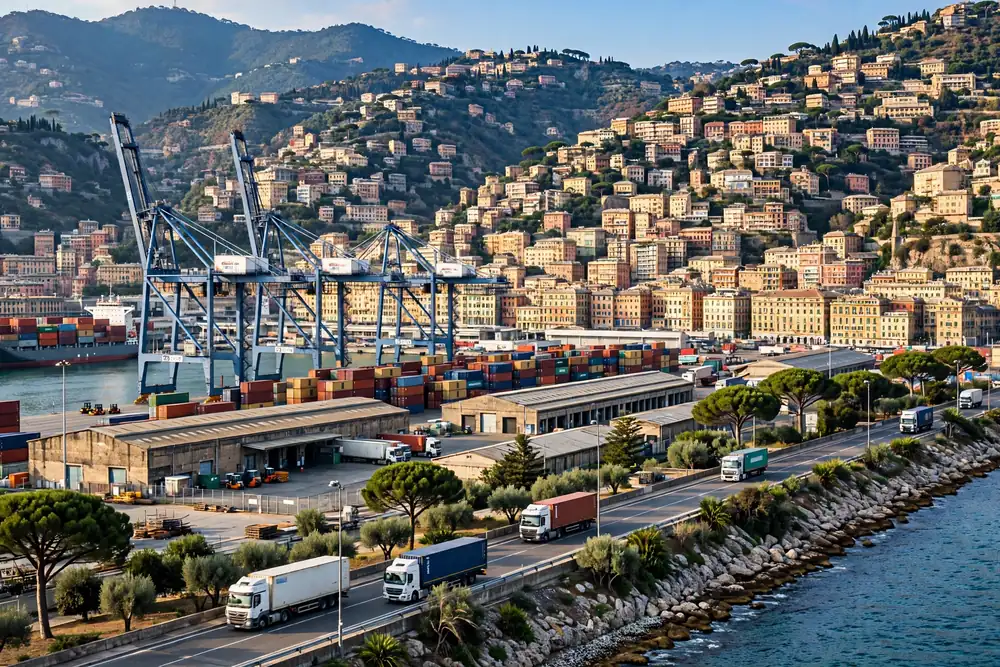
Marseille and the Fos port area are not flat inland country. Old port, newer terminals, old city streets, all packed together. A queue at the port gate, a warehouse that treats appointment times loosely, and tight delivery windows in the old town — put those three together and they decide how many turns a driver can make in a day. And once the number of turns is fixed, the freight cost, the delivery time and the shipper's temper are all fixed with it. What follows is road logic. For current charges, access rules and port arrangements, always check the latest official and market information. Any numbers I use are an illustrative example, there to make the point clear.
Marseille france warehouse logistics starts at the gate: a queue and an appointment are not the same thing
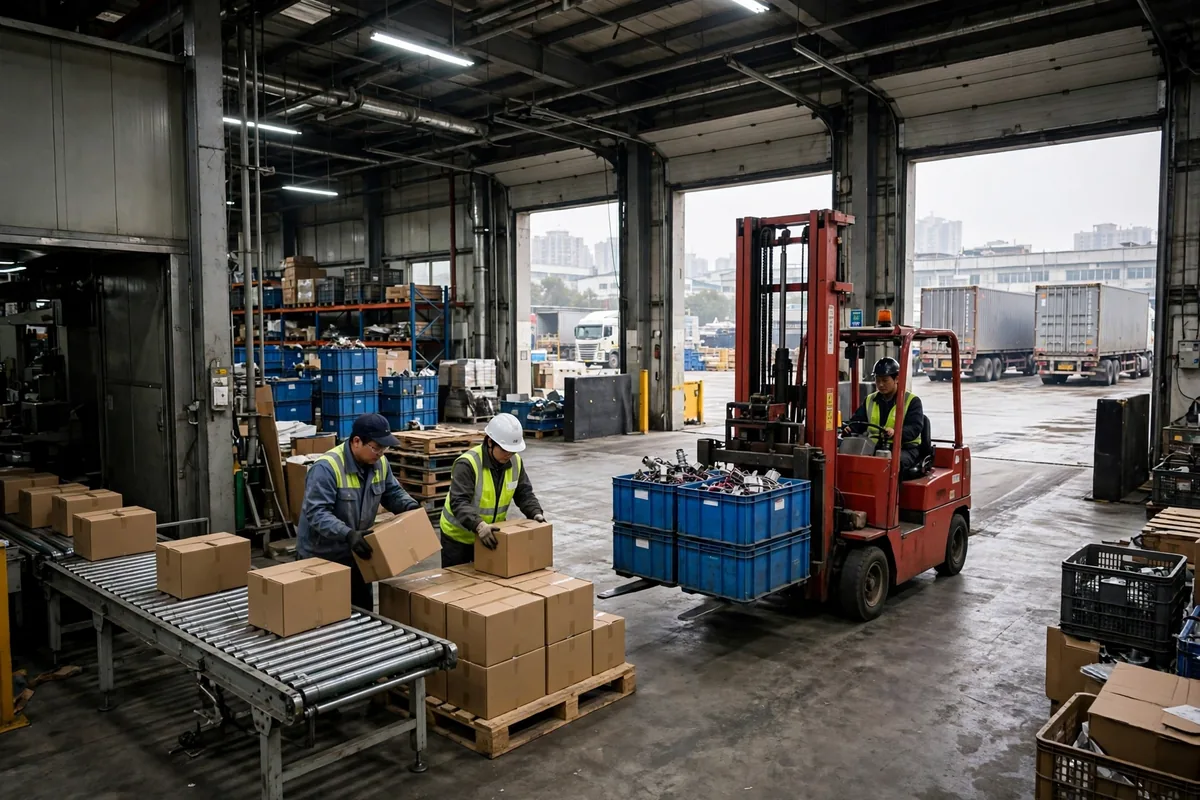
Here is another illustrative example. I once took a container to a warehouse near the port with a ten o'clock appointment. I arrived at twenty to ten and found seven or eight trucks already waiting. Inside, the story came out. Two trucks booked for nine had not shown up and their loads were not ready, but the dock sat empty rather than letting the next truck in. Another truck had a paperwork mismatch and was sitting on the dock making phone calls. By the time my turn came it was nearly noon. Unloading itself took about forty minutes. I had waited three times as long as I worked. The second short haul I had planned for that afternoon was gone.
What does that prove? Half the queue at a port gate is the port itself — too many trucks, nothing you can do except arrive early and have your papers ready. The other half is the warehouse's own appointment discipline, and that half is man-made. An appointment time means nothing if the load is not picked, the dock is not cleared and the documents are not checked before the truck arrives. The driver ends up paying, in his own hours, for the warehouse's disorder. In fifteen years I have seen two kinds of warehouse. In the first, the appointment is the appointment: truck, papers and freight all ready, straight onto the dock. In the second, the appointment is a rough suggestion and we sort it out when you get here. Drivers fight to work for the first kind. In peak season the second kind cannot get trucks at any price, because drivers vote with their wheels and they vote fast.
So my advice to warehouses is one sentence: treat an appointment like a contract. If you book a truck in at ten, have the dock and the freight ready at ten, and flag paperwork problems the day before, not with the truck sitting on your dock. And my advice to shippers is also one sentence: when you choose a warehouse, do not just ask about rent and location. Ask a driver how long he usually waits there. That number is worth more than anything a salesman tells you.
Marseille france warehouse logistics site choice: count the turns, not the kilometres
Now site choice. Plenty of shippers hear a warehouse might move inland, in the general direction of Aix or Avignon, and shake their heads: further from the port, higher drayage. Let me tell you, that account cannot be done in kilometres. It has to be done in turns per day.
Take an illustrative example with simplified numbers. A port-side warehouse is close, say a two-hour round turn, but gate queues and city congestion mean a driver reliably makes two turns a day and often misses the third before closing. An inland warehouse adds, say, an hour on the road each way, but entry is smooth and appointments hold, so the same driver reliably makes three turns. Side by side, the inland site looks dearer per trip and delivers one whole extra turn per day. With volume, that extra turn is extra capacity. With low volume, the port-side site wins again because it is close and reacts fast. Neither location is simply better. Each suits a different freight profile. And here is the part people miss: the closest warehouse to the port is not always the fastest warehouse. A long queue at its gate can eat the whole distance advantage.
City delivery works the same way. The old town has narrow streets, one-way systems and few unloading points, so a big truck has to hit a time window or spend the day circling and waiting. An illustrative example: a delivery with two kilometres left on the satnav, blocked for over ten minutes by a badly parked car on a narrow street, then caught in school-run traffic, arriving after the booked window had closed and pushed to the next day. That second day's trip was pure loss — fuel and labour spent to deliver the same freight twice. Old-city delivery is not about driving skill. It is about homework done in advance: which streets a truck can use, at what hours, where the unloading point is, where to wait. A warehouse or shipper who hands the driver that information in advance does more good than ten phone calls chasing him on the road.
| Illustrative example | Port-side warehouse | Inland warehouse (toward Aix/Avignon in general) |
|---|---|---|
| One-way to port | Short | Longer, about an extra hour |
| Gate and congestion waiting | Long and unpredictable | Shorter and steadier |
| Turns per day | 2 solid, 3rd is luck | 3 solid |
| Best suited to | Small volume, fast in and out, tight vessel cut-offs | Larger volume, steady turns, distribution work |
That table is an illustrative example, not measured data. Before you sign, let a driver run the site for a day and write down the turns and the waiting. Then talk about everything else.
Cross-dock for Mediterranean flows: the freight never sits, so the timing cannot slip
Marseille faces the Mediterranean, and a good deal of freight for North Africa and the wider Mediterranean moves through here in general terms. Much of it should not sit in storage at all. It suits cross-dock: one truck unloads, the freight is sorted and relabelled on the dock, and it leaves on another truck. Cross-dock sounds simple and depends entirely on connection. Port timing, warehouse timing, both trucks' appointments, the paperwork handover — if any link slips by half an hour, freight piles up on the dock and drivers pile up in the yard.
A good cross-dock warehouse never looks rushed, because the day was planned by the hour before it started: which truck arrives first, which leaves first, which dock door holds what, who signs the handover. The driver arrives and follows the sheet. A bad one runs on shouting. Whoever gets shouted at gets served, and the rest of us drive in circles looking for somebody in charge. If you ship this kind of transit freight, choose on one test: does the warehouse have a connection plan written down to the hour? Without it, cross-dock is a gamble. With it, freight that never touches a rack still moves on time.
One more plain word: drivers and warehouses are not enemies. Half an hour less waiting is a dock freed earlier and a delivery note sooner — everybody gains. Write the waiting time down daily and pin it on the dispatch wall; within weeks you will see which hours jam and which paperwork fails most.
Fifteen years teaches an old lesson: walls and racking are dead things, time is alive. Look after the driver's time and your freight moves. Treat his waiting as free, and in the end your own customers do the waiting — and then the leaving. Marseille france warehouse logistics, in the end, is about running a chain of times that must join up: gate time, dock time, road time. Get them to meet, and the freight truly moves.
By Shifu Zhao, Trucking Veteran (15 yrs)