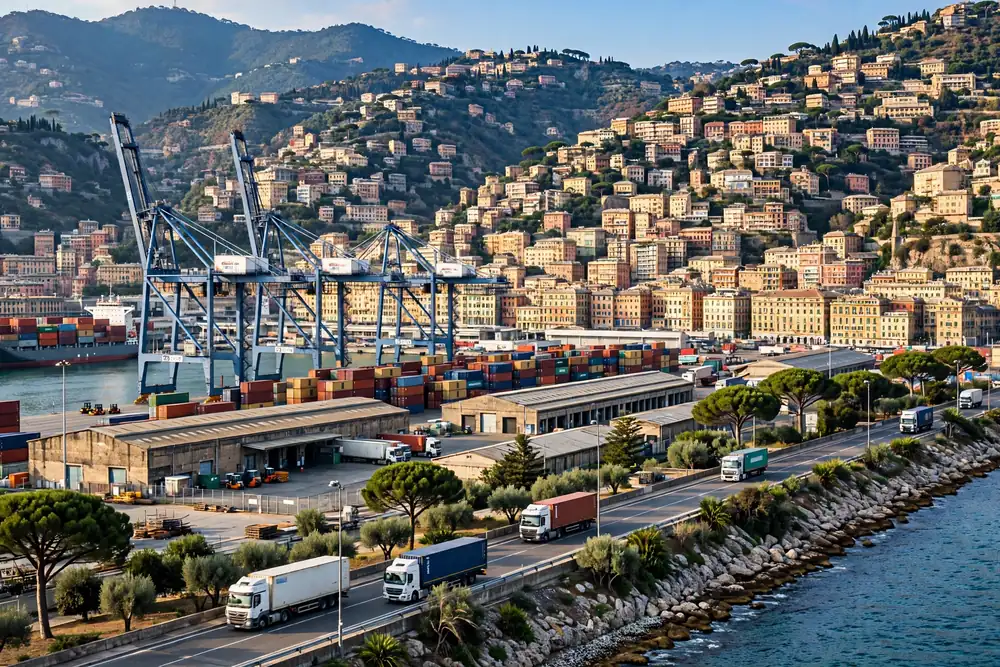
Let me start with the verdict on genoa italy warehouse logistics: warehousing in Genoa is expensive because of the ground it stands on, not because landlords are greedy. The city is squeezed between the sea and the mountains, flat land for warehouses is scarce, and every extra euro you pay for port-side space buys you a shorter climb and one less traffic jam through town. I have watched too many operators compare rent per square meter, push everything to a cheaper inland site, and then hand the savings straight back in driving time and emergency transfers. genoa italy warehouse logistics comes down to one question: does your freight belong next to the port, or should it move inland?
I first worked through the Genoa numbers properly with a client trading olive oil and pasta, imported lines alongside domestic distribution. In his illustrative case, he was shown a modest warehouse near the port at a rent clearly above inland options, and his first reaction was to shake his head: the same money bought half again as much space inland. I told him to hold on and count his truck movements first. His orders were frequent, small, and scattered along the Ligurian coast. Sending trucks back and forth from an inland base every day would have burned driver hours and schedule certainty, and that, not the rent line, was his real cost. Cheap space has a habit of collecting its money somewhere else.
Every option here has two sides. A port-side warehouse needs little selling: it sits close to the berths, freight moves in fast after discharge, problems get answered quickly, and coastal delivery runs stay short. The price is equally obvious: tight space, high rent, and almost no room to expand when peak season arrives and you suddenly need more floor. An inland warehouse reverses the trade. Land is plentiful, rent is friendlier, and you can store and sort at scale, but every port-related movement starts with a road calculation. So do not ask which warehouse is better. Ask which freight you actually have.
Genoa warehouse costs: reading the Italy port-city terrain
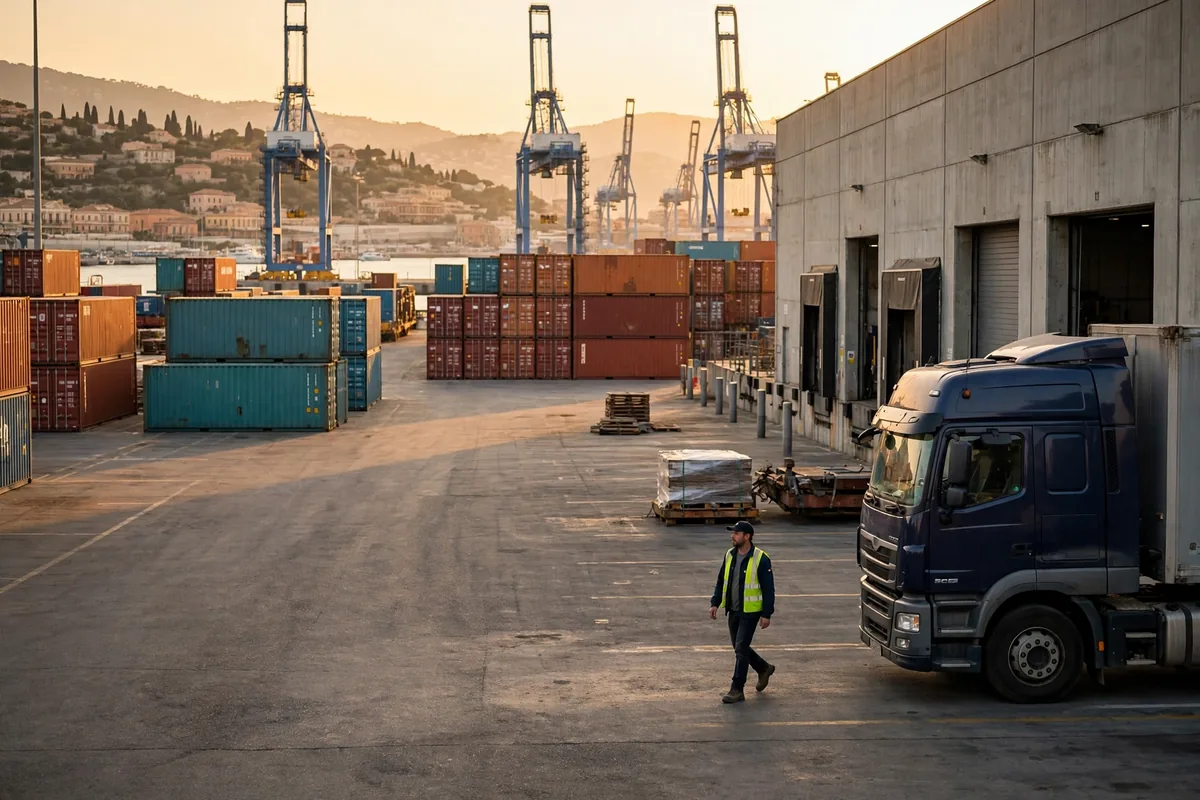
Genoa is not a flatland port. It grew pressed against the hills, with the port and the city competing for the same narrow strip. Trucks have only a handful of workable routes in and out, and in tourist season, on event days, or when a motorway junction clogs, the same trip can take dramatically longer than planned. Choosing space here means judging more than the building. You judge how many reliable trips a day a truck can make between the warehouse door, the terminal, and your customers.
A stone and tile distributor I worked with hit the opposite trap. His freight was heavy, bulky, and in no hurry, and his customers allowed generous delivery windows. Chasing proximity, he parked the bulk of his inventory in port-side space and paid premium rent month after month for stock that barely moved. We shifted the bulk inland and left only working stock near the port. When he ran his own numbers, his comment was simple: the rent he had been paying would have covered a lot of transfer trips. Heavy, slow freight stored at the port pays top price for speed it never uses. That is my counterintuitive rule for this city: for slow-moving goods, the warehouse closest to the port is often the worst choice on the table. The speed premium goes to thin air.
Consider the opposite profile. A chilled food distributor lives on timing and an unbroken temperature handoff, selling into wholesale markets and coastal supermarkets clustered around the city. For freight like that, I argue the other way: pay for port-side or at least city-side space. What he sells is certainty. One late arrival does not cost him a freight bill, it costs him shelf position. The same expensive rent is insurance for fast freight and waste for slow freight. The only difference is how quickly your stock turns.
Italy warehouse overflow: what Piedmont and Lombardy logistics coverage buys you
Pushing inland usually means overflow space in the direction of Piedmont and Lombardy. The logic is plain: more land, more warehouses, friendlier rents, and natural coverage of the Turin and Milan hinterland, where much of the industrial and consumer demand sits. If most of your customers are inland, freight entering through Genoa often flows better by clearing, shuttling to an inland base, and distributing from there than by sitting in the port city and being pushed north load by load. Plenty of machinery parts and home goods importers work exactly this way: the port handles clearance and a short shuttle, the inventory body lives inland, and coastal orders get topped up in small batches.
Inland space is not free money, though. First, a longer coverage radius means slower reactions to urgent orders, and when a coastal customer is chasing you, there is nothing to do but wait. Second, splitting stock across two sites adds a management layer: one inventory view, clear transfer rules, and a fixed answer to which site ships first, all agreed before sales starts promising and warehouses start arguing. Third, the in-and-out-of-town road account has to be priced trip by trip. In the worst congestion months, shuttle time between an inland site and the port swings far more than most plans assume.
Here is the decision frame I actually use. Three questions settle most cases:
| Factor | Keep it at the port | Push it inland |
|---|---|---|
| Order pattern | Frequent, small, urgent orders | Infrequent, large, planned orders |
| Customer base | Ligurian coast and local market | Piedmont and Lombardy hinterland |
| Freight profile | Time-sensitive, lateness loses orders | Heavy, bulky, slow-turning, storable |
| Space needs | Short-term flow, no expansion needed | Storage, sorting, room to grow |
| Main cost | High rent, tight space | Shuttle variability, two-site management |
An illustrative comparison: the same home goods stock, held entirely at the port, pays premium rent but delivers short coastal runs and same-day answers to urgent orders. Held mainly inland, it saves a clear slice of rent and pays it back in scheduled shuttles each week, plus time buffer in congested months. Neither plan is right in general. Each is right for a particular order structure. All fees follow the latest warehouse and carrier quotations; my job here is to make the structure visible, and you will get further taking this frame to market than listening to anyone quote a number from memory.
People who think genoa italy warehouse logistics through tend to land on the same sentence: port space buys time, inland space buys room, and you pay for whichever one your freight is short of. Want both, and you split the stock, fast lines at the port and slow lines inland, which is where most experienced operators end up.
The logistics leakage: where inland savings quietly go
One last account, the one most often missed. The rent an inland warehouse saves tends to leak back out in three places. First, shuttle transport: trips multiplied by the time buffer you honestly need is real money. Second, stretched inventory: stock sitting on the road and split between two sites turns more slowly, and every extra day of cover carries a financing cost. Third, a bigger management surface: reconciliation, transfers, and cycle counts across sites need people and a single system view to stay honest. Leave those three lines out of the comparison and inland space will always look cheaper than it is.
Price the port side honestly too. Its premium also buys what never shows on a rent table: not hunting for spot shuttle capacity in peak weeks, and not apologizing to a customer for a late load. genoa italy warehouse logistics was never a one-line rent comparison. Time, flexibility, and risk all belong on the table.
So the next time someone tells you Genoa space is too expensive and everything should move inland, ask them three questions back. How many days does my freight sit before it moves? Where exactly are my customers? And in the worst traffic month of the year, can my orders afford to wait? Answer those, and the port-versus-inland call makes itself. Get the warehouse decision wrong, and every saving you chase afterward is just patching the first mistake. Tell me that is not how it usually goes.
By Lao Mi, Supply Chain Veteran (20 yrs)