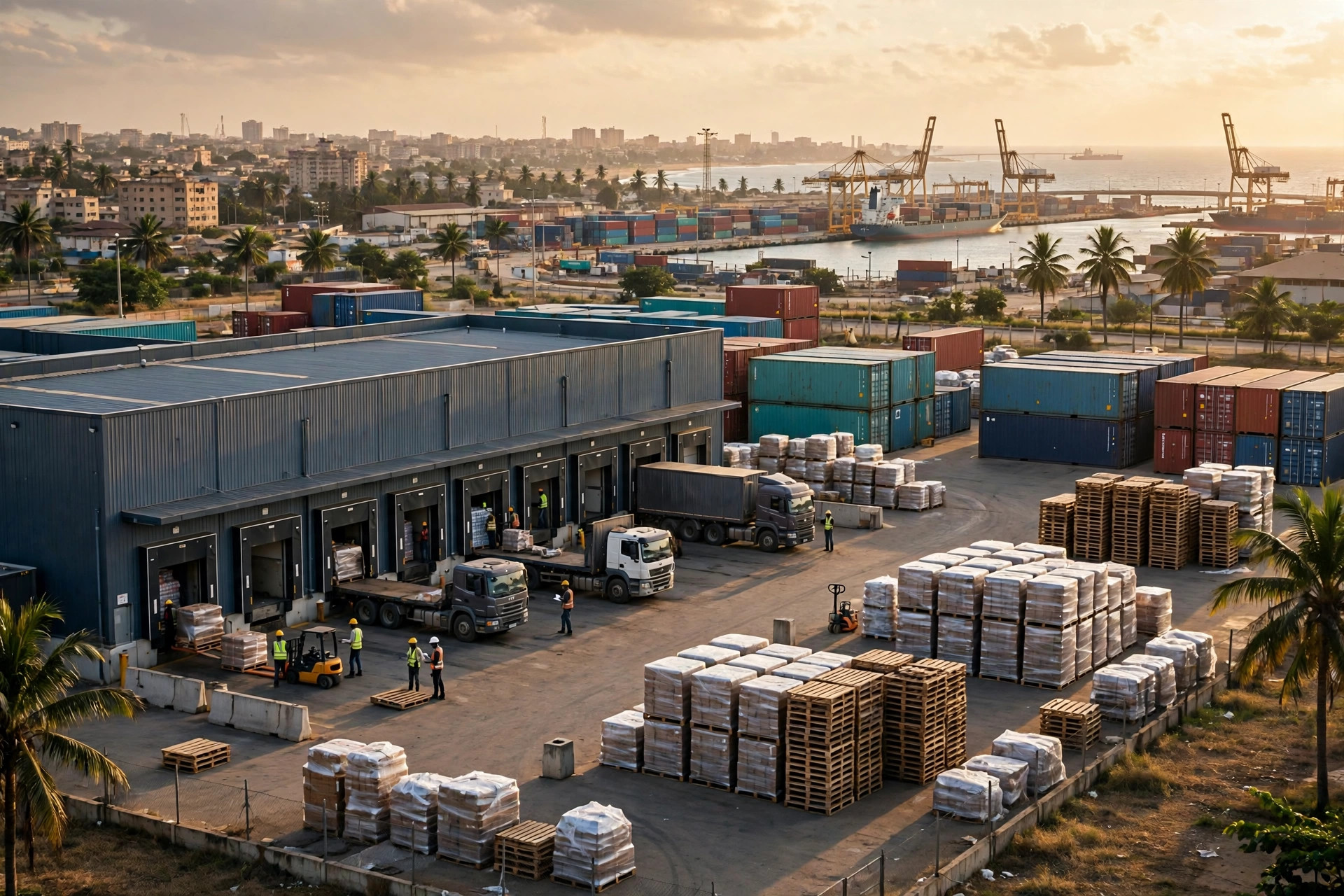
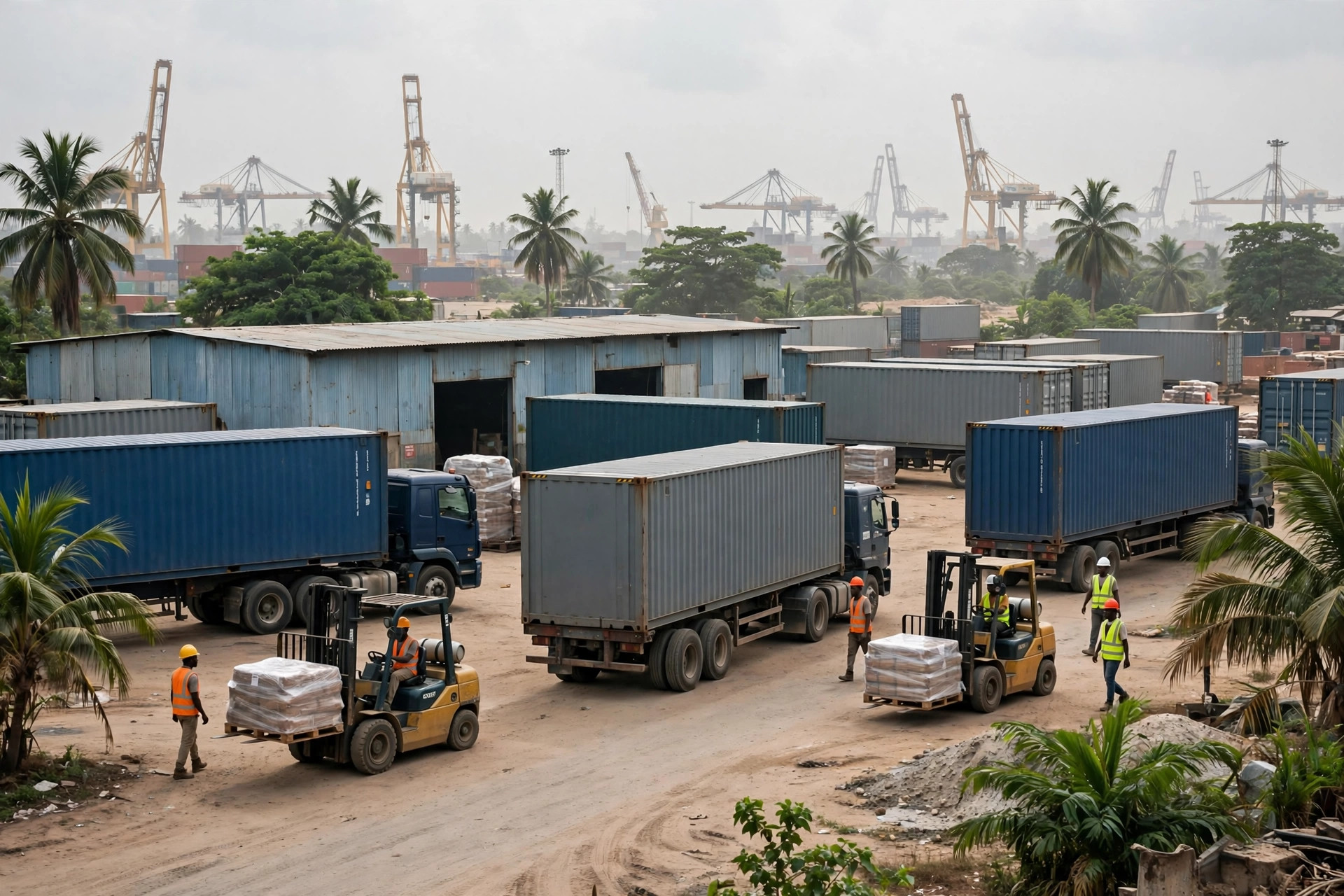
We have a client in nigeria cocoa export warehouse storage who has been exporting cocoa for years, buying up beans across southwestern Nigeria and shipping them out through Lagos Port. He did not call me to negotiate rates. He called to complain. A full container had arrived at destination, and the buyer’s re-inspection flagged under-fermented beans and excess mouldy beans. The whole container was held up while a claim was argued. On the phone he kept saying the beans had looked perfectly fine at origin. I asked him one question: do you have the fermentation box records for those days? There was a long silence on the other end.
That is what nigeria cocoa export warehouse storage really looks like in practice. Bean quality is not decided on loading day. It is built up step by step — intake inspection, fermentation, drying, grading — and a warehouse that only stacks bags without managing the process will eventually meet its match at the Lagos export terminal, where inspectors check moisture, bean count, and degree of fermentation without sentiment. Buyers can be perfectly polite in a contract and utterly unforgiving at inspection.
The Real Nigeria Cocoa Export Warehouse Storage Bill
Let us get the bill straight first. The warehousing bill for export cocoa is never just rent. It has at least four lines: the labour and time of intake inspection, the space and cycle time taken by fermentation and drying, the cost of grading, re-inspection, and fumigation, and the cost of rework if a lot fails before loading. Too many warehouse quotes show only the rent and bury the rest under "settled as actually incurred." The client signs thinking it is cheap, and discovers the hidden lines only at settlement.
Our client learned this the hard way. His beans came from several buying points, each managing its own fermentation boxes — some turned diligently, others left untouched for days. By the time the beans reached the central warehouse they looked similar on the outside, but their fermentation levels were all over the place. The warehouse, trying to save effort, had not kept batch samples or separate fermentation records, and once the lots were mixed, nobody could tell which batch was the problem. At Lagos, the terminal inspection caught it, and the problem batch held up the entire container.
My advice has always been blunt: do not negotiate a contract on price per tonne alone. Negotiate batch control. What gets inspected on intake day, how long samples are kept, who turns the fermentation boxes, what standard counts as properly dried — put all of it in writing. It is far cheaper than arguing after a failed inspection. And here is something warehouses will rarely say out loud: what they fear most is not a demanding buyer, but a buyer whose standards are never written down, changing from one shipment to the next.
What a Nigeria Cocoa Warehouse Is Actually Doing During Fermentation
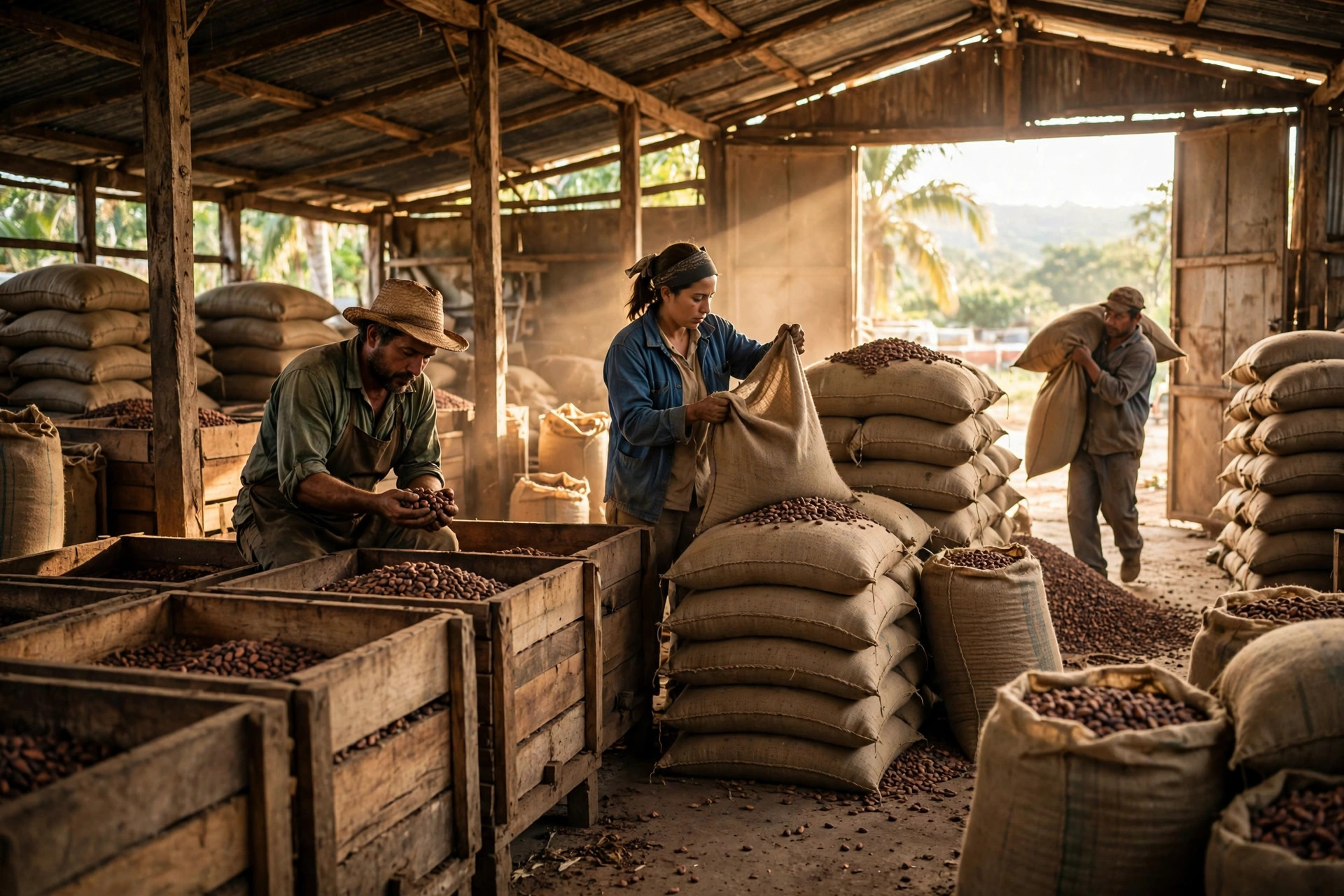
Fermentation is the stage where shortcuts cost the most. Beans go into the boxes with their pulp, and microbial activity raises the temperature and transforms them. The process typically takes 5–7 days. Too short, and the beans stay astringent and under-fermented. Too long, and off-flavours creep in. Each day the warehouse crew should be measuring temperature, turning the boxes, and watching colour and smell, pulling any abnormal batch aside instead of mixing it with good beans.
A cooperative warehouse in Ogun State does this well, and it is worth copying. Every fermentation box has a number, and a board hangs on each box noting the intake date, the bean source, and the turning times. Workers turn the boxes daily, record the temperature as it rises, and that board becomes the batch’s medical record. When a buyer comes to inspect, one look at the boards tells the whole story — far more convincing than any verbal assurance. The extra labour pays for itself at the negotiating table.
Drying follows fermentation. Beans need to reach a moisture content of 6–8% before they are fit for storage and export. Above that range, mould risk climbs during ocean transit. Below it, beans turn brittle, breakage rises, and buyers deduct for that too. Here is the counterintuitive point many newcomers miss: drier is not automatically safer. Treating moisture as a "lower is better" number is a classic warehouse mistake. The safe zone has both a floor and a ceiling, and holding the range matters more than chasing an extreme figure.
| Stage | What the warehouse must do | What the buyer checks | What goes wrong if it is vague |
|---|---|---|---|
| Intake inspection | Inspect by batch, keep samples, stack separately | Bean origin, impurities, mouldy beans | Mixed lots make liability impossible to assign |
| Fermentation | 5–7 days, regular turning and temperature checks | Degree of fermentation, smell, colour | Under-fermentation downgrades the lot |
| Drying and grading | Dry to 6–8% moisture, then grade | Moisture, bean count, breakage | Excess moisture means mould at sea |
| Fumigation and loading | Fumigate to standard, re-inspect, then load | Pests, residue compliance, container condition | Rework before loading misses the vessel |
Guarding Against Mould Before Lagos Port
Getting the beans dry does not mean mould has given up. Nigeria’s climate is hot and humid, and mould prevention is a long game. Jute bags go onto pallets, kept away from walls, with ventilation and dry floors. It all sounds like common sense, yet I have walked into warehouses where bags were stacked flush against the wall to the ceiling, and condensation on the wall quietly dampened the inner bags. By the time pre-loading inspection caught it, the rework cost far more than leaving ventilation gaps would have.
Another client’s story is worth remembering. His central warehouse re-inspection passed everything, but sampling at the Lagos export terminal found a few bags with high moisture. The investigation traced it to a short transfer leg in the rainy season: a poorly sealed truck let rain reach a few bags, and those bags raised the sampling risk for the whole container. Warehouse and transporter blamed each other, and the contract, unfortunately, said nothing about who owned moisture damage in transit. Both sides eventually compromised, but the sailing was already lost. The lesson is simple: a warehousing contract should run all the way to loading on board, with transfer, temporary storage, and pre-port inspection responsibilities drawn clearly at signing, not left to "we will sort it out later."
Fumigation follows the same logic. It must be done to standard, with records kept, and the aeration time respected before loading — a residue finding at destination creates a far bigger problem than a delayed container. Pest control is not one spray; it runs from intake through storage to loading, with clean floors, intact bags, and pallets off the ground keeping pest pressure down at every step.
What to Negotiate in Nigeria Cocoa Export Warehouse Storage
By now the negotiation checklist practically writes itself. Before haggling over rent, settle these points: how batches are numbered, whether fermentation and drying records are shared, whose re-inspection standard governs, who pays for rework and demurrage when re-inspection fails, and who owns transfer and pre-port storage risk. Get those clear, and slightly higher rent is actually the cheaper deal — because rework and claims are where the real money goes.
And one honest word from the warehouse side of the table: the buyer warehouses fear is not the strict one. It is the one whose acceptance standard lives in conversation rather than in the contract. Put the standard in writing, and the warehouse knows what to aim at; execution gets smoother, not harder. Everyone’s idea of "industry practice" turns out to be different the moment something goes wrong.
Strip it down, and the business is one sentence: cocoa quality is grown in the fermentation box and on the drying bed, not talked into existence at the negotiating table. A warehouse that manages the process gets smooth inspections; one that does not will find that no sales pitch rescues a container of mouldy beans. When you reckon up nigeria cocoa export warehouse storage, you are not really pricing rent — you are pricing process control.
Next time you negotiate a contract, ask these three questions: can I see this lot’s fermentation records? Who re-inspects drying to 6–8% moisture, and to what standard? If re-inspection fails, who pays for rework and a missed sailing? Three questions, and you will know quickly whether the other side truly understands cocoa warehousing.
By Susan, 3PL Sales Director