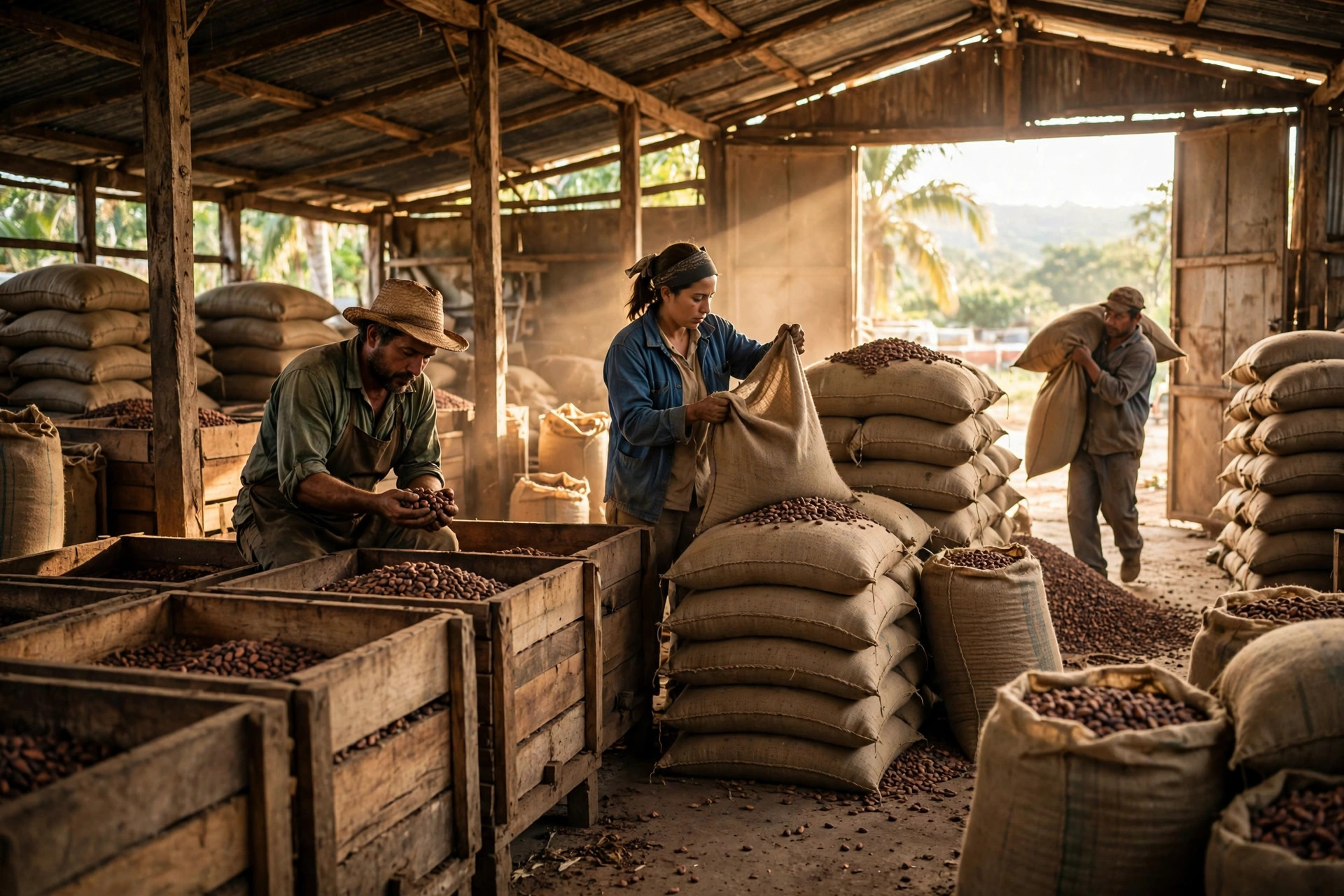
We have a client who buys cacao in the mountains of Antioquia, Colombia, and his story is a useful lesson in Colombia cacao export warehouse storage. Last rainy season he sent a container to Cartagena, confident it would sail without drama. When the warehouse team opened it at the port, a few sacks carried a faint musty smell, and the whole lot was knocked down a grade. He called me in a panic, ready to blame the shipping line. I told him to hold that thought and pull the fermentation and warehouse records first. The records told the real story: the trouble did not start at sea. What Colombia cacao export warehouse storage really rewards is not speed, but patience at the fermentation box and discipline with moisture afterwards. Freight you can see on a quote. Downgrades and mould show up later, when the bill is already yours.
That client is not unusual. I have watched more than one exporter lose money on the quiet parts of the chain, not the loud ones. A second client of ours buys from dozens of small farmers scattered across a valley. Early on he mixed lots in a single warehouse bay to save space and never separated them by fermentation date. A buyer sampled the shipment, found the flavour uneven, and asked for the whole lot to be re-sorted. The sorting labour and the lost week cost him far more than the space he thought he had saved. He told me later that the episode taught him more than any training course: cacao is not rice. You cannot mix it, and you cannot rush it.
The Fermentation Box Decides Your Colombia Cacao Export Warehouse Storage Bill
Most people start a warehouse conversation by asking about rent. That is the wrong first question. If fermentation is cut short, no warehouse, however good, can rescue the beans. The beans need turning, steady warmth, and their full days in the box. Shave a day off to meet a sailing date and you have planted a mould problem that will only announce itself at the port.
So I insist on one boring habit: the fermentation record must travel with the beans into storage. Which lot, which day it entered the box, how often it was turned, when it came out — all of it written down, and lots stacked separately in the warehouse, not blended for convenience. When a buyer asks, a clean record is negotiating power. Without one, a single comment about inconsistent quality is enough to push your price down.
There is also the handover nobody photographs: drying patio to warehouse. Beans can dry beautifully in the sun and then get ruined in one rainy truck ride, with a torn sack or a damp trailer floor. Check the weather, check the sack closures, check the truck bed before loading. I have seen a shipment lose its grade over exactly that gap, and the argument afterwards lasted weeks. One careful look at loading would have prevented it.
For exporters buying from many smallholders, I recommend the simplest system that actually gets used: one card per lot, carried with the sacks, noting the fermentation date, the farm source, and the drying days. Fancy software is fine, but it never replaces that card. Buyers love traceable lots, and they will often pay a little more for them.
Moisture Is the Quiet Tax on Colombia Cacao Storage
Cacao fears two things: damp and still air. In Colombia's long rainy seasons, a warehouse with poor ventilation and a floor that sweats will let sacks slowly absorb moisture, and mould follows quietly. By the time you can smell it, the loss is already booked.
The fix is unglamorous routine. Measure moisture at intake, spot-check during storage, and measure again before dispatch. Keep sacks off the wall and off the floor, with air channels between stacks. When the weather turns, increase the checking frequency. It sounds fussy, but it costs far less than a downgraded container.
Here is the counter-intuitive part: the most expensive warehouse near the port is not always the safest choice. Clients often rush beans into a port warehouse because it feels close to the ship, then watch them sit through humid weeks waiting for a sailing. Sometimes the smarter move is to hold the beans inland until they are thoroughly dry and stable, then move them to port for a short, sharp turnaround. What you save is not rent. It is the downgrade and the claim you never have to file.
Sacks and pallets deserve the same attention. A torn or reused sack can spoil a whole pallet, so replace damaged ones without sentimentality. Walk the warehouse before the rains: drainage, ventilation, roof leaks. Fixing those in dry weather is cheap. Rescuing mouldy stock in wet weather is not. And if a few sacks do turn, isolate them immediately. Do not blend them in and hope the buyer misses it. Buyers sample better than you think, and one blended sack can cost you the reputation of the whole lot.
Three Warehouse Options, and How to Pick Without Regret
| Option | Best for | Upside | Watch out for |
|---|---|---|---|
| Cooperative warehouse near origin | Small exporters with concentrated supply and few lots | Close to fermentation, easy lot control | Ventilation and damp-proofing vary, needs close supervision in the rainy season |
| Inland consolidation warehouse | Exporters gathering from many farms who need sorting and consolidation | Flexible sorting and stuffing, timing freedom | One more handling step, one more chance for damp and mixing |
| Port warehouse | Exporters with a fixed sailing date who want fast turnaround | Close to the vessel, quick dispatch | Humidity risk while waiting for the vessel, contract terms need careful reading |
There is no universally right answer. The messier your lots, the more you need a warehouse that stacks and ships them separately, with records to match. The less certain your sailing date, the less you want beans parked at the port, waiting.
Next Time You Negotiate, Ask These Three Questions
Do not negotiate a warehouse contract on price alone. A cheap rate with loose terms is not a bargain. My clients now use three questions, and they tell me all three earn their keep.
First, who bears the cost when moisture runs high or mould appears, and can the warehouse show its inspection records to settle the argument? Second, can lots be stacked and shipped separately, and who pays if they get mixed? Third, if the vessel is delayed, how is storage charged, and is there a cap? Get those three answers in writing and most disputes disappear before they start.
One more negotiating tip: settle the claims process before anything goes wrong. How many days to notify, who takes the sample, which lab tests it, who advances the testing cost. It reads like fine print on a quiet day. On a bad day, it is your protection. Clients often tell me that the more detailed the contract, the smoother the relationship, because both sides know where the boundaries sit.
Before dispatch, run this five-point check: are the lot records complete, has moisture been spot-checked, have damaged sacks been replaced, are pallets clear of walls and floors, and does the storage deadline line up with the sailing date? Five yeses, then release. One no, fix it first. Cacao exporting punishes "good enough" more harshly than almost any other cargo I handle. Get Colombia cacao export warehouse storage right — fermentation, moisture, and lot discipline — and your beans will stand up to the inspector's nose and the buyer's tasting table in Cartagena, which is, after all, the whole point.
By Susan, 3PL Sales Director