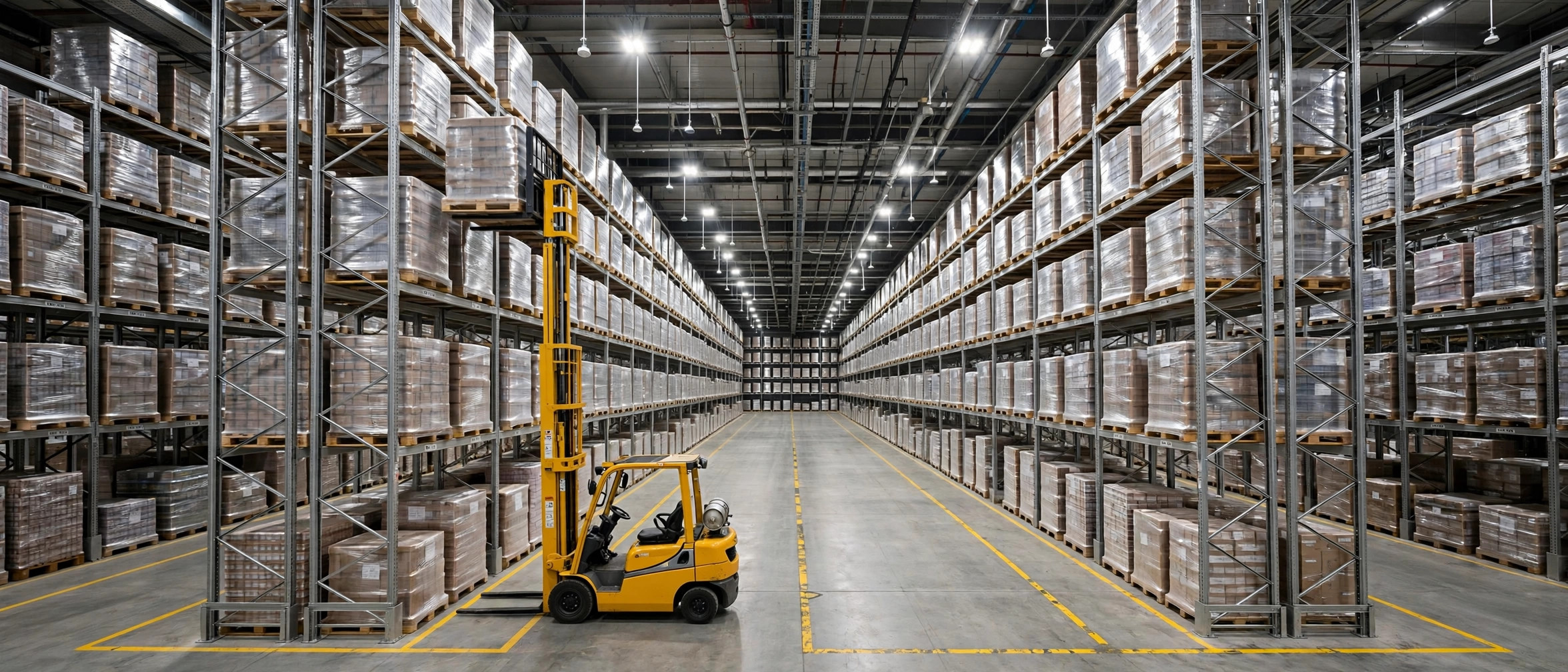
Here's a number I want you to sit with: in a 120,000-square-foot DC I helped open in Riverside back in 2019, pickers were walking almost 2 extra miles per person per day by month three. Not because the layout was bad. Not because the WMS was misconfigured. Because on day one, with forty containers of freight arriving and a forklift driver asking "where does this pallet go," I pointed at the farthest rack and said, "just put it back there for now."
That "for now" lasted six months. Fixing it took a full weekend, two outbound lanes shut down, and close to twenty grand in labor and overtime. I've carried that lesson into every greenfield startup since: a new warehouse is a blank sheet of paper exactly once. Slot the first pallets wrong and you spend the next half-year paying it back, one extra footstep at a time.
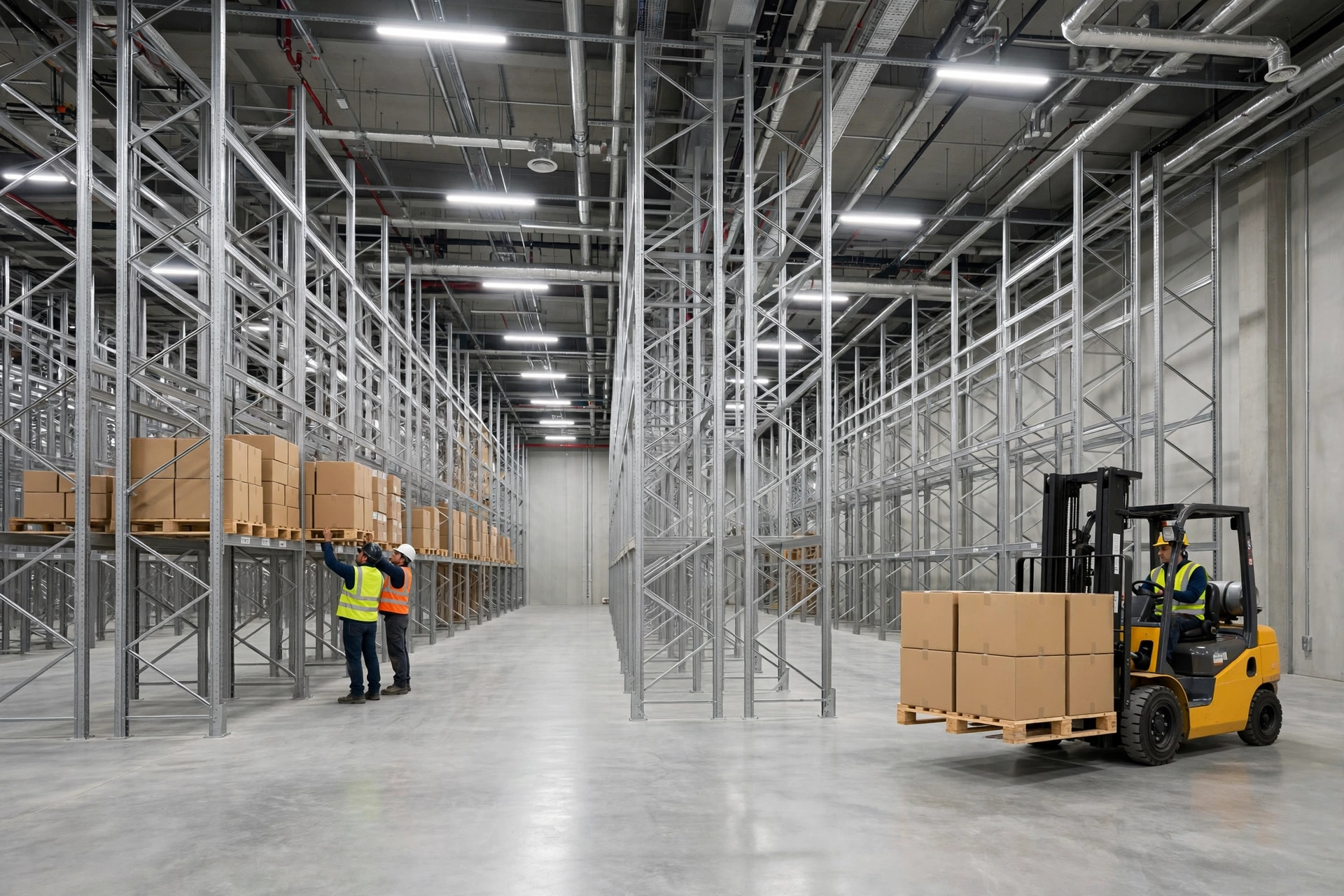
Walk the empty building like it's full
Before a single pallet arrives, walk the empty floor three times — and each time, picture freight moving.
Walk one is receiving: which doors do containers hit, how big is staging, where does the QC table go. Size staging generously. Inbound peaks in week one, and if staging overflows into the aisles, your putaway rate collapses before you've shipped a single order. Walk two is putaway: the shortest forklift path from staging to every aisle. Flag any dead-end aisle where a driver has to back out — mark those slots "use with caution" now, not after someone curses you out from inside one. Walk three is outbound: from pick faces to pack stations to the dock doors. Do the flows cross? Is the returns area far enough from outbound staging?
After the walks, lock the location numbering scheme before freight arrives. Location codes are the building's social security numbers — changing them after go-live is a full-building blood transfusion. I learned this the hard way on a project where we improvised codes at opening; six months later the WMS couldn't map them, and we relabeled 3,000-plus locations over a two-day shutdown. Zone-aisle-bay-level, digit counts, separators: decide it all now, print it, tape it to the office wall. No improvising during week one.

One more low-tech trick that works: before freight arrives, "reserve" the golden-zone slots with empty pallets. It's not waste — it's a signal every forklift driver understands at a glance. These slots are spoken for. When opening week gets chaotic, nobody remembers the slotting plan on paper, but everybody respects a pallet sitting in a slot.
No history? You can still call ABC
The hardest part of a greenfield slot is the absence of shipping history. My approach is "look three places, then hold back."
First, look at the customer's old data. If this building is a relocation or an expansion for an existing client, pull 3–6 months of shipment history from the old site. It's the single best predictor you have. Some clients resist sharing, calling it proprietary — that's when you do the math for them: blind slotting means six months of inflated pick cost, and in a 3PL that bills per order, that cost lands on them. The data usually appears after that conversation.
Second, look at purchase orders and sales forecasts. Promo buy lists for peak season — whatever's at the top is almost certainly your future A-class. But insist on committed purchase quantities, not the sales team's "expected to sell" numbers. Anyone who's worked ops knows how much water is in a forecast.
Third, look at industry common sense. In auto parts, oil filters and brake pads are always high-velocity. In apparel, current-season styles always outrun off-season inventory. Laugh if you want — I've literally seen off-season stock slotted in the golden zone because "this freight is valuable." Value and velocity are different things. Slotting only cares about velocity.
Then the hold-back: in week one, permanently slot only the A and B SKUs you're confident about. Everything uncertain — slow movers and question marks — goes into a "pending zone" of ordinary mid-level rack. Let the first week's real shipping data decide their fate. A half-empty pending zone at opening beats a wrongly committed golden slot every time. Moving a mis-slotted pallet costs double the labor and disrupts outbound while you do it. Uncertainty at opening is normal; the pending zone is where you store it cheaply.
Pro tip: tag every pending-zone location with a yellow label, SKU and receiving date handwritten on it. The yellow is a psychological nudge — it tells everyone "this placement is temporary." On day seven, walk the yellow labels. You won't miss a single one.
An empty golden zone is discipline, not waste
Every warehouse has a golden zone: closest to outbound, waist height, shortest picker travel. The most common opening-week impulse is "empty racks look bad, fill them up" — and slow movers flood the golden zone. The boss tours the building, sees full racks, feels great. The pickers pay for that feeling with their legs for the next six months.
Resist it. Keep at least thirty percent of the golden zone open through week one. Why? Because week one will prove two or three of your calls wrong — the SKU you pegged as C-class lands a big order, the A-class bet moves like molasses. With open golden slots, you adjust same-day. With a full golden zone, you're relocating slow freight first, and a three-day shuffle means three days of extra walking for every picker. That's the price of fill-it-up syndrome.
My cadence: day three, first micro-adjustment — look only at the top 20 SKUs by pick count, move what's wrong, same day, no waiting. Day seven, a real review — re-grade the pending zone against actual data, promote what earned it, demote what didn't. Day thirty, one big re-slot — by then you have a month of data and ABC is largely settled. After that, quarterly reviews are plenty. Stability is itself a form of efficiency; stop churning.
One thing to do before week one ends: export every SKU's pick count from the system, sort it, print it on one sheet of paper. Walk the floor with that sheet. Are any top-20 SKUs too far from outbound? Any A-class freight still napping in the pending zone? That single sheet of paper is the draft of next month's efficiency — and the best evidence you'll ever have that slotting plans are worth real money.