A netherlands tulip bulb export cold chain warehouse is not judged by how cold it can get. It is judged by how steady it stays when the doors open, the grading line speeds up, and a truck arrives late. I have walked through plenty of facilities where the refrigeration plant was excellent and the shipment still went wrong. The damage almost never happened inside the cold room. It happened in the gaps: the grading hall, the staging dock, the four hours a load waited for a container. Bulbs are living material. Think of them as sleeping organisms with a limited energy reserve. Keep them asleep and they wake up on schedule at the destination. Wake them repeatedly and they burn that reserve early, then emerge unevenly, late, or not at all.
First, the Principle: Bulbs Fear Swings, Not Cold
The job of cold storage is not to manufacture cold. It is to lock variation out. Think of it like monitoring a patient: a single reading tells you almost nothing, while the curve across a full day tells you whether the system is stable. A bulb warehouse works the same way. Temperature, humidity, and airflow have to be read together. A facility that shows you only a snapshot of a display panel is not showing you control; it is showing you a photograph.
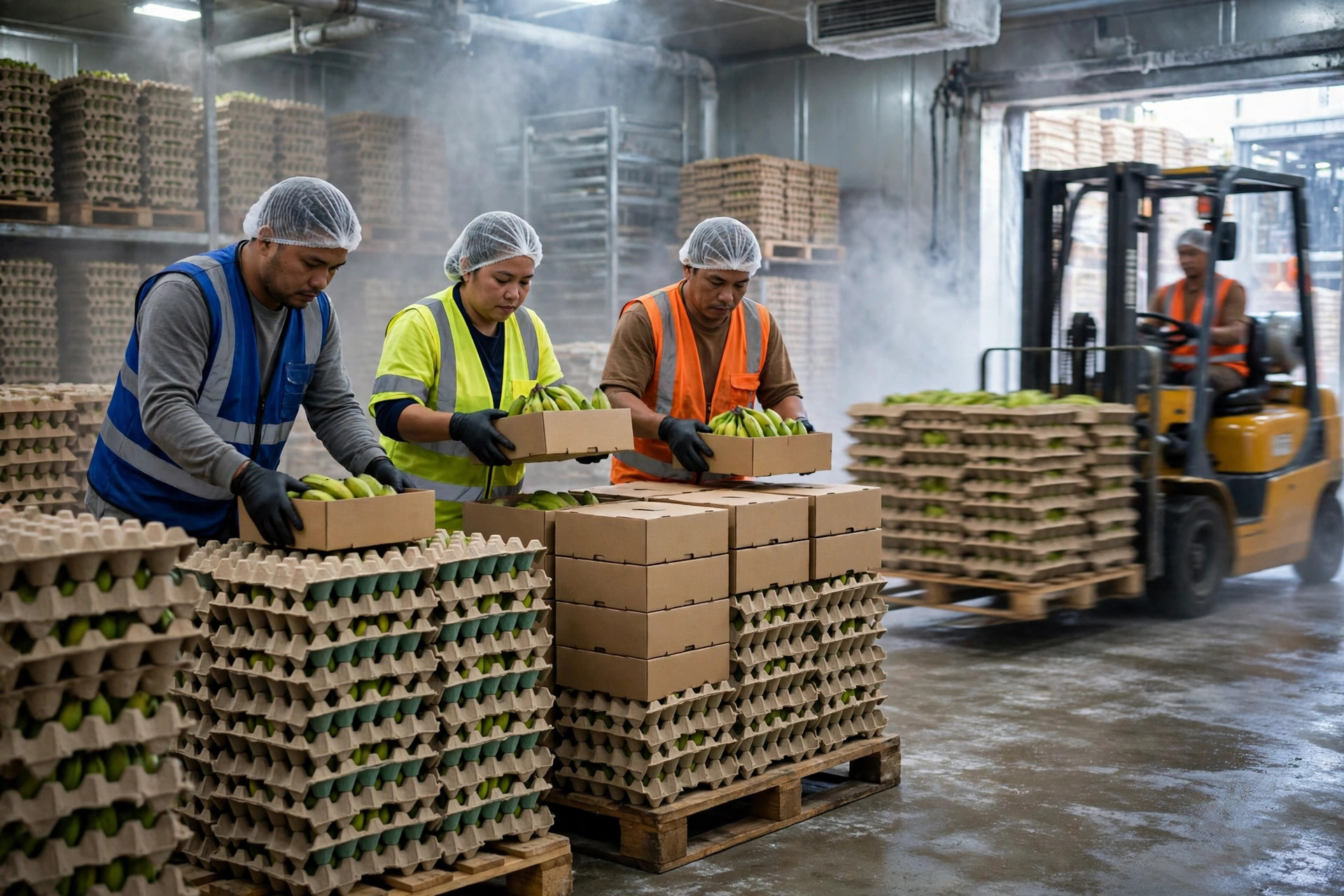
When I audit a site, I ask for continuous logs, hour by hour, covering grading, staging, and loading. Gaps are a finding, not a detail. I also check stacking: bulbs respire and generate heat, so a tightly packed block without ventilation channels runs warmer in the middle than at the edges, even while the room sensor reads perfectly.
Here is the counterintuitive part, and it surprises a lot of buyers: colder is not automatically safer. Push the temperature too low and condensation forms on bulb surfaces, which invites mould. Drop the temperature too fast and the skin and the interior contract at different rates, which can damage the bulb. The craft is steadiness and uniformity, not extremes. Think of it like driving a long distance: flooring the accelerator does not get you there safely, but holding a steady speed does.
How to Choose a Netherlands Tulip Bulb Export Cold Chain Warehouse: Three Dividing Lines
I draw three lines before talking about price. If a facility fails one, a cheaper rate does not rescue the deal.
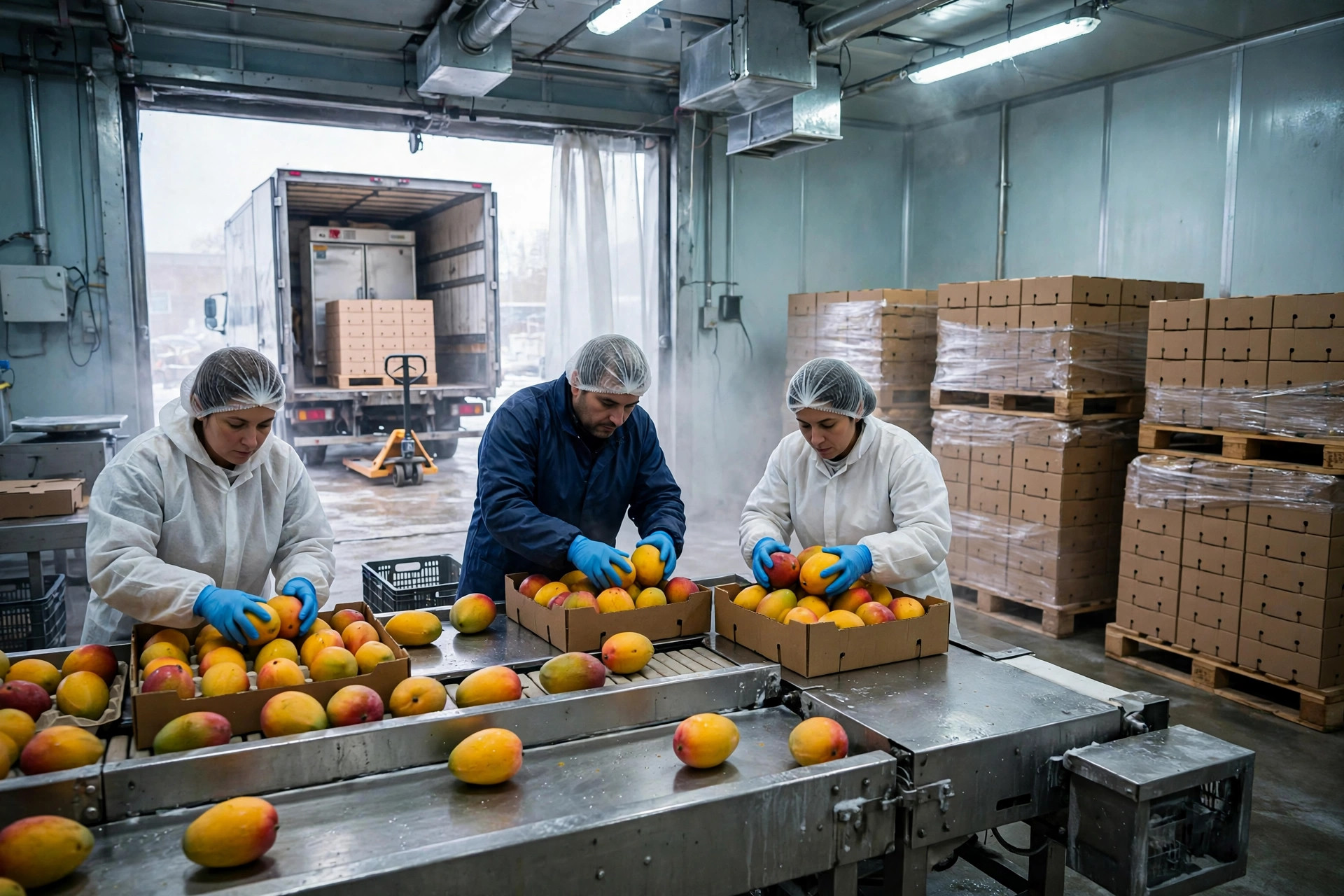
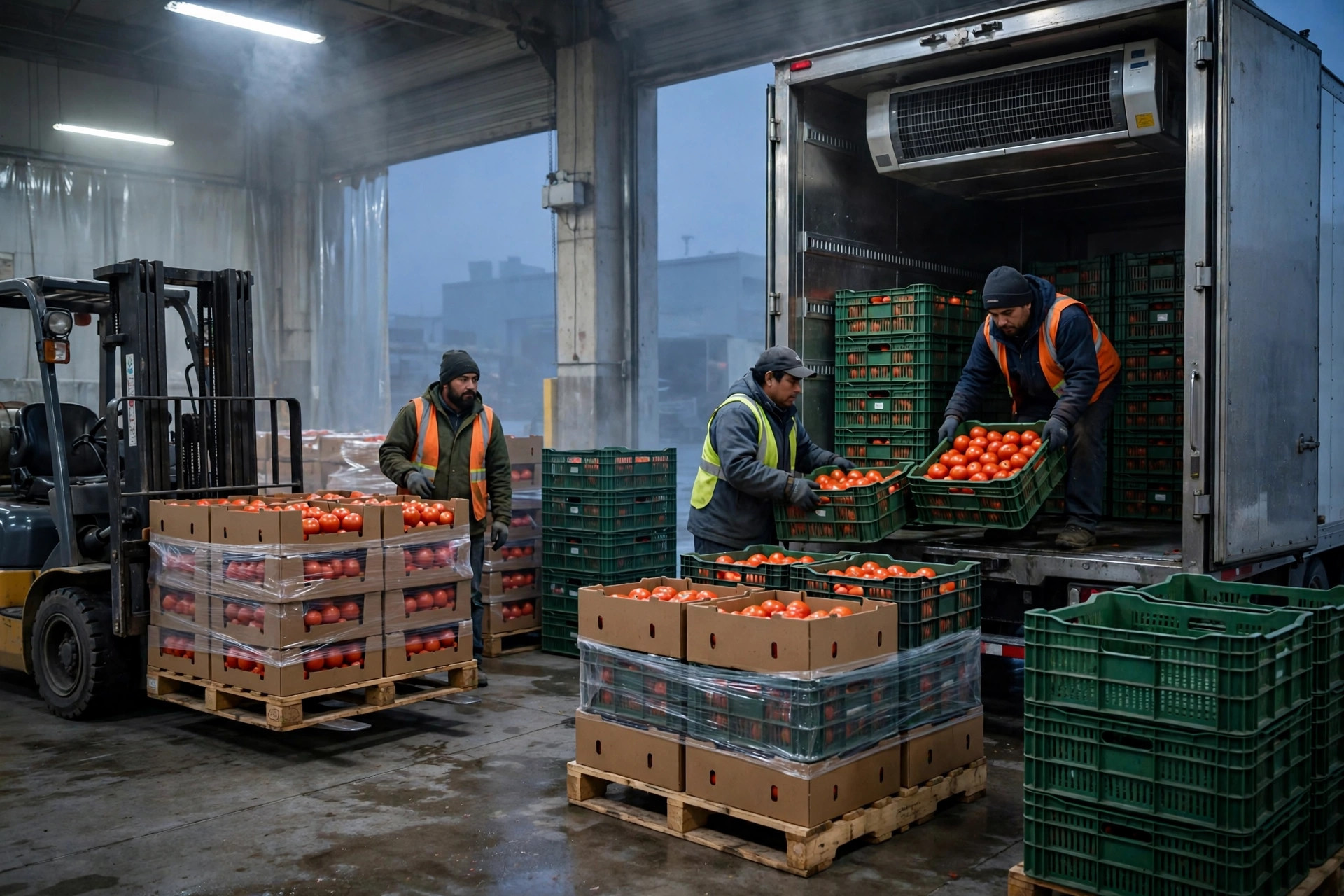
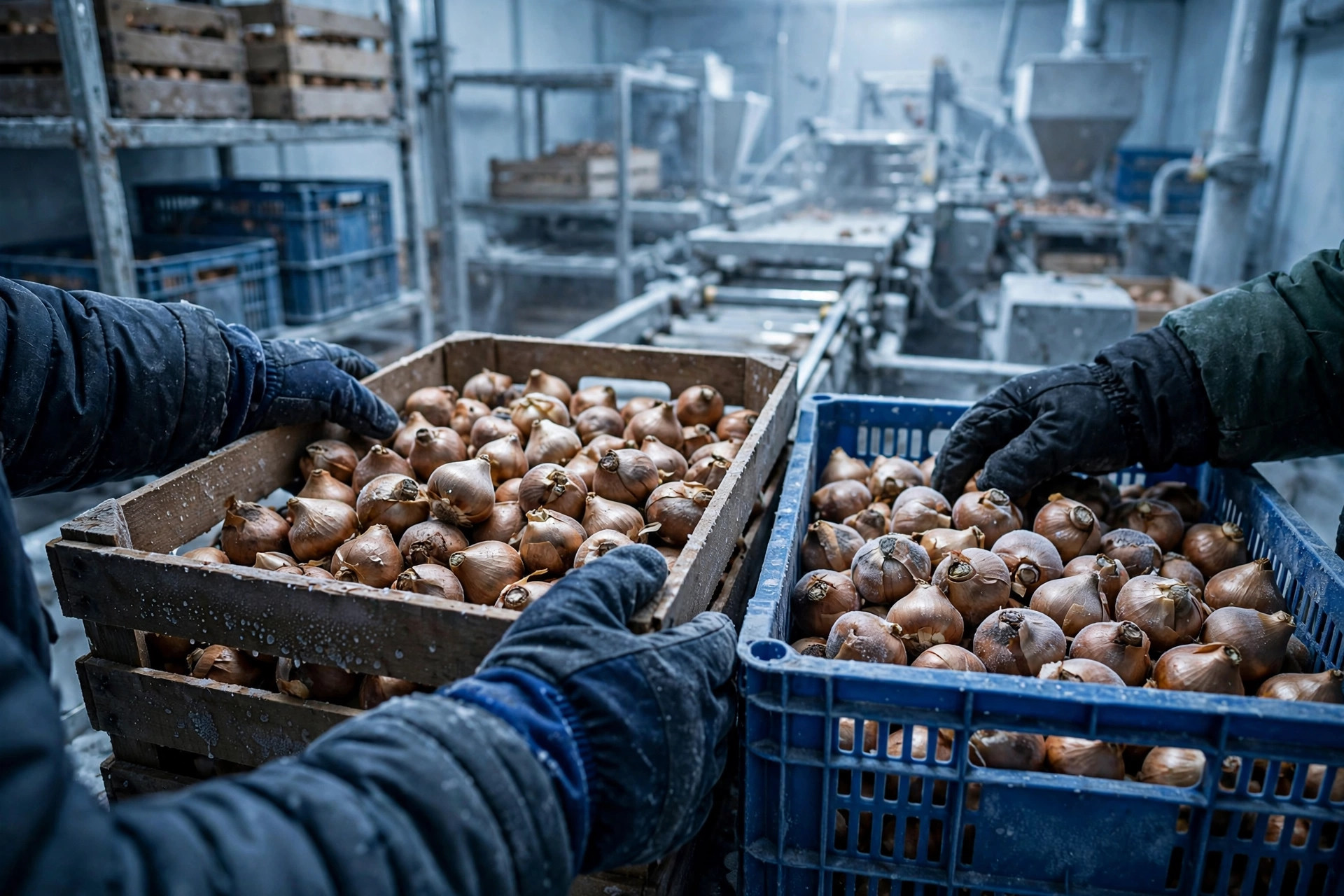
The first line is whether temperature control covers the whole journey or only the cold room. Many warehouses are cold inside and warm everywhere else, with grading, labelling, and loading done on an open dock where bulbs sit for hours. A serious operation controls those transition zones or protects them with insulated dock doors, thermal curtains, and strict staging time limits. One visit reveals the truth: doors left open, cold air pouring out with every forklift pass, workers sorting crates in an unconditioned area.
The second line is whether grading and storage share one system of record. Export bulbs must be graded by size, cleared of damaged stock, and stored by variety and batch, and at high speed similar varieties are easy to mix. A good warehouse codes every batch, labels every crate, and stages loads in outbound order. When grading and storage keep separate, unreconciled records, a mixed pallet is only a matter of time, usually discovered at the destination port, where fixing it is expensive.
The third line is the breakdown plan. Refrigeration equipment will fail eventually; the question is what happens in the first hour. Is there a backup unit? How fast can the site switch over? Does anyone actually answer the phone at night and come in? I ask these three questions before signing anything, and I want the answers in the contract. A verbal promise that nothing has ever broken is not a plan. An untested plan is not a plan either.
Two scenes illustrate why the gaps matter more than the plant. In September 2024, a trader in the north of the Netherlands shipped a well-graded lot with clean cold-room logs, then lost control at loading: the load waited more than four hours on an open dock with two large doors standing open, and the container temperature had already climbed before the seal went on. At destination, emergence was uneven, the buyer claimed a discount, and the freight and labour for that container were effectively wasted. In a separate case from 2023, a high-speed grading centre processed tens of thousands of bulbs per hour but staged graded stock without batch separation; during a peak week, three pallets of two similar varieties were mixed, the loading list no longer matched the physical stock, and the container sat for days at destination while the mix was sorted out. In both cases the refrigeration plant was not the problem. The handover was.
Doing the Math: Where the Money Really Goes
Most buyers compare rent and stop there. That comparison misses the largest cost: rejected or discounted stock and the claims that follow. The table below is the decision framework I use with small and mid-sized exporters. Treat the figures as a way to structure your own calculation, not as a quote, and rerun it with your volumes and contract terms.
| Option | Upfront cost | Temperature stability | Peak-season flexibility | Best for |
|---|---|---|---|---|
| Build your own small cold store | High, one-off investment | Depends entirely on your maintenance | Poor, idle space costs money off-season | Stable volumes, year-round shipments |
| Rent third-party cold storage | Low, pay as you use | Depends on the contract and on-site execution | Good, expand space in peak weeks | Most small and mid-sized exporters |
| Partner with a grading and packing centre | Medium, grading plus storage bundled | Depends on how well the centre is managed | Moderate, book slots early | Many varieties, fragmented outbound batches |
Now a simple yardstick. Take a container of 200,000 bulbs and ignore the cargo value for a moment. If poor temperature handover pushes the defect or uneven-emergence rate up by three to five percentage points, that is 6,000 to 10,000 bulbs compromised, plus the buyer discount, replacement samples, and the staff time spent arguing about it. Whatever you saved on rent is gone. Turn it around: if better cold-chain control cuts the defect rate by a single percentage point across dozens of peak-season containers, the saving is real and recurring. So do not ask only what a pallet space costs. Ask what the defect rate was for comparable shipments last year, and how claims are calculated.
One boundary matters here. Quarantine, customs clearance, and destination-market entry rules change frequently and differ by market. For anything regulatory, check the latest official policy rather than relying on a broker's verbal assurance. A warehouse can protect your bulbs; it cannot replace your own check of current requirements.
Maintenance Pitfalls in a Netherlands Tulip Bulb Export Cold Chain Warehouse
Cold stores rarely fail because someone bought the wrong machine. They fail because nobody maintained the right one. I have seen premium refrigeration units in rooms with filthy condensers, door seals so worn that cold air leaked all day, and temperature probes mounted beside the air outlet, where they always report the most flattering number. That is like buying a good car and never servicing it, then being surprised when it breaks down on a long trip.
Maintenance comes down to four checks. First, seals and insulation: doors, dock curtains, and wall penetrations, since every leak is money leaving the building. Second, probe placement: sensors belong where the bulbs are, mid-stack and at the return-air point, not at the outlet. Third, airflow and stacking: keep ventilation channels and wall clearance, and do not block the air path to squeeze in extra pallets. Fourth, records and alarms: logs must be continuous and retrievable, and an over-temperature alarm must trigger a human response, not ring unanswered for days. A full inspection before peak season beats an emergency repair in the middle of it.
There is also a human factor engineers forget: cold hands move slowly, and slow hands mean bulbs spend longer outside controlled zones. A well-run site designs grading, labelling, and loading as one smooth sequence with minimal waiting in uncontrolled areas. When you visit, do not just read the refrigeration nameplate. Follow one batch from intake to loading and watch where it stalls, warms, and waits.
So here is my blunt verdict. A netherlands tulip bulb export cold chain warehouse is worth its price when three consecutive months show a stable first-pass acceptance rate at destination and falling claims. If those numbers hold, the cold-chain spend is paying for itself. If they do not, even the cheapest pallet rate is expensive, because you are paying for storage and then paying again for the consequences.
By Da Liu, Automation Engineer