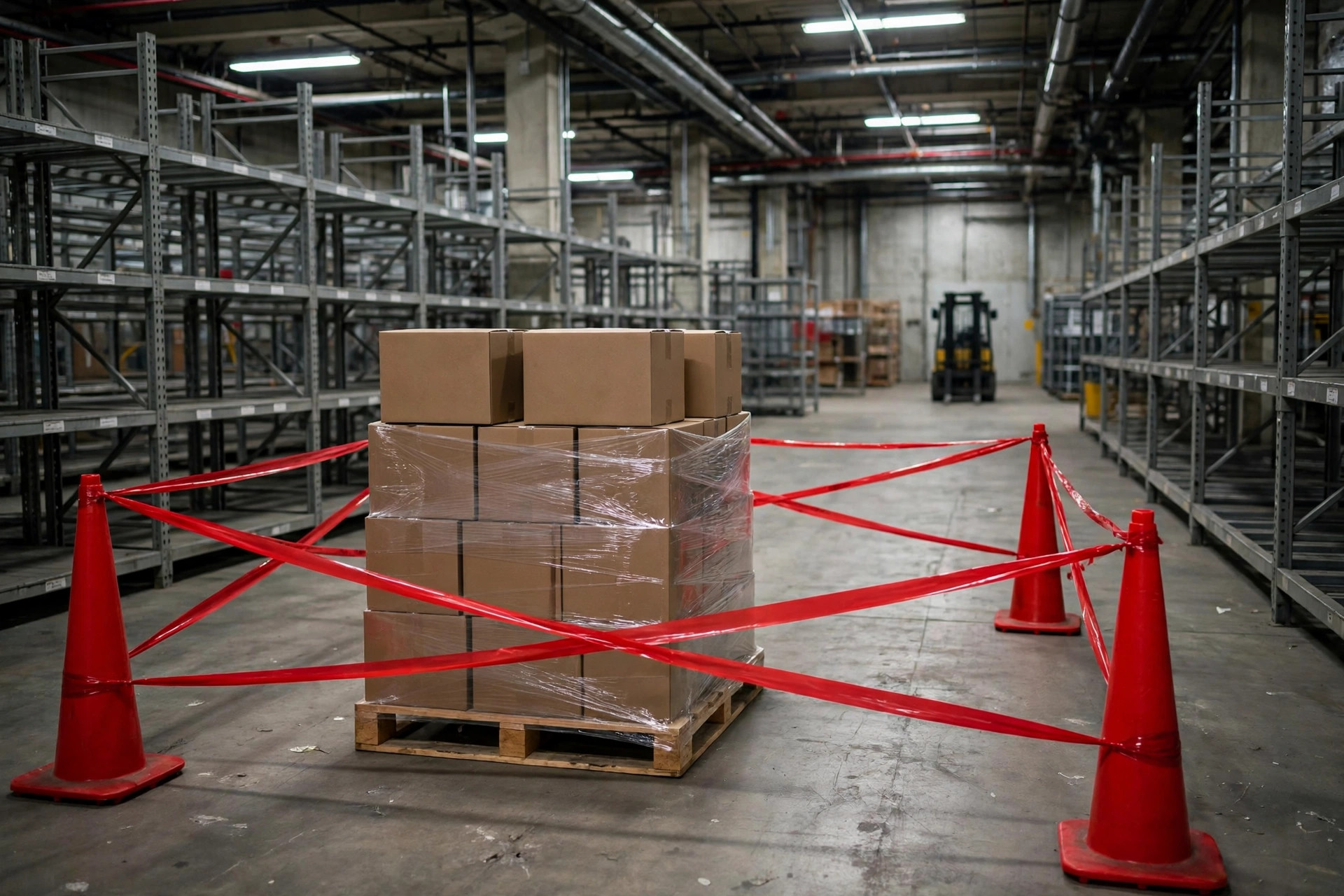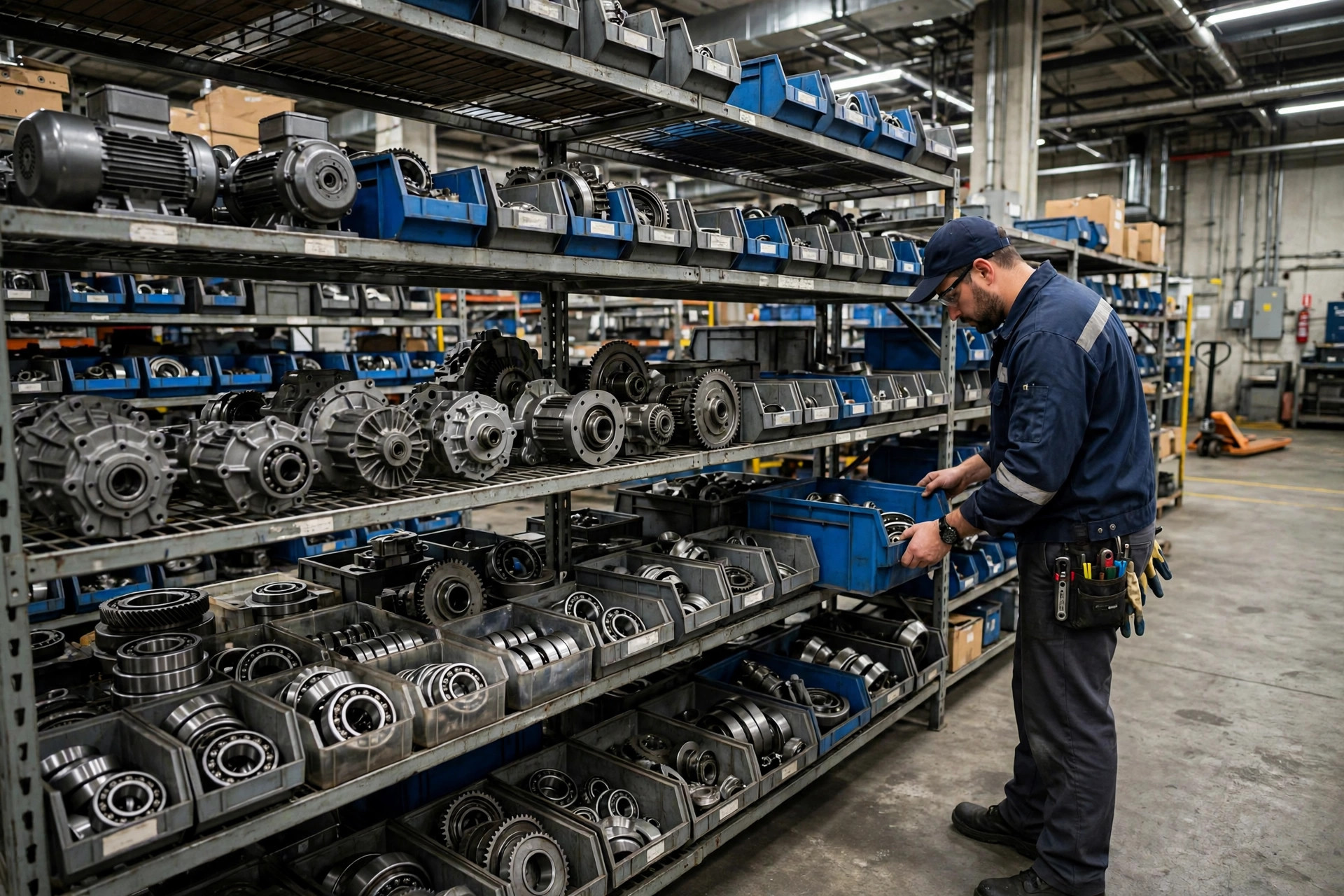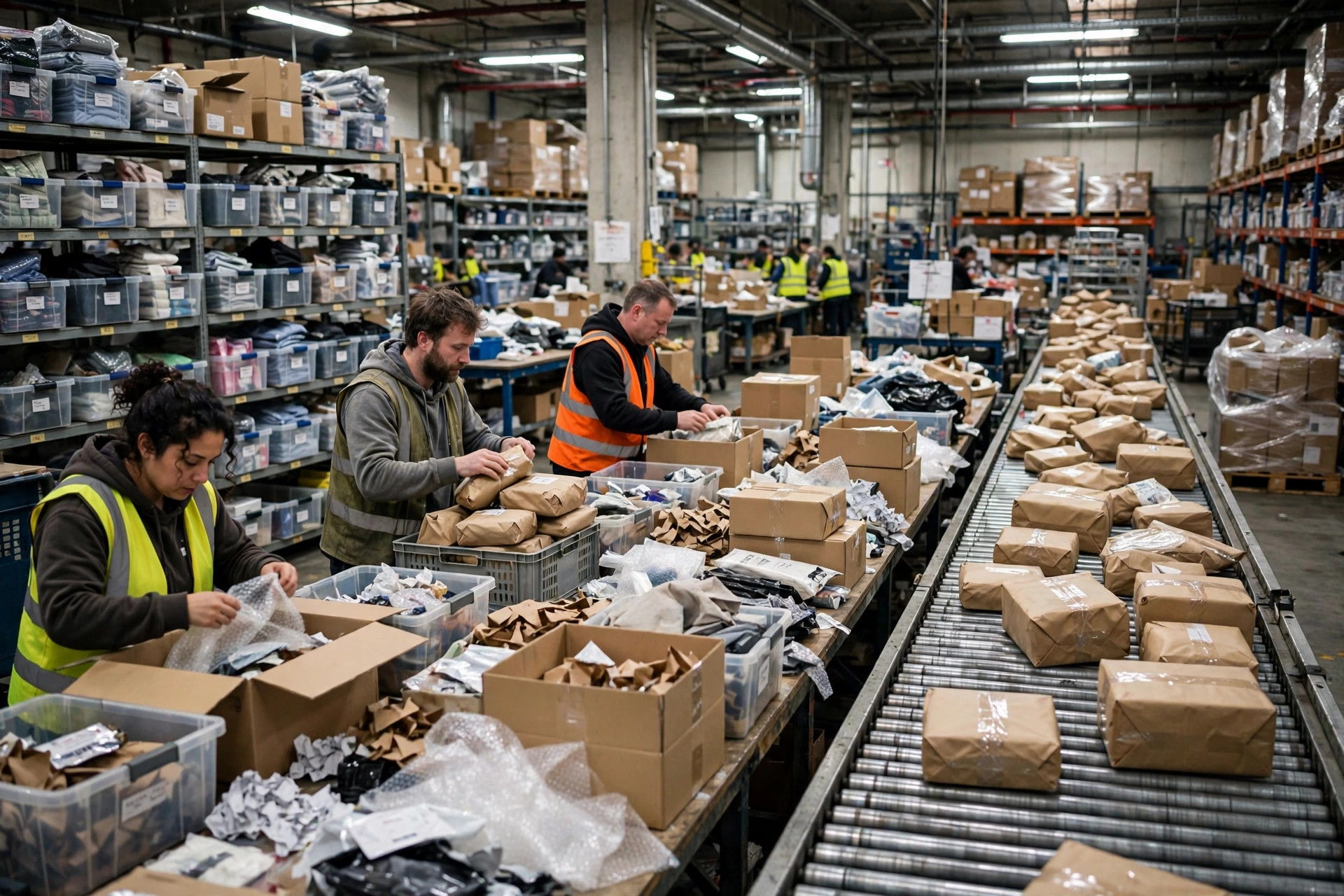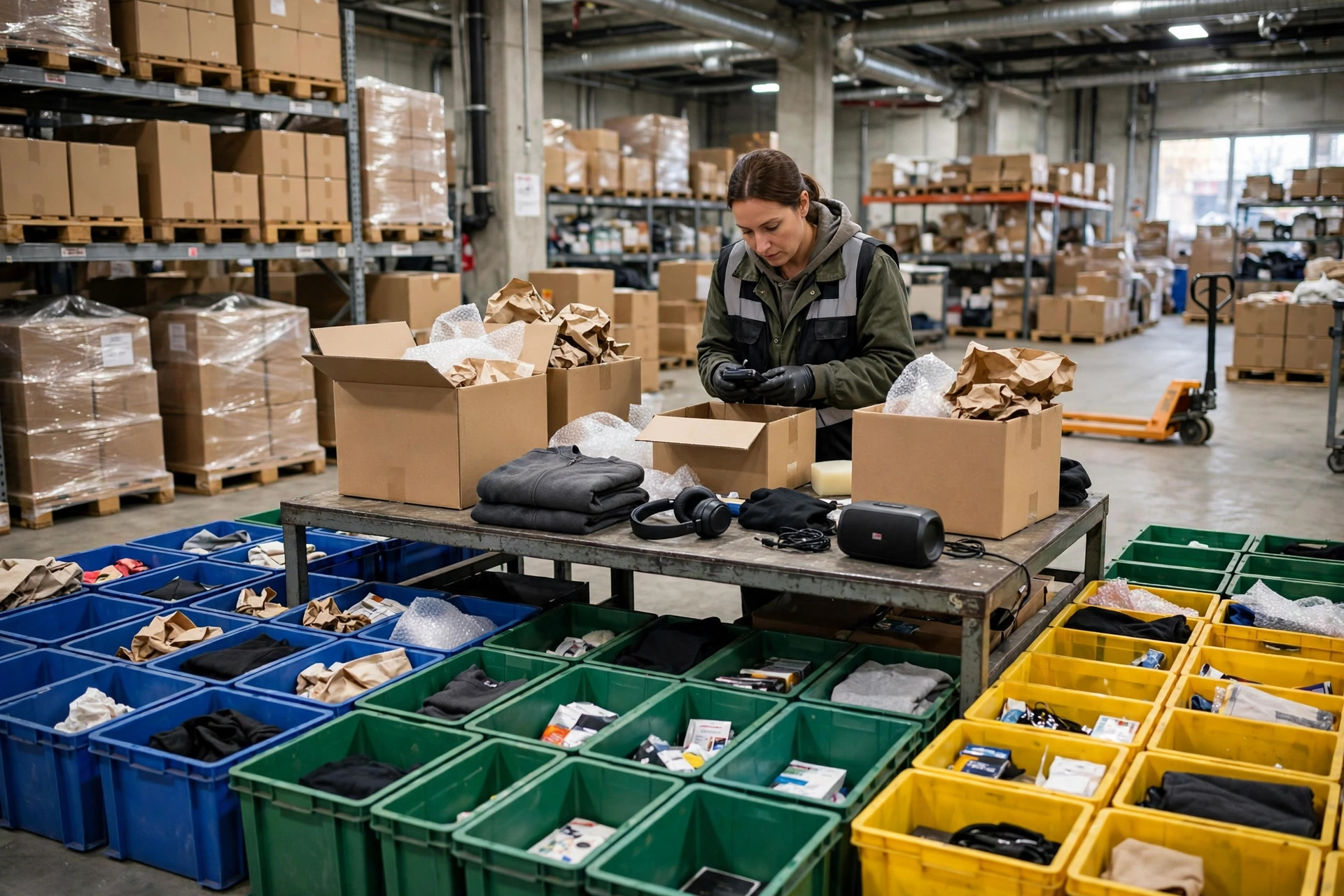
On the third morning after last year's big sale, I walked in at seven and found three pallets of returns waiting in the returns area. Some cartons were crushed. Some had tape cut open twice. Some still had a free gift mixed in with the returned item. The crew stood around those pallets and waited for me to start returns grading: what could go straight back to the shelf, and what had to sit aside for now? I did not rush to call it. I had everyone open the boxes first and lay the goods out on the tables. Let me be plain about it: returns are not scary because there are a lot of them. They are scary when the standard is unclear. If every person carries a different ruler in their head, the same item gets a different grade from each person, and picking, customer service, and accounting all pay for it later.
After that week, we locked the system down to four tiers, no more and no less. More tiers sound precise, but new hires cannot remember them. Fewer tiers mix good stock with bad stock. Tier A goes straight back to the shelf: no clear damage, works fine, original packaging intact, and the date and batch check out. Tier B has a light flaw but still works, like a small dent or a replaced outer box, so it goes to repack or discount. Tier C needs repair: something does not work, but it can be fixed, like a dead button or one missing part, and it only goes back on sale after repair and a second check. Tier D is scrap: badly damaged, water-damaged, expired, or more expensive to fix than the item is worth. It never goes back into saleable stock.
Returns Grading Tiers A/B/C/D: Looks, Function, Packaging, and Dates
In our warehouse today, every return goes through the same four checks in the same order: looks, then function, then packaging, then dates and batch. For looks, we check for dents, scratches, stains, and warping, and on appliances we also check screens and case seams. For function, we do not run a full test. We test the one or two things most likely to fail: a small appliance gets powered on to see if it runs and the light comes on, and a battery item gets checked to see if it charges. For packaging, the question is simple: can it be sold as it stands? If the inner box is torn or the outer box is crushed, the item drops a tier. Dates and batch get their own check at the end. A short-dated item never goes back as Tier A, no matter how good it looks. It gets its own marked area and moves first.
We learned that the hard way with two batches. One batch of returned small fans looked brand new, and a few new hires graded them all Tier A and sent them back to the shelf. Then complaints started coming in about a rattling noise when the fan ran. We pulled that batch back and found a motor problem in that production run that no visual check could catch. Since then, anything with power gets a powered test, no matter how new it looks. Another time, a food return came back with perfect outer packaging, but about half the batch was short-dated. Under the old loose habit, all of it would have gone back as Tier A. Now the date check is one nobody skips, and short-dated goods sit in their own marked zone until they are handled.
Setting Up the Grading Line: Pace, Rechecks, and Photos
We set the grading bench up as one line, and goods only move forward: open the box, do the first check, assign the tier, label it, and put it in the right bin. Five spots, one person on each step, no goods going backward. Tier A goes into the restock bin, Tier B into the repack bin, Tier C into the repair bin, and Tier D into the red scrap bin. The bin colors never change, and the floor has painted lines to match, so nobody has to guess where something goes. We do not chase speed here. A Tier A item takes roughly half a minute to a minute to check. A Tier C item takes longer because it needs a function test, and that is normal.
Disputed items show up every day, and we have a rule for them: do not argue, do not guess, and do not force a grade. The item goes into a yellow dispute bin. Every afternoon, the shift lead goes through that bin with a veteran worker, and they settle each item together. For every disputed item we take two photos, one of the whole item and one close-up of the problem, and the photos stay on file with the order number. Whoever makes the final call signs the sheet, so responsibility is clear. Training new hires works the same way. For their first two weeks, new people only handle Tier A and Tier D, the two ends that are easiest to tell apart. They move on to the middle tiers, B and C, once their judgment steadies. On peak return days, we never leave a new hire alone on a grading station. A veteran always stands next to them.
When Grading Goes Wrong: Disposition and the Books
Good returns grading cuts both ways when it goes wrong. Grade too strict, and good stock gets treated as bad stock. The warehouse loses goods it could have sold, and it spends extra labor on repair and scrap handling for no reason. Grade too loose, and bad stock flows back to the shelf. Then come the complaints, the second returns, the shipping cost both ways, and the damage to trust. We once worked out the rough cost of a single bad item that went back to the shelf and came back again: the freight both ways, the handling labor, and the customer service time added up to far more than the one extra minute a careful grade would have taken at the bench. That is why this step does not get skipped. Time saved by rushing it always gets paid back with interest later.
Each tier has a fixed disposition path now, and the table hangs on the wall above the grading bench:
| Tier | What it means | Disposition path | How the books treat it | | Tier A | Looks, function, packaging, and dates all pass | Straight back to the shelf as saleable stock | Back into normal inventory | | Tier B | Light flaw, works fine | Repack or discount sale, clearly marked | Booked at its discounted or repacked status | | Tier C | Faulty but repairable | To repair, then a second check before sale | Held as in repair; moves to Tier D if repair fails | | Tier D | Badly damaged, water-damaged, expired, or not worth repairing | Scrap with photos on file, through the normal scrap process | Written off through scrap, never back to saleable stock |
Here is a judgment that surprises people: tighter grading is not better grading, and more tiers are not better grading either. We once tried six or seven tiers because it sounded more precise. Within a month we were back to four, because new hires could not tell the middle tiers apart and errors went up, not down. Four tiers work when the boundary for each tier is written down, photos back up the hard calls, and someone owns the recheck. One more thing about Tier C: do not rush to repair everything. First ask whether the repaired item will actually sell, and whether the labor and parts are worth it. Repairing a pile of goods nobody wants just turns the repair area into a second slow-moving stockroom.
For crews facing their next returns peak, my reminder is simple. Lock the standard, lay the line out so work moves one way, keep a photo record for disputed items, and make sure every tier lands in the books the same way it lands on the shelf. Before the peak hits, put out sample items for all four tiers and let everyone handle them once. One hands-on pass at returns grading beats ten meetings about the standard. By Chen Feng, Warehouse Operations Manager