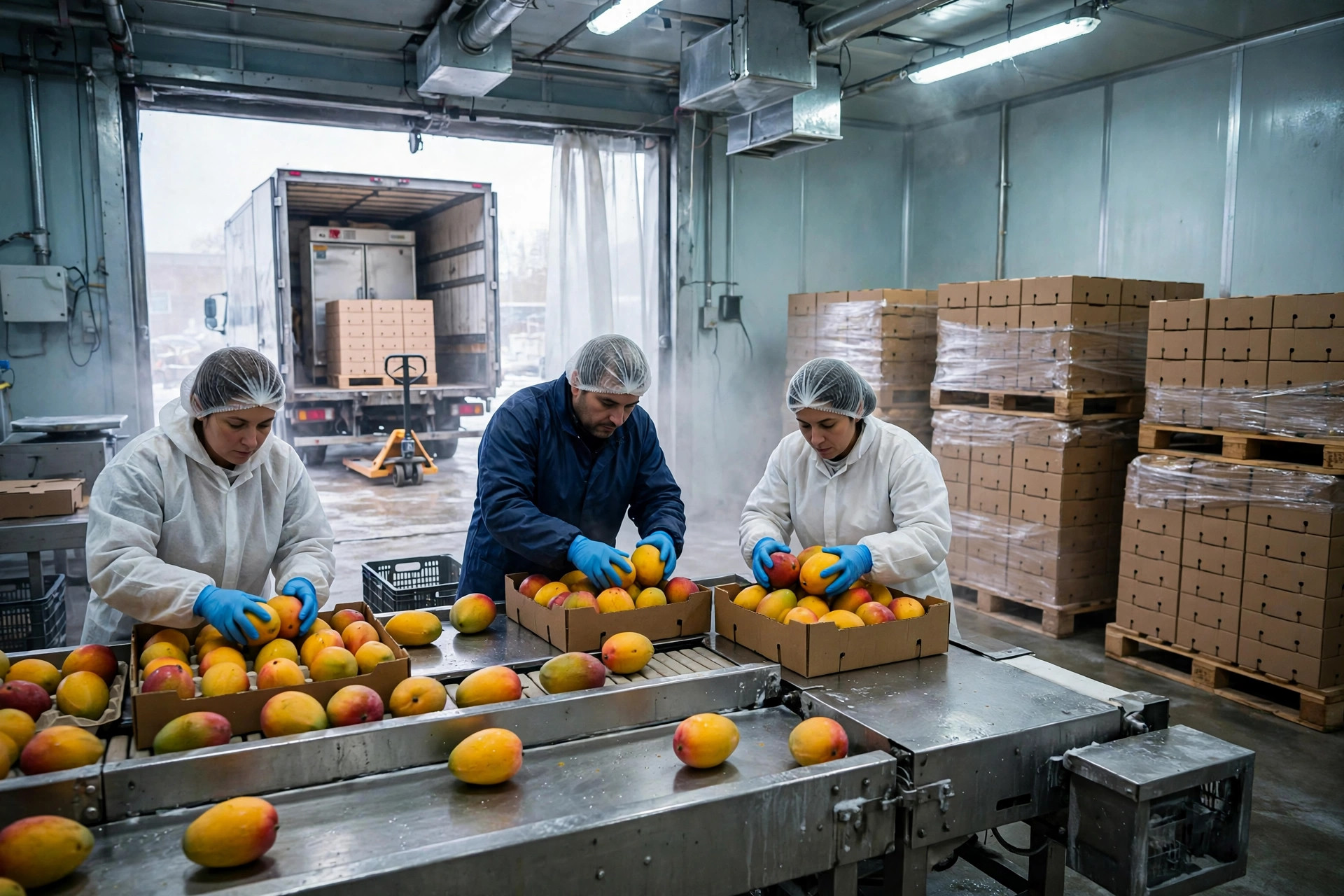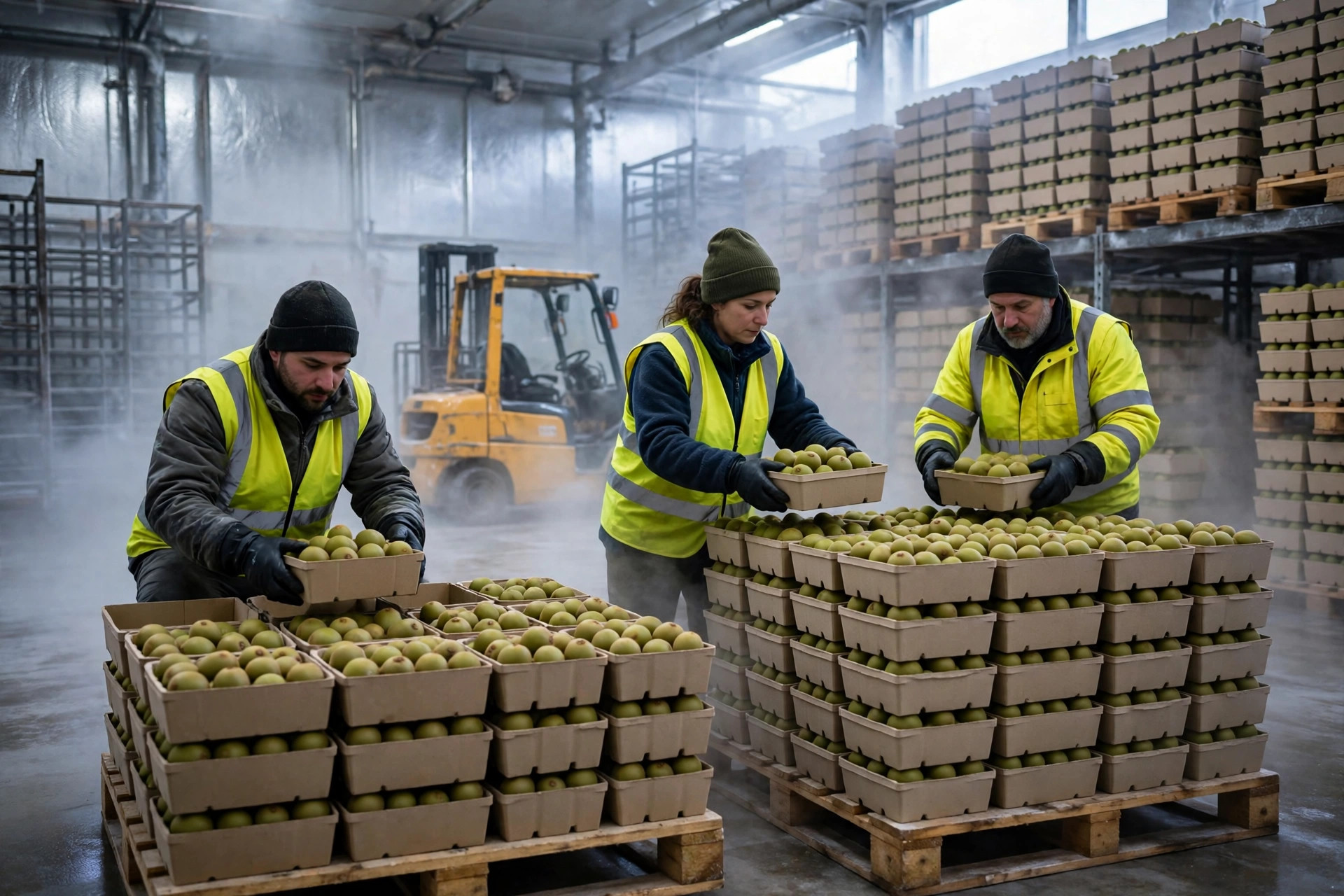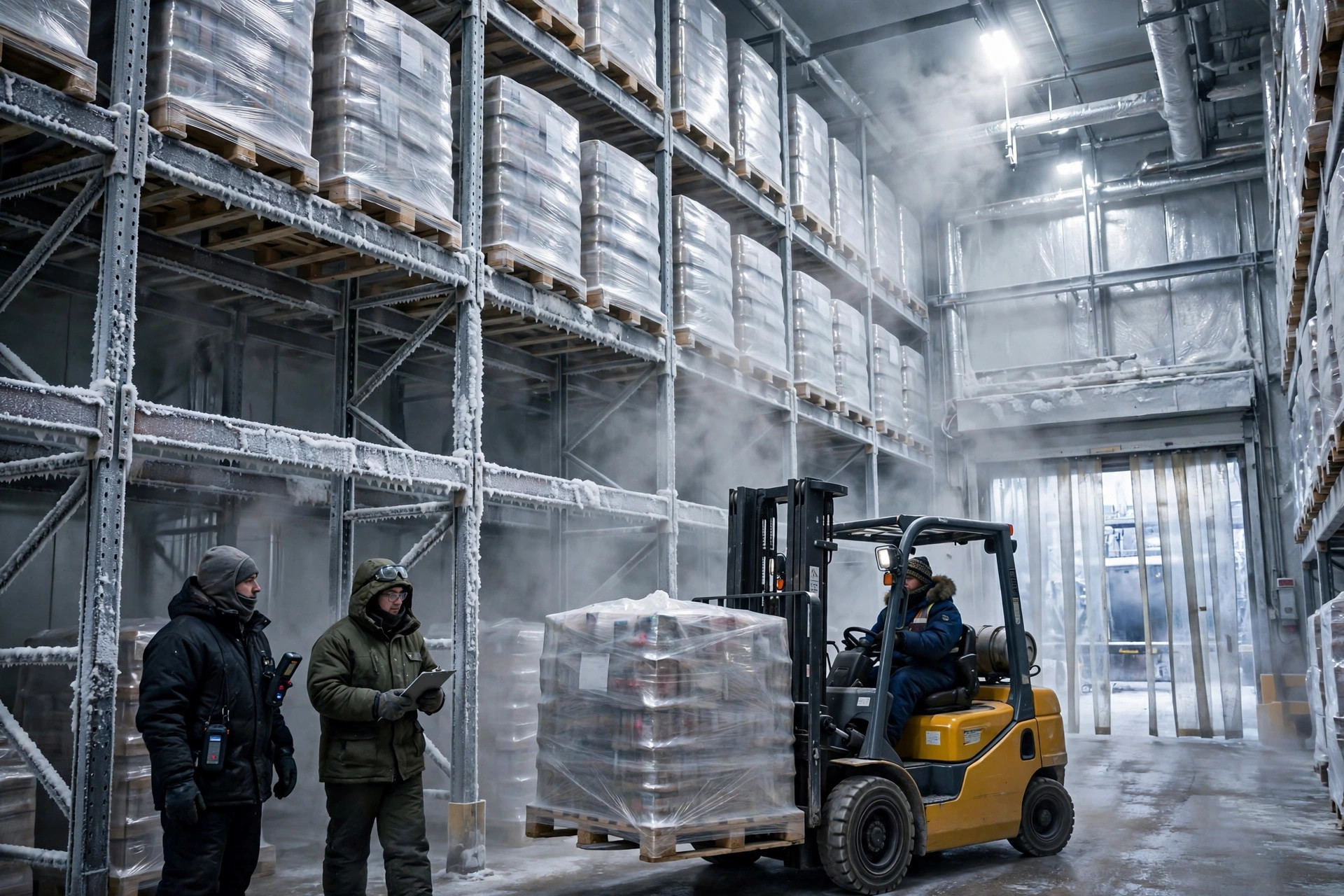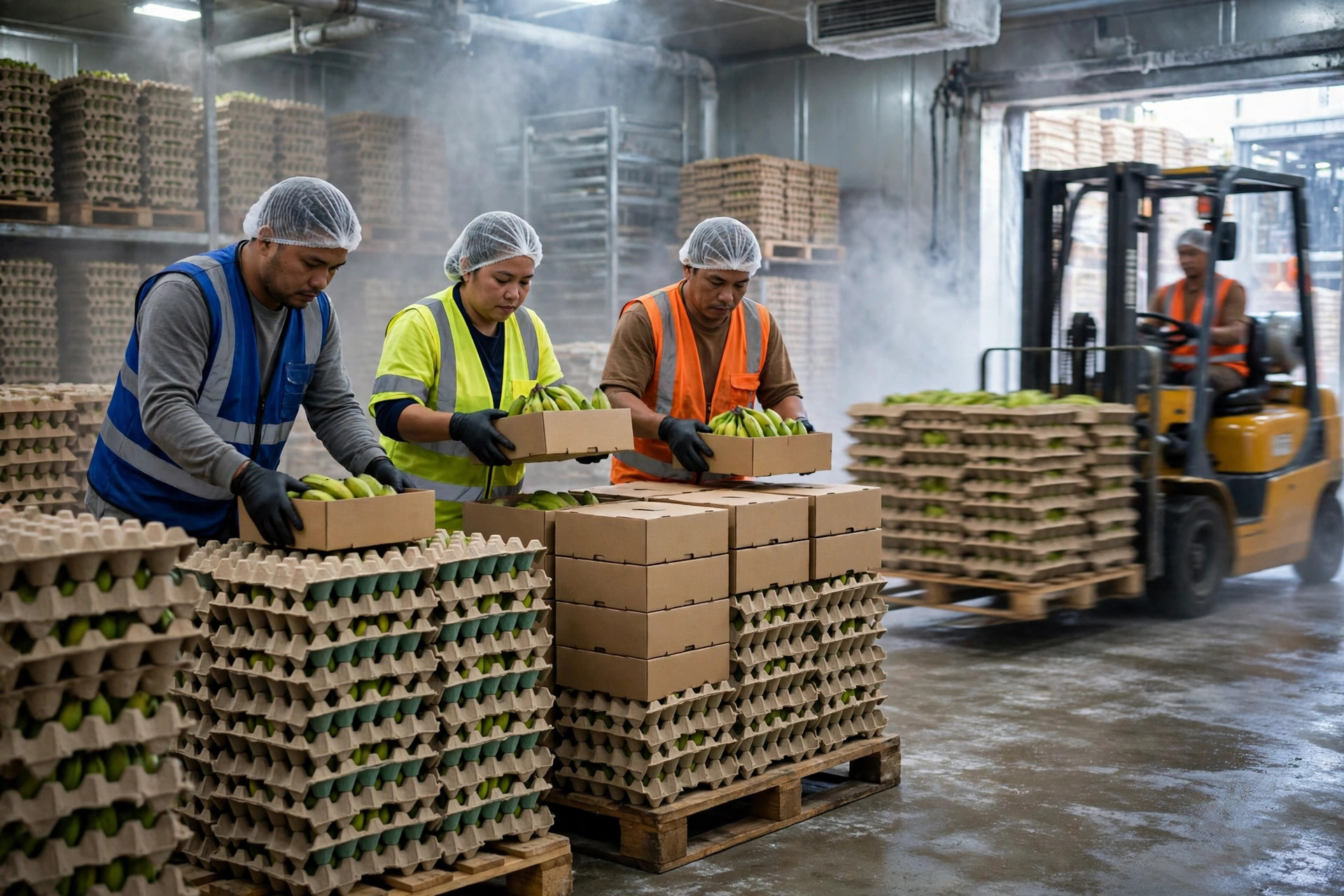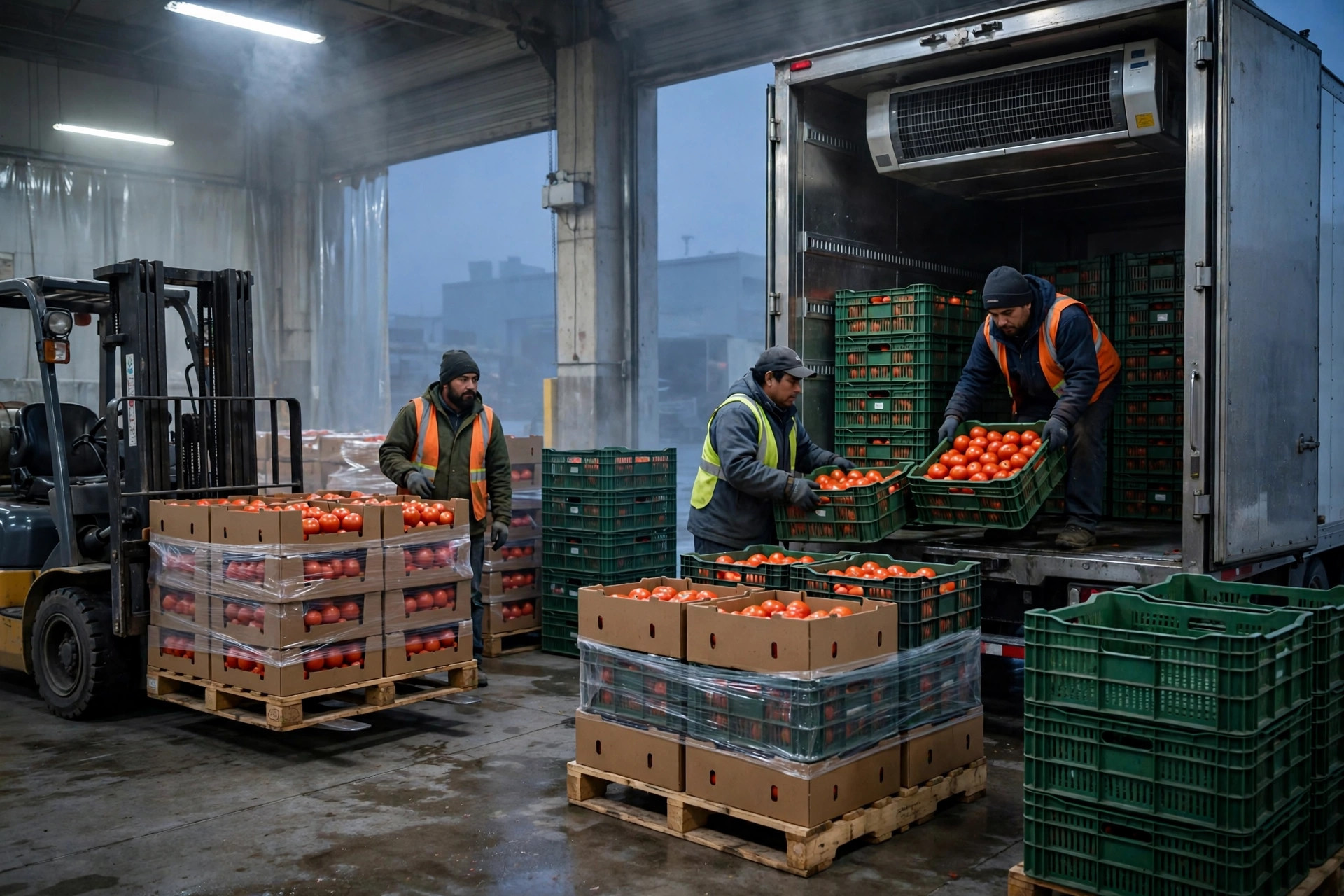
It is four thirty in the morning in Sinaloa, and the lights are just coming on in the packing house. Trucks are already lined up at the cold room door, and the crew is moving fast because the day's first loads have to be out before the heat builds. Folks, let me be straight with you: Mexico tomato export cold chain warehouse work looks smooth on a normal day and falls apart in peak season. A tomato does not wait for paperwork. You lose half a step on your side, and the fruit softens a notch on the other side. By the time the problem shows up at the Texas border warehouse, the whole load is worth less. After years of running a warehouse floor, I have learned one thing above all else: the cold chain is not about how expensive your equipment is. It is about whether somebody actually owns every handoff.
Mexico Tomato Export Cold Chain: Where the Chain Usually Breaks
The first break happens before the truck even moves, at pre-cooling. Tomatoes come in from the field carrying field heat. Load them warm and you have sealed a truckload of warm air inside a reefer, and no refrigeration unit is going to catch up on the road. Our rule is stubborn and simple: nothing loads until it has been pre-cooled, the boxes are dry on the outside, and the load feels uniformly cool to the hand. It looks slow. It saves time later, because the truck spends the trip holding temperature instead of chasing it.
The second break happens at loading. Two things kill a load at the dock. One is a reefer door left open while people wait for paperwork. The other is pallets packed so tight that they block the airflow channels. I saw this go wrong once at a packing house, when a truck sat at the door for the better part of an hour with its doors open while the paperwork caught up. The driver stood outside, the loading crew worked slowly inside, and nobody felt responsible for the open door. When that load reached the border warehouse, the pallets nearest the door were noticeably soft, and the whole shipment had to be split up and handled separately. After that, we made a rule that has stuck ever since: no paperwork, no open door. Once the door opens, somebody stands there and owns it, and nobody blocks an airflow channel to save a few minutes of stacking.
The third break is the border queue. A truck that reaches the border warehouse does not get unloaded right away. It queues, waits for inspection, waits for a dock door, and each step can eat hours. A reefer sitting in the sun keeps running the whole time, burning fuel while the fruit slowly loses condition. Our answer is to book the dock slot before the truck leaves, so the border warehouse knows roughly when it arrives, how many pallets it carries, and whether it needs priority unloading. If no slot is available, we would rather hold the truck at the packing house than send it to bake in a border queue.
Mexico Tomato Export Cold Chain Routine: How Our Warehouse Runs It Now
Our routine from the packing house to the border warehouse is not fancy. It is a short list, and every item on it exists because somebody already paid for the lesson.
First, one handoff sheet rules the whole trip. The packing house, the carrier, and the border warehouse all work from the same sheet: pallet count, case count, pre-cooling completion time, and seal number. In the old days, each side kept its own notes, and mismatched numbers left the load sitting in the doorway. Now, if the sheet does not match, the truck waits to one side until the responsible person shows up. We do not unload first and argue later. That order matters more than it sounds.
Second, the roster follows the freight, not the clock. Night shifts are where peak season goes wrong, because people are tired, loads are heavy, and paperwork piles up. We split our experienced staff across shifts so that no night shift is ever staffed by two newcomers alone. The veterans have a skill no manual teaches: open a case, feel a box, look at the stem end of a tomato, and tell whether the load took heat on the road. That skill only transfers when a newcomer works beside a veteran, so the roster makes that happen.
I remember one night shift when a new hire was left alone at the receiving door and three trucks arrived back to back. Paperwork, seal numbers, and pallet counts all landed at once, and the faster he worked, the messier it got. He nearly mixed two loads into one location before a veteran spotted a seal number that did not match and stopped the whole thing. Since then, the outgoing crew does not leave until the incoming crew has been walked through every truck still unprocessed, face to face. Morale is not a poster on the wall. It is having somebody beside you when the work piles up.
Third, when something goes wrong, we save the freight first and fix the paperwork second. If a temperature alarm goes off on the road, the first question is what happens to the load: can we switch trucks, can we unload early, can we move it to a closer cold room? We sort that out before we argue about whose fault it was. A saved load with messy paperwork is still a load. A spoiled load with perfect paperwork is worth nothing. That sounds rough, but it is how our warehouse actually operates, and it has saved us more than once.
Running the Numbers: Where an Unbroken Chain Pays
People often ask me whether all this discipline is worth it. Here is how the math works on our floor, and it is the real math of Mexico tomato export cold chain warehouse work. The visible costs are refrigeration, fuel, and labor. The real costs sit in spoilage and rework. When part of a load softens because the chain broke, the cleanup eats people and time: sorting, re-boxing, re-palletizing, and rebooking a dock slot, with every step pulling workers off other jobs.
| Where the money goes | A load with a broken chain | A load with an unbroken chain | | Sorting at receiving | Rework, split handling | Straight to putaway | | Waiting at the border warehouse | Long queue, reefer running | Booked slot, unload on arrival | | Spoilage handling | Soft fruit handled separately, heavy labor | Barely any second handling | | Buyer confidence | Next order starts with questions about loss | Next order follows the usual routine |
This table carries no copied industry figures, because every warehouse runs different volumes, routes, and seasons, and borrowing somebody else's numbers would be dishonest. But the direction is certain. What an unbroken chain saves is not the electricity for refrigeration. It is the labor spent on rework and the trust spent on explaining a bad load. Trust, once lost, takes several good loads to win back.
A Counterintuitive Call: Slower Is Often Faster
Here is a judgment some people will not like: in Mexico tomato export cold chain warehouse work, the fastest route is often the slower one. Wait for pre-cooling to finish. Line up the paperwork before opening the doors. Book the border slot before dispatching the truck. Each step looks slow, and the whole trip ends up faster, because rework is the slowest thing in this business. One reworked load wipes out every shortcut taken earlier in the day.
There is also a trade-off worth thinking through carefully. Running a reefer as cold as it will go looks like the safest choice, but it is not always the best one. Tomatoes pushed too cold can suffer chilling injury and sell poorly at the store, while a slightly warmer setting, combined with proper pre-cooling and fast handoffs, can leave the fruit in better shape. The right setting depends on variety, season, and what the buyer and receiver currently require, so I will not hand you a single number here. Check the latest requirements for your shipment rather than copying a figure from an article, mine included.
One last reminder for fellow warehouse folks: walk your process before peak season starts. Do not discover in the middle of a surge that the night shift is short-staffed, the handoff sheets do not match, or nobody booked the border slots. A cold chain cannot be learned on the fly in peak season, because the tuition is a whole truckload. Our warehouse runs it the way I have described here.
By Chen Feng, Warehouse Operations Manager