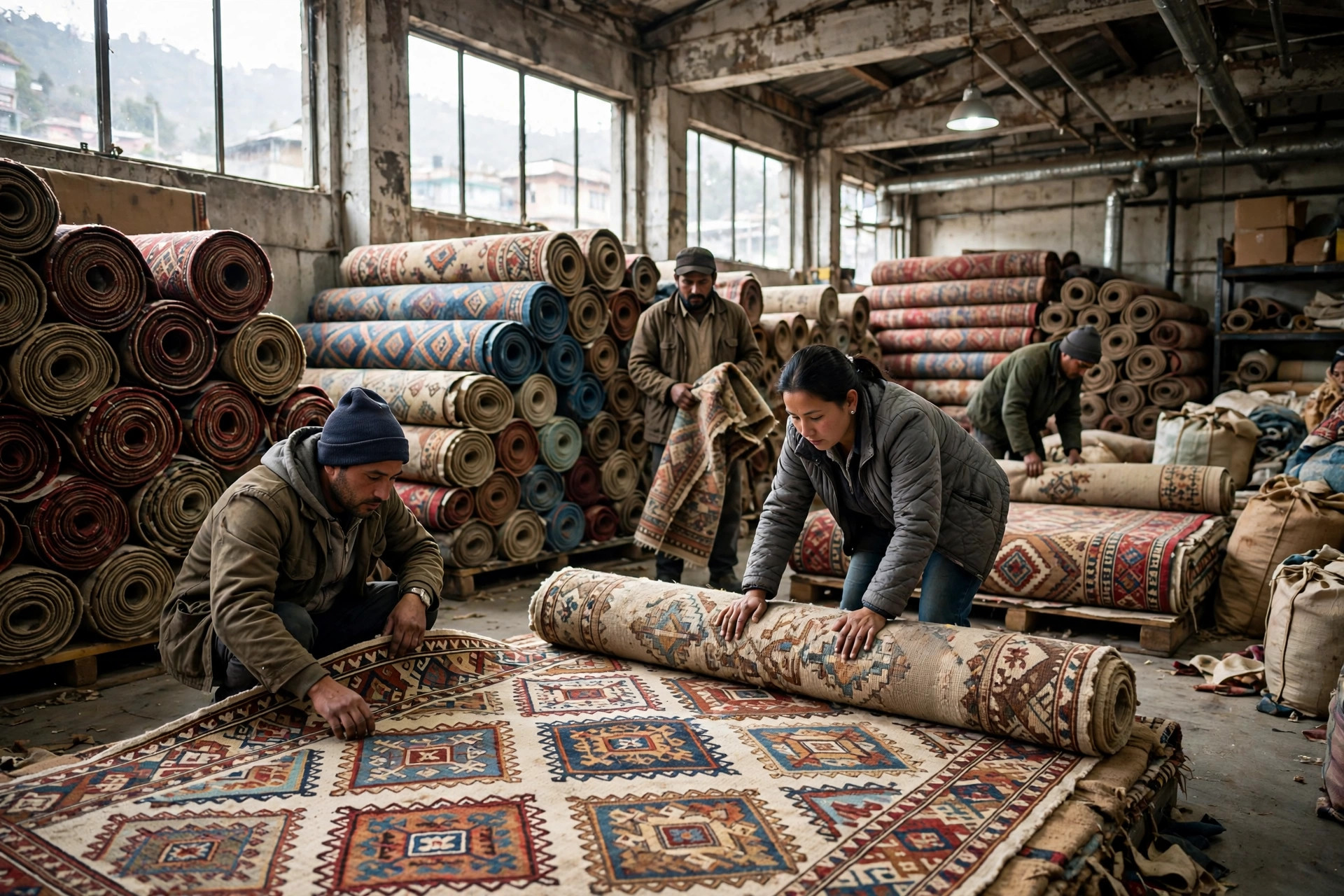
When a friend first asked whether my little warehouse could handle a shipment of handmade goods from Nepal, my honest reaction was: please, spare me. Nepal cashmere and carpet export warehouse logistics sounds poetic on a brochure. In real life it means soft, expensive, moth-prone cargo landing in a 3,000-square-metre warehouse that normally deals with neat cardboard cartons. Hand-knotted carpets and pashmina scarves do not behave like cartons. They do not stack, they do not forgive damp, and they attract insects. We took the job anyway, and along the way we worked out a set of low-cost routines that actually hold up.
Our Small Warehouse Meets Handmade Cargo
Let me start with the embarrassing story. One autumn, a batch of 60 hand-knotted carpets arrived from Kathmandu and sat in our warehouse for less than a month. On inspection day, our quality checker unfolded a light-coloured carpet and found a few pinhead-sized holes along the edge. That was not dirt. That was moth damage. Wool and cashmere are keratin, and clothes moth larvae eat keratin. Worse, moths do not stay on one carpet. Once they are in a storage area, they visit the neighbours.
We spent that night doing three things: unfolding and checking every carpet, isolating the affected ones, and cleaning the whole storage zone, including pallet gaps and wall bases. The rest of the goods went into sealed bags with moth repellent. The shipment still went out, but 4 carpets were downgraded and lost their original price. That price cut alone would have paid for several years of our moth-prevention supplies. Our small warehouse cannot afford that kind of loss, so ever since then, the first step for handmade cargo is not shelving. It is a health check.
The check needs no fancy equipment, just eyes, a flashlight, and a nose. Unfold each carpet and look at the edges and the back for holes, stains, or loose threads. Shine the flashlight at an angle across the pile and look for unusual powder, which can be insect residue. Smell for mustiness. Cashmere scarves are even more delicate. For a carton of 800 scarves, we pull at least 10 pieces per carton for inspection. That is not distrust of the supplier. With cashmere, one bad piece can trigger a complaint about the whole carton.
Nepal Carpet Export Warehouse Storage: Roll, Never Stack
Should handmade carpets be rolled or stacked? After our moth lesson, we made a hard rule: carpets are always rolled, never flat-stacked. Stacking presses the pile for weeks, and a dead crease in a handmade carpet is almost impossible to fix. Rolling spreads the pressure evenly, and you can pull one carpet out without moving the whole pile. Two details matter when rolling: roll with the pile facing inward so the surface does not rub against itself, and use a rigid cardboard core. A hollow roll sags into an oval over time.
Cashmere scarves and shawls go the other way: folded flat, separated by tissue paper, no more than 20 pieces per layer. Stack too high and the bottom layer gets pressed into creases that a customer can feel the moment they touch the goods.
| Method | Best for | Advantage | Trap |
|---|---|---|---|
| Rolled storage | Hand-knotted carpets, large wall hangings | No pile crushing, easy picking | Hollow rolls collapse; use a core |
| Flat folding | Cashmere scarves, shawls | Saves space, easy counting | Layers over 20 pieces press creases into the bottom |
| Hanging | Sample carpets, small hangings | Good for display | Only for samples; hanging bulk stock burns money |
Here is the counterintuitive call: a handmade-goods warehouse does not need full climate control. What it needs is moth-proofing, damp-proofing, and ventilation done properly. We raise pallets at least 15 centimetres off the floor, keep ventilation gaps along the walls, run dehumidifiers in the rainy season, and rely on sealed bags the rest of the year. Full temperature and humidity control would be lovely, but the electricity and maintenance bills would sink a small warehouse. The real enemy is not the moisture in the air. It is the damp layer hugging the floor and the rain that creeps in through window gaps during monsoon season.
From Kathmandu to Kolkata: The Nepal Export Warehouse Chain for Handmade Goods
Nepal is landlocked, so its exports travel through India. The usual chain runs from a factory or consolidation warehouse in Kathmandu, by road to the border crossing at Birgunj, into India, and on to the port of Kolkata for loading. Warehouse work matters at more than one point on this chain. The Kathmandu warehouse handles inspection, grading, and packing. The transit warehouse near Birgunj should do a second check, because road vibration and border waiting time can shift goods inside a carton even when the outside looks fine. That second check does not need to be a full inspection. A sample check plus an exterior review is enough, and the point is to catch problems before the goods enter India. Once they are in, sending anything back for rework costs far more.
Paperwork is where small operators most often trip. Certificates of origin, packing lists, and grading records must match before departure: carton count, piece count, grade, and shipping marks, all aligned. Our low-tech fix is one card per carton, handwritten, listing the grades and quantities inside, checked line by line against the electronic packing list. It sounds primitive, and it has caught two mix-ups where the carton count was right but the grades were wrong. For duties, clearance requirements, and quarantine rules, check the official sources for the latest policy, since rules change and forwarded screenshots go stale fast.
Consolidated or full container? My test is simple: which costs more, the freight saving or the risk? Handmade carpets are bulky and individual shipments are small, so consolidation saves freight. But it also means more transfers, longer waiting for a vessel, and extra damp exposure in the rainy season. When the delivery date is tight or the cargo value is high enough that damage hurts, a full container is worth the premium. Do not compare freight rates alone. Put damage risk and late-delivery cost in the same calculation.
Where the Money Actually Goes
For warehouses like ours, the big money is not rent. It is rework and downgrades. One carpet dropping a grade can lose hundreds in value. One damp carton of cashmere means the whole carton goes back for drying and re-inspection. Sealed bags, moth repellent, rolling cores, and raised pallets cost a fraction of that. Our spending order is: inspection labour first, moth and damp prevention second, packing reinforcement third, and racking and equipment last. Equipment can wait. Moth holes and mildew spots will not.
One more money-saving trick for small operators: buy consumables together with other warehouses handling Nepal goods. Sealed bags and repellent are expensive in small quantities and much cheaper in a joint order. Three small warehouses ordering together get a noticeably better unit price. Big companies have procurement systems for this. We have a group order, and it does the same job.
Small warehouses have their own way of surviving. Handmade cargo rewards patience and attention to detail, not equipment. Check every piece on arrival, roll carpets by the rules, match the paperwork, and never skip the transit check. Get those small things right, and a shipment can travel safely from Kathmandu to Kolkata and onto a vessel. In warehousing, small things done properly are the big things.
By Xiao Ma, Small Warehouse Owner