We have a client in the natural-ingredients trade who came to us asking about freight rates and warehouse rent for Ghana shea butter export. Half an hour into the conversation, it became clear that freight was not where his money was leaking. The real losses happened before the goods ever left Ghana: nuts dried badly, grades mixed together, and butter drums left sitting in a hot warehouse through a rainy season. This is the warehouse bill for Ghana shea butter export warehouse storage and logistics, from the northern co-op that collects the nuts, through processing, to the container.
The bill starts on collection day
Here is the first story. A few years back, a northern co-op supplied nuts to an exporter during a wet harvest season. The nuts were spread on bare ground to dry, and when evening rain came, nobody got them under cover in time. They sat damp overnight. The next morning they looked fine, the weights checked out, and the delivery went into the books without a fuss. It was only at the processing plant's lab that the problem showed up: that lot's oil yield and rancidity indicators were both off. The exporter had to downgrade the lot, the co-op took a smaller payment, and a batch that could have shipped at a higher grade was gone.
Nobody in that chain was lazy. The failure was structural: no proper drying yard, no turning rhythm, no rainy-day cover plan, and no lot records. So the warehouse bill for collection has to be counted in those terms: is the drying surface paved or properly covered, are nuts spread in lots and turned on a schedule, is there a plan for moving them under cover when rain hits, and does every lot carry its village of origin and drying dates? Buyers do not pay for effort. They pay for lot records and lab results, and a lot without records starts every negotiation a step behind.
Grading: where export warehouse money is most easily lost
The second story is more typical, and more expensive. An exporter's consolidation warehouse held nuts and butter from several co-ops, and the labels said little more than a rough description. When the buyer sampled the goods, different drums performed differently, and the grade applied to the whole container got pulled down. The exporter had to re-sort and re-test, missed the sailing, and paid extra warehouse and labor charges on top. The buyer, bless them, did not shout. They simply cut the prepayment percentage on the next order, which is where the real money went.
Grading is where supplier spec sheets will mislead you if you let them. The numbers floating around the market disagree with each other, so copying any single supplier's table into your contract is asking for trouble. The sensible reference is the Global Shea Alliance grade framework for understanding the grades, while the document that actually governs is the buyer's certificate of analysis. The warehouse's job is not to invent a standard. It is to keep every lot's grade identity intact from start to finish: nuts stored by co-op and drying lot, butter stored by grade and production date, labels showing lot, grade, and date, and every outbound shipment ticked off lot by lot.
| Chain stage | What the warehouse must watch | What it costs when it slips |
|---|---|---|
| Co-op collection and drying | Drying yard, lot separation, rain plan, lot records | Mold and rancidity, whole lot downgraded |
| Processing and grading | Grade-separated storage, labels down to the lot | Mixed grades drag down the whole container |
| Consolidation warehouse | First-in, first-out, lot traceability records | Failed inspection, rework, missed sailing |
| Container handover | Seals, photos, lot list traveling with the cargo | No evidence when a dispute lands at destination |
Butter hates heat: storing shea butter
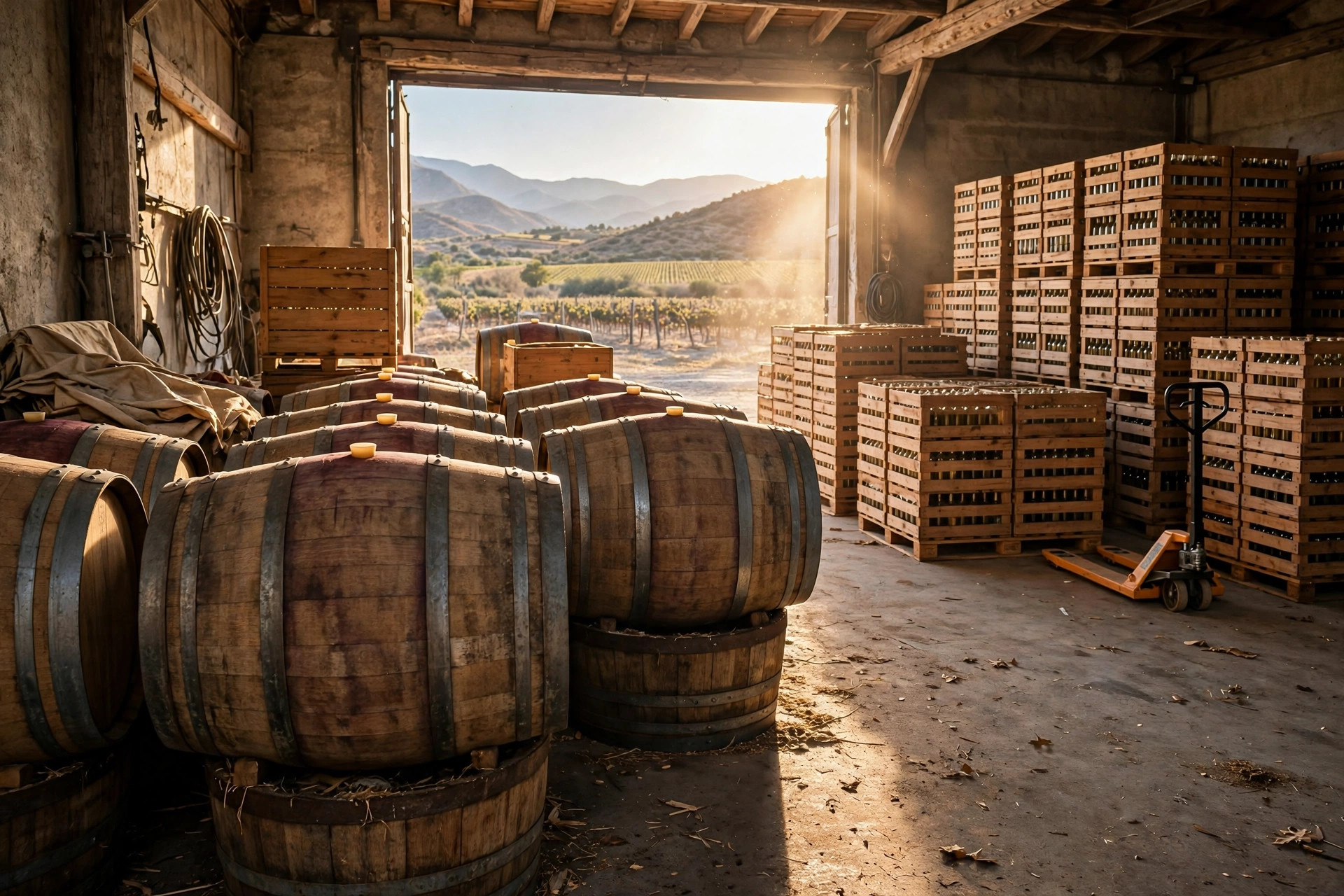
Butter storage is the other underestimated line on the bill. Shea butter suffers under heat, direct sun, and long periods sitting open, and a warehouse with a tin roof that bakes all afternoon will quietly degrade the goods. The good practice is unglamorous: a cool, ventilated store, drums raised off the floor and away from the walls, no direct sunlight, seals intact, and stock rotated by production date, first in, first out. As for precise temperature and specification ranges, sources disagree, so the contract should name the buyer's certificate of analysis as the acceptance standard rather than copying figures off a supplier's marketing page.
Packaging deserves the same attention. Export drums and liners must be clean, odor-free, and free of residue, with the seal ring checked before closing and every drum's lot label verified before loading. We have seen a shipment questioned at destination over an off odor that traced back to poorly washed recycled drums, and the reputational cost of a full container dwarfed the price of new drums. Packaging standards, drum inspection, and damaged-drum handling all belong in the warehouse contract in writing.
The rainy season adds one more test for the consolidation warehouse: damp floors. Drums sitting directly on concrete pick up moisture at the base, rust creeps in, and once a label goes illegible, that lot's identity is guesswork. Pallets under the drums, a ventilation gap from the walls, and regular drum and label inspections are small habits that add up to one thing, which is lots that never lose their identity. Inspections should not wait for month-end stock counts; in the rainy season the frequency should go up, and a fallen label should be replaced and logged on the spot, not discovered at loading time.
Handover: counting the bill all the way onto the ship
At container loading, the warehouse bill for Ghana shea butter export finally closes. Before loading, there should be a lot list: which lots, which grades, how many drums, and which lab certificates they match, traveling with the cargo, with photographs and seal numbers sent to the buyer at the same time. Loading itself calls for gentle handling, no dented drums, and solid securing inside the container so drums cannot shift and leak across the load. The handover note records quantity, lots, seals, and loading time, signed by both sides, so that any later dispute starts from that document.
Here is the counterintuitive judgment that most exporters get backwards. Warehousing is usually treated as a pure cost line to be squeezed, but the items being squeezed are precisely the ones protecting the grade: the drying yard, grade-separated storage, the cool store, and the lot records. Those look like warehouse fees. In reality they are grade insurance. One container downgraded for mixed grades or spoilage can cost several times a full year of warehouse spending, and once that arithmetic is clear, the negotiation posture on warehouse budgets changes completely.
Next time you negotiate a contract, ask these three questions. First, can collection and drying records trace every lot back to its village and its drying days? Second, does the consolidation warehouse physically separate grades and lots, rather than separating them only on paper? Third, do the lot list, lab certificates, and seal photographs travel with the container and reach the buyer at the same time? A warehouse that answers all three is one that can actually protect your shea grade.
By Susan, 3PL Sales Director