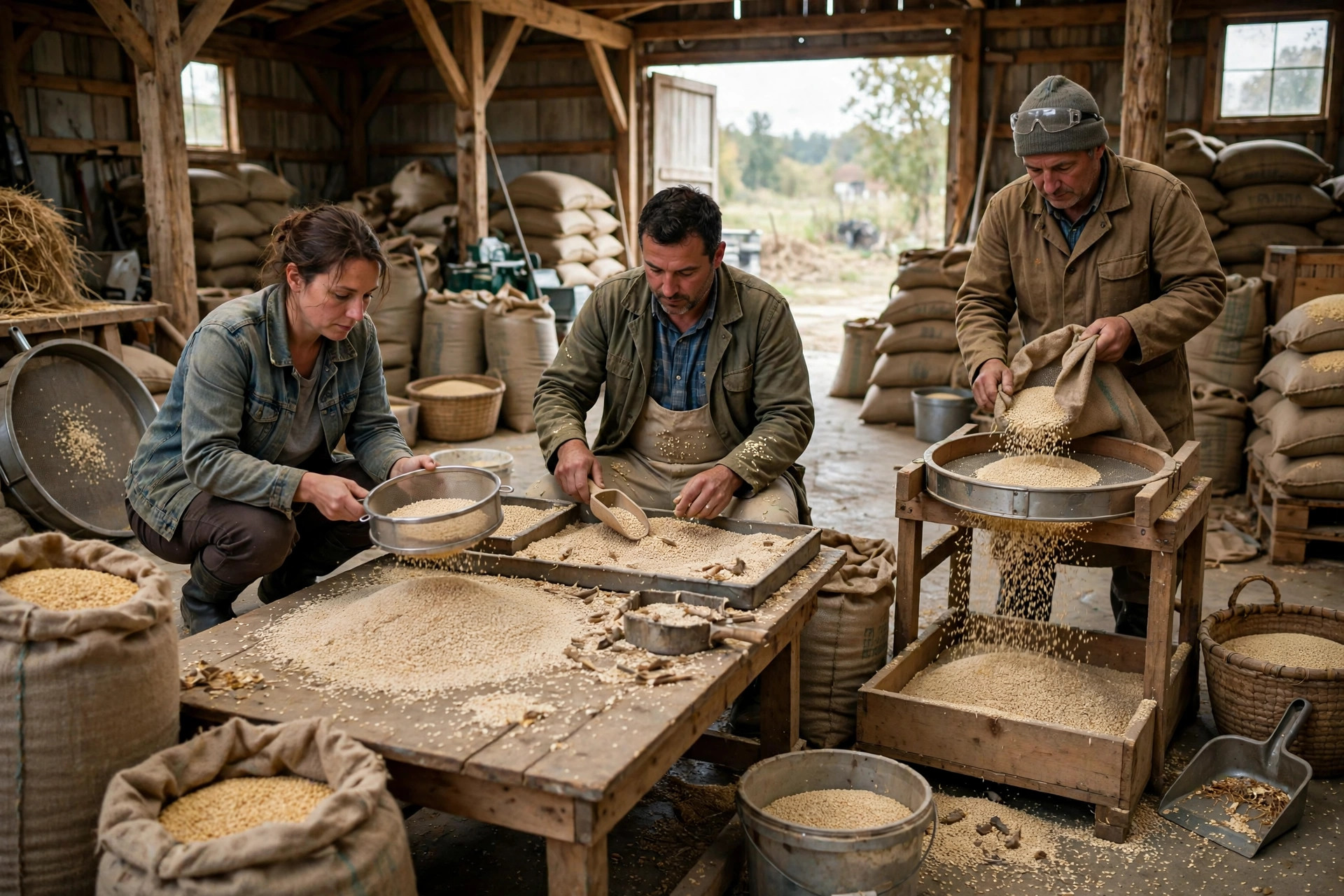
Let me start with a complaint. Nigeria's sesame trade has good product, and it loses at exactly one step: the cleaning warehouse. Smallholder farmers deliver bag by bag, with soil, stones, and stalks mixed in. If you skip grading and cleaning and ship straight to Lagos, Chinese buyers will test the shipment, find excess impurities, and dock the price. Then you are paying freight on top of the deduction. My first season in this trade taught me that lesson the hard way. Out of three containers, two took impurity deductions. I basically worked a year for the buyer for free.
I learned my lesson. The sesame export game is not about who collects the most. It is about whose cleaning warehouse is cleanest. The cleaning and grading warehouses around Kano and Jigawa are where smallholder sesame becomes export sesame. This is how that warehouse works.
Sesame smallholder intake: set the rules before you take the crop
Smallholders farm roughly half a hectare to two hectares each, and every delivery differs in quality. The cleaning warehouse's first job is not to switch on the machines. It is to set rules. At intake, check impurities, moisture, and color. Deliveries that fail go into a separate pile. They never go straight into the main pile to mix. Plenty of warehouses skip this to save time, dump everything into one big heap, and watch a few bad bags drag down a whole heap of good sesame.
My approach is to put up a board at the intake point stating the acceptance lines for impurities, moisture, and color. Deliveries over the line get bought at a downgraded price, not rejected. Rejection hurts farmers. Downgraded buying protects quality. Farmers quickly learn that clean deliveries sell high and dirty deliveries sell low, and next season's deliveries come in cleaner. I have tested this myself, and average intake impurities fell in the second year.
The sesame cleaning line: air separation, destoning, and gravity separation
The cleaning line runs like this. Air separation blows away light trash. Screens sort by size. A destoner removes stones. A gravity table separates shriveled and foreign seeds at the end. Every step has its job. Skip one and you pay for it later.
The steps most often skipped are destoning and gravity separation. Screens cannot catch stones and air cannot blow them away. Only a destoner handles them. Shriveled seeds look like sesame but weigh wrong, and only a gravity table separates them. Buyers test exactly these two things: impurities and moisture. Excess impurities mean deductions. Excess moisture is worse. Wet sesame heats and molds in storage, and arrival quality drops a grade.
Moisture control has a down-to-earth method. Test at intake, test again after cleaning, and test a third time before container loading. Staple all three readings to the batch sheet. When a buyer asks, you can show a moisture curve instead of saying "we controlled it." Numbers talk, and when a deduction is on the table, numbers are your only leverage in negotiation.
| Cleaning step | What it solves | What skipping it costs |
|---|---|---|
| Air separation | Light trash, stalks, dust | Downstream screens clog, throughput falls |
| Destoner | Stones, heavy trash | Buyer impurity deductions |
| Gravity separation | Shriveled and foreign seeds | Grade never reaches export price |
| Three moisture tests | Heat and mold risk in storage | Arrival quality drops, whole container discounted |
Shipping to Lagos: do not flip at the last mile
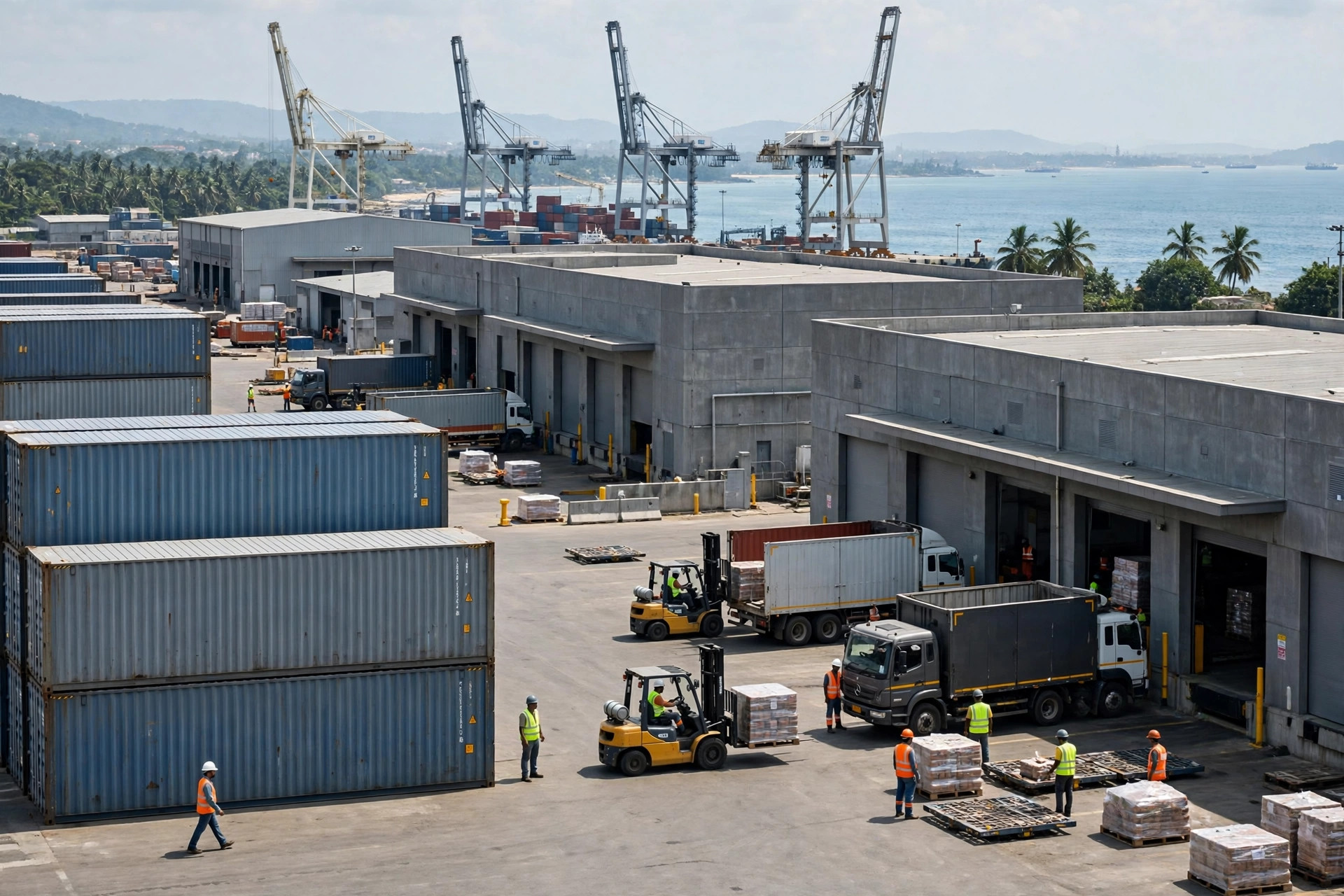
After cleaning and grading, the goods move to Lagos for export. This stretch flips more shipments than people admit. Bags tear, rain gets in, and different grades get mixed into one container. Before loading, recheck the bags and recheck the grade marks. If a container is mixed, break it open and reload it rather than betting that the buyer will not notice. Buyers notice. And once they notice, your next shipment gets inspected first.
One more warning. Only half-believe equipment vendors. Claims like "99 percent impurity removal" or "15 percent annual loss" are sales language, not your warehouse's real data. Your real data comes from your own three-test records and your buyers' inspection reports. Negotiate with vendor numbers and you will lose every negotiation.
The sesame pest bill: insects cost more than impurities
Let me start with a complaint that gets overlooked. In sesame storage, insects cost more than impurities. Excess impurities mean a deduction. An insect problem means rejection. A warehouse can grade its goods well and control moisture well, and then lose everything to pests in storage. After a few months, boreholes, frass, and live insects show up at buyer inspection, and the whole container gets sent back. Return freight, demurrage, and re-cleaning together cost several times an impurity deduction.
Pest prevention has three down-to-earth rules. First, keep the storage environment clean. Cleaned warehouses, empty bags, and leftover stock in corners get cleared on a schedule, so pests have nothing to feed on. Second, inspect incoming goods by sampling. A batch with live insects gets stored separately and treated separately, so it cannot spread to the whole warehouse. Third, inspect storage regularly, and staple inspection records to batch sheets, so any problem can be traced back to the batch, the warehouse, and the delivery day.
One more warning. Fumigation is not a cure-all. Fumigation kills insects, but fumigant residues, fumigation records, and destination-country fumigation requirements all have to follow current rules. Do not just follow someone who says one fumigation makes everything clean. The chemical, dose, and exposure time follow the treatment provider's authorization and the destination country's current requirements, and the records must travel with the goods. Fumigation with incomplete records can still be rejected by the buyer at the destination port.
Here is the bottom line. In the sesame trade, the cleaning warehouse is one line away from being a money printer or a money shredder. Grade it clean, hold the moisture down, and staple the records to the batch, and the Chinese buyer's inspection sheet becomes your price increase. I have tested this myself. Follow it, and your name will not be on the next deduction sheet.
By Ah K, E-commerce Seller (5 yrs)