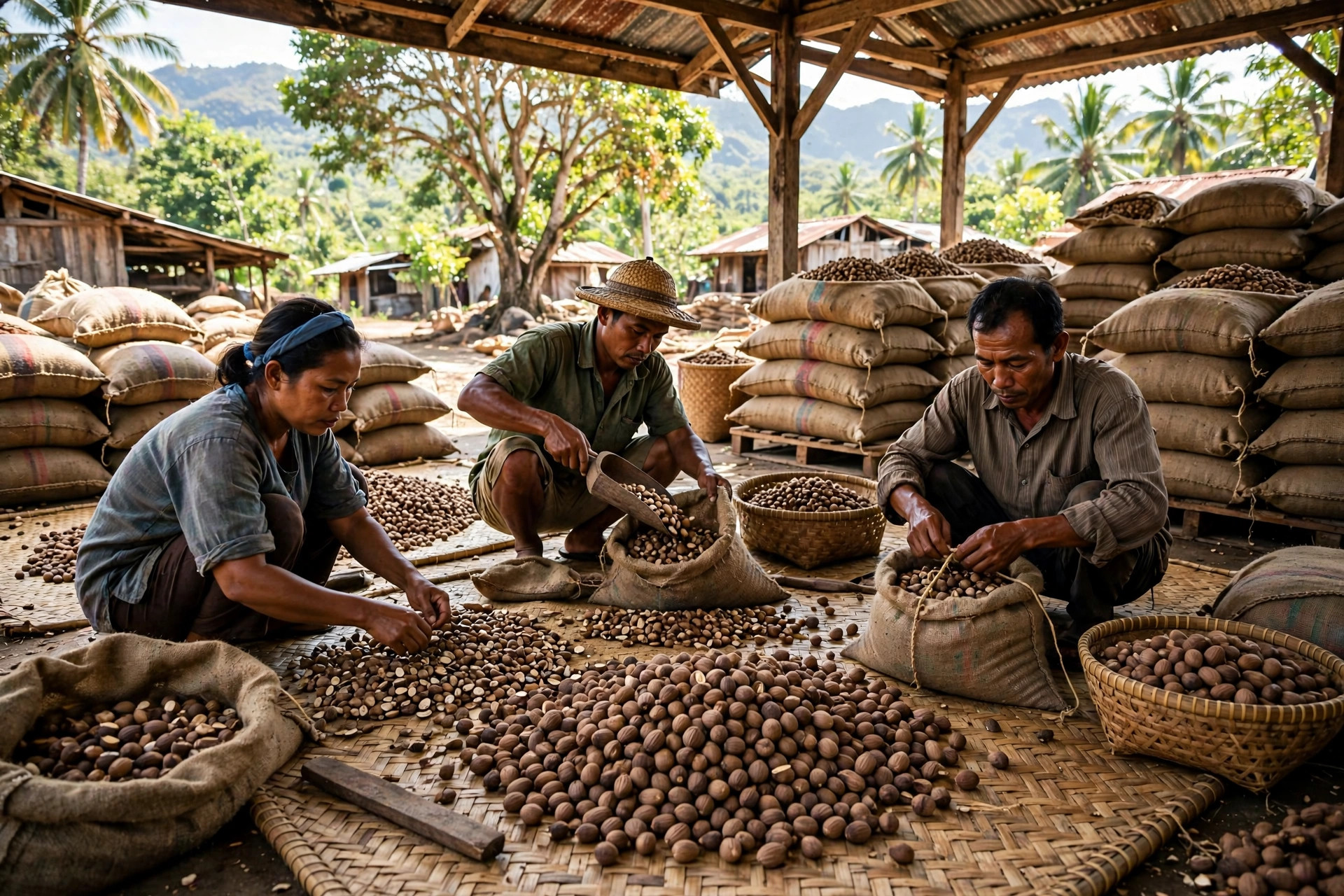
Let me be blunt: Indonesia nutmeg export warehouse storage is not won by building a bigger warehouse. It is won — or lost — at the two ends: the drying mat and the shipping container. Nutmeg is unforgiving. Store it damp and it molds. Pack it into a container without moisture protection and it molds. Good warehouse practice in between cannot rescue either failure.
Indonesia Nutmeg Export Warehouse Storage Starts on the Mat, Not in the Warehouse
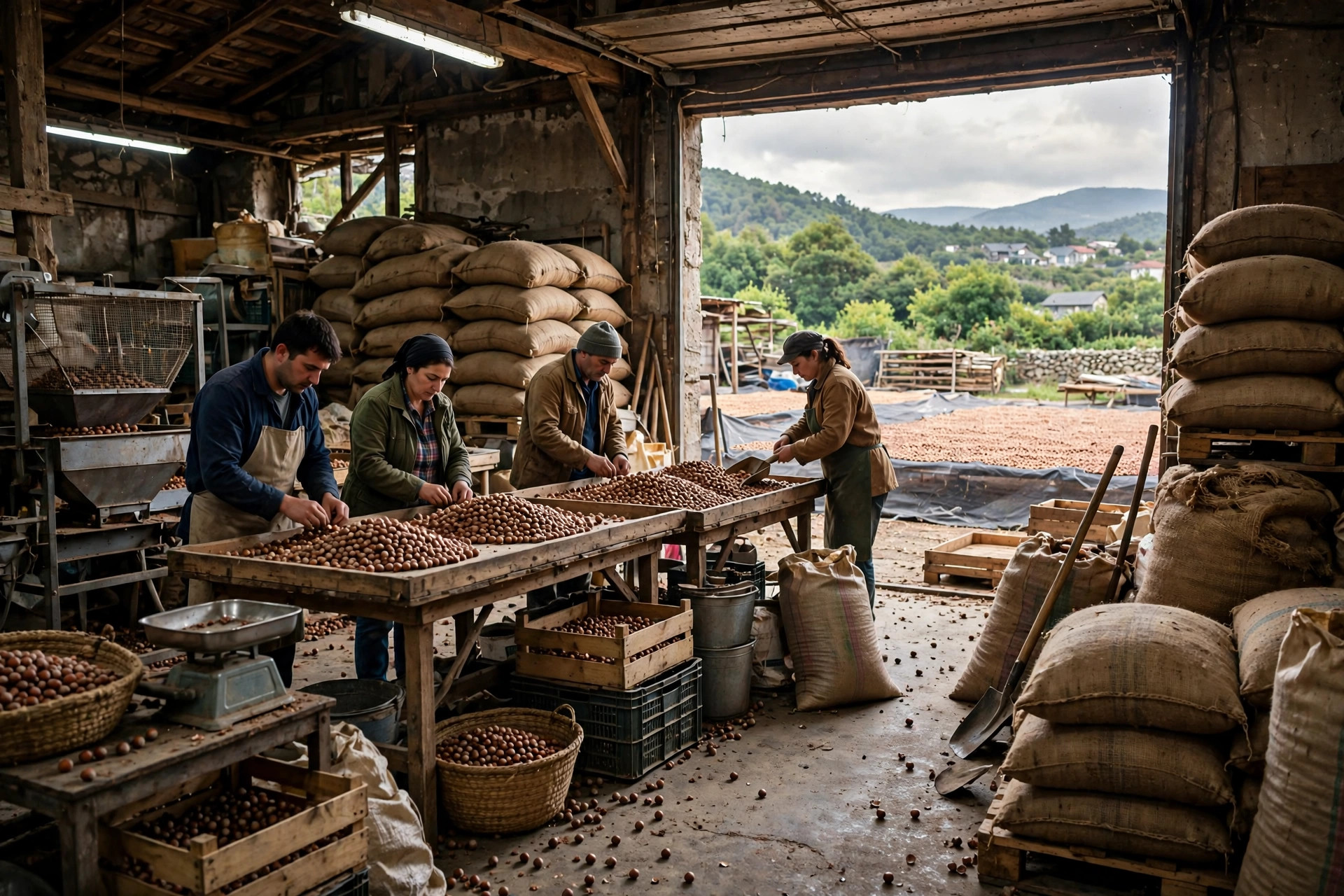
I have seen too many people treat moisture control as a warehouse problem — a few dehumidifiers and done. The Banda Islands climate does not cooperate with that idea. The air itself is wet, so the drying mat is the first line of defense. Nutmeg seed and mace must be dried separately. They dry at different rates; dried together, the mace turns brittle while the seed is still damp, or the seed dries while the mace crumbles. Either way, grading becomes a mess.
Drying mats, frequent turning, and pulling the crop under cover when rain comes — these unglamorous chores are worth more than any warehouse equipment. Near the end of the dry season in 2023, a buying station in the Banda area rushed a lot out: four days of drying, the surface looked dry, and the lot went into bags. The bags went into a stack against a warehouse wall, and nobody noticed the wall sweating. Two weeks later the bottom bags were warm and sticky. The lot had to be re-sorted and re-dried, and the downgraded portion sold for less. The failure had two sides: drying time squeezed by a sailing schedule on one side, and a stack with no gap from the wall on the other. Small errors on both sides added up to one lost shipment.
What the Warehouse Actually Has to Control
Three things, and only three, matter most once the crop is off the mats.
First, grading. Sort by size, wholeness, and dryness. Broken, mold-spotted, and under-dried nuts each go in their own bags. Mixing them to save labor is false economy: when a buyer opens one bad bag, the whole container falls under suspicion, and the cost of sloppy grading is paid at the destination port, not in your warehouse.
Second, moisture and mold discipline by hand and by schedule. Properly dried nutmeg rattles and feels crisp; if it does not, it does not go into storage. After intake, open bags and check every week, especially in the rainy season and in stacks near walls and floors. On aflatoxin testing, take no chances: follow the buyer's requirements and the destination country's latest official rules, and treat anything that fails as domestic or downgraded stock, never as export cargo squeezed into a container. One rejected container costs more in freight and reputation than a decade of careful drying.
Before filling, there is one check that often gets skipped: the bag itself. Check inner liners for tears and seals for wear — one minute before filling saves a whole bag of rework. Do not overfill; leave room for a proper seal, because a bag that cannot close tightly has no moisture barrier at all. Label every bag on the spot: lot, date, and grade. A bag without a label is cargo without an identity, and finding or tracing it later costs nothing but time — which is to say, it costs time.
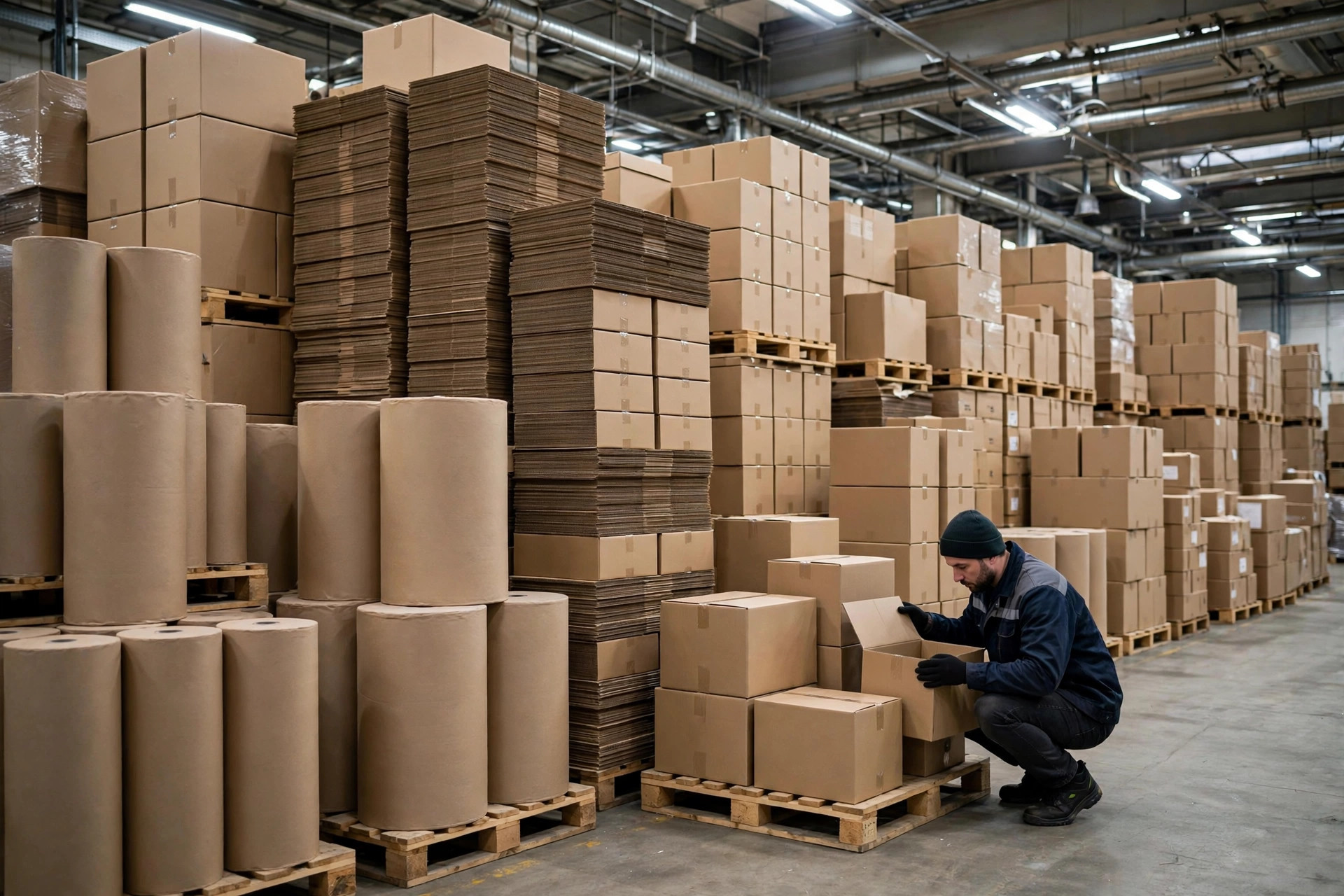
Third, bags and stacking. A torn inner liner means the moisture barrier is gone, so inspect bags before filling and replace damaged ones. Keep stacks off walls and floors, leave air gaps, and never pack stacks tight against each other. In early 2024, a storage point in the Maluku area got through the rainy season on exactly these basics: diligent turning on the mats, grading at intake, and weekly checks. No new equipment. The owner's line stuck with me: equipment is the bonus; discipline is the capital.
Indonesia Nutmeg Export Warehouse Storage and the Last Mile: The Container
Here is the part people hate to hear: get everything right up to loading, and then fail the container, and the whole job was wasted. Tropical cargo in a steel box faces condensation as temperatures swing day and night. One drip from the container roof onto a bag is one mold spot, and mold spreads the argument to the whole lot.
My kit has three parts, and none is optional: desiccant matched to the container type and the voyage length, never guessed short; inner liners checked and sealed properly, because a bad seal is no seal; and careful stowage, bags upright, with gaps, so nothing gets crushed open. Desiccant, by the way, is not a case of more-is-better or less-is-cheaper. Too much is waste; too little is risk. Match it to container type, load, voyage length, and season, write the quantity down, and check the next container against the same note. Before the doors close, take one last look: are all bag openings up, is any bag caught in the door, has a forklift tine nicked a liner? That look takes a minute and can save a container.
Documents get the same once-and-right treatment: phytosanitary certificate, certificate of origin, and packing list must agree on product name and quantity before the container leaves. Fixing documents at the destination costs double in money and time.
Grading pays a second dividend that rarely shows up in warehouse budgets: good lots can be priced separately. Mixed cargo can only be sold at an average price, while separated grades let the top grade be negotiated on its own and the lower grade routed elsewhere. That extra sorting step in the warehouse can earn back a whole price tier at the sales desk. The warehouse and the sales team have to do that arithmetic together, or neither sees it.
And one piece of advice that sounds like a platitude until it saves you: never load under-dried nuts to catch a sailing. Sailings come every week. Moldy cargo has no way back. Indonesia nutmeg export warehouse storage comes down to one moisture ledger with three entries: the mat stops the first damp, the warehouse holds the second, and the container stops the last. Close all three, and Banda nutmeg arrives dry in the buyer's hands.
By Lao Mi, Supply Chain Veteran (20 yrs)