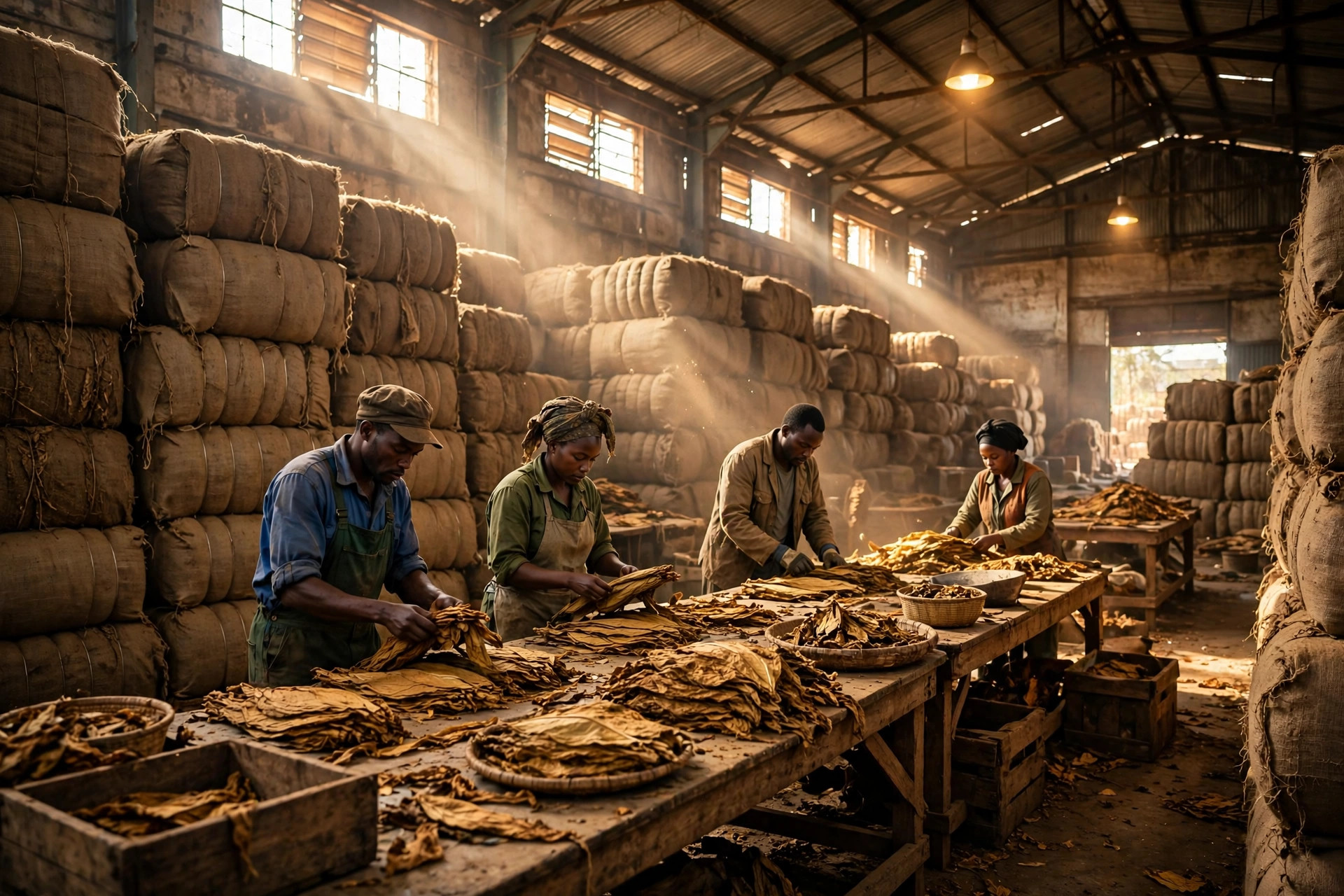
Portugal cork export warehouse storage looks, from the outside, like a forestry business. Inside the warehouse it is an accounting exercise. According to public trade statistics, Portugal is the world's largest cork exporter, accounting for roughly seven in ten of global exports, a position held for decades.
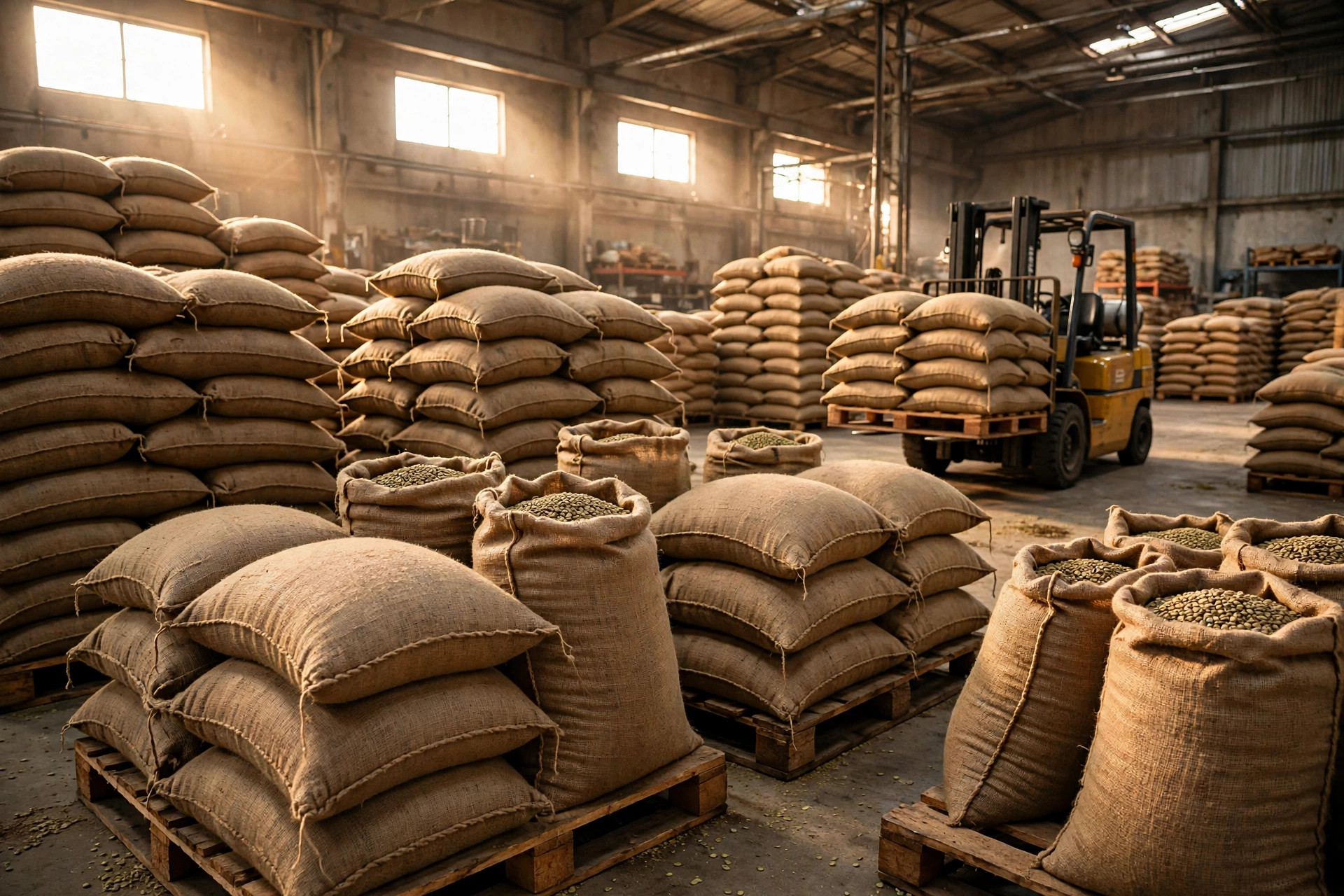
Bark stripping in the montado oak woodlands follows a strict seasonal window, and stripped planks cannot be shipped straight away. Freshly stripped cork carries high moisture and uneven texture, and it must first go through seasoning in the warehouse: stacked flat, with gaps for air, ventilated, so that moisture leaves slowly. This stage cannot be rushed. Drying too aggressively leaves the surface dry while the core is still wet, and the plank rebounds the first time it meets humidity again. Stacking too tightly creates dead zones in the middle of the pile, and mould starts exactly there. An experienced keeper judges a plank not by colour but by edge curl and spring-back in the hand, because flatness decides whether it can enter the stopper grade at all.
Portugal Cork Export Warehouse Storage Grading: Stopper, Granule and Decorative Grades
Grading is the most valuable operation in the whole warehouse, because it sets the price and the destination of every plank. Stopper grade demands the most: a clean surface, fine pores, even thickness, no through-cracks and no insect holes, since only such planks can be cut into natural stoppers with reliable sealing performance. Granule grade is judged differently: what matters is the uniformity of the granules after crushing and the level of impurities, and its destination is agglomerated stoppers and granule products. Decorative grade follows a third logic: grain, pattern and surface integrity are the selling points, used for wall panels, flooring and decorative facings, where slight colour variation is part of the appeal, not a defect.
Grading cannot rest on one person's eye. The disciplined approach is dual verification: one person grades, a second person samples the result, and the sampling rate and every downgrade are recorded. A downgrade is not a punishment; it is a figure in the ledger. When a plank drops from stopper grade to granule grade, the value gap is several-fold, and if the reason is not written down, the next stripping season brings no lesson about which forest supplier needs a quality conversation.
| Grade | Core requirement | Warehouse handling | Main destination |
|---|---|---|---|
| Stopper grade | Clean surface, fine pores, no through-cracks | Separate zone, flat stacking with air gaps, protected from pressure and moisture | Natural stopper plants |
| Granule grade | Uniform granules, low impurities | Moderate stacking allowed, dust control | Agglomerated stoppers, granule products |
| Decorative grade | Intact grain and pattern | Shielded from light and scratches, boards separated | Wall panels, flooring, decorative facings |
In the summer of 2023, a mid-sized export warehouse in Alentejo learned this the hard way. That stripping season had heavier than usual rain, and a batch of planks looked dry on arrival while their cores were still holding moisture. The warehouse graded and packed them on the normal schedule. Three months later, when the stopper plant opened the cases, mould spots showed on the edges of the sampled boards, the whole batch was downgraded, and the warehouse paid the return freight and lost the customer's next-season order. On review, the grading standard was not the problem; the timing was. After that, the warehouse required a longer seasoning period for rainy-season arrivals, moisture sampling before grading, and intake batch numbers on the grader's record.
Moisture and Mould Control in Cork Export Warehousing: Three Lines of Defence
Cork's fear of water sounds like a simple statement, but in warehouse practice it breaks down into three concrete control lines. The first is contact with floors and walls: planks laid directly on the floor pick up rising damp in the bottom layer first, and planks stacked against a wall collect condensation marks on the back. Pallets for height and a gap from the wall are the cheapest moisture measures available, and also the easiest to skip when people are in a hurry. The second is ventilation dead zones: the middle of a warehouse stack is the likeliest place to go stale, so aisles between stacks must be kept open for airflow and stacks must be turned and inspected on a schedule, not left untouched until shipment. The third is rainy-season intake management: planks stripped in wet weather arrive with surface water and must be spread out and aired before entering the stack, an extra half-day that can save a whole batch.
Here the counterintuitive judgement matters: drier is not always better for cork. A plank dried too far becomes brittle, chips at the edges when cut, and the stopper plant's finished-product yield falls. The goal is not the lowest possible moisture figure but a stable range that keeps the plank resilient. Mould prevention and resilience are a trade-off: over-drying removes the mould risk and pays for it in processing yield.
Stopper Plant Incoming Inspection and Batch Traceability
A stopper plant's incoming inspection never judges only the batch in front of it; it judges the supplier's whole management system. Inspection usually runs in three steps: appearance and moisture sampling first, then grade and quantity against the order, then the batch documentation. The documentation is the decisive part. Every batch must trace back to the stripping woodland, the stripping year, the seasoning dates, the grader and the grading date. With incomplete files, the plant will not accept the goods, because if a finished stopper later fails on sealing, and the traceability chain breaks at the warehouse, responsibility cannot be established.
An incoming inspection in the north of Portugal in early 2024 illustrates the point. A batch of decorative-grade boards arrived at a stopper plant, and sampling showed the grain pattern did not match the order sample. The batch records traced the fault to warehouse re-stacking: boards from two woodlands had been merged during a stack transfer, the grade was right but the woodland was wrong. The outcome was return and re-grading at the warehouse's expense, including freight both ways. The lesson was a missing rule, not carelessness: boards from different woodlands and grades must be physically separated, and every re-stacking record must state source and destination, not just quantity.
Consolidation and the Damage Ledger: Packing Planks for Shared Containers
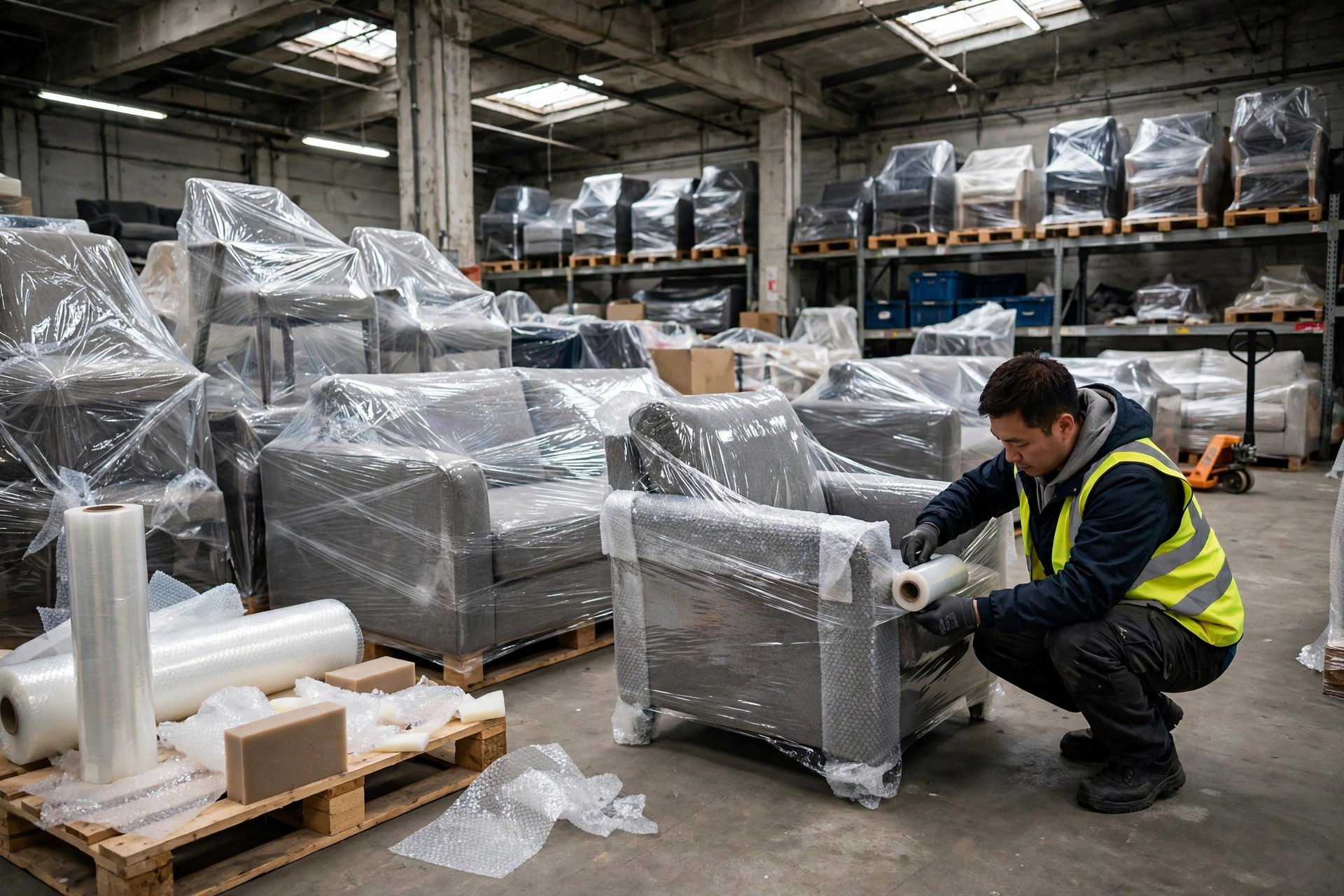
In Portugal cork export warehouse storage, packing planks for consolidated shipment means settling two accounts: pressure damage and moisture. Pressure is managed through stack geometry: heavy boards below, light boards above, separator boards between stacks, corner protection, and buffer space at the container door so boards do not topple when the doors open. Moisture is managed through packing materials, desiccant in the container, and a final moisture sample before the doors close. Many warehouses treat container loading as pure manual labour, but loading is the last quality gate before shipment: before the doors shut, the sampling record, the batch list and the marking photographs should all be complete, because every missing item becomes a bargaining cost in a dispute at the destination port.
Consolidation carries one more account that is often overlooked: co-loading. Stopper-grade raw material should not share a container with strongly scented cargo; where sharing is unavoidable, isolation measures and loading order belong in the loading sheet, not in the loader's on-the-spot judgement.
From the montado to the stopper plant, a cork plank's journey is really a quality decay curve: quality is highest at stripping, and every subsequent warehouse operation decides how fast that curve slopes down. Grading sets the value ceiling, moisture control sets whether the floor collapses, traceability decides whether a failure can be explained, and consolidation decides how much quality survives to the customer's hands. Whether Portugal's export pattern stays stable over the long term depends on woodland resources and global stopper demand, but the warehouse side of the ledger is computable: record the grade, the moisture and the batch of every plank, and warehousing turns from a cost centre into the guardian of quality. The open question worth watching is whether stopper plants will tighten incoming standards as natural and agglomerated stoppers compete harder — and if they do, the warehouses hit first will be the ones whose grading and traceability are the roughest. By Dr. Chen, Supply Chain Researcher