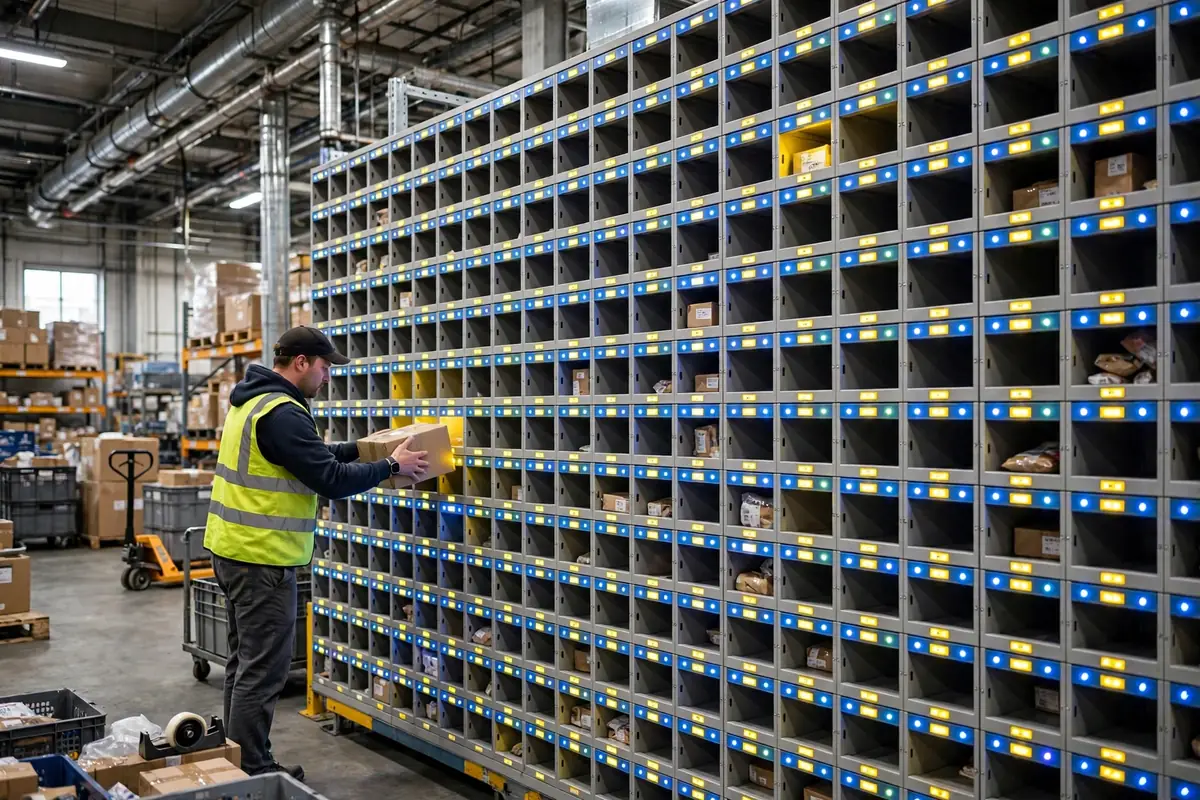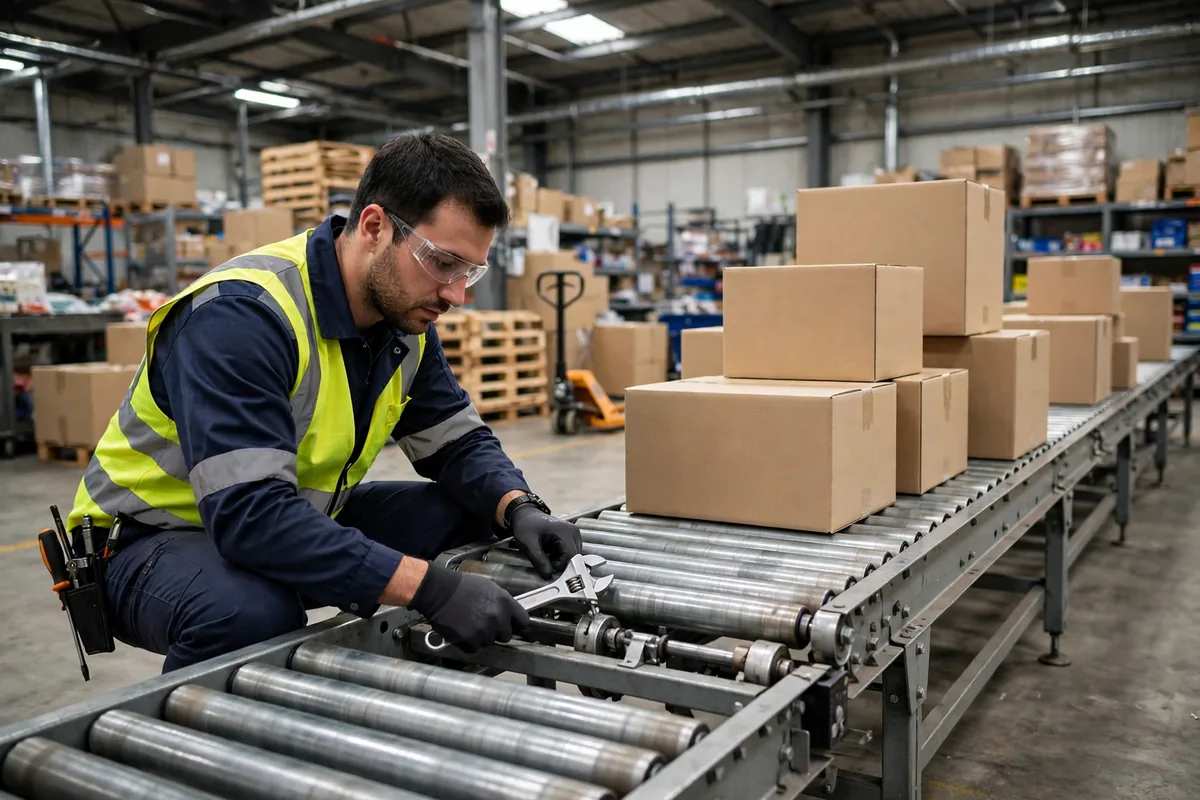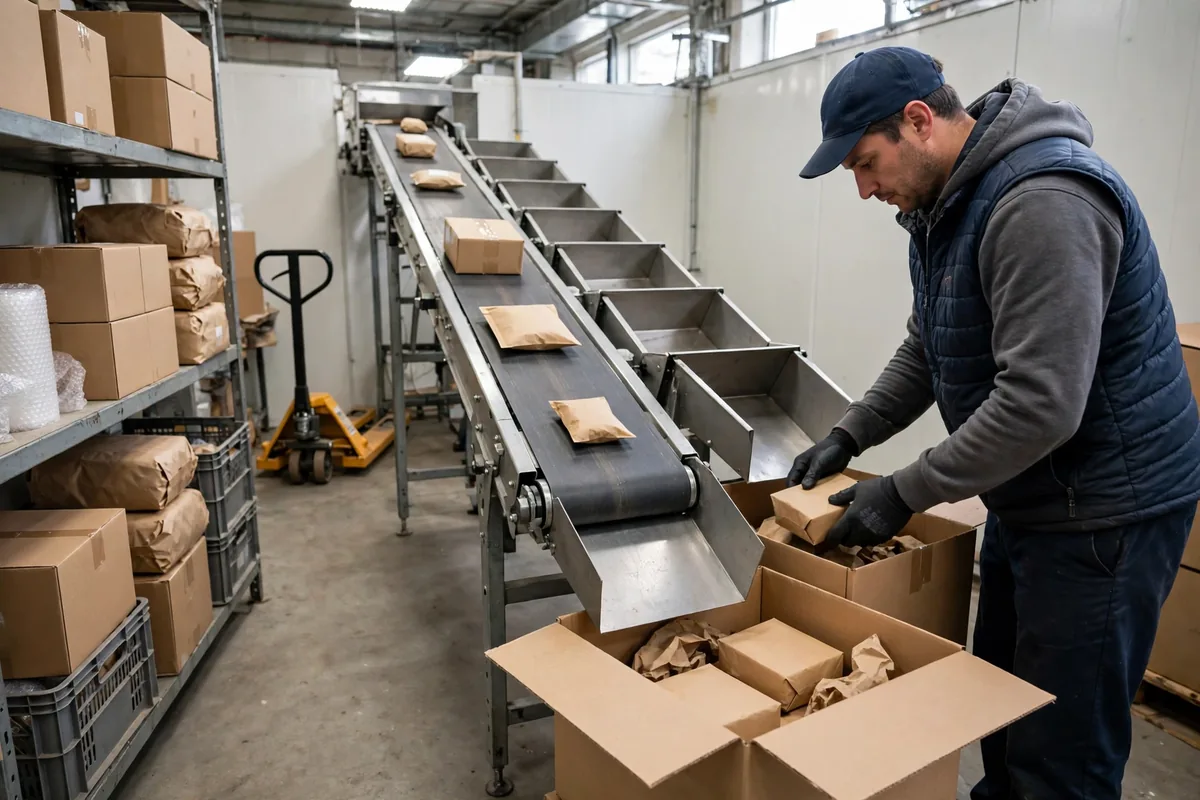
Let me start with our embarrassment. Our warehouse is about 3,000 square meters, and on peak days we push past 6,000 orders, all sorted by eight people standing around manual chutes. On the third night of a big promotion, at nine in the evening, mis-sorted parcels were stacked against the wall, the carrier cut-off had passed, and more than 400 orders were still unsorted. I was squatting on the floor sticking labels on boxes, thinking: one more season like this and I quit. That is why I seriously studied the narrow belt sorter. Not to look impressive. Because manual sorting had backed us into a corner, and a small warehouse like ours cannot afford to burn money on the wrong machine.
Start With Your Order Profile, Not the Top Speed
The first question most owners ask a vendor is: how many pieces per hour at top speed? I asked it too, and it is the most misleading question in sorter shopping. The counterintuitive truth is this: pick a sorter by your order profile, not by its maximum rated speed.
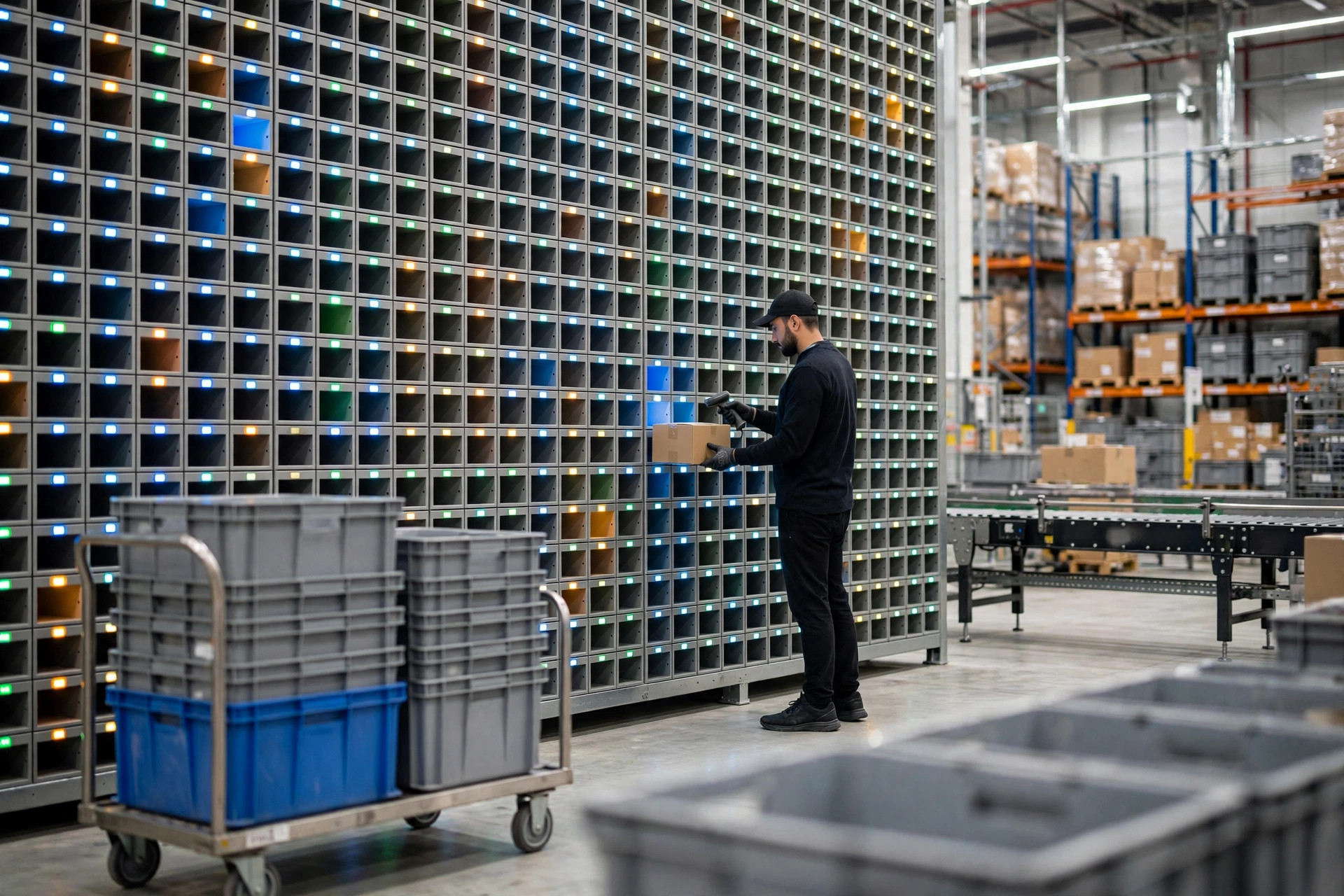
Your order profile means what your parcels actually look like. How heavy are they, how big, how many destinations do they split into, and how do your waves arrive during the day? A narrow belt sorter is mechanically simple: a line of small belt units carries each parcel along, and when the parcel reaches its chute, the belt runs sideways and pushes it off. That design is born for small and medium items — apparel, cosmetics, phone accessories, household goods — reasonably light, reasonably regular, and not too soft or floppy.
If more than eighty percent of your orders look like that, if you run roughly 3,000 to 15,000 orders a day, and if you need a few dozen chutes rather than a few hundred, narrow belt sorter warehouse selection stops being a hard question. It fits. If you ship furniture and odd-shaped freight, or only a thousand orders a day, skip the machine. Manual chutes will serve you better and cheaper.
Also watch your waves. E-commerce orders do not arrive evenly; they slam in during the afternoon and evening peaks. Size the machine for your peak hour, not your daily average, and definitely not for the brochure speed, which is measured with perfect test parcels in a lab. Real soft packs and odd shapes will discount that number fast. Treat every speed and price figure as vendor-specific, and always check the final vendor quote against a live site running parcels like yours.
Narrow Belt Sorter vs Cross Belt vs Manual Chutes
I put three options on the table and did the math over half a night. Here is the framework. Figures are orders of magnitude only; get a real vendor quote before deciding anything.
| Option | Investment Level | Suitable Daily Volume | Footprint | Best For |
|---|---|---|---|---|
| Manual sorting with chutes | Lowest; chutes and scanners get you started | Under about 3,000 orders a day | Small, but peak season needs a wall of people | Early-stage warehouses with unstable volume |
| Narrow belt sorter | Mid-range, often a fraction of a cross belt system | Roughly 3,000-15,000 orders a day | One straight or L-shaped line | Small warehouses with mostly small items and a few dozen chutes |
| Cross belt sorter | Highest; loop line plus full control system | Only pays off above roughly 20,000 orders a day | Needs a full loop area | Large hubs with hundreds of chutes and high throughput |
The most painful row in that table is footprint. A cross belt runs in a loop. The vendor measured our floor, shook his head, and admitted the loop would fit only if we gave up our packing and staging areas. A narrow belt line is straight. We ran ours along a wall in an L shape, sized by chute count, and never touched the racking area. For a small warehouse, whether a machine fits your existing floor often matters more than its speed, because relocating costs more than the machine's price difference.
Then count people. Manual sorting took eight people across shifts at peak, and we still could not hire enough. After the narrow belt went in, three people covered sorting, and the freed hands moved to packing and quality checks, which were the real bottlenecks. Do not let a salesperson calculate your payback. Count three things yourself: extra peak orders you can now accept, mis-sort compensation you no longer pay, and temporary labor you no longer hire. If those three cover it, buy. If not, wait.
Life After Go-Live: Better, Not Magical
We installed the line before last year's peak season, and I stood by the chutes through the first big promotion. It held up better than I feared. Mis-sorts dropped clearly, because manual sorting at full sprint depends on tired eyes and fast hands, and new hires mis-sort enough in their first week to make you question everything. A machine, given a correct scan, never guesses the chute.
But do not worship it. Here are my three bruises. First, soft packs and ultra-thin mailers misbehave. An apparel soft pack sits crooked on the belt and slides off at an angle, so we added a shaping step at the induction table, where one person flattens and squares each soft pack. That mostly fixed it. Second, induction can starve the machine. The sorter is only as fast as the people unpacking and scanning in front of it, so we went from one induction station to two before the line stopped waiting around hungry. Third, full chutes do not stop the machine. Parcels keep coming and pile up at the chute mouth unless someone patrols and clears full chutes on a schedule. None of these are machine failures. They are process failures, and in a small warehouse, automation is seventy percent process and thirty percent machine. I now say that to anyone who will listen.
A Selection Checklist for Fellow Small Warehouses
First, pull three months of your own order data before you visit any showroom: weight and size distribution, the share of small and medium items, daily and peak-hour volumes, and your destination count. Without that data, the salesperson drives and you just ride along.
Second, size your chute count to your real destinations plus modest headroom. Every chute costs money and floor space. Give high-frequency destinations their own chutes, let rare destinations share one chute with a manual second pass, and expand later if the volume proves it.
Third, make the vendor test your ugliest parcels. Bring the soft packs, the long boxes, and the round bottles from your own floor and run them on their demo line. Standard cartons in a promo video run smoothly for everyone. Your freight is the only honest test.
Fourth, keep a manual fallback lane. Every machine stops for maintenance eventually. One chute line and one sorting table let your team cover a half day by hand instead of shutting the whole warehouse down. We cannot afford the machine, and we definitely cannot afford a full day stopped.
Fifth, pin down after-sales terms and spare parts in the contract. The small belt units and motors are wear parts. Ask the spare part prices and delivery times in writing, subject to the vendor quote and contract, so a peak-season breakdown does not leave you staring at a silent line.
A cross belt sorter is not a bad machine. It is simply built for big warehouses, and forcing one into a small site is like giving a neighborhood diner a central commissary kitchen: impressive, and exhausting. The charm of the narrow belt is that it is just enough. It takes over the one stretch that hurts a small warehouse most — sorting small and medium parcels — without demanding your floor or eating your budget. Small warehouses survive their own way: stay alive first, look fancy later.
By Xiao Ma, Small Warehouse Owner