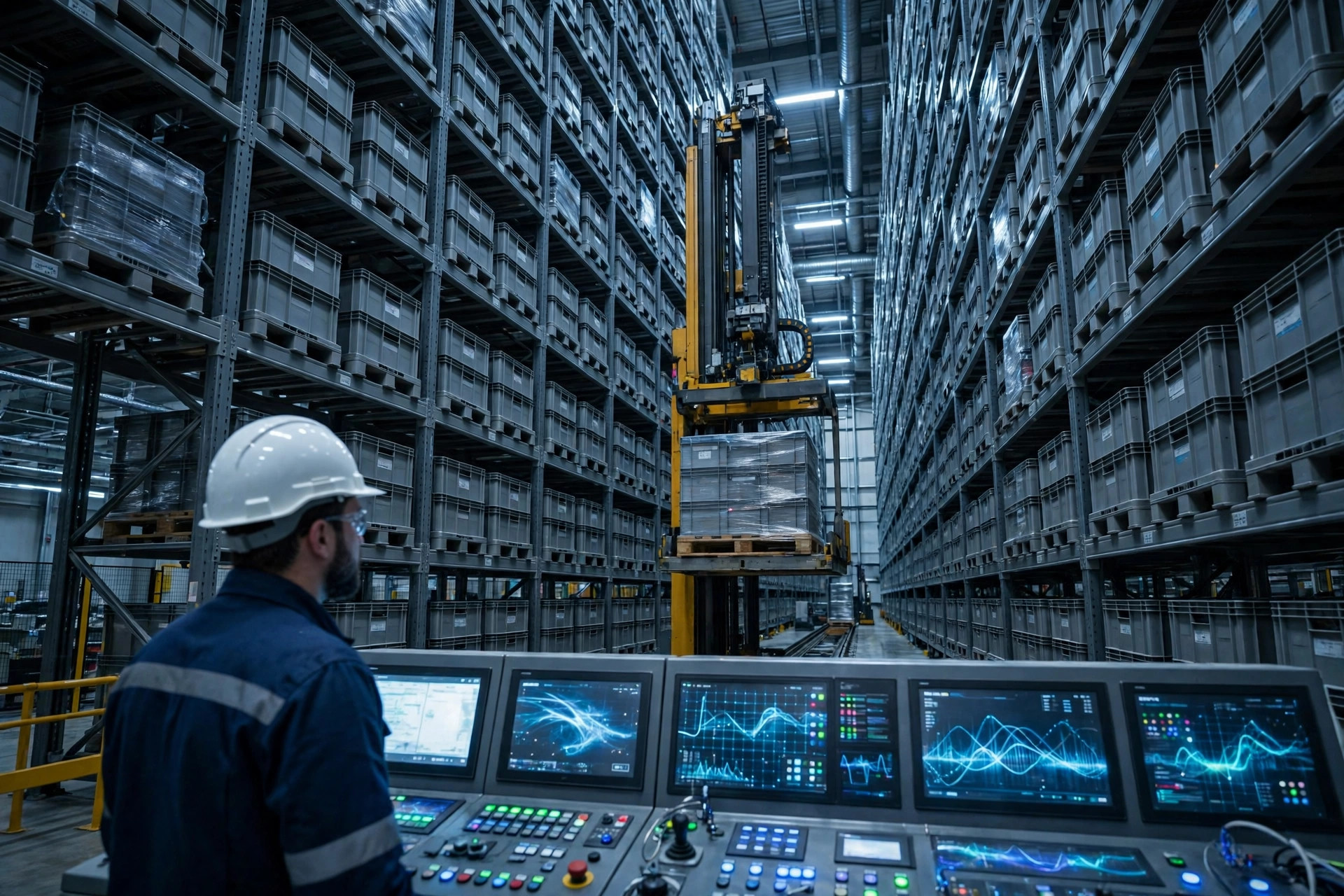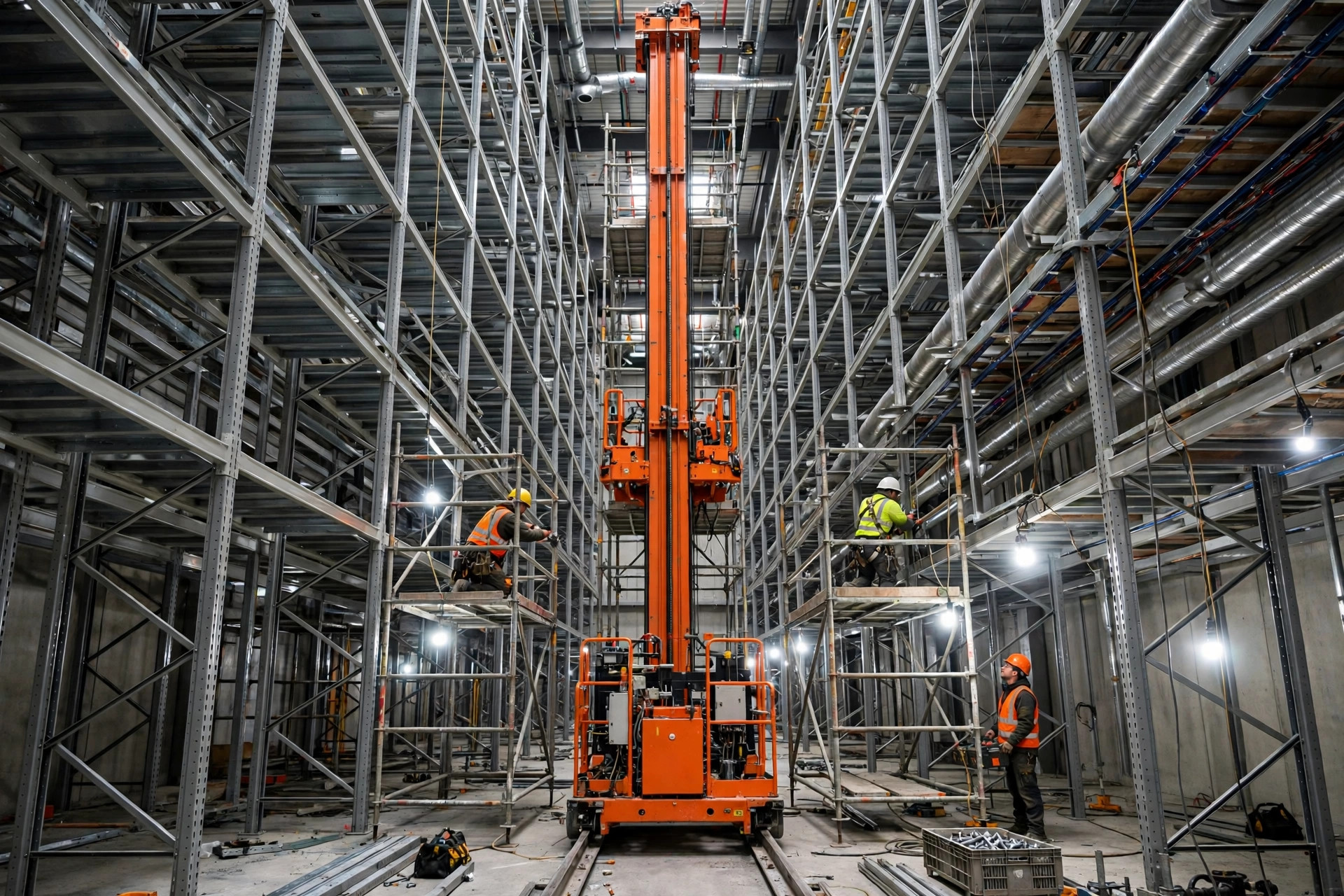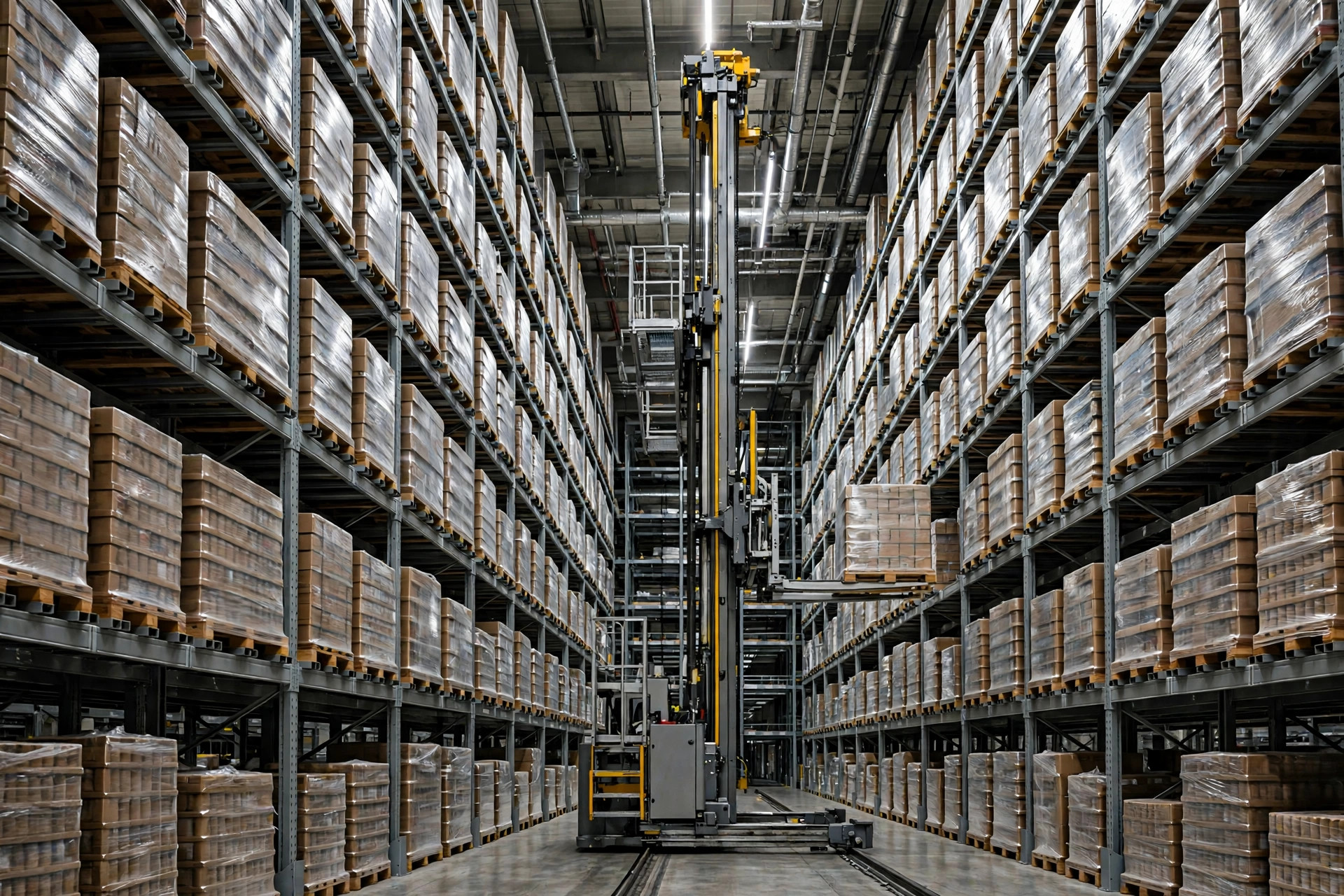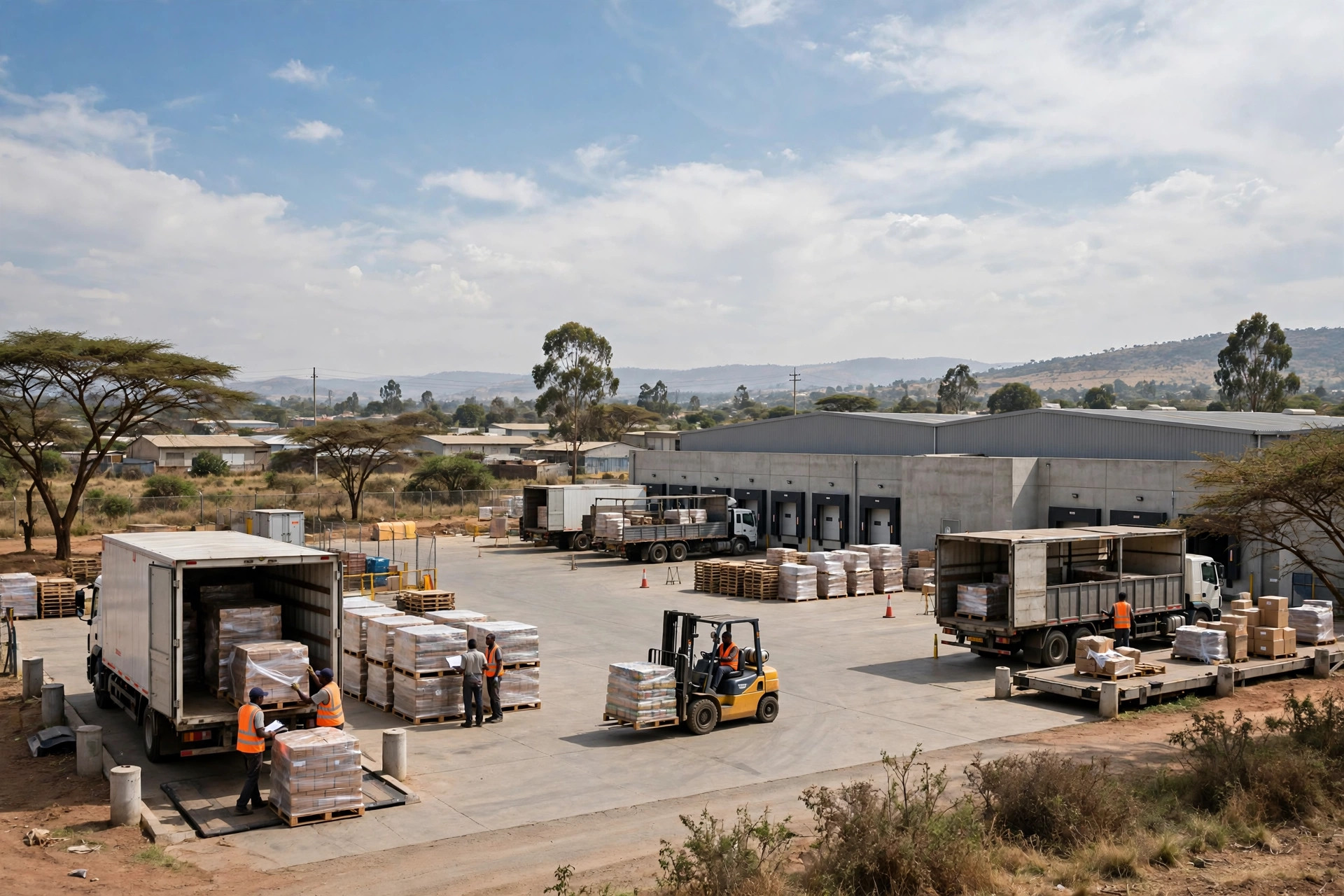
Let me confess something first: our warehouse is 3,000 square meters, eight people total, and last year we nearly signed for an automated storage and retrieval system. The salesperson made it sound like a no-brainer — all the big players do it, double the throughput, halve the headcount. I went home, ran the numbers on my calculator, and felt my stomach drop. A small warehouse like ours cannot afford to burn money that way. The big-company playbook simply does not transplant into a small operation. This is the math I did after walking away, and the thresholds I now use before anyone talks to me about ASRS again.
The Expensive Lesson We Almost Paid For
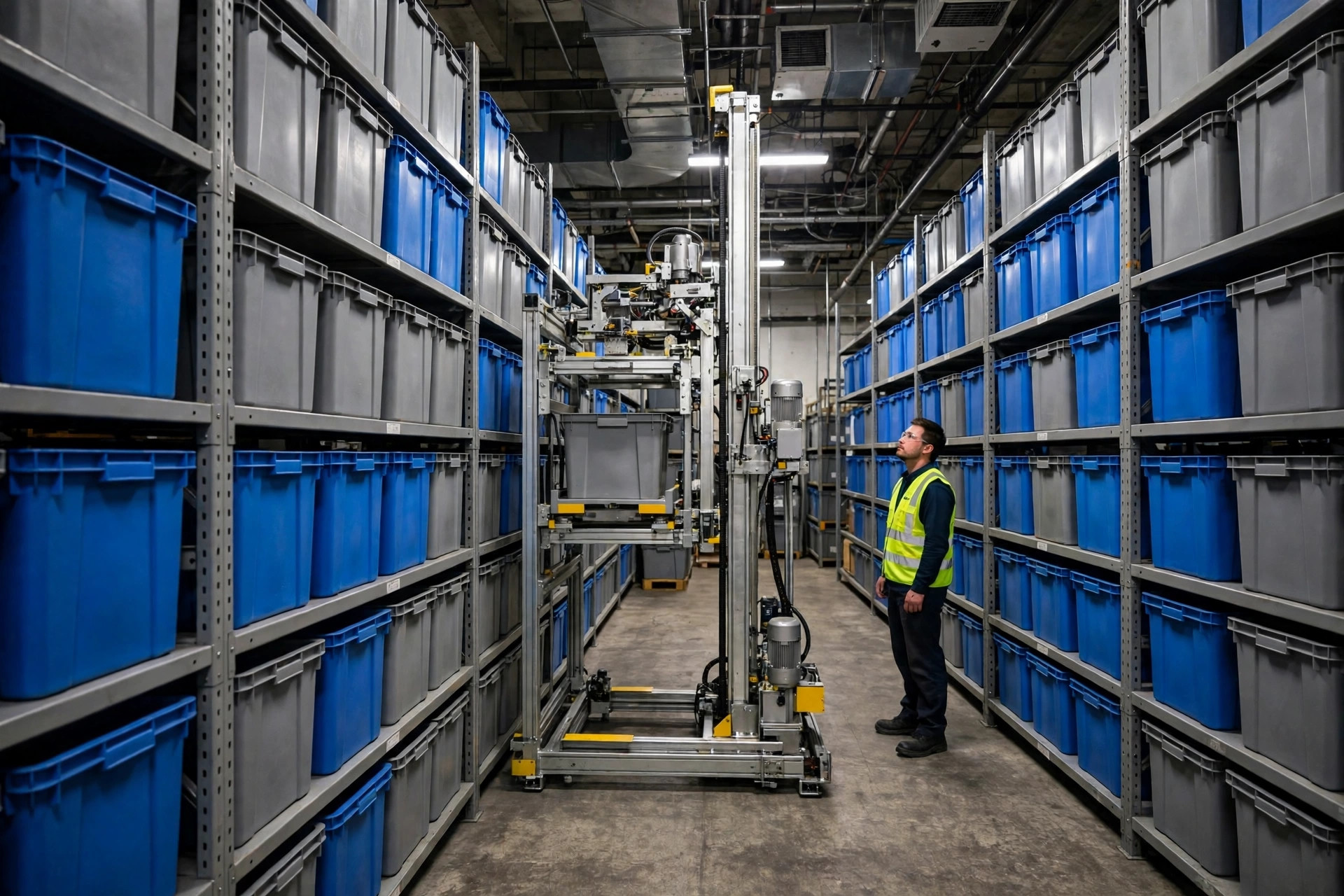
In September 2025, a vendor came to measure our site: 7.5 meters of clear height, roughly 2,600 SKUs, about 280 orders a day, spiking to 500 in peak season. The proposal was two mini-load aisles with conveyors and a lift. I will not quote the price — quotes vary wildly between vendors, so verify with vendors before budgeting — but the payback period I calculated was over six years. Our lease had four years left. The equipment would not have paid for itself before we had to move out. That is a losing deal no matter how you frame it.
The worse number was our order pattern. We are lopsided. Almost nothing ships before 10 a.m., then half the day's volume slams in between 3 and 6 p.m. An ASRS runs at a fixed rhythm; two aisles can only chew through so much during a three-hour surge, and they idle the rest of the day. The salesperson's answer was "add an aisle," which is just another pile of money chasing the same problem.
I went to see a peer's warehouse in the next industrial park. They installed a single-aisle system in 2024 — a 4,000-square-meter site doing 600 orders a day. The owner's exact words stuck with me: "Nothing wrong with the machine. The problem is we don't have enough orders to feed it." In slow season the crane runs four hours a day, and they still need someone who can fix it when it faults, with spare parts two weeks away. That is the small-warehouse nightmare: big companies have a maintenance department; we have Lao Wang, and when Lao Wang takes a day off, the ASRS takes a day off too.
The Four Thresholds I Drew Up
After the quote scared me off, I did not give up on the idea entirely. I wrote down four thresholds and tested our own numbers against each one. Fail a threshold, and the conversation stops.
The first is volume. My homegrown test is the "aisle feed rate": how many bin or pallet cycles can one aisle realistically run per day, and can your daily outbound volume keep it above 60% utilized? Below 60%, you are paying depreciation on a machine that mostly stands around. We could not even feed one aisle to that level, so we stopped right there.
The second is SKU profile. An ASRS loves many SKUs in stable, standard-sized bins. It hates oversized, overweight, oddly shaped, or wildly seasonal items. We carry over 300 SKUs of bulky, irregular goods that will never fit a standard tote. Those still need floor locations, which means running two systems in parallel — and doubling your management headaches.
The third is height and lease. Below about 7 meters of usable clear height, high-bay ASRS stops making sense, because fire sprinklers, lighting, and racking hardware eat more headroom than you expect. Your remaining lease must outlast the payback period, or you are renovating your landlord's building. And do not forget the floor: slab load capacity and flatness in an older building can mean a reinforcement bill that never appears on the equipment quote.
The fourth is people. An ASRS does not print money by itself; it needs someone who can read fault codes, do daily checks, and know when to call the vendor. A small warehouse cannot justify a dedicated automation engineer, so vendor response time and local spare parts become make-or-break. Our park is 200 kilometers from the nearest service depot — next-day response at best. I was not willing to gamble on that.
What We Did Instead — and What It Earned Us
Walking away from ASRS did not mean standing still. We spent a fraction of that budget on unglamorous fixes, and they worked. First, we got serious about ABC classification: our top 200 A-class SKUs drive 65% of outbound volume, so we moved them to the two rack rows nearest the packing benches, cutting picker walking distance roughly in half. Second, we built a mezzanine for light, small items, freeing up 400 square meters of floor — capacity gained without renting a bigger building. Third, we introduced a simple wave-release rule and a put wall, so the afternoon surge ships in controlled waves instead of whoever shouts loudest picking first.
Within three months, productivity rose from 35 orders per person per day to 48, and peak season's 500-order days were handled without extra hires. Total spend was a small fraction of the ASRS proposal. Small warehouses have their own way of surviving, and it is not always the most expensive tool in the catalog.
A Self-Test Table
| Your situation | ASRS may pay off | Racking + mezzanine wins |
|---|---|---|
| Daily volume | Stable 500+ orders, modest peak-to-trough swing | Under 300 orders, or volume crammed into a few hours |
| SKU profile | 2,000+ standard items with steady turnover | Many bulky or seasonal SKUs |
| Height and lease | 7+ meters clear height, lease longer than payback | Low ceiling, or under 5 years left on the lease |
| Maintenance cover | Dedicated tech, or vendor on site within hours | One or two veterans juggling it alongside everything else |
| Growth outlook | Volume confidently doubling in two years | Volume at the mercy of seasons and big customers |
If two or more rows land in the right-hand column, do not sign yet. Here is the counterintuitive part most vendors will not tell you: automation can actually slow a small warehouse down. When orders are lumpy, the fixed rhythm of an ASRS becomes the bottleneck, while a manual operation can add people, add overtime, and reroute on the fly. Flexibility is a small warehouse's lifeblood. Trading it away for a prettier throughput number is a bad bargain.
Honest Advice for Fellow Small Operators
If you pass all four thresholds, ASRS deserves a serious look — but negotiate three things: make the quote include civil works, fire protection, floor reinforcement, and three years of maintenance, not just the machine; get service response times and spare-parts terms in writing, because verbal promises are worth nothing at 2 a.m.; and start with one aisle for six months to validate volume and fault rates before committing to more.
If you fail a threshold, do not feel embarrassed. Getting ABC slotting, layout, and wave discipline right will buy you more productivity per dollar than any crane will at your current scale. And when your volume genuinely grows into ASRS territory, you will walk into that negotiation with real data — which makes your bargaining position a lot stronger.
We are still eight people in the same 3,000 square meters, volume up 30% on last year, no ASRS, and we have not fallen behind anyone. Small warehouses have their own way of surviving: play the hand you have well before you pay for a fancier deck.
By Xiao Ma, Small Warehouse Owner