Nairobi urban warehouse distribution is not a rent problem first. It is a traffic problem, and last mile delivery in Kenya's capital is where that problem lands every morning. Our warehouse is only 3,000 square metres, our team is small, and we cannot afford the big-company playbook of a large downtown warehouse plus direct delivery across the city. We tried to push through traffic, we tried to route around it, and the approach that kept us alive turned out to be plain and unglamorous: keep the main stock in a suburban warehouse, move goods to a satellite point before the jam builds, and let motorbikes and small vans finish the job.
Rent is only one line in the cost of Nairobi urban warehouse distribution. Time stuck on a main road, drivers waiting, customers calling to ask where their goods are, and a van that can only make one trip a day will eat any rent saving before lunch.
Nairobi Urban Warehouse Distribution: Count the Traffic Before You Count the Rent
Big companies choose a warehouse by rent per square metre and distance to customers. We do it the other way round: look at the morning jam first, then at whether vans can get back for a second run. A cheaper lease means nothing if the van spends an extra hour or two crawling through traffic. The saving goes straight into fuel, overtime, and phone calls. Local conditions change, so check any current rent or road claim on the ground.
One rainy Tuesday morning taught us this the hard way. A household-goods customer needed 120 orders delivered to shops in the city centre before noon. Three small vans left our suburban warehouse at 7 a.m., hoping to slip in ahead of the peak. One main road jammed for an hour or two, and the whole plan stalled. By noon we had delivered only about half the orders. The rest spilled into the afternoon, shop staff were waiting at the door, and our phones did not stop. We sent two extra people just to answer calls and rearrange times.
In Nairobi urban warehouse distribution, time costs more than distance. A route that looks short on a map can feel like a cross-city trip at peak hour. A warehouse close to customers does not mean fast delivery. If vans cannot get out and back, one trip a day is all you get, and a large warehouse becomes expensive storage.
We changed the timing instead of changing the address. The suburban warehouse picks and sorts the next day's goods by zone during the night. At 5:30 a.m., a van carries the sorted goods to a satellite point near the edge of the city, before the jam builds. Staff there start splitting orders as soon as it is light, and motorbikes and small vans fan out from that point. The same 120 orders, run this way, were more than 80 percent delivered before noon, with the scattered remainder cleared by one afternoon run. Vans stopped crossing the centre back and forth, drivers could fit in an extra trip, and the phone stopped ringing so much.
To move faster, do not start by moving the warehouse into the centre. Move the goods past the jam before it forms. The best location is not the closest one. It is the one that stays out of the worst traffic.
City Warehouse, Suburban Warehouse, or Satellite Point: Pick a Combination
Stop choosing one kind of warehouse and start combining them. A small warehouse cannot afford to build all three at full scale, so build the combination that matches your order pattern and your customer map.
| Option | Rent feeling | Traffic exposure | Who it suits | Where it hurts |
|---|---|---|---|---|
| Small city warehouse | Expensive, and small | You drive straight into the jam | Orders concentrated downtown with urgent timing | Too little storage, and replenishment still comes from outside |
| Large suburban warehouse | Cheaper, with room to work | Entering and leaving the city at peak hour costs time | Sellers with volume who can prepare stock in advance | Direct delivery to the centre gives you very few trips a day |
| Suburban warehouse plus satellite point | Main warehouse plus one small point, total cost stays manageable | Large vans only run suburb to satellite, small vehicles handle the city | Small teams with scattered orders who still need to protect timing | A point with nobody watching it, and sorting gone wrong, is worse than no point at all |
The table looks simple, but the trade-off behind it is one line: keep large vans out of the city centre. They carry more, yet they are hard to turn, hard to park, and can spend longer waiting than unloading. Small vans and motorbikes carry less, yet they can weave through, stop, and turn around. In last mile work here, the number of trips you can complete beats the load on any single vehicle.
Before you choose, ask three plain questions. Are your orders bunched in one shopping district, or spread across the city? Bunched orders justify a small point nearby; spread orders call for more points and less stock in any one of them. Can your goods miss the peak? If you can prepare stock at night and split it early, a suburban warehouse is enough. If you must pick and send in the morning, you need a foothold in the city. Does the satellite point have a reliable person on site? A point with no one watching it is just a corner where goods pile up, and one wrong sort can cost more to fix than the rent you saved.
Our own combination is a suburban main warehouse plus one satellite point of about 200 square metres near the city edge. It does only two jobs: receive and split goods in the morning, and serve as the departure point for motorbikes and small vans. Goods do not sleep there, and the bookkeeping stays simple.
Last Mile Runs on Motorbikes and Small Vans, Not on Big Trucks
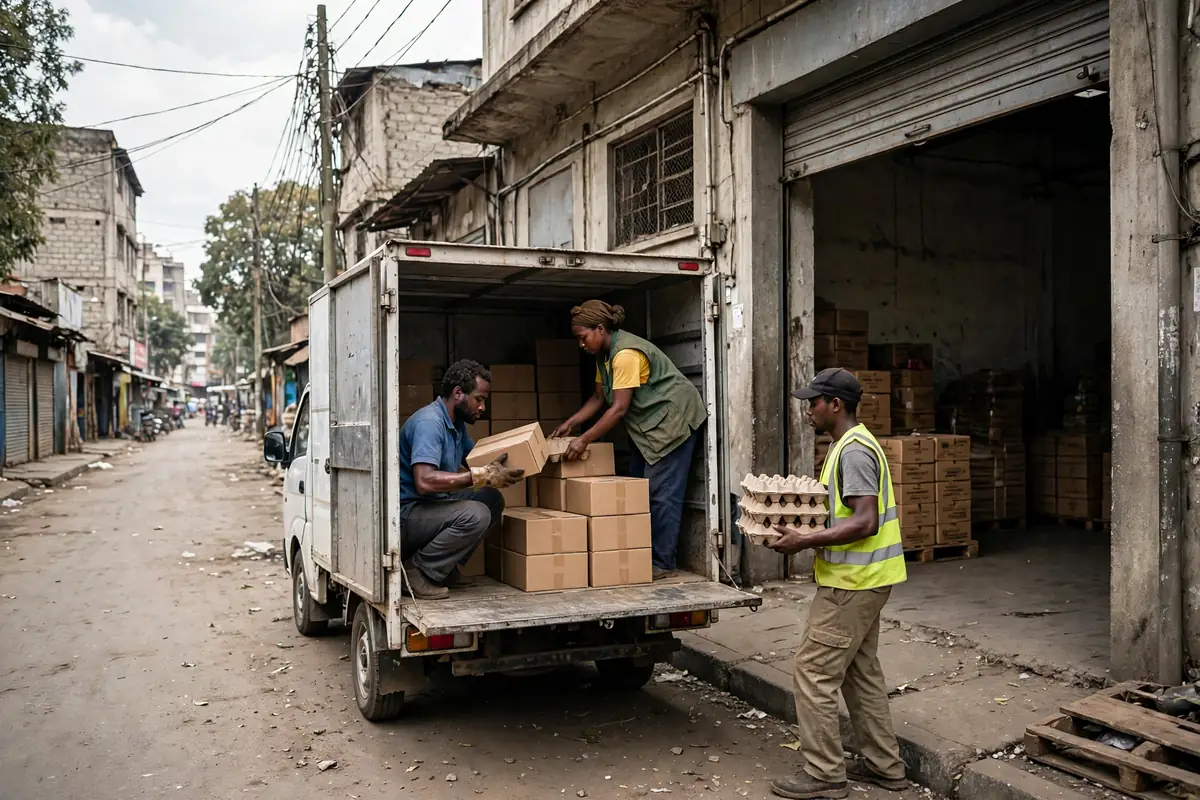
The easiest mistake in last mile delivery is to assume a bigger truck is cheaper per order. We believed that too, until a large truck spent more than forty minutes looking for a place to unload downtown, while the orders behind it waited. After that day, only small vans and motorbikes went into the centre. Large trucks stopped at the satellite point.
From our eastern satellite point, motorbikes take small scattered orders first, a few per trip, grouped along one direction. Small vans take slightly larger orders and concentrated drops in one zone, clearing a whole zone in one run. Together they complete more orders in a day than two large trucks forcing their way downtown, while fuel use and waiting time fall.
Sort by zone and by time window, not by customer name. Sorting by name forces staff to recognise every name at the busiest hour, which is when mistakes happen. Sorting by zone means the shelf and the order carry the same zone label, and a rider can see the direction at a glance. We stuck a hand-drawn zone map on the wall of the satellite point. The writing is crooked, and a new starter can learn it in ten minutes.
Rain needs its own plan. Roads get harder and motorbikes have to slow down, so we send what can go early and call customers before noon about orders that cannot make it. One early call is usually understood. Silence until dark loses the next order.
For other small warehouses in the same position, our advice is plain. Do not sign a long lease on a downtown warehouse first. Rent a small satellite point for a month, and add another only when the first one runs smoothly. Keep large trucks on the suburban run to the satellite point, and let small vehicles handle the city. Do not save money on sorting staff: even a two-person point needs one person watching the split. Leave half an hour to an hour of buffer in the rainy-season schedule, so a jam has somewhere to go.
We have no grand trick. We count traffic as a cost, move goods past the jam before it forms, and hand last mile delivery to vehicles that can actually move. The warehouse is not in the centre, and the business still works. A small warehouse has its own way to survive.
By Xiao Ma, Small Warehouse Owner