Full disclosure up front: our warehouse could never afford this stuff.
We run 3,000 square meters, pick with two legs and a pallet jack, and during peak season the temp workers show up and even the word "scheduling" feels like a luxury. So when I first heard about "multi-agent AMR fleet coordination," my reaction was: oh great, someone built a traffic-police department for robots. A warehouse like ours will never touch it.
Then I visited a friend's warehouse, and I changed my mind — not about buying, but about the idea. Turns out this fancy-sounding thing describes exactly what our little warehouse does every single day. So today I'm going to explain multi-agent coordination using the one analogy that actually works: warehouse traffic control. No papers, no formulas. Plain talk, I promise.
Our mess: add people, get traffic jams — robots included
Let me tell you our low-budget story first, and you'll see the problem instantly.
Last peak season we added six temp pickers. Our 3,000-square-meter building has two main aisles. Four people walked it fine; six turned it into rush hour. Two pickers meeting head-on in a narrow aisle, both sidestepping; someone turning a pallet jack around with three people queued behind; and at end of shift everybody rushing the packing station, the aisle entrance jammed solid, our supervisor yelling "one at a time!"
We wised up and made three free rules: narrow aisles are one-way, loop around, no reversing; the packing station got two drop-off windows, odd orders left, even orders right; pallet jacks may only turn in the main aisle, never inside a narrow one. Three rules, zero dollars, most of the efficiency back.
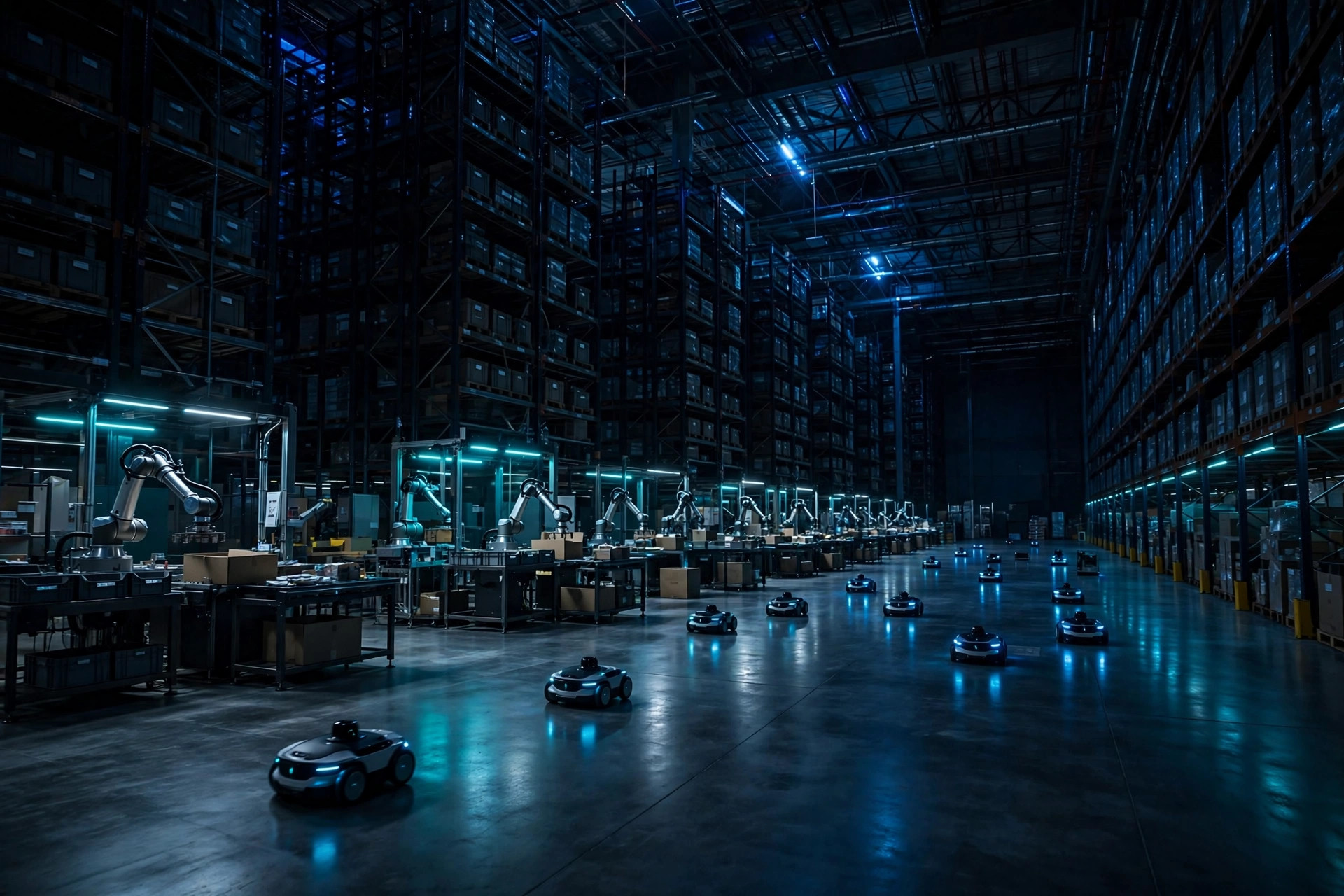
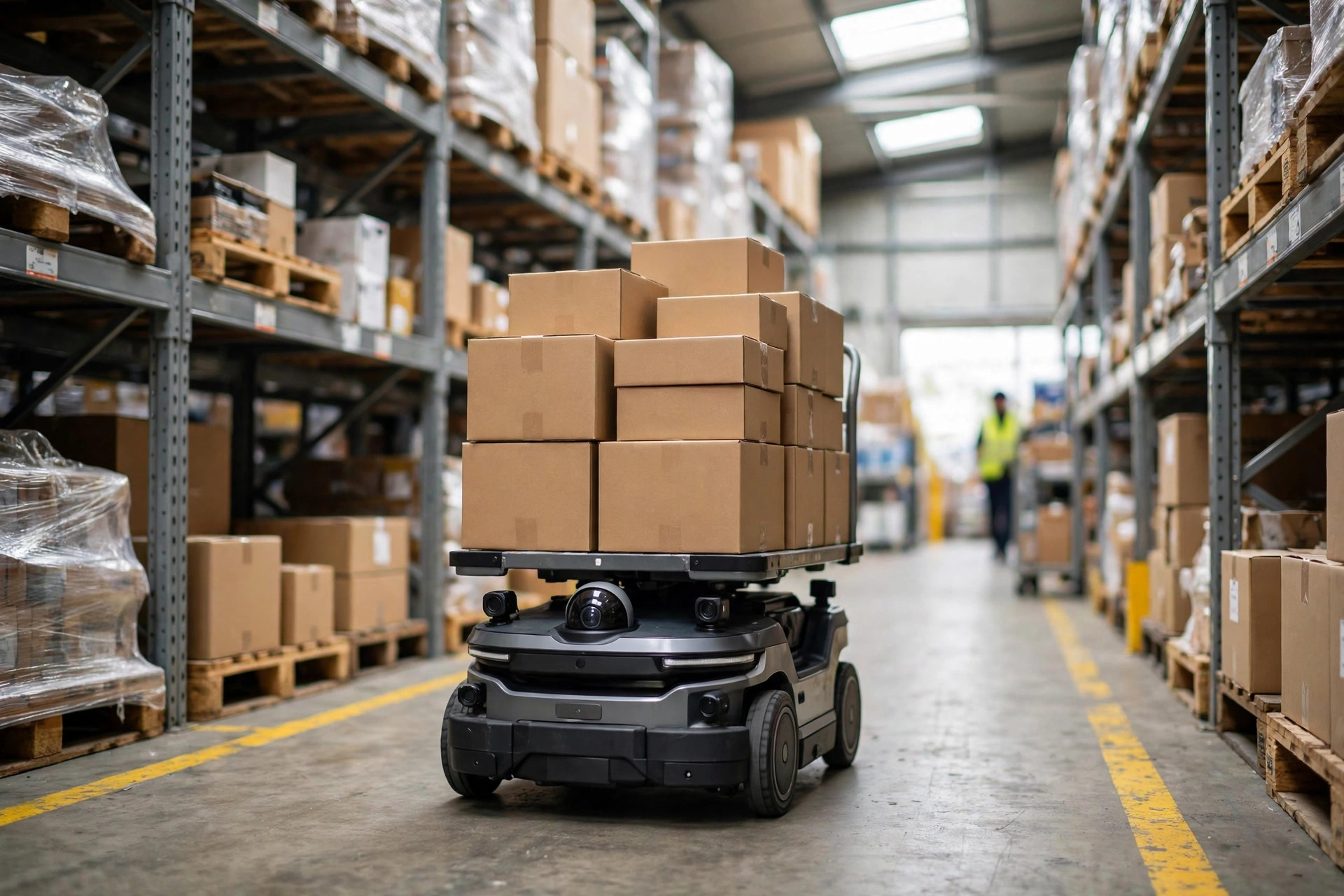
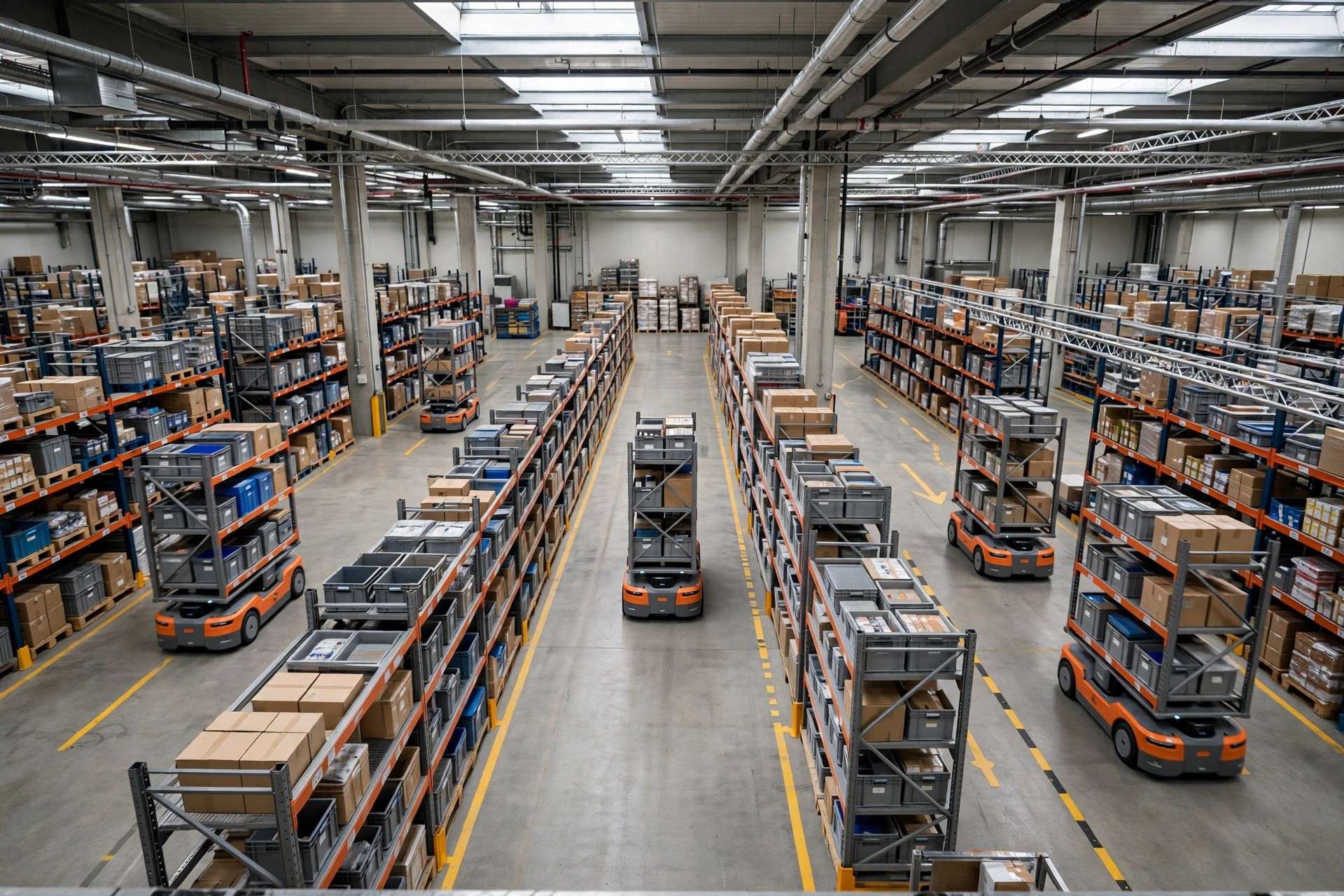
When I toured my friend's warehouse and watched 20 AMRs running, each with its little line on the screen, two of them "faced off" at an intersection for three seconds — then one backed up half a step and let the other through. I burst out laughing. That's just two of our pickers sidestepping in the aisle, except their yielding is done by algorithm and ours is done by shouting.
So the core of multi-agent coordination, translated into human: two jobs. First, who does which order (task allocation). Second, when paths cross, who yields (conflict resolution). Intersection yielding, charging queues, narrow-aisle passing — all variations of job two. "Multi-agent" is just a fleet of robot pickers that still needs someone — or some algorithm — playing traffic cop.
What we stole from the algorithm playbook (for free)
After the visit I kept thinking: if the logic is the same, is there anything in the big players' algorithm thinking that a small warehouse can steal? Turns out, plenty.
First, assign by "what's on the way," not "who asked first." We used to dispatch by whoever shouted first, and our pickers ran marathons across the building. Then we switched to zone batching: orders in the same aisle go to the same person, one trip. That's exactly the AMR logic — the algorithm doesn't dispatch first-come-first-served; it computes which vehicle can swing by with the least detour. My friend said their system calls it a "cost function." We call it "don't run around like an idiot." Different names, same math.
Second, intersections need priority rules, not negotiation. Our rule is crude but works: loaded yields to no one — actually, loaded goes first, empty yields, and whoever's closer to the packing station wins. The AMR side does the same: the algorithm assigns priorities — loaded vehicles first, low-battery ones heading to charge next, empty ones pull over. Some systems even reroute low-priority vehicles around the jam — the equivalent of a traffic cop saying "take the long way, stop adding to this mess." Our version: we painted yield spots in the main aisle, and anyone pushing a pallet jack must stop three seconds and look both ways. Primitive. Same ancestor.
Third, charging needs a schedule, not vibes. This one I loved most. My friend said their biggest headache wasn't picking — it was all 20 vehicles running dry at once and queuing at the chargers while work stopped dead. So the algorithm added charge scheduling: at 30% battery, go charge early, staggered, no bunching. I slapped my thigh when I heard that — our pallet jack and electric forklift used to run until dead too, then die mid-peak-season. Now we have one rule: every device goes on the charger at lunch break, no exceptions. See? The problem a six-figure algorithm solves, we solved with a printed schedule on A4 paper.
The counterintuitive part: more vehicles isn't more speed
Here's the counterintuitive bit, straight from my friend's mouth, worth the gas money for the visit alone.
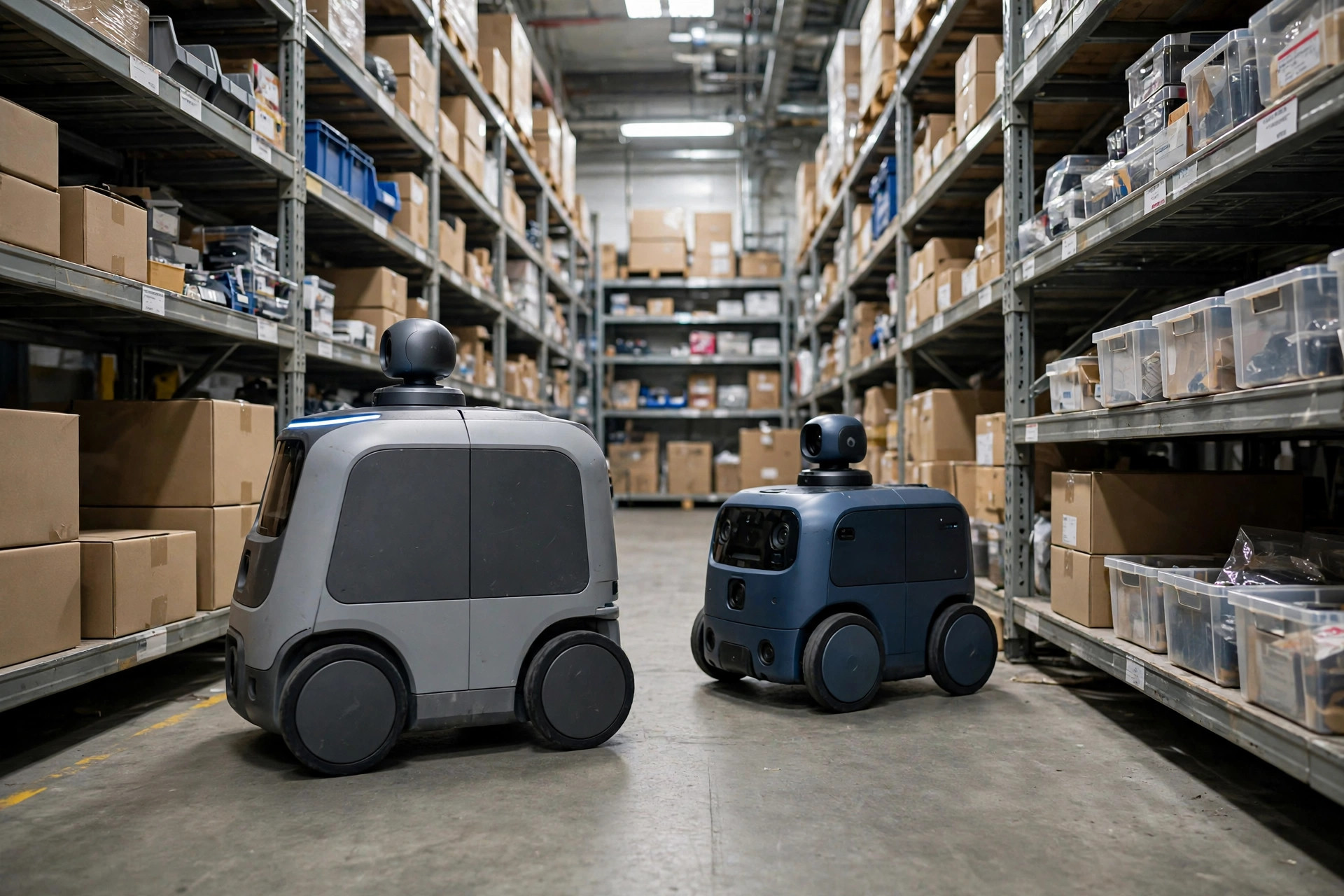
They went from 12 AMRs to 20, and throughput rose less than twenty percent. Pushed to 28, and throughput dropped. Why? The aisles are only so wide. More vehicles just means more time yielding at intersections — they spent more time waiting than moving. As their engineer put it: "the throughput ceiling isn't the number of vehicles, it's the conflict points in the road network."
Translated for small-warehouse ears: this peak season, don't just add people — check whether your aisles are wide enough first. Last year we added six people and jammed solid; this year we added four, widened the main aisle by half a meter, opened a second packing window, and volume went up thirty percent. Humans and robots suffer identically at "the intersection."
So if you're thinking about AMRs, don't start with "how many." Start with three questions: does my road network have one-way design? Are there enough chargers, in sensible spots? At peak, who yields to whom? Can't answer those three — every vehicle you buy just adds to the jam. Humans and robots alike.
Advice for my fellow small-warehouse owners
At the end of the day, multi-agent coordination is built for big operations: many vehicles, many orders, complex road networks. For a small warehouse like ours, the comparison is stark:
| Our low-budget way | Multi-agent coordination system | |
|---|---|---|
| Investment | A few sheets of paper + our voices | Six figures and up for hardware + software |
| Problem solved | Yielding, sensible dispatch, charge scheduling | Same — but 24/7 and never tired |
| Ceiling | Hits the wall as headcount grows | The more vehicles, the more the algorithm pays off |
| Right for | Small warehouses under ~2,000 orders/day | Big DCs, 10+ AMRs, five-figure daily orders |
Three pieces of advice, specifically for owners like me:
First, don't let the jargon scare you. "Multi-agent," "swarm collaboration" — sounds like a sci-fi movie, but open it up and it's dispatch plus yielding. If you've sorted out your own dispatch logic and right-of-way rules, you've already absorbed eighty percent of the idea. The remaining twenty percent is math.
Second, steal the algorithm's thinking — it's free. Dispatch by what's on the way, set intersection priorities, stagger your charging. All three work in a small warehouse with paper, pen, and shouting. I won't claim we match their system, but on return per dollar invested, we win by a mile.
Third, know your scale. When it's time for equipment, don't be cheap — but below that scale, don't pay the "smart" tax for two fancy words. The day our little warehouse breaks ten thousand orders a day, I'll be first in line to order AMRs. Until then? Small warehouses have their own way of thriving, and the low-budget playbook works just fine.
One question to leave you with: in your warehouse, are the "intersections" run by algorithm, by rules — or by shouting? Drop it in the comments; I want to see how many fellow sufferers are out there.
By Xiao Ma, Small Warehouse Owner